
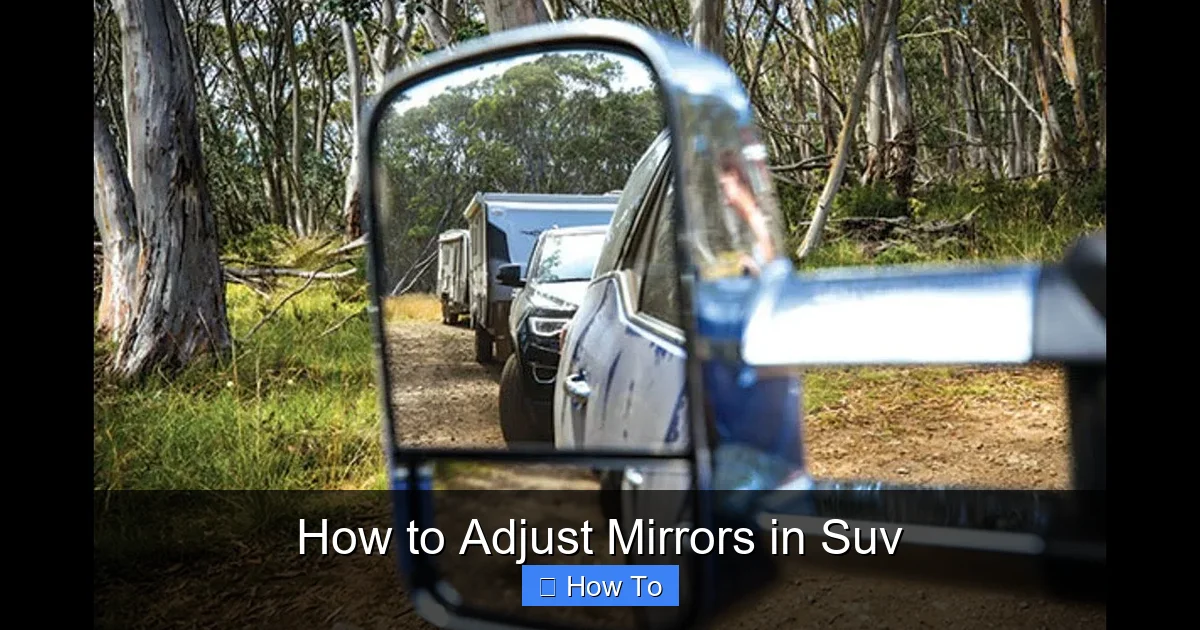
Adjusting mirrors in SUV correctly is essential for safe driving. This guide walks you through setting up your side, rearview, and blind spot mirrors to eliminate blind spots and improve road awareness.
Key Takeaways
- Proper mirror adjustment reduces blind spots: Correctly positioned mirrors minimize dangerous blind zones, especially in larger SUVs with higher seating positions.
- Start with the driver’s seat and steering wheel: Always adjust your seat and steering column first to ensure accurate mirror alignment based on your natural driving posture.
- Use the “lean forward” method for side mirrors: Lean your head against the window and adjust the left mirror until you just see the side of your SUV, then repeat on the right.
- Angle side mirrors outward, not inward: Unlike older techniques, modern best practice is to angle mirrors outward so they capture adjacent lanes, not just your own vehicle’s sides.
- Check and adjust mirrors every time you drive: Passengers, cargo, or seat changes can shift your position—recheck mirrors before hitting the road.
- Use convex or blind spot mirrors as supplements: Small round mirrors can help, but they should never replace proper mirror alignment.
- Test your setup in real traffic: Practice merging and lane changes in light traffic to confirm your mirrors give you full coverage without over-reliance on shoulder checks.
How to Adjust Mirrors in SUV: A Complete Guide for Safer Driving
Driving an SUV comes with many advantages—more space, higher ground clearance, and a commanding view of the road. But that elevated seating position also means larger blind spots, especially to the sides and rear. One of the most overlooked yet critical aspects of safe SUV driving is properly adjusting your mirrors. Many drivers assume that mirrors come pre-set or that a quick glance is enough. But the truth is, incorrect mirror alignment can lead to dangerous blind spots, increasing the risk of side collisions, lane-change accidents, and poor awareness in traffic.
In this comprehensive guide, you’ll learn exactly how to adjust mirrors in SUV for optimal visibility, safety, and confidence on the road. Whether you’re driving a compact crossover or a full-size SUV, these steps apply universally. We’ll cover the rearview mirror, both side mirrors, and even how to use blind spot monitoring systems effectively. You’ll also get practical tips, troubleshooting advice, and real-world examples to help you master mirror adjustment like a pro.
By the end of this guide, you’ll not only know how to set your mirrors correctly but also understand why each step matters. You’ll reduce your reliance on risky shoulder checks, improve your lane-change safety, and gain better overall awareness—especially in busy traffic or tight parking situations.
Why Proper Mirror Adjustment Matters in SUVs
Visual guide about How to Adjust Mirrors in Suv
Image source: i.ytimg.com
SUVs are taller and often wider than sedans, which creates unique visibility challenges. The higher driver’s seat gives you a better view of the road ahead, but it also raises your eye level, changing the angle at which you see surrounding vehicles. This means that if your mirrors aren’t adjusted correctly, you could easily miss cars in adjacent lanes—especially during lane changes or merging onto highways.
Blind spots in SUVs can be significantly larger than in smaller vehicles. According to the National Highway Traffic Safety Administration (NHTSA), blind spot-related crashes account for thousands of accidents each year. Many of these could be prevented with proper mirror use. In fact, studies show that drivers who correctly adjust their mirrors reduce their blind spot area by up to 30%.
Another reason mirror adjustment is crucial in SUVs is the increased likelihood of carrying passengers or cargo. When you add weight to the vehicle, the suspension can compress slightly, changing your seating position and, consequently, your line of sight. That’s why it’s not enough to set your mirrors once and forget them—you should check and adjust them every time you drive, especially if someone else has used the vehicle.
Finally, many modern SUVs come equipped with advanced driver assistance systems (ADAS), such as blind spot monitoring (BSM) and rear cross-traffic alert. While these technologies are helpful, they are not foolproof. Sensors can fail, and warnings can be delayed. Relying solely on technology without proper mirror use is a dangerous habit. The best approach is to combine tech with good old-fashioned visibility—starting with correctly adjusted mirrors.
Step 1: Adjust Your Seat and Steering Wheel First
Visual guide about How to Adjust Mirrors in Suv
Image source: learndriving.tips
Before you touch any mirror, you must ensure your driving position is correct. Mirrors are designed to work with your natural posture, so if your seat is too far forward, too far back, or tilted at an odd angle, your mirror alignment will be off—no matter how carefully you adjust them.
Find Your Ideal Driving Position
Sit in the driver’s seat and place both hands on the steering wheel at the “9 and 3” position. Your arms should be slightly bent, not locked or overly stretched. If you have to reach forward to grip the wheel, slide the seat forward. If your knees are too close to the dashboard, move the seat back.
Next, check your back support. Your lower back should be comfortably supported, and your shoulders should rest naturally against the seatback. Many SUVs have adjustable lumbar support—use it to eliminate any gaps between your spine and the seat.
Finally, adjust the seat height so your eyes are level with the top third of the windshield. This gives you the best forward and peripheral vision. In taller SUVs, you may need to raise the seat to see over the hood, but avoid going so high that you lose visibility of the road immediately in front of the vehicle.
Adjust the Steering Wheel
Most modern SUVs have tilt and telescoping steering wheels. Pull the lever (usually under the steering column) and adjust the wheel so it’s comfortable to hold and doesn’t block your view of the instrument panel. The top of the wheel should be just below your eye level when seated normally.
Once your seat and steering wheel are set, you’re ready to adjust your mirrors. Never skip this step—mirrors are only effective when aligned to your specific driving posture.
Step 2: Adjust the Rearview Mirror
The rearview mirror is your primary source of information about what’s happening behind you. In an SUV, this mirror is especially important because the large rear window and high roofline can create glare or distortion if not used correctly.
Position the Mirror for Maximum Coverage
Sit in your normal driving position and look straight ahead. The rearview mirror should be centered so that you can see the entire rear window without moving your head. You should have a clear, unobstructed view of the road behind you, including vehicles, pedestrians, and traffic signals.
If your SUV has a day/night toggle (usually a small lever at the bottom of the mirror), use it to reduce glare from headlights at night. Flip it down for night driving to dim the reflection and prevent blinding yourself.
Check for Obstructions
In many SUVs, the rearview mirror may be partially blocked by headrests, passengers, or cargo. If you’re carrying tall items in the back seat, consider folding the seats down or using the side mirrors more frequently. Some SUVs also offer a rear camera system that displays on the rearview mirror—use this as a supplement, but don’t rely on it exclusively.
Use the Auto-Dimming Feature (If Available)
Many newer SUVs come with auto-dimming rearview mirrors that automatically reduce glare when bright lights are detected from behind. While convenient, this feature doesn’t replace the need for proper mirror alignment. Make sure the mirror is still positioned to give you a full view of the rear window.
Step 3: Adjust the Left Side Mirror
The left side mirror (driver’s side) is crucial for lane changes, merging, and monitoring traffic in the adjacent lane. Unfortunately, many drivers set this mirror too far inward, showing too much of their own vehicle and not enough of the road.
Use the “Lean Forward” Method
Here’s a proven technique used by driving instructors and safety experts:
1. Sit in your normal driving position.
2. Lean your head to the left until it touches the driver’s side window.
3. Adjust the left side mirror so that you can just barely see the side of your SUV in the mirror.
4. Return to your normal seated position.
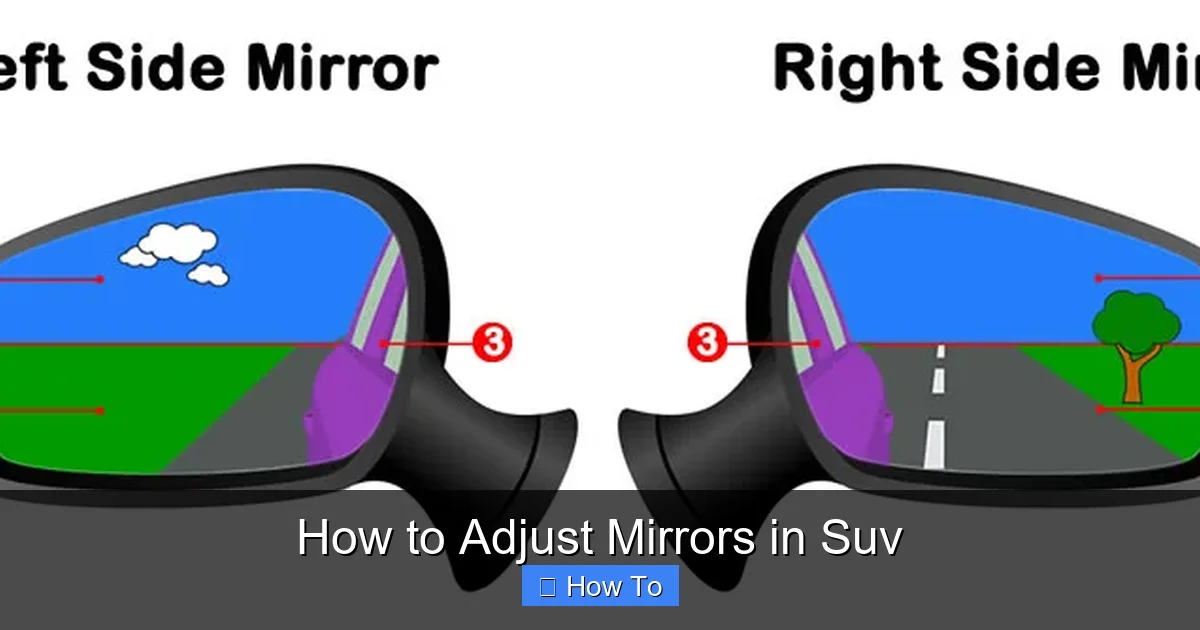
At this point, the mirror should be angled outward, showing the lane to your left—not the side of your vehicle. When a car passes you, it should appear in your side mirror just as it begins to leave your rearview mirror. This seamless transition reduces blind spots.
Why This Method Works
The “lean forward” method ensures that the mirror is positioned to capture the maximum amount of the adjacent lane. If you set the mirror while sitting upright, you’ll likely angle it too far inward, creating a large blind spot. By leaning, you simulate the extreme edge of your field of vision, allowing the mirror to extend your view beyond what your eyes can naturally see.
Test the Adjustment
After adjusting, have a friend drive a car past you on the left while you’re stopped. Watch how the car moves from your rearview mirror into your side mirror. It should transition smoothly without disappearing into a blind spot.
Step 4: Adjust the Right Side Mirror
The right side mirror (passenger side) is often more challenging to adjust because you can’t lean as far to the right. However, the same principle applies: you want to minimize the view of your own vehicle and maximize coverage of the adjacent lane.
Use the “Lean Forward” Method (Modified)
1. Sit in your normal driving position.
2. Lean your head toward the center of the vehicle (as far right as comfortably possible).
3. Adjust the right side mirror so you can just see the side of your SUV.
4. Return to your normal seated position.
Because you can’t lean as far on the right, you may need to estimate the correct angle. A good rule of thumb is to set the right mirror slightly more outward than the left, since the passenger side blind spot is often larger in SUVs.
Account for the Wider Blind Spot
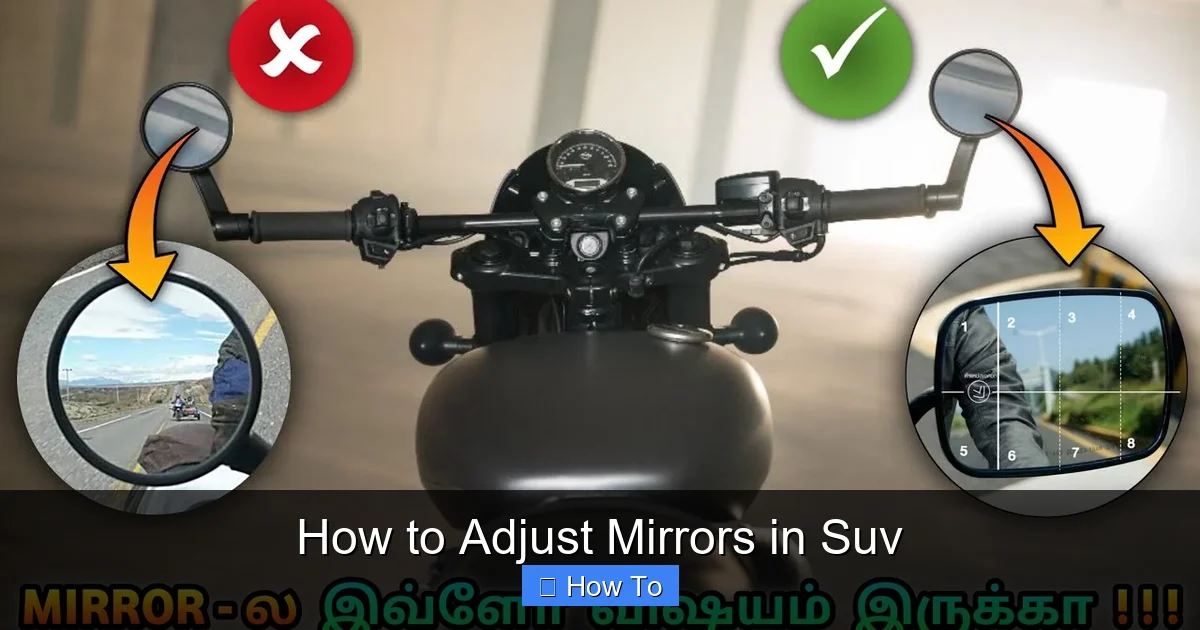
The passenger side of an SUV typically has a larger blind spot due to the distance from the driver and the curvature of the vehicle. Some drivers find it helpful to use a small convex mirror (often called a blind spot mirror) on the right side mirror. These round, stick-on mirrors provide a wider field of view but should never replace proper mirror adjustment.
Test the Right Side Mirror
Again, have a friend drive past on the right. The car should appear in your side mirror just as it leaves your rearview mirror. If it disappears, your mirror is angled too far inward.
Step 5: Fine-Tune for Blind Spot Coverage
Even with properly adjusted mirrors, SUVs can still have small blind spots—especially directly behind and to the sides. Here’s how to fine-tune your setup for maximum safety.
Check the “No-Zone” Areas
The “no-zone” refers to areas around your vehicle where other cars can disappear from view. In SUVs, these zones are larger than in smaller vehicles. To check:
– Have a friend stand in the blind spot areas (about 10–20 feet to the side and rear).
– Sit in the driver’s seat and see if you can spot them in your mirrors.
– If not, slightly adjust your side mirrors outward (in small increments) until you can see them.
Use Technology Wisely
Many SUVs come with blind spot monitoring (BSM) systems that alert you with a light or sound when a vehicle is in your blind spot. These systems are helpful, but they’re not perfect. Sensors can be blocked by dirt, snow, or heavy rain. Always use BSM as a supplement—not a replacement—for proper mirror use.
Consider Aftermarket Solutions
If you frequently drive in heavy traffic or tow trailers, consider installing wide-angle side mirrors or towing mirrors. These provide a broader field of view and are especially useful for large SUVs.
Step 6: Adjust Mirrors When Carrying Passengers or Cargo
One of the most common mistakes drivers make is forgetting to readjust mirrors after loading passengers or cargo. Weight in the rear of the SUV can cause the vehicle to sag, changing your eye level and seating position.
Re-Check After Loading
Whenever you add passengers, luggage, or equipment, take a moment to sit in the driver’s seat and check your mirrors. You may need to:
– Raise the seat slightly if the vehicle sags.
– Re-adjust the rearview mirror if your view is blocked.
– Tweak the side mirrors if your posture has shifted.
Use Memory Settings (If Available)
Many luxury and mid-range SUVs offer memory seat and mirror settings. If your vehicle has this feature, save your preferred mirror positions so you can quickly restore them after someone else drives the car.
Troubleshooting Common Mirror Issues
Even with careful adjustment, you may encounter problems. Here’s how to fix the most common issues.
Mirror Vibrates or Shakes While Driving
This is often caused by loose mounting or worn components. Check the mirror housing for cracks or looseness. If the mirror is electric, ensure the motor is functioning properly. In some cases, replacing the mirror assembly is necessary.
Blind Spot Still Too Large
If you’ve followed all steps and still have a large blind spot, consider:
– Installing aftermarket wide-angle mirrors.
– Using blind spot monitoring systems.
– Practicing the “shoulder check” as a backup (turn your head to look over your shoulder before changing lanes).
Mirror Fogs Up or Gets Dirty
Use a microfiber cloth and glass cleaner to keep mirrors clear. In cold weather, use the defroster to prevent fogging. Some SUVs have heated side mirrors—activate them in winter for better visibility.
Electric Mirrors Won’t Adjust
Check the fuse box and mirror control switch. If the motor is faulty, you may need to replace the mirror assembly. Consult your owner’s manual or a professional mechanic.
Best Practices for Maintaining Mirror Visibility
Proper mirror adjustment is only effective if your mirrors stay clean and functional. Follow these best practices:
– Clean mirrors weekly with glass cleaner and a soft cloth.
– Check mirror alignment before long trips.
– Use the rear defroster in cold or humid weather.
– Replace damaged or cracked mirrors immediately.
– Avoid hanging air fresheners or decorations that block the rearview mirror.
Conclusion
Adjusting mirrors in SUV isn’t just a one-time setup—it’s an ongoing habit that can significantly improve your safety on the road. By following the steps in this guide, you’ll eliminate dangerous blind spots, reduce reliance on technology, and gain better awareness of your surroundings.
Remember: start with your seat and steering wheel, use the “lean forward” method for side mirrors, and always test your setup in real traffic. Don’t forget to readjust when carrying passengers or cargo, and keep your mirrors clean and functional.
Safe driving begins with visibility. Take a few minutes today to adjust your mirrors correctly—you’ll drive with more confidence, react faster in emergencies, and protect yourself and others on the road.