
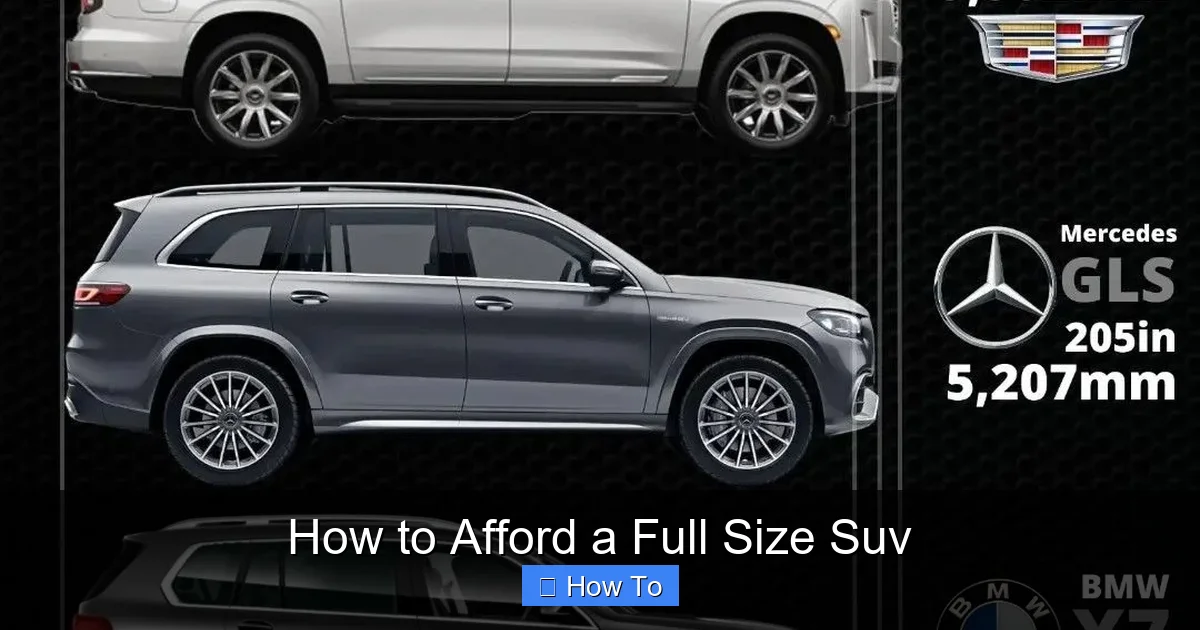
Buying a full size SUV doesn’t have to drain your wallet. This guide walks you through practical steps—from budgeting and saving to financing and negotiating—so you can afford your ideal vehicle with confidence and financial peace of mind.
Key Takeaways
- Set a realistic budget: Know your income, expenses, and how much you can comfortably spend on a vehicle without straining your finances.
- Save consistently: Build a dedicated down payment fund using automatic transfers and smart spending cuts.
- Improve your credit score: A higher credit score means lower interest rates and better loan terms, saving you thousands over time.
- Shop smart: Compare new vs. used, certified pre-owned options, and timing your purchase can lead to major savings.
- Negotiate effectively: Research prices, use competing offers, and don’t rush—patience pays off at the dealership.
- Consider total ownership costs: Factor in fuel, insurance, maintenance, and depreciation, not just the sticker price.
- Explore financing alternatives: Credit unions, online lenders, and manufacturer incentives can offer better deals than traditional banks.
How to Afford a Full Size SUV: A Step-by-Step Guide
Dreaming of a full size SUV? You’re not alone. These spacious, powerful vehicles are perfect for families, road trips, and hauling gear. But let’s be honest—they come with a hefty price tag. The average new full size SUV costs between $50,000 and $80,000, and that’s before adding options, taxes, and fees.
The good news? You can afford a full size SUV without going broke. It just takes planning, discipline, and smart decision-making. Whether you’re eyeing a Ford Expedition, Chevrolet Tahoe, Toyota Sequoia, or GMC Yukon, this guide will show you exactly how to make it happen—without sacrificing your financial health.
In this comprehensive how-to guide, you’ll learn how to:
- Create a realistic car-buying budget
- Save for a down payment efficiently
- Improve your credit to get better loan rates
- Choose between new, used, and certified pre-owned models
- Time your purchase for maximum savings
- Negotiate like a pro at the dealership
- Understand and minimize long-term ownership costs
- Explore financing options beyond the dealer
By the end, you’ll have a clear, actionable plan to afford the full size SUV you want—on your terms.
Step 1: Assess Your Financial Situation
Before you even look at SUVs, take a hard look at your finances. You can’t afford a full size SUV if it wrecks your budget. Start by answering these questions:
Visual guide about How to Afford a Full Size Suv
Image source: thedibb.co.uk
- What’s your monthly take-home pay?
- What are your fixed monthly expenses (rent, utilities, groceries, debt payments)?
- How much do you currently save each month?
- Do you have an emergency fund?
Calculate Your Car Budget
A common rule of thumb is the 20/4/10 rule:
- 20% down payment: This reduces your loan amount and avoids being “upside down” on your loan.
- 4-year loan term: Shorter terms mean less interest paid over time.
- 10% of income on car expenses: This includes loan payments, insurance, fuel, and maintenance.
For example, if you earn $6,000 per month after taxes, your total car expenses should not exceed $600 per month. If you can put down 20% and finance over 4 years, that puts your max vehicle price around $35,000–$40,000. But wait—full size SUVs start higher than that.
So how do you bridge the gap? You’ll need to either increase your income, reduce other expenses, or save longer. Let’s explore those options.
Boost Your Income
If your current budget doesn’t support a full size SUV, consider side hustles:
- Freelance work (writing, design, coding)
- Rideshare or delivery driving
- Selling unused items online
- Part-time weekend jobs
Even an extra $500–$1,000 per month can make a big difference in your car budget over time.
Cut Unnecessary Expenses
Review your spending for the past 3 months. Look for areas to trim:
- Cancel unused subscriptions (streaming, gym, apps)
- Eat out less—cook at home more
- Switch to a cheaper phone or internet plan
- Use public transit or carpool to save on gas
Redirecting $200–$400 per month toward your car fund can help you afford a better SUV or reduce your loan amount.
Step 2: Save for a Down Payment
A large down payment is one of the best ways to afford a full size SUV. It lowers your monthly payment, reduces interest costs, and helps you avoid negative equity.
Visual guide about How to Afford a Full Size Suv
Image source: i.ytimg.com
Set a Savings Goal
For a $60,000 SUV, aim for at least $12,000 (20%) down. That’s a solid target. If you can save $500 per month, you’ll reach it in 24 months. If you save $1,000 per month, you’ll get there in just one year.
Open a Dedicated Savings Account
Use a high-yield savings account (HYSA) to earn interest while you save. Online banks like Ally, Marcus, or Discover offer rates over 4% APY—much better than traditional banks.
Automate Your Savings
Set up automatic transfers from your checking to your savings account right after payday. “Pay yourself first” so saving becomes a habit, not an afterthought.
Use Windfalls Wisely
Tax refunds, bonuses, or gifts? Put them toward your down payment. Even $1,000 extra can shave months off your savings timeline.
Cut Big-Ticket Expenses Temporarily
Consider delaying major purchases like vacations, home renovations, or luxury items until after you buy your SUV. Every dollar saved brings you closer to your goal.
Step 3: Improve Your Credit Score
Your credit score affects your loan interest rate—and that can mean thousands in savings. A score of 720+ qualifies for the best rates, while scores below 650 may lead to high-interest loans.
Check Your Credit Report
Get a free copy of your credit report from AnnualCreditReport.com. Look for errors like incorrect balances, late payments, or accounts you didn’t open. Dispute any mistakes—they could be dragging your score down.
Pay Down Debt
Credit utilization (how much of your credit limit you’re using) makes up 30% of your score. Aim to keep it below 30%, ideally under 10%. Pay down credit card balances aggressively.
Make On-Time Payments
Payment history is the biggest factor in your score. Set up autopay for at least the minimum amount due on all bills. Even one missed payment can hurt your score.
Avoid New Credit Applications
Each hard inquiry can drop your score by a few points. Hold off on applying for new credit cards or loans while you’re preparing to buy a car.
Become an Authorized User
If a family member has a long, positive credit history, ask to be added as an authorized user on their card. This can boost your score—just make sure they use the card responsibly.
Improving your credit by 50–100 points could save you $3,000–$5,000 in interest on a $50,000 loan over 5 years. That’s real money back in your pocket.
Step 4: Choose the Right SUV for Your Budget
Not all full size SUVs are created equal—especially when it comes to price. Here’s how to find one that fits your budget without sacrificing what you need.
New vs. Used vs. Certified Pre-Owned (CPO)
New SUVs offer the latest features, full warranty, and peace of mind—but they depreciate fast. A new SUV can lose 20% of its value in the first year.
Used SUVs (3–5 years old) are often 30–50% cheaper than new and have already taken the biggest depreciation hit. Just make sure to get a vehicle history report (like Carfax) and have it inspected by a mechanic.
Certified Pre-Owned (CPO) vehicles are used cars inspected, refurbished, and backed by the manufacturer’s warranty. They cost more than regular used cars but offer better reliability and often include roadside assistance and maintenance perks.
Compare Models and Trims
Full size SUVs come in different trims—base, mid, and high-end. The top trim of a GMC Yukon Denali can cost $80,000+, while a base model starts around $60,000. Ask yourself: Do you really need the panoramic sunroof, massaging seats, and premium sound system? Or will the mid-level trim meet your needs for less?
Consider Fuel Efficiency
Full size SUVs aren’t known for great gas mileage. A Ford Expedition gets about 17 mpg combined, while a Toyota Sequoia gets around 15 mpg. At $4 per gallon, driving 15,000 miles a year could cost you $3,500–$4,000 in fuel. Factor that into your budget.
Research Reliability and Maintenance Costs
Check sites like Consumer Reports and J.D. Power for reliability ratings. Some brands (like Toyota and Honda) have lower long-term repair costs than others. Also, consider extended warranties if you plan to keep the SUV for many years.
Step 5: Time Your Purchase for Maximum Savings
When you buy matters almost as much as what you buy. Dealers often have sales targets and incentives that can save you thousands.
Shop at the End of the Month, Quarter, or Year
Dealerships push to meet sales goals at these times. Salespeople may be more willing to negotiate to close a deal.
Buy During Holiday Sales Events
Look for promotions around Presidents’ Day, Memorial Day, July 4th, Labor Day, and Black Friday. Manufacturers often offer cash rebates, low APR financing, or lease deals.
Avoid Peak Seasons
Summer and early fall are popular times to buy SUVs. Prices may be higher, and inventory more limited. Winter (especially January and February) can be a better time to negotiate.
Wait for New Model Year Releases
When new models arrive (usually late summer), dealers discount the previous year’s models to clear inventory. You could save $3,000–$7,000 on a nearly identical SUV.
Step 6: Get Pre-Approved for Financing
Don’t rely solely on dealer financing. Getting pre-approved gives you leverage and helps you avoid high-pressure sales tactics.
Shop Around for Loans
Compare rates from:
- Credit unions (often the best rates)
- Online lenders (like LightStream or Upstart)
- Your bank
- Dealer financing (use as a last resort or to compare)
Pre-approval typically takes 15–30 minutes online and doesn’t affect your credit score if done within a short window (14–45 days).
Understand Loan Terms
Avoid loans longer than 60 months. While they lower your monthly payment, they increase total interest paid. For example:
- $50,000 loan at 5% over 60 months = $943/month, $6,580 total interest
- $50,000 loan at 5% over 72 months = $791/month, $8,952 total interest
That’s over $2,300 more in interest for a slightly lower payment. Stick to 48–60 months if possible.
Step 7: Negotiate the Price Like a Pro
Negotiating can save you $2,000–$5,000 or more. Here’s how to do it right.
Research the Invoice Price
Use sites like Edmunds or Kelley Blue Book to find the dealer’s invoice price (what the dealer paid). Aim to pay close to that number, plus fees.
Get Multiple Quotes
Contact 3–5 dealerships and ask for their best out-the-door price via email. This creates competition and gives you leverage.
Focus on Total Price, Not Monthly Payment
Dealers may try to lower your monthly payment by extending the loan term or adding fees. Always negotiate the total price first.
Be Ready to Walk Away
If the deal isn’t right, leave. There are plenty of SUVs and dealers. Walking away often prompts the salesperson to call you back with a better offer.
Ask About Incentives
Mention any current rebates, loyalty programs, or military/first responder discounts. These can be stacked with negotiated pricing.
Step 8: Factor in Total Ownership Costs
The purchase price is just the beginning. Full size SUVs cost more to own than smaller vehicles.
Insurance
Insurance for a full size SUV can cost $1,500–$2,500 per year, depending on your location, driving record, and coverage. Get quotes before you buy.
Maintenance and Repairs
Oil changes, tires, brakes, and transmissions cost more on larger vehicles. Budget $800–$1,200 per year for routine maintenance.
Depreciation
Even if you plan to keep the SUV for 10 years, it will lose value. A $70,000 SUV might be worth $25,000 after 5 years. This affects resale value and trade-in potential.
Towing and Off-Roading Costs
If you plan to tow a boat or trailer, factor in hitch installation, brake controllers, and increased fuel use. Off-roading may require upgrades like all-terrain tires or skid plates.
Troubleshooting Common Challenges
“I Can’t Save Enough for a Down Payment”
Try a shorter timeline with a smaller down payment (10–15%) and a co-signer with good credit. Or consider a slightly used SUV to lower the total cost.
“My Credit Score Is Too Low”
Work on improving it for 6–12 months before buying. In the meantime, save more to reduce the loan amount. Some lenders specialize in bad credit auto loans, but expect higher rates.
“I Need the SUV Now for My Family”
If you need a vehicle immediately, consider leasing a full size SUV. Monthly payments are lower, and you can upgrade in 2–3 years. Just be aware of mileage limits and wear-and-tear fees.
“The Dealer Won’t Negotiate”
Try a different dealership or salesperson. Some dealers are more flexible than others. You can also use online car-buying services like Carvana or Vroom for a no-haggle experience.
Conclusion
Affording a full size SUV is absolutely possible—if you plan ahead and make smart financial choices. It’s not about rushing into a purchase; it’s about preparing your budget, improving your credit, saving diligently, and shopping strategically.
Remember, the goal isn’t just to drive a big SUV—it’s to do so without stressing your finances. By following the steps in this guide, you’ll be able to afford the vehicle you want while staying in control of your money.
Start today. Review your budget, open a savings account, check your credit, and begin researching models. Every small step brings you closer to the driver’s seat of your dream full size SUV.