

Yes, you can add a sunroof to most SUVs—but it’s not as simple as it sounds. While factory sunroofs are built into the design, aftermarket installations require careful planning, professional help, and a solid budget. This guide covers everything you need to know before making the leap.
Key Takeaways
- Aftermarket sunroofs are possible: Most SUVs can be retrofitted with an aftermarket sunroof, but it requires cutting into the roof and structural modifications.
- Professional installation is a must: DIY sunroof kits exist, but improper installation can lead to leaks, rust, and safety risks—always hire a certified technician.
- Costs range from $800 to $3,000+: Basic pop-up sunroofs are cheaper, while panoramic or power-sliding models cost significantly more, including labor.
- Warranty and resale value may be affected: Modifying your SUV’s roof can void factory warranties and impact resale value, depending on the quality of the work.
- Not all SUVs are ideal candidates: Vehicles with reinforced roofs, sunroof delete panels, or complex headliners may not support aftermarket installations easily.
- Weatherproofing is critical: A poorly sealed sunroof can cause water leaks, mold, and interior damage—choose high-quality seals and drainage systems.
- Consider alternatives: If a full sunroof isn’t feasible, consider a sunroof insert, roof vent, or panoramic glass roof upgrade if available from the manufacturer.
📑 Table of Contents
- Can You Add a Sunroof to a SUV? The Short Answer
- Why People Want Sunroofs in Their SUVs
- Types of Aftermarket Sunroofs for SUVs
- Can Every SUV Handle a Sunroof Installation?
- Cost Breakdown: What to Expect When Adding a Sunroof
- DIY vs. Professional Installation: What’s the Right Choice?
- Potential Risks and Downsides of Adding a Sunroof
- Alternatives to Adding a Sunroof
- Final Verdict: Should You Add a Sunroof to Your SUV?
Can You Add a Sunroof to a SUV? The Short Answer
So, you love your SUV—its space, its power, its rugged charm—but there’s one thing missing: that open-air feeling only a sunroof can deliver. You’ve seen other SUVs gliding down the highway with their roofs open, sunlight streaming in, and you’re wondering: Can I add a sunroof to my SUV?
The short answer? Yes—but with caveats.
Adding a sunroof to an SUV that didn’t come with one from the factory is technically possible, but it’s not a simple bolt-on upgrade like swapping out speakers or adding floor mats. It involves cutting into the metal roof, reinforcing the structure, rerouting wiring (for powered models), and ensuring a watertight seal. It’s a major modification that demands expertise, precision, and a healthy respect for automotive engineering.
Think of it like remodeling your kitchen: you can do it, but you’ll need permits, skilled contractors, and a clear plan to avoid costly mistakes. The same goes for your SUV’s roof. While the dream of cruising with the sun on your face is tempting, it’s important to understand what you’re getting into—financially, structurally, and logistically.
Why People Want Sunroofs in Their SUVs
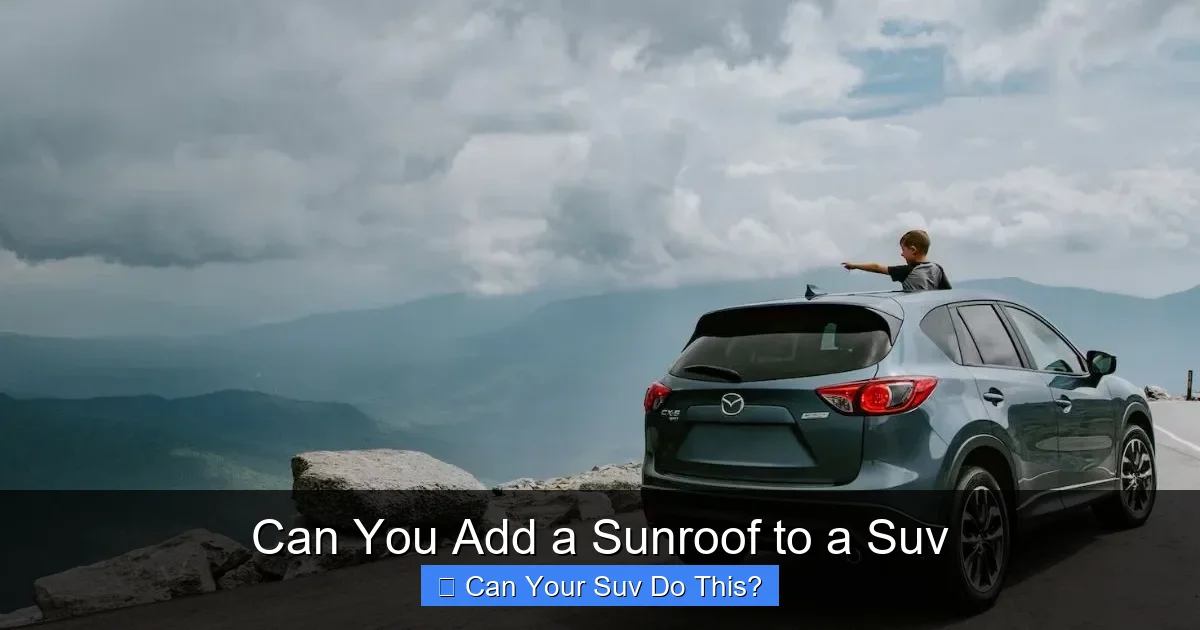
Visual guide about Can You Add a Sunroof to a Suv
Image source: i0.wp.com
There’s a reason sunroofs are one of the most popular optional features in modern vehicles. They’re more than just a luxury—they’re a lifestyle upgrade. For SUV owners, who often use their vehicles for family trips, outdoor adventures, and daily commutes, a sunroof adds a sense of freedom and openness that’s hard to replicate.
Imagine driving through a mountain pass with the panoramic view above you, or letting fresh air circulate on a warm spring day without rolling down all the windows. Sunroofs enhance the driving experience by connecting you more deeply with your surroundings. They also improve cabin ambiance, reducing the “cave-like” feeling some SUVs can have, especially models with dark interiors or high beltlines.
Beyond aesthetics, sunroofs can increase resale value—especially if they’re factory-installed. Buyers often see them as a premium feature, and a vehicle with a sunroof may stand out in a crowded used car market. Even aftermarket sunroofs, when done well, can make your SUV more appealing to future buyers.
But it’s not just about looks. Sunroofs can improve ventilation, reduce stuffiness, and even help with defogging in certain conditions. Some modern sunroofs come with built-in sunshades, rain sensors, and one-touch operation, adding convenience and safety.
Types of Aftermarket Sunroofs for SUVs
If you’re serious about adding a sunroof, the first step is understanding your options. Not all sunroofs are created equal, and the type you choose will affect cost, installation complexity, and performance.
Pop-Up Sunroofs
These are the most basic and affordable aftermarket option. A pop-up sunroof is a fixed glass panel that can be manually tilted open to allow airflow. It doesn’t slide back like a power sunroof, but it does provide ventilation and a bit of open-air feel.
Pros: Low cost ($300–$800), simple installation, minimal structural changes.
Cons: Limited functionality, no sliding feature, less weather protection when open.
Pop-up sunroofs are ideal for budget-conscious buyers or those who want a modest upgrade without major modifications. They’re often used in older SUVs or off-road vehicles where simplicity and durability matter more than luxury.
In-Built (Flush-Mount) Sunroofs
These are more advanced and closely resemble factory-installed sunroofs. The glass panel sits flush with the roof when closed and can tilt or slide open. They require more precise cutting and sealing but offer a cleaner, more integrated look.
Pros: Sleek appearance, better weather resistance, sliding functionality.
Cons: Higher cost ($1,200–$2,500), complex installation, requires professional work.
In-built sunroofs are a popular choice for SUV owners who want a factory-like experience without paying dealer prices. They’re commonly installed in mid-size and full-size SUVs like the Toyota Highlander, Ford Explorer, or Jeep Grand Cherokee.
Panoramic Sunroofs
Panoramic sunroofs cover a large portion of the roof, often extending from the front seats to the rear. They provide an expansive view and a truly open-air experience. However, they’re the most complex and expensive to install aftermarket.
Pros: Maximum light and view, luxurious feel, great for rear passengers.
Cons: Very high cost ($2,500–$4,000+), significant structural modifications, potential weight and rigidity issues.
Panoramic sunroofs are rare in aftermarket installations due to the engineering challenges. Most are factory-installed because they require reinforced roof structures and specialized glass. Attempting a DIY or low-quality panoramic install can compromise your SUV’s structural integrity.
T-Top or Split Sunroofs
More common in classic cars, T-tops divide the roof into two sections with a central support beam. While not typical for modern SUVs, some enthusiasts modify older models (like the Jeep Cherokee XJ) with T-top conversions.
Pros: Unique style, excellent ventilation.
Cons: Extremely complex, rare, not recommended for daily drivers.
Unless you’re a dedicated customizer, T-tops are not practical for most SUV owners. They require extensive welding, reinforcement, and sealing—best left to professional fabricators.
Can Every SUV Handle a Sunroof Installation?
Not all SUVs are equally suited for sunroof retrofits. While many can accommodate an aftermarket sunroof, some models present unique challenges that make the process riskier or more expensive.
Roof Structure and Material
The thickness and composition of your SUV’s roof play a big role. Most modern SUVs have steel roofs with sound-dampening layers and headliner insulation. Cutting into these requires precision to avoid weakening the structure.
SUVs with reinforced roofs—like those designed for rollover protection or off-road use—may have additional bracing that complicates installation. For example, the Toyota 4Runner or Land Cruiser have robust roof frames that aren’t easily modified without professional assessment.
Sunroof Delete Panels
Some SUVs are built with “sunroof delete” panels—solid roof sections in models that didn’t come with a sunroof option. These panels are often thicker or differently shaped than standard roofs, making cutting more difficult.
For instance, the base model Honda CR-V may have a thicker roof panel than the EX or Touring trims with factory sunroofs. Installing an aftermarket sunroof in such a vehicle requires careful measurement and possibly custom brackets.
Headliner and Interior Trim
The interior headliner must be removed and modified to accommodate the sunroof mechanism. In SUVs with complex trim, ambient lighting, or sunroof-specific controls, this can be a nightmare.
Models like the BMW X5 or Mercedes GLE have intricate headliners with integrated lighting, sensors, and air vents. Cutting into these without damaging the electronics or aesthetics requires expert handling.
Electrical and Wiring Challenges
Power sunroofs need wiring for motors, switches, and sometimes rain sensors. If your SUV wasn’t pre-wired for a sunroof, you’ll need to run new circuits, which can be tricky in modern vehicles with complex CAN bus systems.
For example, adding a power sunroof to a 2018 Ford Escape may require tapping into the body control module or installing a separate relay system. This isn’t impossible, but it’s not beginner-friendly.
SUVs That Are Better Candidates
Some SUVs are more “sunroof-friendly” than others. Older models with simpler roofs and fewer electronics—like the Jeep Wrangler, Toyota RAV4 (pre-2019), or Nissan Pathfinder—are often easier to modify.
These vehicles have flat, accessible roofs and minimal interior complexity, making them ideal for aftermarket sunroof installations. Enthusiasts frequently add sunroofs to Wranglers for that true open-air experience.
Cost Breakdown: What to Expect When Adding a Sunroof
Adding a sunroof isn’t cheap. While you might find DIY kits online for under $500, the real cost comes from professional installation, materials, and potential repairs. Here’s a realistic breakdown of what you’ll spend.
Sunroof Kit Costs
– Pop-up sunroof: $300–$800
– In-built sunroof: $800–$1,800
– Panoramic sunroof: $2,000–$4,000+
These prices vary by brand, glass quality, and features like tinting or UV protection. Stick with reputable brands like Webasto, ACS, or Car Top Cargo to avoid cheap, leaky units.
Installation Labor
Professional installation is non-negotiable. Expect to pay $500–$1,500 for labor, depending on complexity and location. A simple pop-up install might take 4–6 hours, while a panoramic sunroof could require 15+ hours.
Labor costs are higher in urban areas and at specialty shops. Always get multiple quotes and check reviews. A botched install can cost thousands to fix.
Additional Costs
– Roof reinforcement: $200–$500 (if needed)
– Headliner repair/replacement: $300–$800
– Wiring and electrical work: $150–$400
– Waterproofing and sealants: $100–$200
– Paint matching and finishing: $100–$300
Don’t forget potential hidden costs: leaks, mold remediation, or structural issues discovered during installation.
Total Estimated Cost
| Sunroof Type | Kit Cost | Labor | Total Range |
|——————–|————–|————-|——————–|
| Pop-up | $300–$800 | $500–$800 | $800–$1,600 |
| In-built | $800–$1,800 | $800–$1,200 | $1,600–$3,000 |
| Panoramic | $2,000–$4,000| $1,200–$2,000| $3,200–$6,000+ |
As you can see, a panoramic sunroof can cost as much as a used car. For many, the expense outweighs the benefit—especially when factory sunroof-equipped SUVs are available on the used market.
DIY vs. Professional Installation: What’s the Right Choice?
You’ve seen the YouTube videos: guys with angle grinders and duct tape turning their SUVs into sunroof-equipped cruisers. But before you grab your tools, ask yourself: is DIY really the way to go?
The DIY Route: High Risk, Low Reward
DIY sunroof kits are available online, and some come with detailed instructions. But here’s the truth: cutting into your SUV’s roof is not a weekend project.
Risks of DIY installation:
– Improper sealing leading to leaks and water damage
– Structural weakening of the roof
– Electrical shorts or fire hazards
– Voided warranties
– Devalued vehicle
Even experienced mechanics avoid DIY sunroof installs. The precision required—measuring, cutting, aligning, sealing—is beyond most hobbyists. One misstep can turn your SUV into a leaky, rust-prone mess.
Why Professionals Are Worth It
Certified sunroof installers have the tools, training, and experience to do the job right. They use laser levels, custom templates, and high-grade sealants to ensure a watertight, factory-like finish.
Benefits of professional installation:
– Guaranteed workmanship (often with 1–3 year warranties)
– Proper structural assessment
– Correct wiring and integration
– Paint matching and finishing
– Peace of mind
Look for installers certified by brands like Webasto or with ASE certification. Ask to see before-and-after photos of previous SUV installations.
When DIY Might Make Sense
The only scenario where DIY could be considered is if you’re working on a project vehicle—like an old Jeep or off-road rig—where leaks and imperfections are acceptable. Even then, proceed with extreme caution.
For daily drivers, family vehicles, or anything you plan to keep long-term, always go pro.
Potential Risks and Downsides of Adding a Sunroof
While a sunroof can enhance your SUV, it’s not without risks. Understanding these downsides will help you make an informed decision.
Water Leaks and Mold
The #1 complaint with aftermarket sunroofs is leaks. Even a tiny gap in the seal can let in rain, leading to soaked carpets, mold, and electrical damage.
Drainage is critical. Factory sunroofs have hidden drain tubes that channel water away. Aftermarket installs must replicate this system—otherwise, water pools and leaks into the cabin.
Structural Integrity
Cutting a hole in your SUV’s roof weakens its rigidity. While most installations include reinforcement, improper work can reduce rollover protection and crash safety.
This is especially concerning in SUVs, which are more top-heavy and prone to rollovers. A compromised roof could be dangerous in an accident.
Noise and Wind Buffeting
Open sunroofs create wind noise, especially at highway speeds. Aftermarket units may not have the same aerodynamic design as factory ones, leading to louder buffeting and turbulence.
Some owners report a “helicopter effect” when driving with the sunroof open—annoying and distracting.
Reduced Headroom
Sunroof mechanisms take up space inside the roof cavity, reducing headroom—especially in smaller SUVs. Tall drivers or passengers may feel cramped.
Warranty and Insurance Issues
Modifying your SUV’s roof may void parts of your factory warranty, especially if the modification causes damage. Some insurers may also view aftermarket sunroofs as a risk, potentially affecting coverage or premiums.
Always check with your dealer and insurance provider before proceeding.
Alternatives to Adding a Sunroof
If the cost, risk, or complexity of a full sunroof installation feels overwhelming, consider these alternatives.
Sunroof Inserts or Roof Vents
These are removable panels that fit into existing roof openings or can be installed with minimal cutting. They provide ventilation without permanent modification.
Examples: Webasto Roof Vents, pop-up roof hatches.
Cost: $200–$600
Best for: Campers, overlanders, weekend adventurers.
Panoramic Roof Upgrades (Factory Options)
If your SUV model offers a panoramic roof as an option, consider trading up to a higher trim or finding a used model with the feature already installed.
This avoids modification risks and often comes with better integration, warranty coverage, and resale value.
Tinted Roof Glass or Sunshades
Some SUVs have fixed glass roofs that can be tinted for privacy and UV protection. While not openable, they provide a similar aesthetic and light-enhancing effect.
Convertible or Targa Top Conversions
For the ultimate open-air experience, some enthusiasts convert their SUVs into convertibles or Targa tops. This is extreme, expensive, and not street-legal in all areas—but it’s an option for custom builds.
Final Verdict: Should You Add a Sunroof to Your SUV?
So, can you add a sunroof to a SUV? Yes—but should you?
The answer depends on your budget, your SUV’s design, and your long-term plans. If you’re driving an older, simpler SUV and want a modest upgrade, a professionally installed pop-up or in-built sunroof can be a rewarding project.
But if you’re driving a newer, complex SUV with advanced electronics and safety systems, the risks and costs may outweigh the benefits. In that case, consider trading up to a model with a factory sunroof or exploring alternatives like roof vents.
Remember: a sunroof is more than a feature—it’s a modification that affects your vehicle’s structure, safety, and value. Do your research, consult professionals, and never cut corners.
When done right, an aftermarket sunroof can transform your SUV into a sun-soaked sanctuary on wheels. But when done wrong, it can turn into a leaky, noisy, expensive headache.
Choose wisely—and enjoy the ride.
Frequently Asked Questions
Can you add a sunroof to any SUV?
Most SUVs can have a sunroof added, but it depends on the roof structure, headliner complexity, and available space. Older or simpler models are better candidates than modern, high-tech SUVs.
How much does it cost to add a sunroof to an SUV?
Costs range from $800 for a basic pop-up sunroof to over $6,000 for a panoramic model, including professional installation, materials, and potential repairs.
Will adding a sunroof void my warranty?
It may void parts of your factory warranty, especially if the modification causes damage. Always check with your dealer before proceeding.
Can I install a sunroof myself?
DIY kits exist, but professional installation is strongly recommended. Improper work can lead to leaks, structural issues, and safety risks.
Will an aftermarket sunroof leak?
Not if installed correctly. Professional installers use high-quality seals and drainage systems to prevent leaks. Poor workmanship is the main cause of water intrusion.
Does a sunroof decrease resale value?
A poorly installed sunroof can hurt resale value, but a high-quality, professional install may have little effect or even increase appeal to some buyers.