
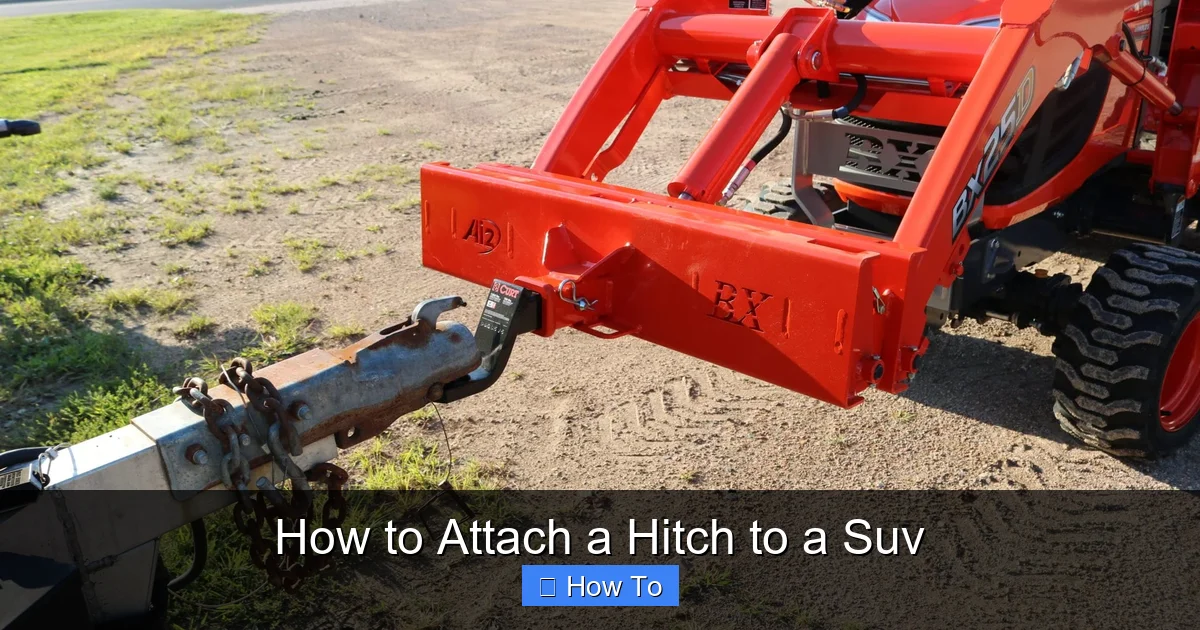
Attaching a hitch to your SUV doesn’t have to be intimidating. With the right tools and careful preparation, you can install a trailer hitch yourself in under two hours. This guide walks you through every step—from choosing the right hitch to final safety checks—so you can tow confidently and safely.
Key Takeaways
- Choose the correct hitch class: Match your SUV’s towing capacity and intended use (e.g., Class III for light trailers, Class IV for heavier loads).
- Use proper tools: A torque wrench, socket set, jack stands, and penetrating oil are essential for a safe and secure installation.
- Follow the manufacturer’s instructions: Every hitch and SUV model is different—always refer to the included manual.
- Check local laws and regulations: Some areas require brake controllers or lighting inspections for towed vehicles.
- Perform a post-installation inspection: Double-check bolt tightness, wiring connections, and hitch alignment before towing.
- Never exceed your SUV’s towing capacity: Overloading can damage your vehicle and create dangerous driving conditions.
- Consider professional help if unsure: If you’re uncomfortable with any step, consult a certified mechanic or installer.
How to Attach a Hitch to a SUV
So, you’ve decided to install a hitch on your SUV. Maybe you’re planning a camping trip, need to haul a small trailer, or want to tow a boat. Whatever the reason, adding a trailer hitch opens up a world of possibilities. The good news? You don’t need to be a mechanic to do it. With the right tools, a bit of patience, and this step-by-step guide, you can attach a hitch to your SUV safely and correctly—right in your driveway.
In this comprehensive how-to guide, you’ll learn everything from selecting the right hitch for your vehicle to tightening the final bolt. We’ll cover the tools you’ll need, safety precautions, detailed installation steps, and tips to avoid common mistakes. Whether you’re a first-time DIYer or just need a refresher, this guide will help you get the job done right the first time.
By the end, you’ll not only have a securely installed hitch but also the confidence to tow safely and responsibly. Let’s get started!
Why Install a Hitch on Your SUV?
Visual guide about How to Attach a Hitch to a Suv
Image source: bigiron.blob.core.windows.net
Before we dive into the installation, let’s talk about why adding a hitch is such a smart move. SUVs are built for versatility, and a hitch enhances that capability. Here are just a few reasons you might want one:
– Towing trailers: Whether it’s a utility trailer, camper, or small boat, a hitch lets you transport gear you couldn’t fit inside.
– Bike racks: Many hitch-mounted bike carriers are easier to load and more secure than roof racks.
– Cargo carriers: Need extra storage? A hitch-mounted cargo box can hold luggage, coolers, or camping gear.
– Increased resale value: A professionally installed hitch can make your SUV more attractive to buyers.
But not all hitches are created equal. The type you choose depends on your SUV’s make, model, year, and towing needs. That’s why the first step is choosing the right hitch.
Step 1: Choose the Right Hitch for Your SUV
Visual guide about How to Attach a Hitch to a Suv
Image source: bigiron.blob.core.windows.net
Not every hitch fits every SUV. You need one that’s specifically designed for your vehicle. Here’s how to pick the right one:
Check Your SUV’s Towing Capacity
First, consult your owner’s manual to find your SUV’s maximum towing capacity. This number tells you how much weight your vehicle can safely pull. Exceeding it can damage your transmission, suspension, or frame—and it’s a serious safety risk.
For example:
– A compact SUV like a Honda CR-V might tow up to 1,500 lbs.
– A full-size SUV like a Ford Expedition can handle 8,000 lbs or more.
Knowing this helps you choose a hitch with the right weight rating.
Understand Hitch Classes
Hitches are classified by their weight capacity. Here’s a quick breakdown:
– Class I: Up to 2,000 lbs towing, 200 lbs tongue weight. Best for small trailers or bike racks.
– Class II: Up to 3,500 lbs towing, 350 lbs tongue weight. Good for light utility trailers.
– Class III: Up to 6,000 lbs towing, 600 lbs tongue weight. Common for mid-size SUVs and campers.
– Class IV: Up to 10,000 lbs towing, 1,000 lbs tongue weight. Ideal for heavy-duty towing.
– Class V: Over 10,000 lbs. Rare for SUVs, more common on trucks.
Most SUVs use Class III or IV hitches. Match the class to your towing needs—don’t go overboard unless you plan to tow heavy loads regularly.
Find a Vehicle-Specific Hitch
Once you know the class, find a hitch made for your SUV’s exact make, model, and year. Brands like Curt, Draw-Tite, and Reese offer direct-fit hitches that bolt onto your frame without welding or drilling (in most cases).
Use online fit guides on retailer websites (like Amazon, AutoZone, or the manufacturer’s site) to confirm compatibility. Enter your vehicle details, and they’ll show you compatible options.
Decide Between Receiver Types
Most SUV hitches use a receiver-style hitch with a square tube (usually 1.25” or 2”). The size depends on the hitch class:
– 1.25” receivers: Class I and II
– 2” receivers: Class III and higher
A 2” receiver is more versatile—you can use it with a variety of accessories and even reduce it to 1.25” with an adapter.
Consider Additional Features
Some hitches come with extras:
– Wiring harness included: Makes connecting trailer lights easier.
– Hidden design: The receiver tucks under the bumper for a cleaner look.
– Powder-coated finish: Resists rust and corrosion.
Choose based on your needs and budget. A basic Class III hitch typically costs $150–$300.
Step 2: Gather Your Tools and Materials
Before you start, make sure you have everything you need. Missing a tool can turn a simple job into a frustrating ordeal.
Essential Tools
Here’s what you’ll need:
– Socket wrench set: With metric and standard sockets (usually 10mm–18mm).
– Torque wrench: Critical for tightening bolts to the correct specification.
– Jack and jack stands: To lift and support your SUV safely.
– Wheel chocks: Prevent the vehicle from rolling.
– Penetrating oil (like WD-40): Helps loosen rusty bolts.
– Safety glasses and gloves: Protect your eyes and hands.
– Flashlight or work light: For better visibility under the vehicle.
– Wire brush: To clean rust or debris from bolt holes.
Optional but Helpful Tools
– Impact wrench: Speeds up bolt removal (but use a torque wrench for final tightening).
– Torque angle gauge: For precise tightening on certain bolts.
– Assistant: A second person can help hold the hitch in place during installation.
Materials Included with the Hitch
Most hitches come with:
– The hitch receiver
– Mounting bolts, nuts, and washers
– Installation instructions
– Wiring harness (if included)
Double-check the package before starting. If anything’s missing, contact the seller immediately.
Step 3: Prepare Your SUV for Installation
Safety first. Before you lift your SUV, take these precautions:
Park on a Level Surface
Choose a flat, solid driveway or garage floor. Avoid gravel or slopes—your vehicle needs to stay stable.
Engage the Parking Brake
This prevents the SUV from rolling. For extra safety, place wheel chocks behind the rear tires.
Disconnect the Battery (Optional but Recommended)
If your hitch includes a wiring harness, disconnect the negative terminal of the battery to avoid short circuits. Use a wrench to loosen the clamp and remove the cable.
Lift the SUV Safely
Use a hydraulic jack to lift the rear of the vehicle. Place jack stands under the frame rails—never rely on the jack alone. Lower the SUV onto the stands and give it a gentle shake to ensure it’s secure.
Remove Obstacles
Some SUVs have splash shields, exhaust components, or spare tires that block access to the frame. Check your hitch instructions—you may need to remove or temporarily detach these parts.
For example, many Subaru and Toyota SUVs have plastic underbody covers that must be unscrewed. Keep the screws in a labeled bag so you don’t lose them.
Clean the Mounting Area
Use a wire brush and penetrating oil to clean rust, dirt, or debris from the bolt holes on the frame. This ensures a tight, secure fit.
Step 4: Install the Hitch
Now for the main event. Follow these steps carefully.
Position the Hitch
With the help of a friend (or a jack stand), lift the hitch into place under the SUV. Align it with the mounting holes on the frame. Most hitches are designed to fit snugly—there’s usually only one way it can go.
If it doesn’t slide right in, don’t force it. Double-check the model number and your vehicle compatibility.
Insert the Bolts
Slide the provided bolts through the hitch brackets and into the frame holes. Use washers as specified in the instructions—usually one on each side.
Some hitches use U-bolts that wrap around the frame. Others use straight bolts with backing plates. Follow the manual exactly.
Hand-Tighten the Nuts
Thread the nuts onto the bolts by hand. Don’t use a wrench yet—just get them snug. This allows you to adjust the hitch position if needed.
Align the Hitch
Make sure the hitch is centered and level. The receiver tube should be parallel to the ground and aligned with the centerline of the vehicle. Use a tape measure to check symmetry from both sides.
If it’s off, loosen the nuts slightly and adjust before tightening.
Tighten the Bolts to Spec
This is crucial. Use your torque wrench to tighten each bolt to the manufacturer’s specification—usually listed in the instructions. Common torque values range from 60 to 120 ft-lbs, depending on bolt size.
Tighten in a crisscross pattern (like tightening lug nuts) to ensure even pressure. Don’t overtighten—this can strip threads or warp the hitch.
Reinstall Removed Components
If you took off a splash shield, exhaust hanger, or spare tire carrier, reattach it now. Make sure everything is secure and doesn’t interfere with the hitch.
Step 5: Install the Wiring Harness (If Applicable)
If your hitch includes a wiring harness for trailer lights, follow these steps:
Locate the Tail Light Wires
Most harnesses plug into the SUV’s existing tail light connectors. These are usually behind the rear bumper or inside the trunk.
Connect the Harness
Plug the harness into the vehicle’s wiring. It should click in place. Some models require splicing wires—use the included connectors or solder and heat shrink for a secure connection.
Secure the Harness
Use zip ties to fasten the harness to the hitch or frame. Keep it away from moving parts like the suspension or exhaust.
Test the Lights
Reconnect the battery and test all lights: brake, turn signals, and running lights. Have a friend stand behind the SUV while you operate the controls.
If a light doesn’t work, double-check connections or consult the wiring diagram.
Step 6: Final Checks and Safety Tips
Before you tow anything, do a thorough inspection.
Inspect All Bolts
Go over every bolt with your torque wrench. Vibration can loosen them over time, so it’s smart to recheck after the first few trips.
Check for Interference
Make sure the hitch doesn’t rub against the bumper, exhaust, or suspension. There should be at least 1–2 inches of clearance.
Verify the Receiver is Secure
Give the hitch a firm shake. It shouldn’t move or wobble. If it does, retighten the bolts.
Label the Hitch (Optional)
Use a label maker or paint pen to mark the hitch class and towing capacity. This helps remind you (and others) of its limits.
Keep the Manual
Store the installation instructions in your glove box or a safe place. You’ll need them for future reference or if you sell the vehicle.
Troubleshooting Common Issues
Even with careful installation, problems can arise. Here’s how to handle them:
Hitch Doesn’t Fit
Double-check the model number and vehicle compatibility. Some hitches require minor modifications (like trimming a bumper pad). If it’s truly incompatible, contact the seller for an exchange.
Rusty or Stuck Bolts
Spray penetrating oil and let it sit for 10–15 minutes. Use a breaker bar for extra leverage. If a bolt breaks, you may need to drill it out—consider professional help.
Wiring Issues
If trailer lights don’t work, check fuses, ground connections, and wire continuity. A multimeter can help diagnose electrical problems.
Hitch Sags or Wobbles
This usually means bolts aren’t tight enough or the hitch is overloaded. Recheck torque specs and ensure you’re not exceeding the weight limit.
Exhaust Rubbing
If the hitch touches the exhaust, install a heat shield or adjust the exhaust hangers. Never ignore metal-on-metal contact—it can cause damage over time.
Conclusion
Attaching a hitch to your SUV is a practical and rewarding DIY project. With the right hitch, tools, and attention to detail, you can complete the installation in a few hours and gain the ability to tow trailers, carry bikes, or haul extra gear.
Remember: safety is paramount. Always follow the manufacturer’s instructions, use a torque wrench, and never exceed your SUV’s towing capacity. If you’re ever unsure, don’t hesitate to consult a professional.
Now that your hitch is installed, you’re ready for your next adventure—whether it’s a weekend camping trip, a move, or a day at the lake. Happy towing!