
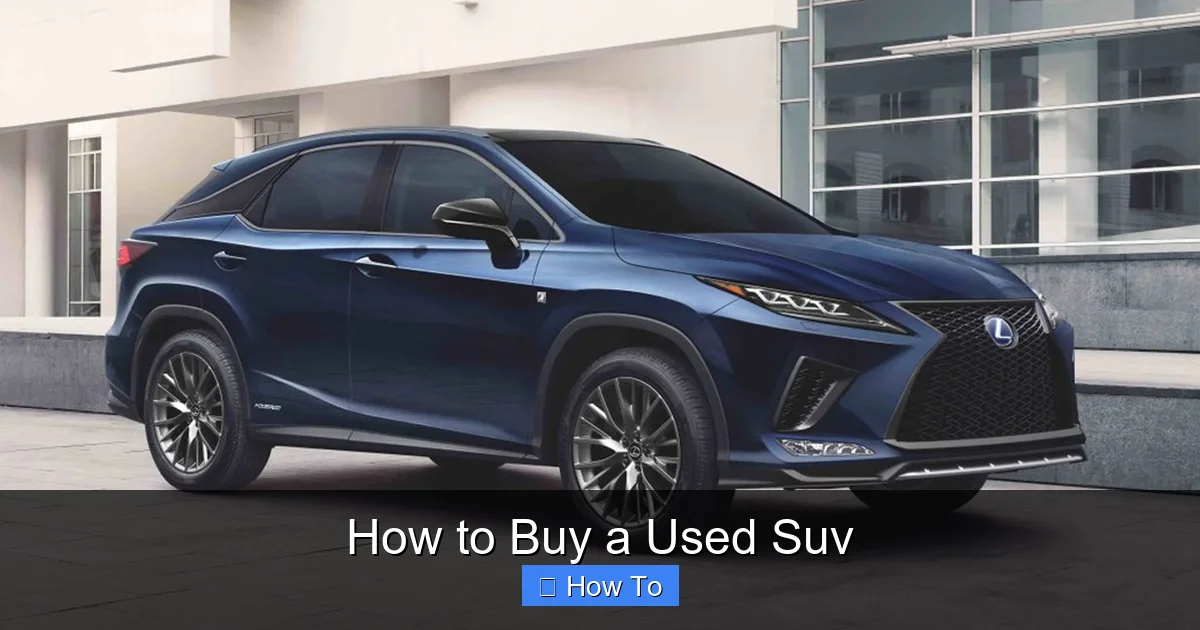
Buying a used SUV can save you money and still deliver reliability, space, and performance—if you know what to look for. This guide walks you through every step, from setting a budget to finalizing the purchase, so you can drive away with peace of mind.
Key Takeaways
- Set a realistic budget: Include not just the purchase price but also taxes, registration, insurance, and potential repairs.
- Research models and reliability: Use trusted sources like Consumer Reports, J.D. Power, and Edmunds to compare safety, fuel economy, and common issues.
- Check the vehicle history report: Always get a Carfax or AutoCheck report to uncover accidents, title problems, or odometer fraud.
- Inspect the SUV thoroughly: Look for rust, uneven tire wear, fluid leaks, and signs of poor maintenance—both inside and out.
- Take a test drive: Pay attention to engine noise, braking, steering, and how the SUV handles on different road types.
- Get a pre-purchase inspection (PPI): A mechanic’s inspection can reveal hidden problems and give you leverage in negotiations.
- Negotiate smartly: Use your research and inspection findings to justify your offer and avoid overpaying.
How to Buy a Used SUV: A Complete Step-by-Step Guide
Buying a used SUV is one of the smartest moves you can make—especially if you need space, versatility, and all-weather capability without the steep price tag of a new vehicle. Whether you’re hauling kids, gear, or just want extra cargo room, a used SUV can offer great value. But like any major purchase, it pays to be prepared.
In this guide, we’ll walk you through every step of the process, from deciding what kind of SUV fits your lifestyle to driving off the lot (or private seller’s driveway) with confidence. You’ll learn how to research models, inspect a vehicle, avoid scams, and negotiate a fair price. By the end, you’ll know exactly how to buy a used SUV the right way—saving money and avoiding costly mistakes.
Step 1: Determine Your Needs and Budget
Visual guide about How to Buy a Used Suv
Image source: i.ytimg.com
Before you even start browsing listings, take a moment to think about what you really need in an SUV. This will save you time and help you avoid impulse buys.
Ask Yourself Key Questions
- How many passengers do you need to seat? If you have a large family or frequently carpool, a three-row SUV like a Toyota Highlander or Honda Pilot might be ideal. For smaller families or solo drivers, a compact SUV such as a Honda CR-V or Mazda CX-5 could be perfect.
- What will you use the SUV for? Daily commuting, weekend adventures, towing a trailer, or off-roading? Your usage affects the type of SUV and features you’ll want.
- Do you need all-wheel drive (AWD) or four-wheel drive (4WD)? If you live in a snowy or rural area, AWD can improve traction and safety. But it may reduce fuel economy.
- How important is fuel efficiency? Some SUVs, like the Toyota RAV4 Hybrid or Ford Escape Hybrid, offer excellent gas mileage. Others, especially larger models, can be gas guzzlers.
Set a Realistic Budget
It’s easy to focus only on the sticker price, but the total cost of ownership matters just as much.
- Purchase price: This is the amount you’ll pay for the SUV itself.
- Taxes and fees: Sales tax, registration, title fees, and documentation charges can add 8–12% to the price.
- Insurance: SUVs often cost more to insure than sedans, especially if they’re larger or have high theft rates.
- Maintenance and repairs: Older or high-mileage SUVs may need new tires, brakes, or suspension work soon.
- Fuel costs: A less efficient SUV could cost hundreds more per year in gas.
A good rule of thumb: don’t spend more than 35–40% of your monthly take-home pay on all vehicle-related expenses.
Example Budget Breakdown
Let’s say you find a used SUV listed for $18,000.
- Taxes and fees (10%): $1,800
- Insurance (estimated): $120/month ($1,440/year)
- Maintenance fund: $1,000 (set aside for first year)
- Total first-year cost: ~$22,240
This helps you see the full picture and avoid surprises.
Step 2: Research SUV Models and Reliability
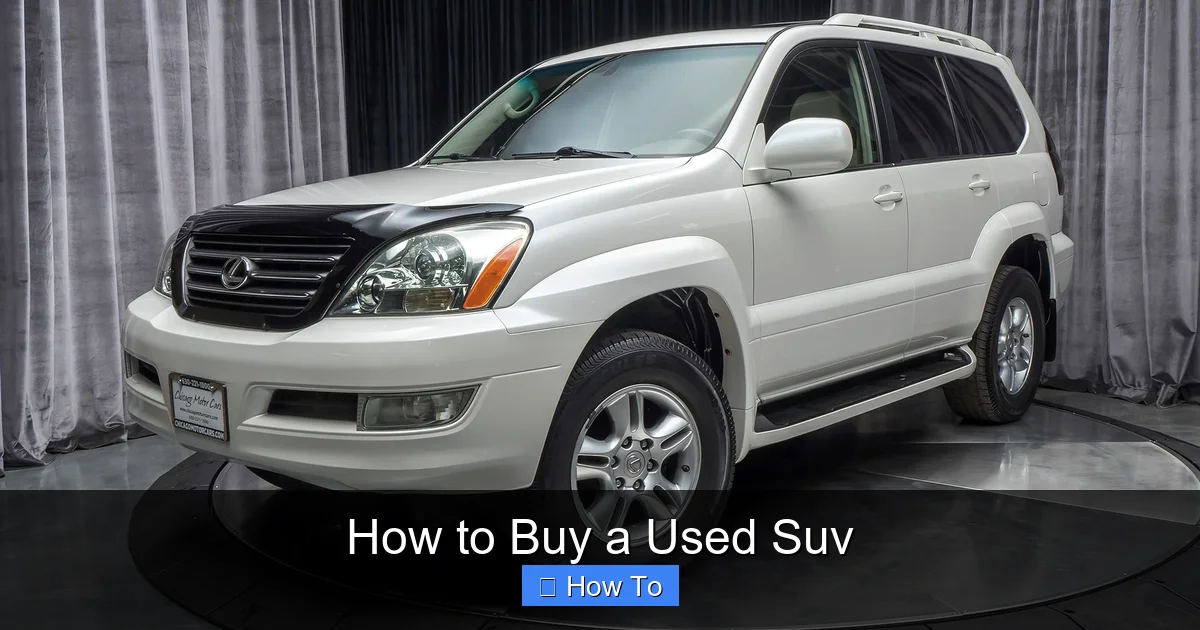
Visual guide about How to Buy a Used Suv
Image source: chicagomotorcars.com
Not all used SUVs are created equal. Some models have a reputation for lasting 200,000+ miles with minimal issues, while others are known for costly repairs.
Use Trusted Resources
Start your research with these reliable sources:
- Consumer Reports: Offers detailed reliability ratings based on owner surveys.
- J.D. Power: Provides vehicle dependability and owner satisfaction scores.
- Edmunds and Kelley Blue Book (KBB): Give pricing guides, expert reviews, and ownership cost estimates.
- NHTSA.gov: Check for safety recalls and crash test ratings.
Focus on Reliability and Common Issues
Look for patterns in owner complaints. For example:
- The Ford Explorer (2011–2015) had issues with transmission shuddering.
- The Jeep Grand Cherokee (2011–2013) sometimes suffered from electrical problems.
- The Toyota RAV4 and Honda CR-V are consistently rated as some of the most reliable compact SUVs.
Compare Ownership Costs
Some SUVs may have a lower purchase price but higher long-term costs. For example:
- A used Subaru Outback might cost less upfront but require more frequent maintenance than a Toyota Highlander.
- Hyundai and Kia offer strong warranties, even on used models, which can reduce repair worries.
Consider Certified Pre-Owned (CPO)
If your budget allows, a CPO SUV from a dealership can be a great middle ground. These vehicles are inspected, refurbished, and come with extended warranties—often for just a few thousand more than a private sale.
Step 3: Find Used SUVs for Sale
Now that you know what you want, it’s time to start shopping.
Where to Look
- Online marketplaces: Autotrader, Cars.com, CarGurus, and Facebook Marketplace offer wide selections and filtering tools.
- Dealerships: Both new car dealers and used car lots often have SUVs in stock. Dealerships may offer financing and warranties.
- Private sellers: You can often find better prices from individuals, but there’s less protection if something goes wrong.
- Auction sites: eBay Motors and local auctions can have deals, but be cautious—these sales are usually “as-is.”
Use Smart Search Filters
When browsing listings, filter by:
- Price range
- Mileage (under 100,000 is ideal for most buyers)
- Year (aim for models less than 10 years old)
- Location (within a reasonable driving distance)
- Features (AWD, third-row seating, tow package, etc.)
Watch Out for Red Flags
Avoid listings that:
- Have blurry or stock photos
- Lack detailed descriptions
- Are priced significantly below market value
- Use vague language like “mechanic special” or “needs work”
These could indicate hidden problems or scams.
Step 4: Check the Vehicle History Report
Never skip this step. A vehicle history report can reveal critical information that isn’t obvious from a test drive.
Get a Report from Carfax or AutoCheck
Most reputable sellers will provide a free report. If not, ask for the VIN and run one yourself (costs about $30–$40).
What to Look For
- Accident history: Even minor fender benders can affect resale value. Major accidents may compromise safety.
- Title status: Avoid salvage, rebuilt, or flood-damaged titles. These indicate serious past damage.
- Odometer rollback: Fraudulent mileage readings are more common than you think.
- Number of previous owners: Fewer owners often mean more consistent care.
- Service records: Regular oil changes and maintenance are good signs.
- Recall status: Check if any recalls were issued and whether they were addressed.
Example: A Clean vs. Problematic Report
A clean report might show:
- One owner
- Regular oil changes every 5,000 miles
- No accidents
- Original title
A red-flag report might show:
- Three owners in two years
- Odometer discrepancy
- Salvage title
- Multiple accidents
Even if the SUV looks great, a problematic history report is a strong reason to walk away.
Step 5: Inspect the SUV Thoroughly
Before you take it for a drive, do a visual and mechanical inspection. This helps you spot obvious issues.
Exterior Inspection
Walk around the SUV and look for:
- Rust or corrosion: Especially around wheel wells, undercarriage, and door seams. Surface rust is common, but structural rust is dangerous.
- Dents, scratches, or mismatched paint: Could indicate past accidents or poor repairs.
- Tire condition: Check for even wear. Uneven wear may signal alignment or suspension problems.
- Headlights, taillights, and signals: Make sure all are working and not cracked.
- Windshield and windows: Look for cracks, chips, or wiper marks that impair visibility.
Interior Inspection
Sit inside and check:
- Seats and upholstery: Look for tears, stains, or excessive wear.
- Odors: Musty smells could mean water leaks or mold.
- Dash and controls: Test all buttons, knobs, and screens. Make sure AC, heat, radio, and power windows work.
- Odometer: Compare it to the history report. If it doesn’t match, walk away.
- Trunk and spare tire: Check for damage, leaks, or missing tools.
Under the Hood
Pop the hood and inspect:
- Engine oil: Should be clean and at the right level. Dark, gritty oil suggests poor maintenance.
- Coolant: Should be full and not rusty or milky.
- Brake fluid: Should be clear and at the proper level.
- Battery: Look for corrosion on terminals. A weak battery may need replacement soon.
- Belts and hoses: Check for cracks, fraying, or leaks.
Test the Lights and Signals
Have someone stand outside while you:
- Turn on headlights, high beams, and fog lights
- Test brake lights and turn signals
- Check reverse lights and license plate illumination
Step 6: Take a Test Drive
This is your chance to see how the SUV feels on the road.
Start the Engine
- Listen for unusual noises like knocking, ticking, or rattling.
- Check that the engine starts smoothly and idles quietly.
- Watch the dashboard for warning lights (e.g., check engine, ABS, airbag).
Drive on Different Road Types
Take the SUV on:
- A quiet neighborhood street (to test steering and braking)
- A highway (to check acceleration, wind noise, and stability)
- A bumpy or potholed road (to test suspension)
Pay Attention to Key Factors
- Steering: Should feel responsive and not pull to one side.
- Braking: Should be smooth and firm. Listen for squealing or grinding.
- Transmission: Shifting should be smooth. Automatic transmissions shouldn’t jerk or hesitate.
- Suspension: The SUV should absorb bumps without excessive bouncing.
- Noise: Excessive road, wind, or engine noise may indicate poor insulation or mechanical issues.
- Visibility: Make sure you have good sightlines from all mirrors and windows.
Test All Features
Try out:
- Cruise control
- Blind-spot monitoring
- Rearview camera
- Heated seats and steering wheel
- Infotainment system
If anything feels off, note it down—you’ll use this info during negotiation.
Step 7: Get a Pre-Purchase Inspection (PPI)
Even if the SUV looks and drives well, a professional inspection can uncover hidden problems.
Why a PPI Matters
A mechanic can spot issues you might miss, such as:
- Worn suspension components
- Transmission wear
- Engine leaks or internal damage
- Brake pad thickness
- Frame damage
How to Get a PPI
- Ask the seller if you can have the SUV inspected. Most honest sellers will agree.
- Take it to an independent mechanic (not one affiliated with the dealership).
- Expect to pay $100–$200 for the inspection.
What to Do with the Results
- If the inspection reveals minor issues, use them to negotiate a lower price.
- If major problems are found (e.g., engine or transmission issues), walk away or ask the seller to fix them before purchase.
- A clean PPI gives you confidence and may help with financing or warranty claims later.
Step 8: Negotiate the Price
Now that you’ve done your homework, it’s time to make an offer.
Know the Market Value
Use KBB, Edmunds, or NADA Guides to find the fair market value for the SUV based on:
- Year, make, and model
- Mileage
- Condition
- Location
- Options and features
Start with a Reasonable Offer
Don’t lowball, but don’t pay full asking price unless the SUV is exceptional. A good starting point is 10–15% below the listed price.
Use Your Findings as Leverage
Mention:
- High mileage
- Needed repairs (from PPI)
- Market comparisons (“I found a similar model for $1,500 less”)
- Minor cosmetic flaws
Be Prepared to Walk Away
If the seller won’t budge and the price is too high, don’t be afraid to leave. There are plenty of other SUVs out there.
Step 9: Finalize the Purchase
Once you’ve agreed on a price, it’s time to close the deal.
Private Sale vs. Dealership
- Private sale: You’ll handle paperwork yourself. Make sure to get a bill of sale, title transfer, and release of liability.
- Dealership: They handle most paperwork, but read everything carefully before signing.
Payment Methods
- Cash: Secure but risky to carry large amounts.
- Cashier’s check: Safer and widely accepted.
- Bank transfer: Common for private sales.
- Financing: Dealerships often offer loans, but compare rates with your bank or credit union.
Complete the Paperwork
Ensure you receive:
- Signed title (with no liens)
- Bill of sale
- Odometer disclosure statement
- Warranty information (if applicable)
- Service records (if available)
Register and Insure the SUV
- Visit your local DMV to register the vehicle and get plates.
- Contact your insurance company to add the SUV to your policy.
- Keep proof of insurance in the vehicle at all times.
Troubleshooting Common Issues
Even with careful planning, problems can arise. Here’s how to handle them.
The Seller Won’t Allow a PPI
This is a major red flag. Walk away. A trustworthy seller should have nothing to hide.
The SUV Fails the Inspection
You have three options:
- Walk away
- Ask the seller to fix the issues and provide proof
- Negotiate a lower price to cover repairs
Financing Falls Through
Have a backup plan. Get pre-approved by your bank before shopping, or bring cash/cashier’s check as a fallback.
Title Problems Arise
If the title is missing, has errors, or shows liens, do not complete the purchase until resolved. Contact the DMV if needed.
Conclusion
Buying a used SUV doesn’t have to be stressful or risky. By following this step-by-step guide, you’ll be equipped to make a smart, informed decision. From setting a budget and researching models to inspecting the vehicle and negotiating the price, every step brings you closer to finding a reliable, affordable SUV that fits your lifestyle.
Remember: patience and preparation pay off. Don’t rush into a purchase just because a deal seems good. Take your time, ask questions, and trust your instincts. With the right approach, you can drive away in a used SUV that’s safe, dependable, and perfect for your needs.