
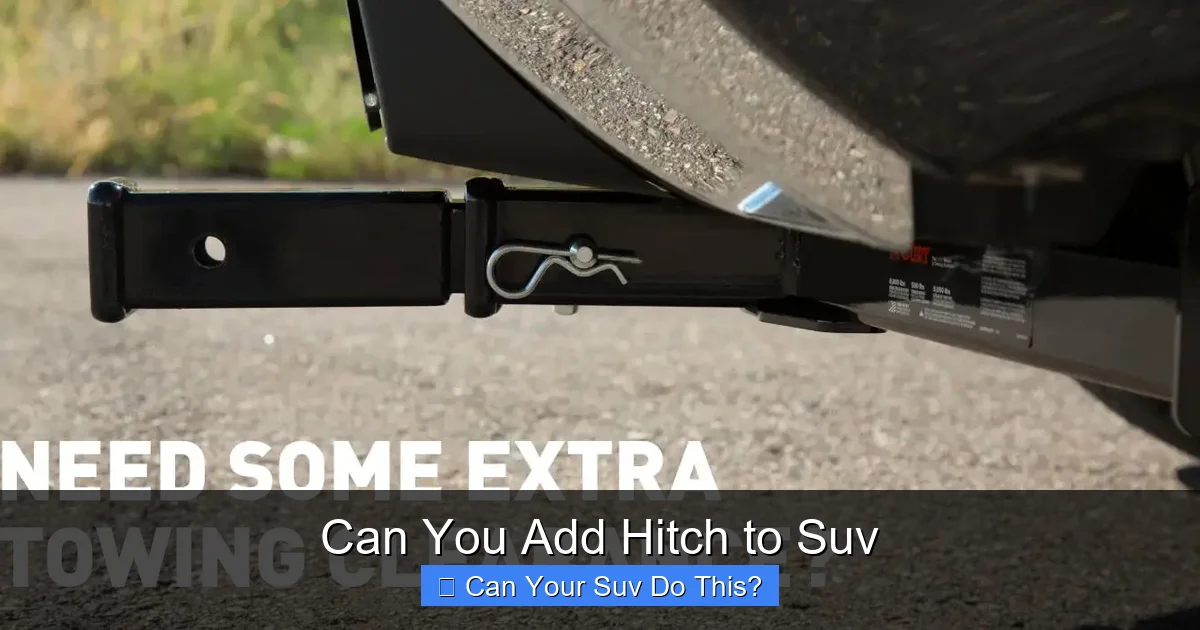
Yes, you can add a hitch to most SUVs—whether it’s factory-installed or aftermarket. With the right equipment and professional installation, your SUV can tow trailers, carry bikes, or haul gear safely and efficiently.
So, you’ve got an SUV—maybe it’s a rugged Ford Explorer, a sleek Toyota Highlander, or a capable Jeep Grand Cherokee. It’s spacious, powerful, and perfect for family road trips or weekend adventures. But now you’re wondering: *Can you add a hitch to an SUV?* The short answer is a resounding **yes**—but there’s more to it than just bolting on a piece of metal.
Adding a hitch to your SUV opens up a world of possibilities. Whether you want to tow a small trailer for a landscaping project, haul a camper for a cross-country trip, or simply mount a bike rack for your next mountain adventure, a hitch makes it all possible. And the good news? Most SUVs are built with the structural integrity to support a hitch, even if one wasn’t included when you bought the vehicle.
But before you rush out to buy the first hitch you see, it’s important to understand the different types of hitches, your SUV’s towing capacity, and the installation process. This guide will walk you through everything you need to know—from choosing the right hitch class to ensuring your setup is safe, legal, and reliable.
Key Takeaways
- Most SUVs are hitch-ready: The majority of modern SUVs have frame designs that support hitch installation, even if no hitch was included from the factory.
- Two main hitch types: Choose between Class I–V hitches based on your towing needs—light-duty for bikes, heavy-duty for trailers and campers.
- Professional installation recommended: While DIY is possible, certified technicians ensure safety, proper wiring, and warranty compliance.
- Check your SUV’s towing capacity: Adding a hitch doesn’t increase your vehicle’s towing limit—know your SUV’s max weight rating before towing.
- Wiring harness required for trailers: To power trailer lights, you’ll need a compatible wiring kit installed alongside the hitch.
- Hitches boost versatility: From weekend camping trips to moving day, a hitch turns your SUV into a multi-purpose workhorse.
- Legal and insurance considerations: Ensure your setup meets local regulations and inform your insurer about modifications.
📑 Table of Contents
Why Add a Hitch to Your SUV?
SUVs are already versatile vehicles, but adding a hitch takes that versatility to the next level. Think of it as giving your SUV a superpower—one that lets you carry more, go farther, and do more with your vehicle.
One of the most common reasons people add hitches is for towing. Whether it’s a small utility trailer for hauling mulch, a boat for weekend fishing trips, or a travel trailer for full-time RVing, a hitch gives you the ability to pull heavy loads safely. But towing isn’t the only use. Many SUV owners install hitches to mount bike racks, cargo carriers, or even wheelchair lifts. These accessories make it easier to transport gear without sacrificing interior space.
Another benefit? Resale value. A properly installed hitch can increase your SUV’s appeal to future buyers, especially if you include the original parts and documentation. Plus, it shows that the vehicle has been well-maintained and used for practical purposes.
And let’s not forget convenience. Instead of renting a truck every time you need to move furniture or transport large items, your SUV becomes a go-to solution. It’s cost-effective, efficient, and keeps everything in one vehicle.
Types of Hitches for SUVs
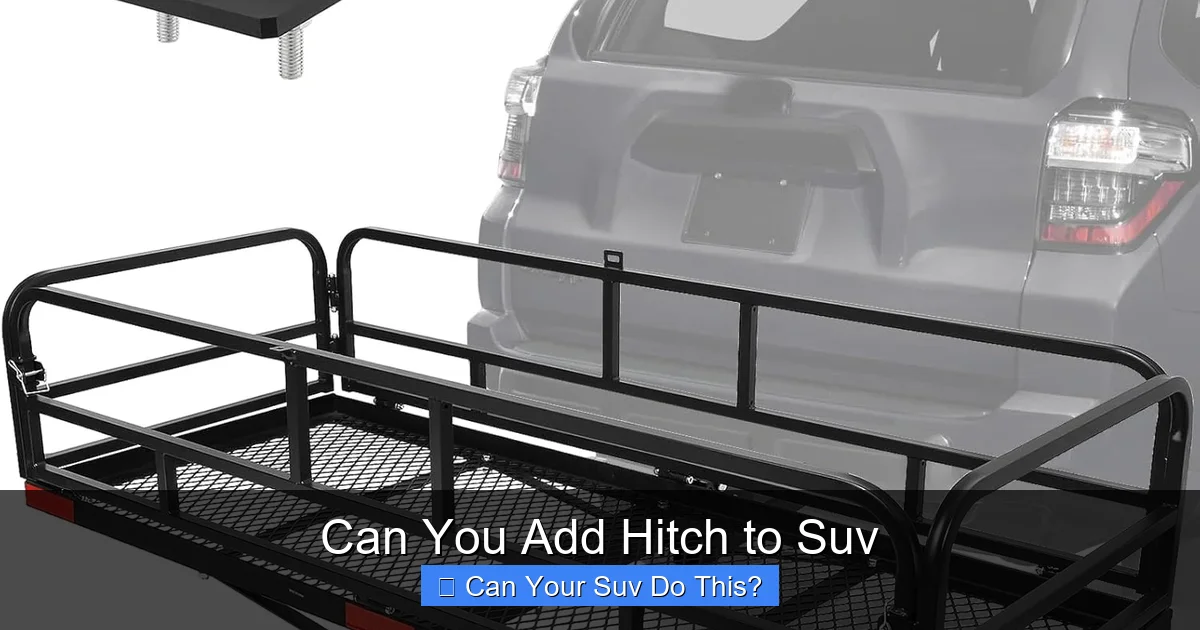
Visual guide about Can You Add Hitch to Suv
Image source: m.media-amazon.com
Not all hitches are created equal. The type you choose depends on what you plan to tow or carry. Hitches are classified by the Society of Automotive Engineers (SAE) into five main categories, ranging from Class I to Class V. Each class has a specific weight rating and use case.
Class I Hitches
These are the lightest-duty options, designed for small loads like bike racks or lightweight cargo carriers. They typically have a towing capacity of up to 2,000 pounds and a tongue weight limit of 200 pounds. Class I hitches are ideal for compact SUVs or drivers who only need occasional hauling.
For example, if you own a Honda CR-V and want to carry two mountain bikes to the trailhead, a Class I hitch is perfect. It’s affordable, easy to install, and won’t strain your vehicle’s frame.
Class II Hitches
Stepping up, Class II hitches handle up to 3,500 pounds of towing capacity and 350 pounds of tongue weight. They’re a great middle ground for midsize SUVs like the Toyota RAV4 or Subaru Outback.
This class is ideal for small trailers, pop-up campers, or lightweight boats. If you’re planning a weekend getaway with a teardrop trailer, a Class II hitch will get the job done without overloading your SUV.
Class III Hitches
Now we’re getting into serious towing territory. Class III hitches support up to 6,000 pounds (or more with weight distribution) and are common on larger SUVs like the Ford Expedition or Chevrolet Tahoe.
These hitches are versatile—they can handle larger travel trailers, medium-sized boats, or heavy cargo carriers. Many Class III hitches also feature a 2-inch receiver, which is the standard size for most aftermarket accessories.
Class IV and V Hitches
For heavy-duty towing, Class IV and V hitches are the way to go. Class IV hitches can tow up to 10,000 pounds, while Class V models handle up to 12,000 pounds or more. These are typically found on full-size SUVs like the Ford F-150-based Expedition or the heavy-duty GMC Yukon XL.
These hitches are built for serious work—think large fifth-wheel trailers, horse trailers, or construction equipment. If you’re planning to tow a 30-foot camper across the country, a Class IV or V hitch is essential.
Can Every SUV Handle a Hitch?
Here’s the million-dollar question: *Can you add a hitch to any SUV?* The answer is mostly yes—but with some caveats.
Most modern SUVs are built on truck-based or unibody platforms that include reinforced frame rails or mounting points designed to support a hitch. Even if your SUV didn’t come with a hitch from the factory, the structural framework is usually there.
However, there are exceptions. Some ultra-compact SUVs or crossover models—like the Nissan Kicks or Hyundai Venue—may have limited frame strength or ground clearance, making hitch installation more challenging. In these cases, you’ll need to consult a professional installer to assess feasibility.
Another factor is your SUV’s towing capacity. Adding a hitch doesn’t magically increase how much your vehicle can tow. You must always stay within the manufacturer’s recommended limits. For example, a Subaru Forester has a towing capacity of around 1,500–3,500 pounds depending on the model year and engine. Installing a Class III hitch won’t change that—it just gives you the hardware to reach that limit safely.
Always check your owner’s manual or the manufacturer’s website for your SUV’s specific towing capacity. Overloading your vehicle can lead to brake failure, suspension damage, or even accidents.
How to Install a Hitch on Your SUV
Once you’ve determined that your SUV can handle a hitch and chosen the right class, it’s time to think about installation. You have two main options: DIY or professional installation.
DIY Installation: Is It Worth It?
Some handy SUV owners choose to install hitches themselves. If you’re mechanically inclined and have the right tools—wrenches, torque wrench, jack stands, and a drill—you can save money by doing it at home.
Many aftermarket hitch manufacturers, like Curt, Draw-Tite, and Reese, provide detailed instructions and even video tutorials. Kits usually include the hitch, mounting hardware, and wiring harness.
However, DIY installation comes with risks. If the hitch isn’t mounted correctly, it can loosen over time, causing dangerous sway or detachment. Improper torque on bolts can lead to frame damage. And if you’re not experienced with electrical systems, wiring the trailer lights can be tricky.
If you go the DIY route, take your time, follow the instructions precisely, and double-check every bolt and connection.
Professional Installation: The Safer Choice
For most people, professional installation is the best option. Certified technicians have the tools, experience, and knowledge to install your hitch correctly and safely. They’ll also ensure that the wiring harness is properly connected and that all components meet safety standards.
Many dealerships and auto shops offer hitch installation services. Some even provide warranties on their work, giving you peace of mind. While it costs more than DIY—typically $200–$500 depending on the hitch and labor—it’s a small price to pay for safety and reliability.
Plus, professional installers can help you choose the right hitch for your SUV and usage needs. They’ll also check for compatibility with your vehicle’s exhaust system, bumper, and suspension.
Wiring and Electrical Considerations
If you plan to tow a trailer, you’ll need more than just a hitch—you’ll also need a wiring harness to power the trailer’s lights, turn signals, and brake lights.
Most modern SUVs have a factory-installed wiring harness or a plug-and-play port under the dashboard or near the rear bumper. This makes installation easier. You can purchase a wiring kit that connects to this port, eliminating the need to splice wires.
For example, the Tekonsha Plug-In Wiring Adapter is a popular choice for SUVs with factory tow packages. It’s simple to install and ensures a secure connection.
If your SUV doesn’t have a pre-wired harness, you’ll need a universal wiring kit that connects directly to the vehicle’s taillight circuits. This requires more work and should be done carefully to avoid damaging the electrical system.
Always test your lights before hitting the road. Make sure brake lights, turn signals, and reverse lights (if applicable) are working correctly. A faulty wiring connection can lead to accidents or traffic tickets.
Legal and Safety Tips
Adding a hitch to your SUV isn’t just about mechanics—it’s also about safety and legality.
First, check your local laws. Some states require trailer lighting, brake controllers (for trailers over a certain weight), or even special licensing for heavy towing. Make sure your setup complies with all regulations.
Second, always use safety chains when towing. These chains connect the trailer to your SUV and act as a backup if the hitch fails. Cross the chains under the trailer tongue to form a cradle that can catch the trailer if it detaches.
Third, consider a brake controller if you’re towing heavy loads. Many trailers have electric brakes that require a controller inside your SUV to activate. Without one, your vehicle’s brakes alone may not be enough to stop safely.
Finally, inspect your hitch and trailer regularly. Check for rust, loose bolts, worn wiring, or damaged components. A quick visual check before each trip can prevent major issues down the road.
Popular SUVs and Their Hitch Compatibility
Let’s look at some real-world examples of popular SUVs and their hitch capabilities:
– **Toyota Highlander:** Supports Class III hitches with up to 5,000 lbs towing capacity. Great for small campers and boats.
– **Ford Explorer:** Can handle Class III or IV hitches, depending on engine and drivetrain. Towing capacity ranges from 5,000 to 7,500 lbs.
– **Jeep Grand Cherokee:** Offers up to 7,200 lbs towing with a Class III hitch—ideal for off-road trailers and RVs.
– **Subaru Outback:** Limited to Class II hitches with 3,500 lbs max. Best for light trailers and cargo carriers.
– **Chevrolet Tahoe:** Built for heavy-duty towing. Class IV hitches support up to 8,400 lbs.
These examples show that most SUVs are hitch-ready, but your specific model, year, and trim level will determine the best option.
Conclusion
So, can you add a hitch to an SUV? Absolutely. With the right hitch, proper installation, and a clear understanding of your vehicle’s limits, your SUV can become a towing and hauling powerhouse.
Whether you’re planning a summer road trip, hauling gear for a home project, or just want the flexibility to carry bikes and cargo, a hitch adds serious value and functionality. Just remember to choose the right class, respect your SUV’s towing capacity, and prioritize safety at every step.
With a little planning and the right setup, your SUV will be ready for whatever adventure comes next.
Frequently Asked Questions
Can I install a hitch on any SUV?
Most SUVs can have a hitch installed, but compact or crossover models may have limitations. Always check your vehicle’s frame strength and towing capacity before proceeding.
Does adding a hitch void my SUV’s warranty?
No, adding a hitch does not void your warranty as long as it’s installed correctly and doesn’t damage the vehicle. Use certified parts and professional installation to stay safe.
How much does it cost to add a hitch to an SUV?
Costs vary: hitches range from $100–$500, and professional installation adds $200–$500. Total cost typically falls between $300 and $1,000.
Can I tow a camper with my SUV?
Yes, if your SUV’s towing capacity meets or exceeds the camper’s weight. Check the camper’s dry weight plus cargo, water, and gear to ensure safe towing.
Do I need a brake controller for my trailer?
If your trailer has electric brakes and weighs over 1,500–3,000 lbs (depending on state laws), a brake controller is required for safe stopping.
Can I use a hitch for bike racks and cargo carriers?
Absolutely. Class I and II hitches are perfect for bike racks and cargo carriers, giving you extra storage without sacrificing passenger space.