

Buying a new SUV can be exciting but overwhelming. This guide walks you through every step—from research to financing to final purchase—so you can make a smart, informed decision. You’ll learn how to choose the right model, negotiate the best price, and drive off in your ideal SUV.
Key Takeaways
- Start with your needs: Consider size, fuel efficiency, cargo space, and safety features before browsing models.
- Set a realistic budget: Include not just the sticker price but also insurance, fuel, maintenance, and taxes.
- Research thoroughly: Use trusted sources like Kelley Blue Book, Edmunds, and Consumer Reports to compare SUVs.
- Test drive multiple vehicles: Experience how each SUV handles, feels, and fits your daily routine.
- Negotiate smartly: Know the invoice price and use competing offers to get the best deal.
- Review financing options: Compare dealer financing with bank or credit union loans to save money.
- Don’t rush the process: Take your time to avoid buyer’s remorse and ensure you’re getting the right SUV for you.
How to Buy a New SUV: A Step-by-Step Guide
Buying a new SUV is a big decision—and an exciting one. Whether you’re upgrading from a sedan, need more space for your growing family, or want a vehicle that handles rough weather and off-road adventures, a new SUV can be a perfect fit. But with so many models, features, and price points, the process can feel overwhelming.
Don’t worry. This guide will walk you through every step of how to buy a new SUV with confidence. From figuring out what you really need to driving off the lot in your dream vehicle, we’ll cover it all. You’ll learn how to research, compare, test drive, negotiate, and finance your purchase—all while staying within your budget.
By the end of this guide, you’ll have the knowledge and tools to make a smart, informed decision. No more guesswork. No more second-guessing. Just a smooth, stress-free path to owning the right SUV for your lifestyle.
Step 1: Assess Your Needs and Lifestyle
Before you even look at a single SUV, take a moment to think about how you’ll use it. This step is crucial because it helps narrow down your options and prevents you from falling in love with a vehicle that doesn’t actually meet your needs.
Ask Yourself Key Questions
Start by answering these questions honestly:
– How many passengers do you typically carry? Do you need third-row seating?
– Do you need a lot of cargo space for sports gear, groceries, or road trips?
– Will you be driving mostly in the city, on highways, or off-road?
– Do you live in an area with snow, rain, or rough terrain?
– Do you tow a trailer, boat, or camper?
– How important is fuel efficiency to you?
– Do you want advanced safety features like blind-spot monitoring or adaptive cruise control?
For example, if you have two kids and a dog, a compact SUV might work. But if you’re a weekend warrior who camps often, a midsize or full-size SUV with all-wheel drive and towing capacity could be better.
Consider Your Driving Habits
Think about your daily routine. Do you commute long distances? A fuel-efficient SUV like the Toyota RAV4 Hybrid or Honda CR-V Hybrid could save you money at the pump. If you mostly drive short distances in the city, a smaller SUV like the Mazda CX-30 or Subaru Crosstrek might be ideal.
Also, consider parking. Larger SUVs can be harder to park in tight city spaces. If you live in a crowded urban area, a compact or subcompact SUV might be more practical.
Think About the Future
Buying an SUV isn’t just about today—it’s about the next 5 to 10 years. Will your family grow? Will your job require more travel? Are you planning to move to a rural area? Planning ahead ensures your SUV will still meet your needs down the road.
Step 2: Set a Realistic Budget
One of the most common mistakes people make when learning how to buy a new SUV is focusing only on the monthly payment. While that number is important, it’s just one piece of the puzzle.
Calculate Your Total Budget
Start by determining how much you can comfortably afford. A good rule of thumb is that your total car expenses—including loan payments, insurance, fuel, maintenance, and repairs—shouldn’t exceed 15–20% of your monthly take-home pay.
For example, if you bring home $5,000 a month, aim to keep your car costs under $1,000.
Include All Costs
Don’t forget these often-overlooked expenses:
– **Down payment:** Aim for at least 10–20% of the SUV’s price to reduce your loan amount and monthly payment.
– **Sales tax:** This varies by state but can add thousands to your total cost.
– **Registration and title fees:** These are one-time costs but can be significant.
– **Insurance:** SUVs often cost more to insure than sedans, especially larger or luxury models.
– **Fuel:** Larger SUVs with V6 or V8 engines consume more gas. Check EPA estimates.
– **Maintenance and repairs:** Some brands are more expensive to maintain than others.
Use online calculators from sites like Edmunds or Kelley Blue Book to estimate your total cost of ownership.
Decide: Buy or Lease?
You’ll also need to choose between buying and leasing.
– **Buying** means you own the SUV after paying off the loan. You can drive it as long as you want, customize it, and sell it later. Ideal if you keep cars for many years.
– **Leasing** means you pay to use the SUV for 2–4 years, then return it. Monthly payments are usually lower, but you don’t build equity. Best if you like driving new cars every few years and don’t exceed mileage limits.
If you’re unsure, consider a lease-to-own option or talk to a financial advisor.
Step 3: Research SUV Models and Compare Options
Now that you know what you need and how much you can spend, it’s time to research. This step helps you narrow down your choices and find the best SUV for your needs.
Use Trusted Review Sites
Start with reputable automotive websites like:
– Kelley Blue Book (KBB)
– Edmunds
– Consumer Reports
– MotorTrend
– U.S. News & World Report
These sites offer detailed reviews, reliability ratings, safety scores, and pricing information. Look for models that consistently rank high in categories like “Best Compact SUVs” or “Most Reliable SUVs.”
Compare Key Features
Make a list of your must-have features, such as:
– All-wheel drive (AWD) or four-wheel drive (4WD)
– Apple CarPlay and Android Auto
– Heated seats and steering wheel
– Adaptive cruise control
– Lane-keeping assist
– Rearview camera and parking sensors
– Cargo space and fold-flat seats
Then compare how different SUVs stack up. For example:
– The **Honda CR-V** is known for its spacious interior, fuel efficiency, and reliability.
– The **Toyota Highlander** offers three rows of seating and strong resale value.
– The **Subaru Forester** excels in off-road capability and safety features.
– The **Ford Explorer** provides strong towing power and a smooth ride.
Check Safety Ratings
Safety should be a top priority. Check ratings from the National Highway Traffic Safety Administration (NHTSA) and the Insurance Institute for Highway Safety (IIHS). Look for SUVs with 5-star overall ratings and high scores in crash tests.
Read Owner Reviews
Don’t just rely on expert opinions. Read real owner reviews on sites like Edmunds or Reddit. Look for common complaints—like poor infotainment systems, uncomfortable seats, or frequent repairs—and see how brands respond to issues.
Step 4: Get Pre-Approved for Financing
Before you visit a dealership, get pre-approved for a loan. This gives you leverage and helps you avoid high-interest dealer financing.
Check Your Credit Score
Your credit score affects the interest rate you’ll qualify for. Check your score for free on sites like Credit Karma or Experian. If it’s below 670, consider improving it before applying for a loan.
Shop Around for Loans
Compare offers from:
– Banks
– Credit unions
– Online lenders (like LightStream or Capital One)
Credit unions often offer lower rates than banks. Even a 0.5% difference can save you hundreds over the life of the loan.
Get Pre-Approval Letters
Once you’re approved, ask for a pre-approval letter. This shows dealers you’re a serious buyer and gives you a clear budget.
Understand Loan Terms
Pay attention to:
– **Interest rate (APR):** Lower is better.
– **Loan term:** Shorter terms (36–48 months) mean higher monthly payments but less interest paid overall.
– **Down payment:** Larger down payments reduce your loan amount and monthly payment.
Avoid stretching your loan beyond 60 months—it increases the risk of being “upside down” (owing more than the car is worth).
Step 5: Visit Dealerships and Test Drive
Now it’s time to see the SUVs in person. This step is crucial—photos and specs don’t tell the whole story.
Schedule Test Drives
Call ahead to schedule test drives for your top 2–3 choices. This ensures the vehicle is available and gives you time to focus.
What to Look for During the Test Drive
Pay attention to:
– **Comfort:** Are the seats supportive? Is there enough headroom and legroom?
– **Visibility:** Can you see clearly out of all windows and mirrors?
– **Handling:** Does the SUV feel stable on turns and bumps?
– **Noise level:** Is the cabin quiet, or do you hear a lot of road and wind noise?
– **Infotainment system:** Is it easy to use? Does it respond quickly?
– **Driving position:** Can you adjust the seat and steering wheel for a comfortable posture?
Test in Real Conditions
If possible, drive on highways, city streets, and rough roads. Test acceleration, braking, and parking. If you plan to tow, ask if you can test with a trailer.
Bring a Checklist
Create a simple checklist to compare each SUV. Rate them on comfort, performance, features, and overall feel. This helps you stay objective.
Step 6: Negotiate the Best Price
Negotiating can save you thousands—but only if you’re prepared.
Know the Invoice Price
The invoice price is what the dealer paid the manufacturer. It’s usually $1,000–$3,000 below the sticker price (MSRP). Use KBB or Edmunds to find the invoice price for your chosen SUV.
Get Multiple Quotes
Contact several dealerships and ask for their best out-the-door price. Use email or online forms to get written quotes. This creates competition and gives you leverage.
Negotiate the Price, Not the Payment
Dealers may try to focus on monthly payments to hide a higher overall price. Always negotiate the total price first, then discuss financing.
Be Ready to Walk Away
If the dealer won’t meet your price, be prepared to leave. There are plenty of other dealerships and SUVs. Walking away often leads to a better offer.
Watch for Add-Ons
Dealers may try to sell you extras like:
– Extended warranties
– Paint protection
– VIN etching
– Fabric protection
Most of these are overpriced and unnecessary. Politely decline unless you truly need them.
Step 7: Finalize the Purchase
Once you’ve agreed on a price, it’s time to close the deal.
Review the Contract Carefully
Read every line of the purchase agreement. Make sure the price, trade-in value, fees, and financing terms match what you agreed on.
Check for Hidden Fees
Watch out for “doc fees,” “advertising fees,” or “destination charges” that seem inflated. Some states cap these fees—know your rights.
Confirm Trade-In Value
If you’re trading in a vehicle, get an appraisal from multiple sources (like KBB or CarMax) before accepting the dealer’s offer.
Choose Your Financing
You can use your pre-approved loan or dealer financing—whichever offers the better rate. Don’t feel pressured to use dealer financing just to get a discount.
Complete the Paperwork
Sign the title, registration, and loan documents. Make sure you receive:
– A copy of the contract
– Warranty information
– Owner’s manual
– Temporary registration
Troubleshooting Common Issues
Even with careful planning, problems can arise. Here’s how to handle them:
Problem: Dealer Won’t Negotiate
Solution: Walk away. Contact other dealerships or consider buying online through services like Carvana or Vroom.

Visual guide about How to Buy New Suv
Image source: carscoops.com
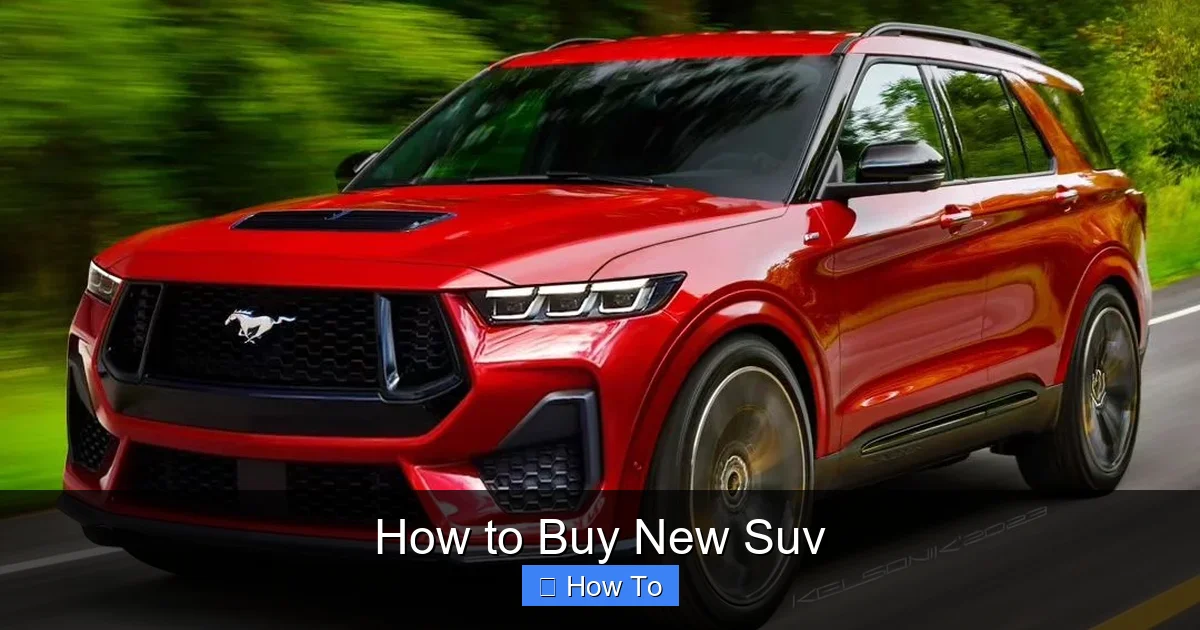
Visual guide about How to Buy New Suv
Image source: carvibz.com
Problem: Hidden Fees in the Contract
Solution: Point them out and ask for removal. If the dealer refuses, consider canceling the deal.
Problem: Loan Approval Falls Through
Solution: Have a backup lender. Some dealers work with subprime lenders if your credit is low.
Problem: SUV Has Defects After Purchase
Solution: Check your warranty. Most new SUVs come with a 3-year/36,000-mile basic warranty. Contact the dealer for repairs.
Conclusion
Buying a new SUV doesn’t have to be stressful. By following these steps—assessing your needs, setting a budget, researching models, getting pre-approved, test driving, negotiating, and finalizing the purchase—you can make a confident, informed decision.
Remember, the goal isn’t just to get a new vehicle. It’s to get the right vehicle—one that fits your lifestyle, budget, and long-term plans. Take your time, do your homework, and don’t let sales pressure rush you.
With the knowledge from this guide, you’re ready to buy a new SUV like a pro. Happy driving!