
Buying an SUV online can save you time, stress, and money—if you know the right steps. This guide walks you through researching, comparing, negotiating, and finalizing your purchase from home, helping you secure the best possible deal without stepping foot in a dealership.
Key Takeaways
- Research is your superpower: Use online tools to compare SUV models, prices, and dealer ratings before making a decision.
- Get pre-approved for financing: Knowing your budget and interest rate ahead of time gives you leverage in negotiations.
- Leverage online price quotes: Request quotes from multiple dealers to create competition and drive down the price.
- Negotiate like a pro—remotely: Use email or chat to negotiate without pressure, and don’t be afraid to walk away.
- Inspect before you buy: Even when buying online, always get a vehicle history report and consider a third-party inspection.
- Understand delivery and paperwork: Know what to expect when your SUV is delivered and ensure all documents are in order.
- Watch for hidden fees: Be alert to add-ons and fees that can inflate the final price—ask for a full breakdown.
How to Buy SUV Online and Save the Most
Buying an SUV used to mean hours spent at dealerships, haggling with salespeople, and feeling pressured into decisions. But today, you can buy an SUV online—comfortably from your couch—and often save hundreds or even thousands of dollars in the process. Whether you’re looking for a rugged off-roader, a family-friendly crossover, or a luxury SUV, the internet gives you access to more options, better pricing, and greater transparency than ever before.
In this guide, we’ll walk you through every step of buying an SUV online while maximizing your savings. You’ll learn how to research models, compare prices, secure financing, negotiate remotely, and finalize your purchase—all without stepping foot in a showroom. By the end, you’ll be equipped with the tools and confidence to drive away (or have delivered) your dream SUV at the best possible price.
Step 1: Determine Your Needs and Budget
Before you start browsing SUVs online, take a moment to clarify what you really need. Not all SUVs are created equal, and choosing the right one starts with understanding your lifestyle, driving habits, and financial situation.
Ask Yourself the Right Questions
- How many passengers do you need to seat? If you have a growing family or frequently carpool, a three-row SUV like the Honda Pilot or Toyota Highlander might be ideal.
- Do you need off-road capability? If you enjoy weekend adventures, consider models with all-wheel drive and higher ground clearance, such as the Jeep Wrangler or Subaru Outback.
- What’s your fuel efficiency priority? Hybrid SUVs like the Toyota RAV4 Hybrid or Ford Escape Hybrid offer better mileage without sacrificing space.
- Do you tow frequently? If you plan to haul a trailer or boat, look for SUVs with high towing capacity, such as the Ford Explorer or Chevrolet Tahoe.
Set a Realistic Budget
Your budget should include not just the purchase price, but also taxes, registration, insurance, and potential maintenance. A good rule of thumb is to keep your total monthly car payment (including insurance) under 15% of your take-home pay.
Use online calculators from banks or credit unions to estimate monthly payments based on different loan terms and interest rates. For example, a $35,000 SUV with a 5-year loan at 5% interest would cost about $660 per month. Add $150–$250 for insurance, and you’re looking at $800–$900 total.
Decide: New, Used, or Certified Pre-Owned?
- New SUVs offer the latest features, full warranties, and peace of mind—but depreciate quickly.
- Used SUVs are more affordable but come with higher risk. Look for models with good reliability ratings.
- Certified Pre-Owned (CPO) vehicles are inspected, refurbished, and backed by manufacturer warranties—offering a sweet spot between new and used.
Pro tip: Check reliability ratings on sites like J.D. Power, Consumer Reports, and Edmunds to avoid models with known issues.
Step 2: Research SUV Models and Compare Prices
Now that you know what you want and how much you can spend, it’s time to dive into research. The internet is your best friend here—use it to compare models, read reviews, and find the best deals.
Use Comparison Websites
Websites like Edmunds, Kelley Blue Book (KBB), and Cars.com allow you to compare SUVs side by side. You can filter by price, mileage, features, fuel economy, and safety ratings.
For example, if you’re deciding between a 2022 Honda CR-V and a 2022 Toyota RAV4, these sites will show you:
- Base price and fair market value
- Standard and available features
- Fuel economy (city/highway)
- Safety scores from the NHTSA and IIHS
- Owner reviews and common complaints
Check Real-Time Pricing
Don’t rely solely on the manufacturer’s suggested retail price (MSRP). Use tools like:
- TrueCar: Shows what others in your area paid for the same model.
- Edmunds True Market Value (TMV): Provides a price based on recent sales data.
- KBB Instant Cash Offer: Lets you see what dealers are willing to pay for trade-ins or similar vehicles.
These tools help you understand the actual market value—not just the sticker price.
Read Expert and Owner Reviews
Expert reviews highlight performance, comfort, and technology, while owner reviews reveal long-term reliability and real-world experiences. Look for patterns: if multiple owners complain about transmission issues or poor infotainment systems, take note.
Step 3: Get Pre-Approved for Financing
One of the biggest advantages of buying online is avoiding the high-pressure financing office at the dealership. By getting pre-approved, you take control of your loan terms and avoid dealer markup on interest rates.
Shop Around for Loan Rates
Start with your bank or credit union. Credit unions often offer lower rates than big banks. Then check online lenders like LightStream, Capital One, or myAutoloan.com.
Compare:
- Interest rate (APR)
- Loan term (36, 48, 60, or 72 months)
- Monthly payment
- Origination fees or prepayment penalties
For example, a $30,000 loan at 4.5% APR over 60 months costs $559/month. At 6.5%, it’s $587/month—$28 more per month, or $1,680 over the life of the loan.
Get Pre-Approval in Writing
Once you find a good rate, get a pre-approval letter. This shows dealers you’re serious and gives you negotiating power. It also prevents them from “yo-yo” financing—where they finalize the deal, then call you back to say the financing fell through unless you accept a higher rate.
Pro tip: Avoid “buy here, pay here” dealerships that offer in-house financing. These often come with high interest rates and strict terms.
Step 4: Find and Compare Online Listings
With your research and financing ready, it’s time to find your SUV. The key is to cast a wide net and compare offers from multiple sources.
Search Multiple Platforms
Don’t limit yourself to one website. Check:
- Dealer websites: Many dealerships now list inventory online with pricing, photos, and vehicle history.
- Cars.com, Autotrader, CarGurus: Aggregators that pull listings from thousands of dealers.
- Manufacturer websites: Brands like Ford, Toyota, and Hyundai let you build and price SUVs and find local inventory.
- Private sellers: Sites like Facebook Marketplace or Craigslist can offer lower prices—but come with higher risk.
Filter and Sort Smartly
Use filters to narrow your search:
- Price range
- Mileage (under 50,000 for used SUVs is ideal)
- Location (within 100 miles for easy pickup or delivery)
- Features (AWD, navigation, blind-spot monitoring, etc.)
- Certified Pre-Owned status
Sort by “best deal” or “lowest price” to see the most affordable options first.
Watch for Red Flags
- Prices significantly below market value (could be a scam or hidden damage)
- Blurry or stock photos (request real images)
- Vague descriptions or missing VIN
- Pressure to wire money or pay upfront
Always verify the seller’s identity and ask for a vehicle history report (more on that below).
Step 5: Request Price Quotes from Multiple Dealers
This is where the magic happens. By requesting quotes from several dealers, you create competition—and competition drives down prices.
Use the “Request a Quote” Feature
Most dealer websites have a “Get Online Price” or “Request a Quote” button. Fill out the form with your contact info and desired vehicle details.
But don’t stop at one. Send the same request to 5–10 dealers in your area (or within delivery range). Include:
- The exact make, model, year, and trim
- Your pre-approved financing info (optional but helpful)
- A polite note: “I’m ready to buy this week and comparing offers.”
Compare the Quotes
You’ll likely receive responses within 24 hours. Compare:
- Out-the-door price (includes taxes, fees, and add-ons)
- Any incentives or rebates
- Trade-in offer (if applicable)
- Delivery options and fees
Pro tip: Ask each dealer to beat the lowest quote you’ve received. Many will, just to win your business.
Step 6: Negotiate the Price (Remotely)
Negotiating online can feel intimidating, but it’s often easier than in-person haggling. You’re not face-to-face with a salesperson, so there’s less pressure to make a quick decision.
Start with the Out-the-Door Price
Focus on the total cost, not monthly payments. Dealers can manipulate monthly payments by extending the loan term, which costs you more in interest.
Say: “I’m looking at an out-the-door price of $32,500. Can you match or beat that?”
Use Email or Chat for Leverage
Written communication gives you time to think and respond. It also creates a paper trail.
Example email:
Hi [Dealer Name],
I’m interested in the 2023 Honda CR-V EX-L listed on your site. I’ve received quotes from other dealers ranging from $31,800 to $32,500 out the door. I’m ready to purchase this week and would prefer to buy from you if you can offer a competitive price.
Can you provide your best out-the-door price, including all fees and any available incentives?
Thanks,
[Your Name]
Don’t Be Afraid to Walk Away
If a dealer won’t budge, thank them and move on. There are plenty of other options. Often, they’ll follow up with a better offer.
Step 7: Verify the Vehicle’s History and Condition
Even when buying online, you must ensure the SUV is in good condition and has a clean history.
Get a Vehicle History Report
Use the VIN to run a report through:
- Carfax
- AutoCheck
- National Motor Vehicle Title Information System (NMVTIS)
Look for:
- Accident history
- Title issues (salvage, flood damage, lemon law buyback)
- Odometer rollback
- Number of previous owners
- Service and maintenance records
A clean report doesn’t guarantee perfection, but it reduces risk.
Request a Third-Party Inspection
If the SUV is used, hire a mobile mechanic from services like Lemon Squad or YourMechanic. They’ll inspect the vehicle at the dealer’s location (or your home) for about $100–$150.
This can uncover hidden problems like engine wear, transmission issues, or frame damage—saving you from a costly mistake.
Ask for a Test Drive (If Possible)
Some dealers offer at-home test drives or 24-hour trial periods. If not, ask to visit the dealership briefly to inspect the SUV in person before finalizing.
Step 8: Finalize the Purchase and Arrange Delivery
Once you’ve negotiated the price and verified the vehicle, it’s time to close the deal.
Review the Final Paperwork
Ensure the contract includes:
- Correct vehicle details (VIN, model, trim)
- Agreed-upon out-the-door price
- No unwanted add-ons (e.g., VIN etching, fabric protection)
- Financing terms (if using dealer financing)
Read every line. If something looks off, ask for clarification.
Choose Delivery or Pickup
Many dealers offer home delivery for a fee (typically $200–$500, depending on distance). This is often worth it for the convenience.
During delivery:
- Inspect the SUV for damage
- Verify all features work
- Confirm you receive all keys, manuals, and warranty info
Complete the Title and Registration
The dealer usually handles this, but confirm:
- You receive the title (or a copy)
- Registration is processed
- You get license plates or temporary tags
Keep all documents in a safe place.
Troubleshooting Common Issues
Problem: Dealer Won’t Honor the Online Quote
Some dealers post low prices online to attract clicks, then add fees later. Always confirm the out-the-door price in writing before committing. If they refuse, walk away and report them to the Better Business Bureau.
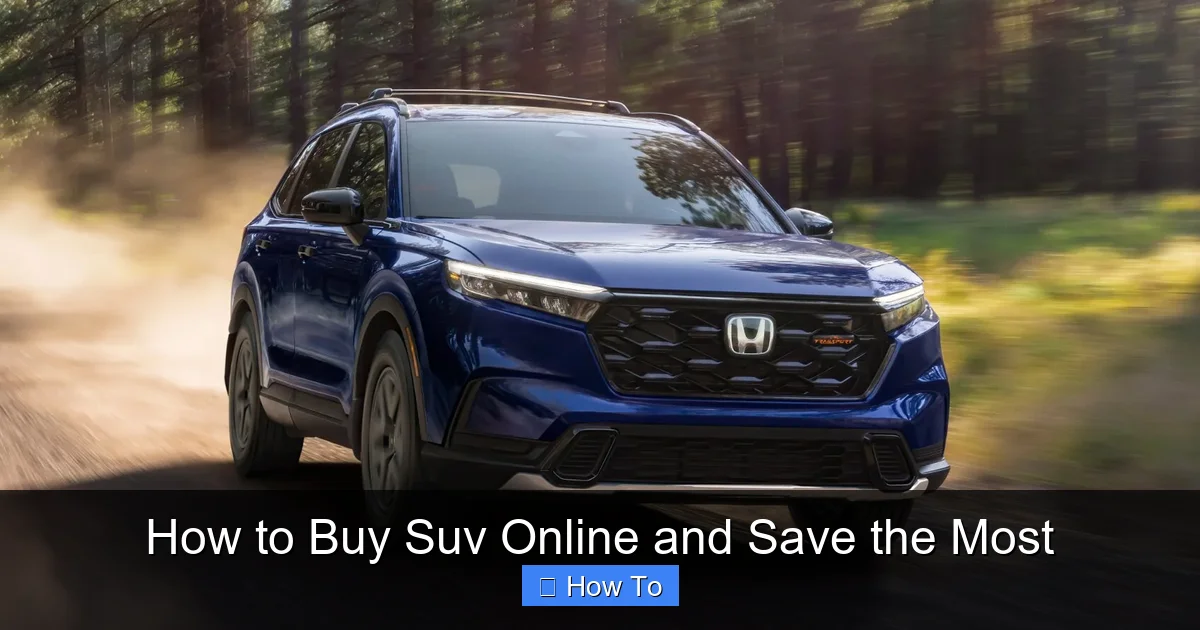
Visual guide about How to Buy Suv Online and Save the Most
Image source: honda.ca

Visual guide about How to Buy Suv Online and Save the Most
Image source: i.ytimg.com
Problem: Hidden Fees in the Final Price
Dealers may add “documentation fees,” “prep fees,” or “advertising fees.” Ask for a detailed breakdown. In many states, doc fees are capped by law—know your rights.
Problem: SUV Arrives with Damage
Inspect the vehicle upon delivery. If you find scratches, dents, or mechanical issues, contact the dealer immediately. Most offer a return or repair window for online purchases.
Problem: Financing Falls Through
If the dealer can’t secure financing, use your pre-approved loan instead. Never sign a contract contingent on financing unless you’re confident it will go through.
Conclusion
Buying an SUV online isn’t just convenient—it’s a smart way to save money and avoid the stress of traditional car shopping. By following this step-by-step guide, you’ve learned how to research models, compare prices, secure financing, negotiate remotely, and finalize your purchase with confidence.
Remember, the key to saving the most is preparation. The more informed you are, the more power you have. Use online tools, get pre-approved, request multiple quotes, and never rush into a decision.
With the right approach, you can drive away in your ideal SUV—without ever setting foot in a dealership. So start your search today, and get ready to enjoy the ride.