
Choosing between a hybrid and electric SUV for long-distance travel depends on your route, access to charging, and driving habits. While electric SUVs offer zero emissions and lower running costs, hybrids provide greater flexibility with no range anxiety—making each ideal under different conditions.
Planning a long-distance road trip in an SUV? You’re not alone. More drivers than ever are trading sedans and crossovers for the space, safety, and versatility of SUVs—especially when it comes to cross-country adventures. But with the rise of electrified vehicles, a new question has emerged: Should you go hybrid or fully electric?
The answer isn’t one-size-fits-all. It depends on where you’re going, how you drive, and what matters most to you—whether that’s saving money, reducing emissions, or simply not worrying about where to refuel next. In this guide, we’ll break down the real-world differences between hybrid and electric SUVs for long-distance travel. No hype, no jargon—just practical insights to help you pick the right ride for your next big journey.
Whether you’re eyeing a Toyota RAV4 Hybrid, a Ford Escape Plug-in Hybrid, a Tesla Model Y, or a Hyundai Ioniq 5, understanding how these vehicles perform over hundreds of miles can make or break your travel experience. Let’s dive in.
Key Takeaways
- Range matters most: Electric SUVs now offer 250–350+ miles per charge, but real-world range drops in cold weather or at high speeds.
- Charging infrastructure is improving: Fast chargers are common on major highways, but rural areas may still pose challenges for EVs.
- Hybrids eliminate range anxiety: With a gas tank backup, hybrid SUVs can refuel anywhere, making them ideal for remote or unpredictable routes.
- Cost of ownership differs: EVs have lower fuel and maintenance costs, while hybrids may have higher upfront prices but no charging dependency.
- Performance varies by terrain: Electric SUVs deliver instant torque and smooth acceleration, while hybrids adapt well to mixed driving conditions.
- Environmental impact favors EVs: Electric SUVs produce zero tailpipe emissions, especially when charged with renewable energy.
- Technology and comfort are comparable: Both vehicle types now offer advanced infotainment, driver assistance, and spacious interiors for long drives.
📑 Table of Contents
- Understanding the Basics: Hybrid vs. Electric SUVs
- Range and Real-World Performance on Long Drives
- Charging vs. Refueling: The Logistics of Long-Distance Travel
- Cost of Ownership: Upfront Price, Fuel, and Maintenance
- Environmental Impact: Emissions and Sustainability
- Comfort, Technology, and Driving Experience
- Which Is Right for Your Long-Distance Travel?
- Final Thoughts: Making the Right Choice
Understanding the Basics: Hybrid vs. Electric SUVs
Before comparing performance on the open road, it helps to understand what sets these two types of SUVs apart.
Hybrid SUVs combine a gasoline engine with an electric motor and battery. They don’t need to be plugged in—instead, the battery recharges through regenerative braking and the gas engine. There are two main types: standard hybrids (like the Toyota Highlander Hybrid) and plug-in hybrids (PHEVs), which have larger batteries and can run on electric power alone for 20–50 miles before switching to gas.
Electric SUVs, or EVs, run entirely on battery power. They must be charged using an external power source—either at home, at public chargers, or via fast-charging networks like Electrify America or Tesla Superchargers. Models like the Ford Mustang Mach-E, Kia EV6, and Rivian R1S fall into this category.
At first glance, the difference seems simple: one uses gas, the other doesn’t. But when you’re driving 500 miles across state lines, those differences become much more significant.
How They Power Up
Hybrids are the ultimate “set it and forget it” option. You fill up at any gas station, just like a traditional SUV. The electric motor assists during acceleration and low-speed driving, improving fuel efficiency without requiring any behavior change from the driver.
Electric SUVs, on the other hand, require planning. You’ll need to know where charging stations are located along your route, how long each stop will take, and whether your vehicle is compatible with the available chargers. While home charging is convenient for daily use, long trips mean relying on public infrastructure.
Fuel vs. Electricity: Cost and Convenience
Let’s talk money. Electricity is generally cheaper than gasoline on a per-mile basis. For example, driving an electric SUV might cost $0.04–$0.06 per mile in electricity, while a hybrid SUV could cost $0.08–$0.12 per mile in gas, depending on fuel prices and efficiency.
But convenience plays a big role too. Filling a hybrid takes 5–10 minutes at a gas station. Charging an EV can take 20–45 minutes at a fast charger—or much longer at slower Level 2 stations. If you’re on a tight schedule or traveling through areas with sparse charging options, that time adds up.
Range and Real-World Performance on Long Drives
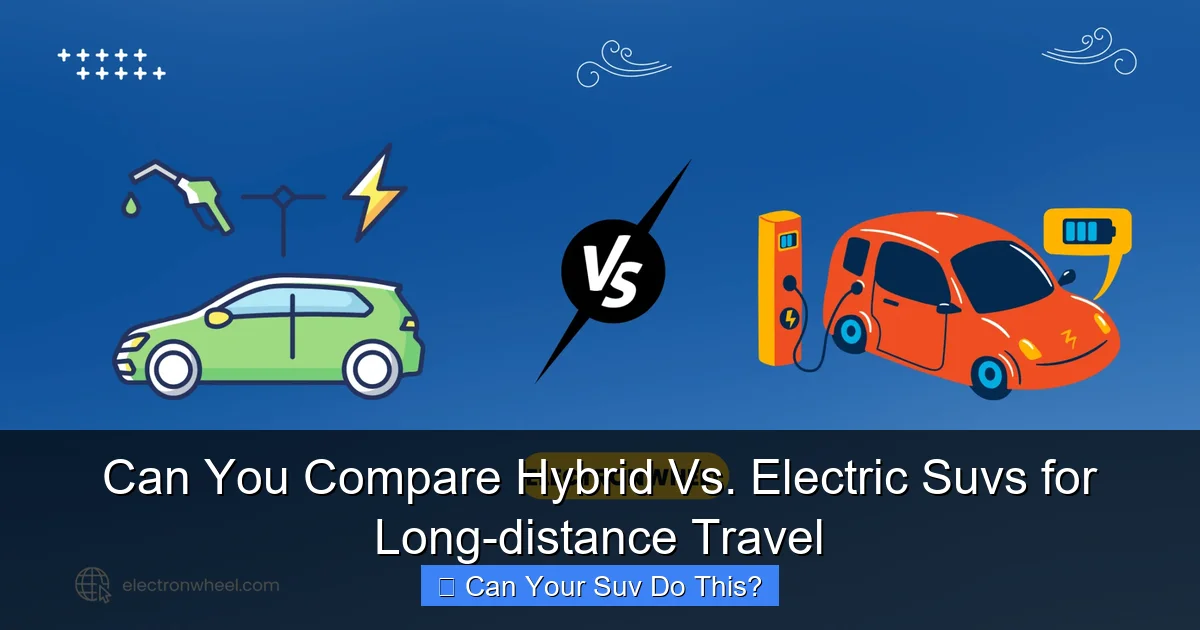
Visual guide about Can You Compare Hybrid Vs. Electric Suvs for Long-distance Travel
Image source: electronwheel.com
Range anxiety—the fear of running out of power before reaching a charger—is one of the biggest concerns for EV drivers. But is it justified?
Modern electric SUVs have made huge strides. The Tesla Model Y Long Range offers up to 330 miles of EPA-estimated range. The Hyundai Ioniq 5 and Kia EV6 can exceed 300 miles. Even luxury models like the Audi e-tron and Mercedes EQE SUV deliver solid numbers.
But real-world range can differ. Cold weather reduces battery efficiency by 20–40%. Driving at highway speeds (70+ mph) also drains the battery faster than city driving. Towing a trailer or carrying heavy cargo? That cuts range even more.
Hybrids, by contrast, don’t suffer from these limitations. A Toyota RAV4 Hybrid gets around 400–500 miles on a tank, and you can refill almost anywhere. No need to worry about weather, speed, or payload affecting your range as dramatically.
Example: A 600-Mile Road Trip
Imagine driving from Denver to Seattle—about 1,300 miles round trip. In a hybrid SUV like the Ford Explorer Hybrid, you’d stop for gas 3–4 times, spending about 30 minutes total refueling. You could do it at any gas station, day or night.
In an electric SUV like the Tesla Model Y, you’d need to plan charging stops every 250–300 miles. On major interstates, fast chargers are common, but you might still face wait times during peak hours. In winter, with snow and cold temps, your range could drop to 200 miles per charge, requiring more frequent stops.
That said, Tesla’s Supercharger network is one of the most reliable and widespread. Other EVs rely on third-party networks, which can be less consistent. Apps like PlugShare and A Better Routeplanner help drivers locate chargers and estimate stop times.
Performance in Different Conditions
Electric SUVs shine in smooth, consistent driving. Their instant torque delivers quick acceleration, and regenerative braking makes highway cruising efficient. But in mountainous terrain or extreme weather, their range can take a hit.
Hybrids adapt better to variable conditions. The gas engine kicks in when needed, providing consistent power whether you’re climbing a mountain pass or driving through a snowstorm. They’re also less affected by temperature swings, making them more predictable in unpredictable climates.
Charging vs. Refueling: The Logistics of Long-Distance Travel
This is where the biggest practical differences emerge. Let’s break down what it’s really like to keep your SUV powered on a long trip.
Charging an Electric SUV: What to Expect
Charging an EV on the road isn’t like filling a gas tank. It’s more like stopping for a meal—you need to plan, wait, and sometimes adjust your schedule.
Fast chargers (DC fast charging) can add 150–250 miles of range in 20–30 minutes, depending on the vehicle and charger speed. But not all EVs charge at the same rate. A Tesla Model Y can charge at up to 250 kW, while some older EVs max out at 50–100 kW.
Public charging networks vary in reliability. Tesla Superchargers are known for their speed and uptime, but non-Tesla EVs may face compatibility issues or broken stations. Electrify America has improved significantly, but rural areas still have gaps.
Home charging is ideal for overnight top-ups, but on a long trip, you’ll rely on public infrastructure. That means checking charger availability, payment methods, and whether the station is near amenities like restrooms or food.
Refueling a Hybrid SUV: Simple and Reliable
Hybrids win in convenience. You pull up to any gas station, swipe your card, and fill up in minutes. No apps, no compatibility issues, no waiting for a charger to free up.
Even plug-in hybrids (PHEVs) offer flexibility. You can charge at home or at public stations when convenient, but if you forget or can’t find a charger, the gas engine keeps you moving. For long trips, many PHEV drivers simply treat them like regular hybrids—using gas most of the time and saving electric mode for city driving.
Planning Your Route: Tools and Tips
For EV drivers, route planning is essential. Use apps like:
– A Better Routeplanner (ABRP): Customizable for EV make/model, weather, and driving style.
– PlugShare: Shows real-time charger availability and user reviews.
– Google Maps: Now includes EV charging stations and estimated charging times.
For hybrid drivers, planning is simpler. Just check gas prices along your route using apps like GasBuddy, and consider stopping at stations with rewards programs or better amenities.
Cost of Ownership: Upfront Price, Fuel, and Maintenance
Let’s talk dollars and cents. Which type of SUV saves you more money over time?
Upfront Cost
Electric SUVs tend to have higher starting prices. For example:
– Tesla Model Y: Starts around $50,000
– Hyundai Ioniq 5: Starts around $48,000
– Ford Mustang Mach-E: Starts around $45,000
Hybrid SUVs are often more affordable:
– Toyota RAV4 Hybrid: Starts around $33,000
– Ford Escape Hybrid: Starts around $30,000
– Honda CR-V Hybrid: Starts around $32,000
However, federal and state incentives can reduce the cost of EVs. The U.S. federal tax credit offers up to $7,500 for qualifying EVs, and some states add additional rebates. Hybrids may qualify for smaller credits or none at all.
Fuel and Electricity Costs
Over 15,000 miles per year, the average driver could save $800–$1,200 annually by switching from gas to electricity, depending on local rates. Electricity prices are also more stable than gas, which fluctuates with global markets.
But remember: public fast charging can be more expensive than home charging. Some networks charge premium rates during peak hours. If you rely heavily on public chargers, your savings may shrink.
Maintenance and Repairs
EVs have fewer moving parts—no oil changes, no exhaust system, no transmission. That means lower maintenance costs over time. Brake wear is also reduced due to regenerative braking.
Hybrids still require oil changes, spark plugs, and other traditional services, though less frequently than gas-only vehicles. Battery replacement is a concern for both types, but modern hybrid and EV batteries are designed to last 10–15 years or more.
Environmental Impact: Emissions and Sustainability
If reducing your carbon footprint is a priority, electric SUVs have a clear advantage—especially when charged with renewable energy.
Tailpipe Emissions
Electric SUVs produce zero tailpipe emissions. That means no CO2, no nitrogen oxides, no particulate matter while driving. Even when accounting for electricity generation, EVs are cleaner than hybrids in most regions.
Hybrids still burn gasoline, so they emit greenhouse gases and pollutants. However, they’re significantly cleaner than traditional SUVs, especially in city driving where the electric motor does most of the work.
Lifecycle Emissions
Manufacturing an EV battery has a higher environmental cost than building a hybrid system. But over the vehicle’s lifetime, EVs typically make up for this through lower operating emissions. Studies show that after 20,000–30,000 miles, an EV’s total emissions fall below those of a hybrid.
Charging with solar or wind power further reduces the impact. Some EV owners install home solar panels to charge their vehicles with 100% clean energy.
Comfort, Technology, and Driving Experience
Long-distance travel isn’t just about range and cost—it’s also about comfort and enjoyment.
Interior Space and Ride Quality
Both hybrid and electric SUVs offer spacious cabins, high seating positions, and ample cargo room. However, EVs often have a slight edge in interior design. With no engine or transmission tunnel, they can offer flatter floors and more flexible seating.
Many electric SUVs also feature quieter cabins. Without a gasoline engine, road and wind noise become more noticeable, but overall, the ride is smoother and more serene.
Technology and Infotainment
EVs tend to lead in tech innovation. Tesla’s minimalist dashboard with a large touchscreen, over-the-air updates, and advanced driver assistance (Autopilot) set a high bar. Other brands like Hyundai, Kia, and Ford are catching up with large displays, wireless Apple CarPlay/Android Auto, and integrated navigation with charging station routing.
Hybrids offer solid tech too, but updates are less frequent, and interfaces may feel more traditional. That said, reliability and ease of use are often better in hybrid systems.
Driver Assistance and Safety
Both vehicle types come with advanced safety features like adaptive cruise control, lane-keeping assist, and automatic emergency braking. EVs often integrate these systems more seamlessly with their electric powertrains, enabling features like one-pedal driving (using regenerative braking to slow the car without the brake pedal).
Hybrids offer similar safety tech, with some models even outperforming EVs in crash tests. The Insurance Institute for Highway Safety (IIHS) rates many hybrid SUVs as Top Safety Picks.
Which Is Right for Your Long-Distance Travel?
So, which should you choose? Let’s summarize the best fit for different travelers.
Choose an Electric SUV If:
– You frequently travel on major highways with good charging infrastructure.
– You can plan your route in advance and don’t mind charging stops.
– You want lower fuel and maintenance costs over time.
– You prioritize environmental impact and quiet, smooth driving.
– You have access to home charging or reliable public stations.
Choose a Hybrid SUV If:
– You travel through rural or remote areas with limited charging options.
– You value flexibility and don’t want to worry about range anxiety.
– You want a lower upfront cost and don’t qualify for EV incentives.
– You drive in extreme weather or mountainous terrain.
– You prefer the simplicity of gas stations and quick refueling.
The Middle Ground: Plug-in Hybrids
Don’t overlook plug-in hybrids (PHEVs). They offer the best of both worlds: 20–50 miles of electric range for daily commutes, plus a gas engine for long trips. Models like the Toyota RAV4 Prime or Ford Escape PHEV are excellent compromises.
For long-distance travel, you can drive on gas most of the time, using electric mode in cities or for short detours. It’s a great option if you’re not ready to go fully electric but want to reduce emissions and fuel use.
Final Thoughts: Making the Right Choice
There’s no universal winner in the hybrid vs. electric SUV debate—only the right choice for your lifestyle and travel needs.
Electric SUVs are the future. They’re cleaner, cheaper to run, and packed with cutting-edge tech. But they require planning, access to charging, and a willingness to adapt your travel habits.
Hybrid SUVs offer peace of mind. They’re reliable, flexible, and ready for any road, any weather, any time. They’re perfect for spontaneous trips or routes where charging isn’t guaranteed.
As charging networks expand and battery technology improves, the gap between these two options will continue to narrow. But for now, understanding your priorities—range, cost, convenience, and environmental impact—will guide you to the best SUV for your long-distance adventures.
Whether you’re cruising down I-95 or exploring backroads in the Rockies, the right SUV can turn a long drive into the best part of your trip.
Frequently Asked Questions
Can electric SUVs really handle long road trips?
Yes, many modern electric SUVs can handle long-distance travel, especially on major highways with fast-charging networks. Models like the Tesla Model Y and Hyundai Ioniq 5 offer 300+ miles of range and access to reliable chargers.
Do hybrid SUVs need to be plugged in?
Standard hybrid SUVs do not need to be plugged in—they recharge through regenerative braking and the gas engine. Plug-in hybrids (PHEVs) can be charged externally but also run on gas when the battery is depleted.
How long does it take to charge an electric SUV on a road trip?
At a fast charger, most electric SUVs can add 150–250 miles of range in 20–30 minutes. Charging time depends on the vehicle, battery size, and charger speed.
Are hybrid SUVs more reliable than electric SUVs for long trips?
Hybrids are generally more reliable for long trips in remote areas due to widespread gas availability. Electric SUVs depend on charging infrastructure, which can be inconsistent in rural regions.
Do cold weather conditions affect hybrid SUVs?
Hybrids are less affected by cold weather than electric SUVs. While fuel efficiency may drop slightly, the gas engine provides consistent power, unlike EV batteries, which lose range in low temperatures.
Which is cheaper to maintain: a hybrid or electric SUV?
Electric SUVs typically cost less to maintain due to fewer moving parts, no oil changes, and reduced brake wear. Hybrids require more traditional maintenance but are still cheaper than gas-only SUVs.