
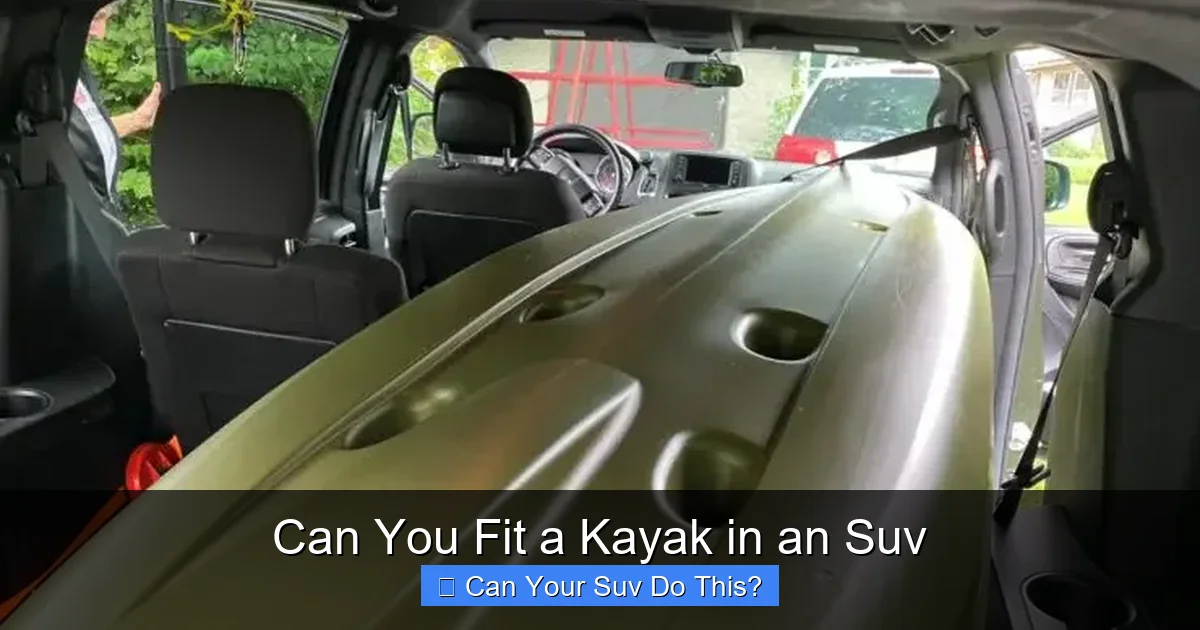
Yes, you can fit a kayak in an SUV—but it depends on the kayak size, SUV model, and how you load it. With the right approach, many kayaks can be stored inside or securely strapped on top for safe travel.
So, you’ve got a kayak. Maybe it’s your first one, or maybe you’re upgrading to a longer touring model. Either way, you’re probably wondering: Can you fit a kayak in an SUV? It’s a fair question—and one that every kayaking enthusiast asks at some point. The answer isn’t a simple yes or no. It depends on a mix of factors: the size of your kayak, the dimensions of your SUV, how you load it, and whether you’re willing to get a little creative.
But here’s the good news: in most cases, the answer is yes. Whether you’re driving a compact crossover like a Honda CR-V or a full-size beast like a Chevrolet Suburban, there’s usually a way to get your kayak from point A to point B—safely and without drama. You might need to fold down seats, angle the kayak just right, or invest in a roof rack, but it’s doable. And honestly, once you figure out your system, loading and unloading becomes second nature.
This guide will walk you through everything you need to know about fitting a kayak in an SUV. We’ll cover interior space, roof rack options, different types of kayaks, and real-world tips from people who’ve been there. Whether you’re planning a weekend paddle on a calm lake or a multi-day river adventure, knowing how to transport your kayak efficiently will make your trips smoother and more enjoyable.
Key Takeaways
- Interior space matters: Larger SUVs like the Honda Pilot or Toyota Highlander often have enough room to fit a kayak inside when seats are folded down.
- Kayak length is key: Most recreational kayaks (under 10 feet) can fit diagonally in midsize to full-size SUVs, but longer touring kayaks may require roof racks.
- Roof racks are reliable: Even if a kayak doesn’t fit inside, a roof rack system offers a safe and secure way to transport it without damaging your vehicle.
- Folding and inflatable kayaks win: These compact options are ideal for smaller SUVs and tight spaces, folding down to fit in trunks or back seats.
- Proper securing is essential: Whether inside or on top, always use straps and foam blocks to prevent shifting and protect both kayak and vehicle.
- Measure before you buy: Always check your SUV’s cargo dimensions and compare them to your kayak’s length and width before planning a trip.
- Creative loading helps: Angling the kayak, removing the seat, or using a tailgate extender can make a big difference in fitting it inside.
📑 Table of Contents
Understanding Your SUV’s Cargo Space
Before you even think about loading a kayak, you need to know what you’re working with. Every SUV is different, and cargo space varies widely—even among models in the same class. Some SUVs boast impressive interior room, while others prioritize passenger comfort over storage.
Start by measuring your SUV’s cargo area with the rear seats folded down. Use a tape measure to check the length from the back of the front seats to the tailgate, the width at the widest point (usually near the wheel wells), and the height from the floor to the roof. These three numbers will give you a clear picture of your available space.
For example, the 2023 Honda CR-V offers about 75.8 cubic feet of cargo space with the rear seats down. That sounds like a lot—and it is—but remember, that’s volume, not linear space. A kayak is long and narrow, so you care more about length than total cubic feet. In the CR-V, the cargo floor is roughly 6 feet long when the seats are folded, which might fit a 9-foot recreational kayak if angled diagonally.
Compare that to a larger SUV like the Toyota Highlander. With over 84 inches of cargo length and nearly 84 cubic feet of space, it’s much more likely to fit a 10-foot kayak straight in. And if you’ve got a full-size SUV like the Ford Expedition or Chevrolet Tahoe, you’re in even better shape—these vehicles can often accommodate kayaks up to 12 feet long with room to spare.
Don’t forget about the shape of the cargo area. Some SUVs have a flat, wide floor, which is ideal for sliding in a kayak. Others have wheel wells that stick up, reducing usable width. And tailgate design matters too—some open wide and flat, making it easier to load long items, while others have a narrower opening or a step-up threshold.
Compact SUVs: Tight but Possible
If you drive a compact SUV like a Mazda CX-5, Subaru Forester, or Hyundai Tucson, you might think fitting a kayak inside is impossible. And yeah, it’s a challenge—but not a dealbreaker.
Most compact SUVs have cargo lengths between 5.5 and 6.5 feet. That’s shorter than the average kayak, which ranges from 8 to 12 feet. So how do people do it? The trick is angling.
By placing the kayak diagonally across the cargo area—front corner to rear corner—you can often squeeze in a kayak that’s a foot or two longer than the straight-line length. It might stick out a bit past the tailgate, but as long as it’s secured and doesn’t block your view, it’s usually legal and safe.
Another tip: remove the kayak seat and any loose gear. This reduces bulk and makes the kayak easier to maneuver. You can also tilt the front seats slightly forward (if your SUV allows it) to gain an extra inch or two of space.
And don’t forget about the front passenger seat. If you’re traveling solo, you can fold down the front seatback and slide the kayak in from the side. It’s a tight fit, but it works—especially for shorter kayaks or inflatable models.
Midsize and Full-Size SUVs: Room to Breathe
If you’re driving a midsize SUV like a Honda Pilot, Toyota 4Runner, or Ford Explorer, you’re in a much better position. These vehicles typically offer 70 to 85 cubic feet of cargo space and lengths over 70 inches.
With that kind of room, many kayaks can fit inside without angling. A 10-foot recreational kayak? No problem. A 12-foot touring kayak? Maybe, depending on the model and how you load it.
The key here is to fold down the rear seats completely and clear out any clutter. Use soft bags instead of hard bins to maximize space, and consider removing the headrests from the front seats—they can add an inch or two of clearance.
Some SUVs even have a “cargo management system” with tie-down hooks and dividers. These can help secure the kayak and prevent it from sliding around during transit. Just make sure to use padded straps or pool noodles to protect the kayak’s hull from scratches.
And if you’ve got a full-size SUV like a GMC Yukon or Lincoln Navigator, you’re basically in kayak-loading paradise. These vehicles often have cargo lengths over 80 inches and wide, flat floors. You can fit multiple kayaks, camping gear, and still have room for passengers.
Types of Kayaks and Their Fit Challenges

Visual guide about Can You Fit a Kayak in an Suv
Image source: kayakpaddling.net
Not all kayaks are created equal—and that affects how easily they fit in your SUV. The type of kayak you own (or plan to buy) plays a big role in your transport strategy.
Recreational Kayaks: The Easiest Fit
Recreational kayaks are typically 8 to 10 feet long and designed for calm waters like lakes and slow rivers. They’re shorter, wider, and more stable than other types, which makes them ideal for beginners and casual paddlers.
Because of their compact size, recreational kayaks are the easiest to fit inside an SUV. Even in a compact crossover, a 9-foot recreational kayak can usually be loaded diagonally with a little maneuvering. And in larger SUVs, it often fits straight in with room to spare.
Popular models like the Pelican Sentinel 9.5 or the Sun Dolphin Aruba 10 are great examples. They’re lightweight (usually under 50 pounds), easy to handle, and don’t require special racks or trailers.
Touring and Sea Kayaks: Longer and Trickier
Touring and sea kayaks are built for distance and speed. They’re longer—often 12 to 16 feet—and narrower, which makes them more efficient in the water but harder to transport.
Fitting a 14-foot sea kayak inside an SUV? Possible, but unlikely unless you’ve got a full-size model with a long cargo area. Even then, you’ll probably need to angle it or extend it past the tailgate.
That’s why most touring kayak owners use roof racks. They’re more practical for long kayaks and free up interior space for passengers and gear. But if you’re determined to keep it inside, consider a SUV with a powered tailgate extender or a removable rear bumper—some custom setups allow for longer overhangs.
Inflatable and Folding Kayaks: The Ultimate Space-Savers
If space is your biggest concern, inflatable or folding kayaks are game-changers. Brands like Advanced Elements, Sea Eagle, and Oru Kayak make models that pack down to the size of a large duffel bag or suitcase.
An inflatable kayak like the Sea Eagle 330 can be deflated and stored in the trunk of a compact SUV with room to spare. Folding kayaks, such as the Oru Kayak Coast XT, fold into a flat case that fits under a seat or in the footwell.
These options are perfect for city dwellers, apartment renters, or anyone with a smaller vehicle. They’re also great for air travel—just check them as luggage.
The downside? They’re not as durable or performance-oriented as hard-shell kayaks. But for casual paddling and easy transport, they’re hard to beat.
Roof Racks: The Go-To Solution
Even if your kayak fits inside your SUV, you might still prefer to carry it on the roof. Roof racks offer several advantages: they free up interior space, reduce the risk of scratches or damage inside the cabin, and allow you to transport longer kayaks without overhang issues.
Types of Roof Racks
There are three main types of roof racks: crossbars, J-style carriers, and saddle racks.
Crossbars are the foundation. They’re metal bars that mount to your SUV’s roof rails or door frames. Most SUVs come with factory-installed rails, but if yours doesn’t, you can add aftermarket crossbars.
J-style carriers hold the kayak on its side, like a J. They’re compact and aerodynamic, which reduces wind noise and drag. They’re great for single kayaks but can be tricky to load alone.
Saddle racks (also called “cradles”) hold the kayak flat on its bottom. They’re more stable and easier to load, especially for heavier kayaks. Many come with padded arms to protect the hull.
For the best of both worlds, consider a hybrid system like the Thule Hullavator, which uses a lift-assist mechanism to help you load the kayak onto the roof.
Loading Tips for Roof Racks
Loading a kayak onto a roof rack can be intimidating—especially if you’re doing it alone. But with the right technique, it’s totally manageable.
Start by placing foam blocks or pool noodles on the crossbars to protect the kayak. Then, lift one end of the kayak and rest it on the rack. Walk to the other end and lift it up, sliding it into place.
Use cam straps or ratchet straps to secure the kayak. Loop them through the crossbars and over the kayak, but avoid over-tightening—this can warp the hull.
Always use bow and stern lines for long trips or highway driving. These attach to the front and back of the kayak and tie down to your SUV’s bumper or tow hooks. They prevent the kayak from lifting in strong winds.
And don’t forget to check your straps periodically during long drives. Vibration can loosen them over time.
Legal and Safety Considerations
In most states, it’s legal to transport a kayak on your roof as long as it doesn’t extend more than 4 feet beyond the front or back of your vehicle and is properly secured. Some states require red flags or lights on overhanging loads.
Always check your local laws before hitting the road. And never drive with a loose or improperly secured kayak—it’s dangerous for you and other drivers.
Creative Loading Hacks and Accessories
Sometimes, standard loading methods just don’t cut it. That’s when creativity comes in. Here are some clever tricks and accessories that can help you fit a kayak in your SUV—even when space is tight.
Tailgate Extenders
A tailgate extender is a metal bar that attaches to your SUV’s hitch receiver and extends the cargo area. It allows you to carry longer items—like a kayak—without them sticking out dangerously.
Models like the Thule TracRac or Yakima BackSwing can add several feet of overhang support. They’re especially useful for full-size SUVs with short cargo beds or when you want to keep the kayak inside but need a little extra length.
Just make sure your SUV’s hitch is rated for the weight, and always use a red flag to mark the overhang.
Kayak Carts and Dollies
If you’re loading a heavy kayak, a cart or dolly can save your back. These wheeled devices attach to the kayak and let you roll it from your SUV to the water’s edge.
Look for models with pneumatic tires for rough terrain or foam tires for quiet pavement use. Some even fold up for storage.
Interior Padding and Protection
If you’re carrying the kayak inside, protect both the kayak and your SUV. Use moving blankets, yoga mats, or foam padding to cushion the hull and prevent scratches.
You can also use bungee cords or cargo nets to keep the kayak from shifting. Just avoid tying it directly to anchor points unless they’re designed for heavy loads.
Removable Seats and Headrests
Some SUVs allow you to remove the rear seats entirely for maximum cargo space. Check your owner’s manual—some models have quick-release mechanisms.
Similarly, removing headrests from the front seats can give you an extra inch or two of clearance. It’s a small change, but it might be the difference between fitting and not fitting.
Real-World Examples: Which SUVs Work Best?
Let’s look at some real SUVs and how they handle kayak transport.
Honda CR-V
The CR-V is a popular compact SUV with about 6 feet of cargo length. A 9-foot recreational kayak can fit diagonally, but it will stick out past the tailgate. Use a red flag and secure it well. For longer kayaks, a roof rack is the better option.
Toyota Highlander
With over 70 inches of cargo length, the Highlander can fit a 10-foot kayak straight in. Fold down the third row (if equipped) and you’ve got even more room. It’s one of the best midsize SUVs for kayak transport.
Ford Expedition
This full-size SUV has nearly 85 inches of cargo length. A 12-foot touring kayak fits easily inside, even with passengers in the second row. It’s a top choice for serious kayakers.
Subaru Outback
Technically a wagon, the Outback has SUV-like cargo space and roof rails. It’s a favorite among outdoor enthusiasts. A 10-foot kayak fits on the roof with ease, and shorter models can go inside.
Final Tips for Safe and Easy Kayak Transport
No matter how you choose to transport your kayak, safety should always come first. Here are a few final tips to keep in mind:
– Always measure your kayak and SUV before buying or loading.
– Use padded straps and avoid over-tightening.
– Check local laws about overhangs and securing loads.
– Inspect your roof rack and straps before every trip.
– Practice loading and unloading at home before heading out.
– Consider a kayak cart for easier portaging.
With the right setup, transporting a kayak in an SUV is not only possible—it’s easy. Whether you’re loading it inside, strapping it to the roof, or using a creative hack, you’ll be ready for your next adventure in no time.
Frequently Asked Questions
Can you fit a 12-foot kayak in a Honda CR-V?
It’s unlikely to fit a 12-foot kayak inside a Honda CR-V without significant overhang. The CR-V’s cargo area is only about 6 feet long, so even angling the kayak won’t help much. A roof rack is the better option for longer kayaks.
Do I need a special rack to carry a kayak on my SUV?
You’ll need crossbars if your SUV doesn’t have them, plus a kayak carrier (like J-style or saddle racks). Most modern SUVs have roof rails, making it easy to add aftermarket racks from brands like Thule or Yakima.
Is it safe to drive with a kayak sticking out of the back of my SUV?
It can be safe if the overhang is minimal (under 4 feet) and the kayak is properly secured with straps and a red flag. However, it’s better to use a roof rack or tailgate extender for longer kayaks to avoid hazards.
Can I fit two kayaks in my SUV?
Yes, if you have a large SUV like a Suburban or Expedition. You can stack them inside or use a dual kayak roof rack. Just make sure both are secured and don’t exceed your vehicle’s weight limits.
Are inflatable kayaks worth it for SUV owners?
Absolutely—especially if you have a smaller SUV or limited storage space. Inflatable kayaks are lightweight, easy to store, and perfect for casual paddling. They’re a great option for city dwellers or frequent travelers.
How do I protect my SUV’s interior when carrying a kayak inside?
Use moving blankets, foam padding, or old towels to cushion the kayak and prevent scratches. Secure it with soft straps and avoid placing heavy gear on top of it.