
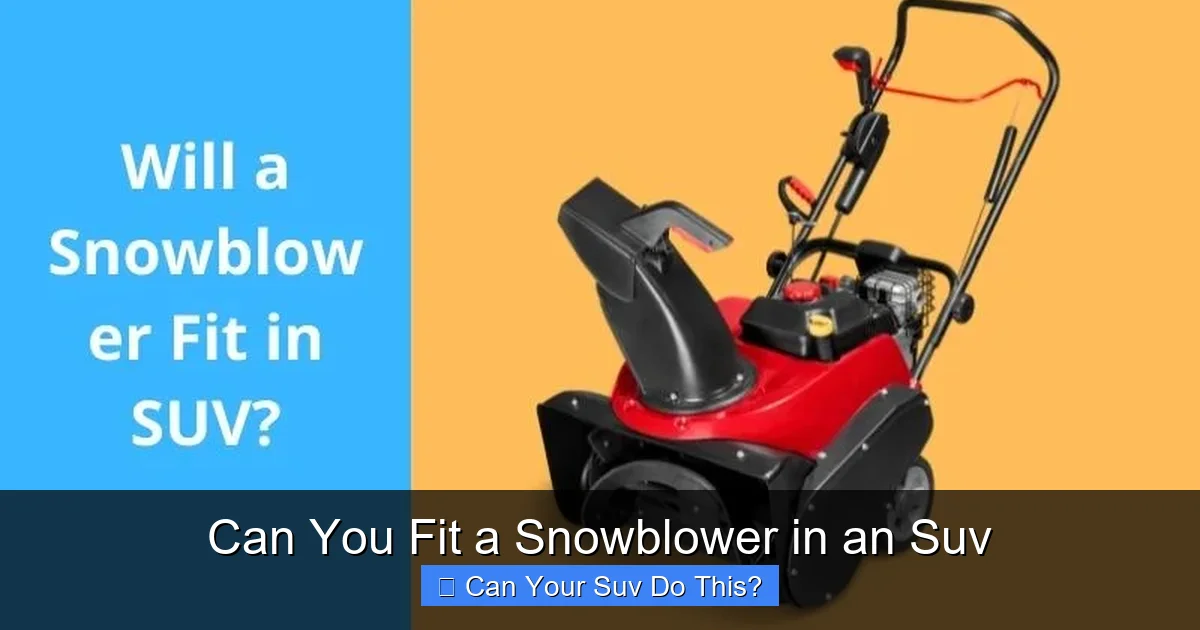
Wondering if your SUV can handle a snowblower this winter? The short answer is yes—but it depends on the size of your SUV, the type of snowblower, and how you pack it. With smart planning and a few tricks, most SUVs can safely transport even larger two-stage models.
Key Takeaways
- SUV cargo space varies widely: Compact SUVs may struggle with large snowblowers, while full-size models like the Ford Explorer or Chevrolet Tahoe offer ample room.
- Two-stage snowblowers are bulkier: These powerful machines often require folding handles or partial disassembly to fit comfortably.
- Folding handles make a big difference: Many modern snowblowers come with foldable or removable handles to reduce overall length.
- Use tarps and straps for safety: Secure the snowblower properly to prevent shifting during transit and protect your vehicle’s interior.
- Consider towing for heavy-duty models: If your SUV can’t handle the load, a small utility trailer is a reliable alternative.
- Measure before you buy or load: Always check your SUV’s cargo dimensions and compare them to the snowblower’s specs.
- Winter driving demands extra caution: Even if it fits, driving with a loaded SUV in snowy conditions requires slow, careful handling.
📑 Table of Contents
- Can You Fit a Snowblower in an SUV? The Truth About Winter Hauling
- Understanding Snowblower Sizes and Types
- Measuring Your SUV’s Cargo Capacity
- How to Load a Snowblower into Your SUV
- SUV Models That Work Best for Snowblower Transport
- Alternatives When Your SUV Can’t Handle It
- Safety Tips for Transporting a Snowblower
- Real-World Examples: Can Your SUV Do This?
- Conclusion: Yes, You Can—With the Right Approach
Can You Fit a Snowblower in an SUV? The Truth About Winter Hauling
Winter storms bring snow, ice, and the inevitable chore of clearing driveways and sidewalks. For many homeowners, a snowblower is the ultimate tool to make this task faster and less back-breaking. But once the snow stops falling, a new challenge arises: how do you get that bulky machine from the store—or your neighbor’s garage—back to your home? If you drive an SUV, you might be wondering: *Can you fit a snowblower in an SUV?*
The good news is that in most cases, the answer is yes. SUVs are designed with versatility in mind, offering generous cargo space, fold-down seats, and often higher ground clearance than sedans. But “fitting” a snowblower isn’t just about squeezing it into the back. It’s about doing so safely, securely, and without damaging your vehicle or the equipment. Whether you’re hauling a compact single-stage model or a heavy-duty two-stage beast, understanding your SUV’s capabilities—and the snowblower’s dimensions—is key.
In this guide, we’ll walk you through everything you need to know about transporting a snowblower in your SUV. From measuring your cargo area to choosing the right model, we’ll cover practical tips, real-world examples, and smart alternatives if your SUV just isn’t up to the task. By the end, you’ll know exactly how to get your snowblower home—and keep it safe all winter long.
Understanding Snowblower Sizes and Types
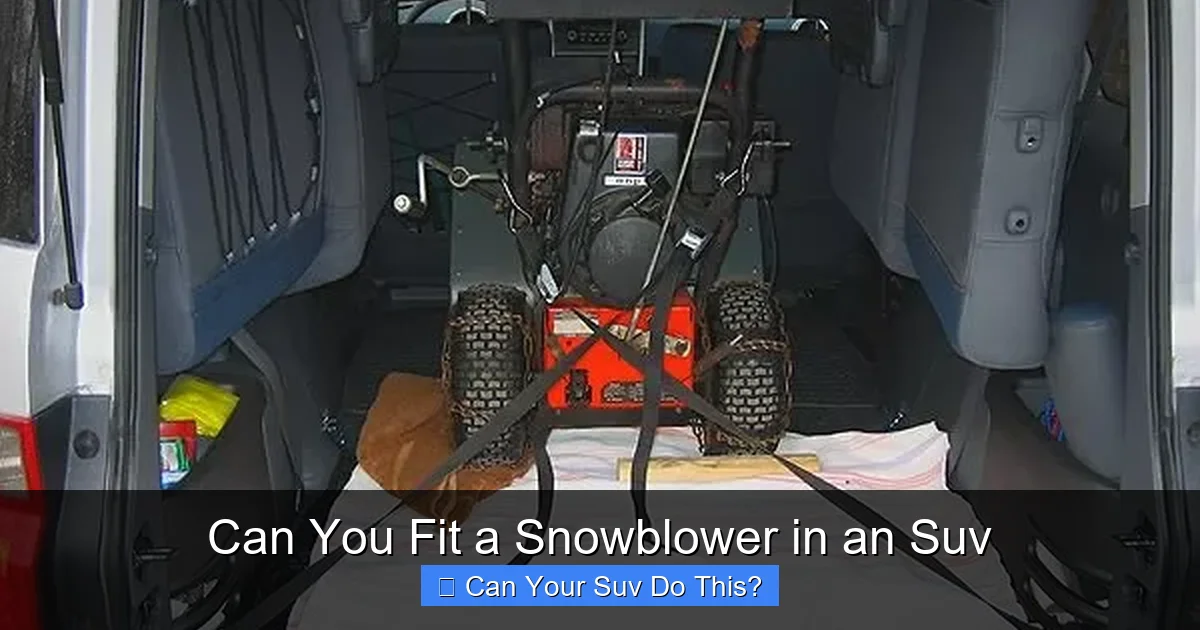
Visual guide about Can You Fit a Snowblower in an Suv
Image source: suvpedia.com
Before you even think about loading up your SUV, it’s important to understand the different types of snowblowers and how their size affects transport. Not all snowblowers are created equal, and knowing the differences can save you a lot of frustration at the hardware store.
Single-Stage Snowblowers: Compact and Lightweight
Single-stage snowblowers are the smallest and lightest option, ideal for light to moderate snowfall on flat, paved surfaces. These machines typically weigh between 30 and 70 pounds and are designed to be pushed manually. Because they’re compact, they’re the easiest to transport—even in smaller SUVs like the Honda CR-V or Toyota RAV4.
Most single-stage models measure around 24 to 30 inches in width and 30 to 40 inches in length. With foldable handles, they can often be laid flat in the cargo area or stood upright like a suitcase. Their lightweight design also means they won’t strain your SUV’s suspension or affect handling.
Two-Stage Snowblowers: Power and Bulk
Two-stage snowblowers are built for heavy-duty work. They can handle deep snow, icy conditions, and larger driveways with ease. These machines are significantly larger and heavier, typically weighing between 150 and 300 pounds. They feature an auger to break up snow and an impeller to throw it out the chute, making them much more powerful than single-stage models.
Because of their size, two-stage snowblowers are the real test for SUV cargo space. Most measure 28 to 36 inches wide and 48 to 60 inches long. Even with foldable handles, they can be challenging to fit—especially in compact or midsize SUVs. However, many modern models are designed with transport in mind, offering features like foldable or detachable handles to reduce overall length.
Three-Stage Snowblowers: The Heavyweights
Three-stage snowblowers are the largest and most powerful consumer models, often used in commercial or extreme winter conditions. These machines can weigh over 400 pounds and are rarely practical for average homeowners. Due to their size and weight, they’re almost always transported via trailer or truck—not an SUV.
For most people, a two-stage model is the upper limit of what’s reasonable to haul in an SUV. But even then, careful planning is required.
Measuring Your SUV’s Cargo Capacity
You can’t answer “Can you fit a snowblower in an SUV?” without knowing your vehicle’s cargo dimensions. Every SUV is different, and even small differences in length, width, and height can make or break your hauling plans.
Cargo Length: The Most Critical Dimension
The length of your cargo area—measured from the back of the rear seats to the tailgate—is usually the deciding factor. Most compact SUVs offer around 30 to 36 inches of cargo length with the seats up. That’s enough for a single-stage snowblower but may fall short for a two-stage model.
With the rear seats folded down, many SUVs gain an extra 12 to 24 inches of space. For example, the Subaru Outback offers up to 75.7 inches of cargo length with the seats down—plenty for most two-stage snowblowers. Always check your owner’s manual or measure yourself using a tape measure.
Width and Height Considerations
Width is less of an issue since most snowblowers are designed to fit through standard garage doors (typically 36 inches wide). However, if your SUV has narrow cargo openings or bulky interior trim, you may need to angle the snowblower or remove the chute.
Height matters when loading. A tall snowblower may not fit under a low roofline unless laid flat. Some SUVs, like the Jeep Grand Cherokee or Ford Expedition, have higher rooflines that make vertical loading easier.
Weight Limits and Suspension
Don’t forget about weight. Most SUVs can handle 150 to 300 pounds in the cargo area, but check your vehicle’s payload capacity—usually listed in the owner’s manual. Overloading can damage suspension, brakes, and tires, especially in winter conditions.
Also, consider how the weight is distributed. Placing a heavy snowblower over the rear axle can improve traction in snow, but too much weight can make steering sluggish. Use cargo nets or straps to keep the load centered and secure.
How to Load a Snowblower into Your SUV
Once you’ve confirmed your SUV can handle the size and weight, it’s time to load up. Proper loading ensures safety, protects your vehicle, and makes unloading easier.
Prepare the Snowblower for Transport
Before loading, take a few minutes to prepare the snowblower:
– **Empty the fuel tank** or add a fuel stabilizer if you’re storing it long-term. Gasoline can leak and damage interior surfaces.
– **Remove the spark plug** to prevent accidental starting.
– **Fold or remove the handles** if possible. Many models have quick-release pins or foldable designs.
– **Detach the chute** if it’s removable. This reduces width and prevents snagging.
– **Clean off snow and ice** to avoid melting and water damage inside your SUV.
Use a Ramp or Lift Assist
Most snowblowers are too heavy to lift directly into an SUV, especially if you’re working alone. A lightweight aluminum ramp can make loading much easier. Place the ramp securely against the bumper and slowly walk the snowblower up using the handles.
For heavier models, consider a portable lift or asking for help. Never risk injury by lifting more than you can handle.
Protect Your SUV’s Interior
Snowblowers are dirty, greasy, and potentially leaky. Protect your cargo area with:
– A heavy-duty tarp or moving blanket
– Rubber cargo mats (not just carpet liners)
– Plastic sheeting for extra protection
Lay the tarp flat, place the snowblower on top, and secure it with straps. This prevents scratches, stains, and moisture from damaging your upholstery.
Secure the Load Properly
An unsecured snowblower can shift during sudden stops or turns, damaging your vehicle or causing an accident. Use ratchet straps or bungee cords to anchor the machine to the cargo hooks in your SUV’s floor or seat anchors.
Tie down the handles, wheels, and any loose parts. If the snowblower has wheels, consider chocking them with small blocks of wood to prevent rolling.
SUV Models That Work Best for Snowblower Transport
Not all SUVs are created equal when it comes to hauling bulky equipment. Some models are better suited for snowblower transport than others, thanks to their cargo space, seating configuration, and design features.
Compact SUVs: Limited but Possible
Compact SUVs like the Honda CR-V, Toyota RAV4, and Mazda CX-5 are popular for their fuel efficiency and maneuverability. But their cargo space is limited—typically 30 to 37 inches with seats up.
These vehicles can usually handle single-stage snowblowers with ease. For two-stage models, you’ll likely need to fold the rear seats and remove or fold the handles. Even then, it may be a tight fit.
Midsize SUVs: The Sweet Spot
Midsize SUVs like the Ford Explorer, Toyota Highlander, and Hyundai Santa Fe offer a great balance of space and practicality. With rear seats folded, they often provide 60 to 75 inches of cargo length—enough for most two-stage snowblowers.
Many midsize models also feature low load floors, wide tailgates, and available roof racks for extra gear. The Subaru Outback, technically a wagon but SUV-like in function, is a standout for its long, flat cargo area and all-wheel drive—perfect for winter hauling.
Full-Size SUVs: Built for Big Loads
Full-size SUVs like the Chevrolet Tahoe, Ford Expedition, and GMC Yukon are the champions of cargo capacity. With three rows of seats and up to 120 cubic feet of space, they can easily accommodate even large two-stage snowblowers—sometimes with room to spare.
These vehicles often have power-folding seats, built-in tie-downs, and high payload capacities. If you frequently haul heavy equipment, a full-size SUV is the most reliable choice.
Electric and Hybrid SUVs: Consider Battery Range
If you drive an electric or hybrid SUV like the Tesla Model Y or Toyota RAV4 Hybrid, be mindful of battery drain. Cold weather reduces EV range, and carrying extra weight can further impact efficiency. Plan your route and charging stops accordingly.
Alternatives When Your SUV Can’t Handle It
Even with the best planning, some SUVs just aren’t up to the task. If your vehicle is too small, too low, or already packed with gear, consider these alternatives.
Rent a Trailer
A small utility trailer is an affordable and effective solution. Many hardware stores and rental centers offer trailers for $20 to $50 per day. A 4×8-foot trailer can easily handle a two-stage snowblower and even multiple bags of salt or shovels.
Most SUVs can tow up to 1,500 to 3,500 pounds, so a lightweight trailer won’t strain your vehicle. Just make sure your hitch is rated for the load and use safety chains.
Use a Truck or Van
If you have access to a pickup truck or full-size van, use it. Trucks offer open beds that make loading and unloading easier, while vans provide enclosed, weather-protected space.
Even a friend’s truck can save the day. Offer to help with gas or a six-pack as a thank-you.
Delivery Services
Many retailers now offer home delivery for large items like snowblowers. For a fee (usually $50 to $100), the store will deliver and even set up the machine in your garage. This is the easiest option if you’d rather avoid the hassle altogether.
Store It On-Site
If you’re buying a snowblower for seasonal use, consider storing it at a local shop or with a neighbor who has more space. Some hardware stores offer winter storage for a small monthly fee.
Safety Tips for Transporting a Snowblower
Transporting heavy equipment in winter conditions requires extra caution. Follow these safety tips to protect yourself, your vehicle, and others on the road.
Drive Slowly and Smoothly
A loaded SUV handles differently—especially in snow and ice. Accelerate gently, brake early, and avoid sharp turns. The added weight can increase stopping distance and reduce stability.
Check Local Laws
Some states have regulations about transporting machinery. For example, exposed blades or protruding parts may require warning flags or covers. Check your local Department of Motor Vehicles (DMV) guidelines.
Inspect Before and After
Before loading, inspect the snowblower for leaks, loose parts, or damage. After unloading, check your SUV for scratches, dents, or fluid stains. Address any issues promptly.
Keep Emergency Gear Handy
Always carry a winter emergency kit: flashlight, blankets, ice scraper, jumper cables, and a first-aid kit. If you’re hauling in remote areas, add a shovel, sand, and a portable charger.
Real-World Examples: Can Your SUV Do This?
Let’s look at a few real-world scenarios to see how different SUVs handle snowblower transport.
Example 1: Honda CR-V with a Single-Stage Snowblower
Sarah owns a Honda CR-V and bought a 24-inch single-stage snowblower for her townhouse driveway. With the rear seats folded, she had 37 inches of cargo length. The snowblower fit easily with room to spare. She used a tarp and two straps to secure it and drove home without issues.
Example 2: Ford Explorer with a Two-Stage Snowblower
Mike drives a Ford Explorer and needed a two-stage model for his long, sloped driveway. The snowblower measured 32 inches wide and 52 inches long. With the rear seats down, the Explorer offered 68 inches of cargo space. He folded the handles and removed the chute, then loaded it using a ramp. It fit snugly but securely.
Example 3: Toyota RAV4 with a Large Two-Stage Model
Lisa tried to fit a 36-inch two-stage snowblower into her RAV4. Even with the seats down, it was too long. She ended up renting a trailer from the store and towing it home safely.
These examples show that while many SUVs can handle snowblower transport, success depends on matching the right vehicle to the right machine.
Conclusion: Yes, You Can—With the Right Approach
So, can you fit a snowblower in an SUV? The answer is a resounding *yes*—for most people, most of the time. Whether you drive a compact crossover or a full-size SUV, there’s a way to transport your snowblower safely and efficiently.
The key is preparation. Measure your cargo space, know your snowblower’s dimensions, and use the right tools—like ramps, tarps, and straps—to make loading easier. Choose a model that fits your needs and your vehicle’s capabilities. And when in doubt, don’t hesitate to use a trailer, rent a truck, or opt for delivery.
Winter doesn’t have to be a battle. With the right equipment and a smart plan, you can clear your driveway with confidence—and get your snowblower home without breaking a sweat (or your back).
Frequently Asked Questions
Can a small SUV fit a two-stage snowblower?
It depends on the model. Compact SUVs like the Honda CR-V or Toyota RAV4 may struggle with larger two-stage snowblowers, even with seats folded. You’ll likely need to remove or fold the handles and may still face space limitations.
Do I need to disassemble the snowblower to fit it in my SUV?
Not always, but partial disassembly helps. Folding or removing the handles and chute can reduce length and width, making it easier to fit. Always check the owner’s manual for disassembly instructions.
Is it safe to transport a snowblower inside an SUV?
Yes, if done properly. Use a tarp to protect the interior, secure the load with straps, and ensure the fuel tank is empty or stabilized. Never leave the snowblower unsecured—it can shift and cause damage or injury.
Can I tow a snowblower behind my SUV?
Yes, with a utility trailer. Most SUVs can tow a small trailer, but check your vehicle’s towing capacity and ensure the trailer is properly hitched and balanced.
What if my SUV is already full of winter gear?
Consider removing non-essential items or using a roof box for lighter gear. If space is still tight, rent a trailer or use a delivery service for the snowblower.
Are there snowblowers designed for easy transport?
Yes. Many modern models feature foldable handles, lightweight frames, and compact designs. Look for “easy transport” or “compact” in the product description when shopping.