

Yes, you can fit golf clubs in a compact SUV—but it depends on how you pack and which model you drive. With smart organization and a few adjustments, even smaller crossovers can handle a full set of clubs, golf bag, and accessories for your weekend round.
So, you’ve just joined a new golf league, signed up for a weekend tournament, or maybe you’re planning a road trip to that scenic course three states away. You grab your golf bag, head to the garage, and pause—can you actually fit golf clubs in a compact SUV?
It’s a question more drivers are asking as compact SUVs dominate the market. These vehicles are popular for their fuel efficiency, easy handling, and urban-friendly size. But when it comes to hauling gear—especially something as awkwardly shaped as a golf bag—many wonder if they’re up to the task. The good news? In most cases, the answer is a resounding yes.
Compact SUVs have come a long way in terms of interior design and cargo flexibility. Manufacturers now prioritize smart storage solutions, fold-flat seating, and generous hatch openings. While they may not have the cavernous trunks of full-size SUVs or pickup trucks, many compact models can comfortably accommodate a standard golf bag with a little planning. Whether you’re driving a Honda CR-V, Toyota RAV4, or even a smaller option like the Mazda CX-30, there are ways to make it work.
But it’s not just about whether the clubs *fit*—it’s about how comfortably they fit, whether you can still carry passengers, and if your gear stays safe and secure. In this guide, we’ll walk you through everything you need to know about fitting golf clubs in a compact SUV. From measuring your cargo space to choosing the right bag and using clever storage hacks, we’ll help you hit the course without the hassle.
Key Takeaways
- Most compact SUVs can fit golf clubs with the rear seats folded down. Models like the Honda CR-V, Toyota RAV4, and Mazda CX-5 offer enough cargo space when configured properly.
- Bag size and orientation matter more than vehicle size. Stand bags are bulkier; consider a carry or Sunday bag for tighter spaces.
- Rear seat configuration is crucial. 60/40 or 40/20/40 split-folding seats allow partial folding, so you can still carry passengers and gear.
- Roof racks and cargo carriers expand storage options. If interior space is tight, a roof-mounted golf bag carrier can free up cabin room.
- Measure your SUV’s cargo area before buying gear. Knowing your hatch height, floor length, and width helps you choose the right bag and packing method.
- Some compact SUVs are better suited than others. The Subaru Forester and Hyundai Tucson offer more vertical space, making club loading easier.
- Always secure your gear. Use cargo nets, straps, or dividers to prevent bags from sliding during turns or sudden stops.
📑 Table of Contents
Understanding Compact SUV Cargo Space
When people think of “compact SUV,” they often picture a small, boxy vehicle with limited room. But today’s compact SUVs are anything but cramped. Thanks to clever engineering and efficient packaging, many offer surprising amounts of cargo space—especially when the rear seats are folded down.
Most compact SUVs provide between 25 and 35 cubic feet of cargo space behind the rear seats. Fold those seats flat, and you can easily double that number, reaching 50 to 70 cubic feet in some models. That’s more than enough room for a standard golf bag, which typically measures around 30 inches tall, 12 inches wide, and 8 inches deep when packed.
But volume isn’t the only factor. The *shape* of the cargo area matters just as much. A tall, boxy interior—like that of the Subaru Forester or Hyundai Tucson—makes it easier to stand a golf bag upright. In contrast, lower, sloped hatchbacks (like the Mazda CX-30) may require you to lay the bag on its side or angle it diagonally.
Another key consideration is the hatch opening. A wide, low-loading lip makes it easier to slide in a heavy golf bag without straining your back. Some SUVs, like the Toyota RAV4, feature a hands-free power liftgate that opens with a foot motion—perfect for when your hands are full.
Let’s look at a few real-world examples:
– The **Honda CR-V** offers 39.2 cubic feet behind the rear seats and 75.8 cubic feet with seats folded. Its flat load floor and wide opening make it a top pick for golfers.
– The **Toyota RAV4** provides 37.5 cubic feet standard and up to 69.8 cubic feet max. Its rear seats fold nearly flat, and the cargo area is designed for easy loading.
– The **Mazda CX-5** has a slightly smaller cargo hold at 30.9 cubic feet, but its stylish interior and responsive handling make it a favorite among urban drivers.
– The **Subaru Forester** shines with 35.4 cubic feet standard and 76.1 cubic feet max. Its tall roofline and wide-opening rear door are ideal for bulky items like golf bags.
So while compact SUVs vary in size and design, most are more than capable of handling your golf gear—especially with the rear seats down.
How to Fit Golf Clubs in a Compact SUV
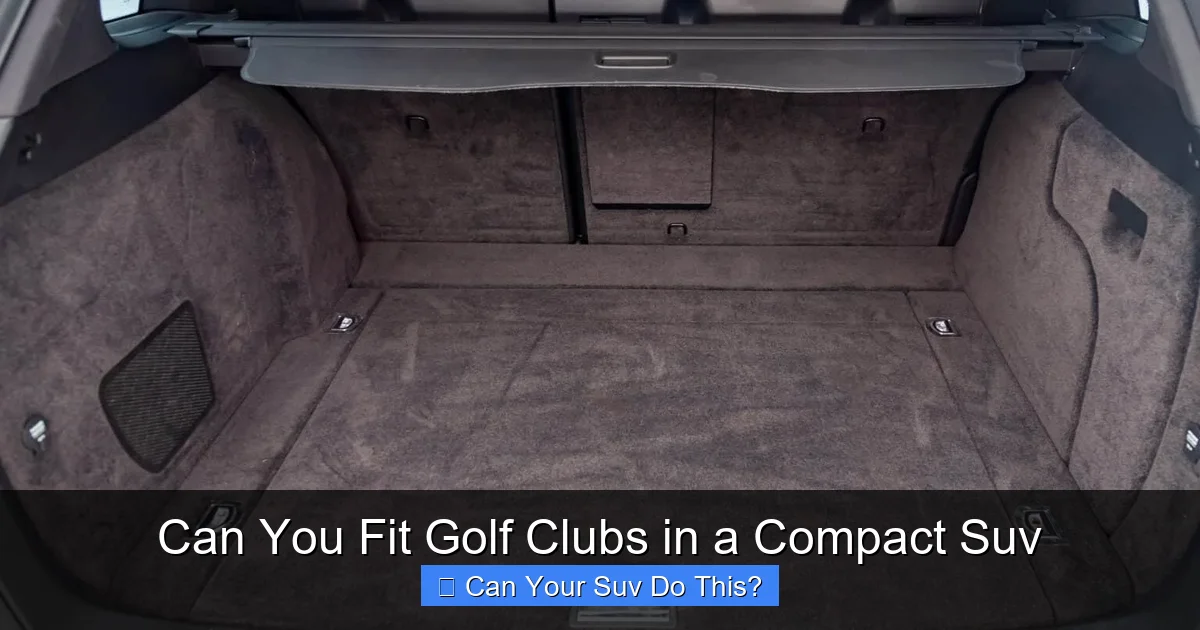
Visual guide about Can You Fit Golf Clubs in a Compact Suv
Image source: fourwheeltrends.com
Now that you know your SUV likely has the space, let’s talk about the *how*. Fitting golf clubs isn’t just about tossing the bag in the back and hoping for the best. A little strategy goes a long way in maximizing space, protecting your gear, and keeping your passengers comfortable.
Fold the Rear Seats
The first and most important step is folding down the rear seats. Most compact SUVs come with 60/40 split-folding rear seats, meaning you can fold one side down while keeping the other up for a passenger. This is ideal if you’re driving with a friend to the course.
To fold the seats, locate the release levers—usually on the sides of the seatbacks or in the cargo area. Pull the lever, and the seatback should drop forward. Some models, like the Honda CR-V, have a one-pull mechanism that folds both sides at once.
Once folded, you’ll have a long, flat surface perfect for laying your golf bag horizontally. This method works well for stand bags, which are taller and bulkier. Just make sure the bag doesn’t stick out too far—you don’t want it blocking the rearview mirror or sticking into the cabin.
Angle the Bag Diagonally
If folding the seats isn’t an option—maybe you’re carrying two passengers—try angling the golf bag diagonally across the cargo area. This takes advantage of the longer diagonal space, which is often several inches greater than the straight length.
For example, a compact SUV with a 48-inch cargo floor might have a diagonal measurement of 60 inches or more. That extra space can be just enough to fit a standard golf bag without folding the seats.
Place the bag so the club heads face the rear window and the base rests near the front seats. This orientation keeps the weight centered and reduces the chance of the bag tipping over.
Use the Footwell Trick
Here’s a clever hack: slide the golf bag into the footwell of the rear seat. Yes, the footwell—the space between the front and rear seats where passengers rest their feet.
Many compact SUVs have a generous footwell depth, especially in models with flat floors like the Subaru Forester or Hyundai Tucson. By placing the base of the golf bag in the footwell and leaning the top against the rear seatback, you can fit the entire bag without folding any seats.
This method works best with smaller bags—carry bags or Sunday bags—since they’re lighter and more compact. It’s also a great option if you’re driving solo and want to keep the rear seats up for extra passenger space later.
Remove the Headcover
If your bag has a large, bulky headcover (the protective cover over the club heads), consider removing it before loading. Headcovers can add several inches of height and make the bag harder to fit.
Store the headcover in the glove compartment, under a seat, or in a small cargo organizer. Just remember to put it back on before your round—wet grass and club heads don’t mix!
Pack Smart with Accessories
Golf bags often come with extra pockets for balls, tees, gloves, and rangefinders. But those pockets can make the bag wider and harder to fit. Before loading, take a moment to organize your gear.
Use a small duffel bag or tote for loose items like shoes, towels, and snacks. This keeps the main bag streamlined and frees up space in the cargo area. You can also use cargo organizers or mesh nets to secure smaller items and prevent them from rolling around.
Choosing the Right Golf Bag for Your SUV
Not all golf bags are created equal—and some are definitely better suited for compact SUVs than others. If you’re serious about golf and drive a smaller vehicle, it’s worth investing in a bag that fits your lifestyle.
Stand Bags vs. Carry Bags
Stand bags are the most popular choice among recreational golfers. They’re lightweight, have built-in stands for course use, and usually come with 4 to 6 dividers to organize clubs. However, they’re also the bulkiest option—typically 30 to 36 inches tall and 12 to 14 inches wide.
While stand bags *can* fit in a compact SUV, they often require folding the rear seats or angling the bag diagonally. If you play frequently and want maximum comfort on the course, a stand bag is worth the extra space.
Carry bags, on the other hand, are smaller and lighter. They’re designed for walking the course and usually weigh under 4 pounds. Their compact size makes them ideal for tight cargo spaces. Many carry bags are under 30 inches tall and 10 inches wide—perfect for sliding into a footwell or fitting behind the front seats.
Sunday Bags: The Ultimate Compact Option
If space is your top priority, consider a Sunday bag. These ultra-lightweight bags are designed for minimalists who only carry a few clubs. They typically hold 6 to 10 clubs and weigh less than 3 pounds.
Sunday bags are perfect for compact SUVs because they’re small enough to fit almost anywhere—under a seat, in the footwell, or even in the passenger footwell. They’re also great for casual rounds or driving ranges when you don’t need a full set.
The downside? No stand, fewer pockets, and less protection for your clubs. But if you’re okay with those trade-offs, a Sunday bag can be a game-changer for SUV owners.
Hybrid and Cart Bags
Hybrid bags combine features of stand and cart bags—they’re sturdy enough for riding in a golf cart but light enough to carry. They’re a good middle ground if you play both ways.
Cart bags are larger and designed to attach to golf carts. They’re not ideal for compact SUVs unless you have the rear seats folded down. But if you always ride in a cart and don’t mind the extra bulk, they’re a solid choice.
Measuring Your Bag
Before buying a new bag, measure your current one—or the one you’re considering. Use a tape measure to check the height (from base to top), width (at the widest point), and depth (front to back).
Compare those dimensions to your SUV’s cargo area. Most manufacturers provide cargo specs online, but it’s always best to measure in person. Open your hatch, lay a tape measure across the floor, and note the length, width, and height.
This simple step can save you a lot of frustration at the course.
Top Compact SUVs for Golfers
Not all compact SUVs are equally golf-friendly. Some models are simply better designed for hauling gear, thanks to their cargo layout, seat configuration, and overall dimensions. Here are a few top picks for golfers.
Honda CR-V
The Honda CR-V is a perennial favorite for a reason. It offers one of the largest cargo areas in its class, with 39.2 cubic feet behind the rear seats and 75.8 cubic feet with seats folded. The flat load floor and wide hatch opening make it easy to slide in a golf bag, even when full.
The rear seats fold completely flat, and the 60/40 split allows you to carry one passenger and still have room for your gear. Plus, the CR-V’s fuel efficiency and smooth ride make it ideal for long drives to the course.
Toyota RAV4
The RAV4 is another excellent choice. It provides 37.5 cubic feet of cargo space standard and up to 69.8 cubic feet max. The rear seats fold nearly flat, and the cargo area is designed with practicality in mind.
One standout feature is the available hands-free power liftgate. Just wave your foot under the bumper, and the hatch opens automatically—perfect when your hands are full of golf gear.
Subaru Forester
If you prioritize vertical space, the Forester is hard to beat. Its tall roofline and boxy design give it a cavernous interior, with 35.4 cubic feet behind the rear seats and 76.1 cubic feet max.
The wide-opening rear door and low load floor make loading a golf bag a breeze. Plus, standard all-wheel drive means you can tackle muddy course parking lots with confidence.
Hyundai Tucson
The Hyundai Tucson offers a stylish interior and generous cargo space—38.7 cubic feet standard and 74.8 cubic feet max. The rear seats fold flat, and the cargo area includes handy features like tie-down hooks and a hidden storage compartment.
The Tucson also comes with a hands-free smart liftgate and available panoramic sunroof, adding a touch of luxury to your golf trips.
Mazda CX-5
While slightly smaller in cargo volume (30.9 cubic feet), the CX-5 makes up for it with premium materials and a fun-to-drive feel. Its cargo area is well-designed, with a low load floor and easy-access hatch.
If you’re willing to fold the rear seats or use the footwell trick, the CX-5 can definitely handle a golf bag—especially if you use a compact carry or Sunday bag.
Creative Storage Solutions and Accessories
Sometimes, even the best-designed SUV needs a little help. That’s where accessories and smart storage solutions come in. These tools can make loading, securing, and organizing your golf gear easier and more efficient.
Cargo Nets and Straps
A cargo net or set of straps is essential for keeping your golf bag from sliding around during turns or sudden stops. Most compact SUVs have built-in tie-down hooks in the cargo area—use them!
Attach a bungee net over your bag or secure it with ratchet straps. This not only protects your clubs but also prevents the bag from tipping over and blocking your rearview mirror.
Cargo Organizers and Dividers
A cargo organizer with compartments can help you store smaller items like shoes, towels, and snacks. Look for one with non-slip bottoms and adjustable dividers.
Some organizers even attach to the back of the front seats, creating a handy storage space without taking up cargo room.
Roof-Mounted Golf Bag Carriers
If interior space is tight, consider a roof-mounted golf bag carrier. These devices attach to your SUV’s roof rack and securely hold your bag outside the vehicle.
They’re especially useful if you’re carrying passengers and can’t fold the rear seats. Just make sure your SUV has a roof rack—most compact models come with one standard or available as an option.
Roof carriers do add wind resistance and reduce fuel efficiency, so only use them when necessary. Also, be mindful of height restrictions in parking garages.
Trunk Mats and Protective Liners
Golf bags can be dirty—mud, grass, and sand tend to cling to the bottom. Protect your SUV’s carpet with a durable trunk mat or rubber liner.
Look for one with raised edges to contain spills and easy-to-clean surfaces. Some mats even have anti-slip backing to keep your bag in place.
Seat Back Organizers
Maximize unused space with a seat back organizer. These hanging pockets attach to the back of the front seats and provide storage for small items like balls, tees, and rangefinders.
They’re lightweight, inexpensive, and don’t take up any cargo room—perfect for keeping your essentials within reach.
Tips for Frequent Golfers
If you play golf regularly, you’ll want to make the process of loading and unloading your clubs as smooth as possible. Here are a few tips to save time and reduce hassle.
Keep a Dedicated Golf Kit
Create a small kit with everything you need for the course: extra balls, tees, a towel, sunscreen, and a water bottle. Store it in a small duffel or tote that you can grab and go.
This way, you don’t have to pack and unpack your entire bag every time.
Use a Bag with a Stand
Even if you ride in a cart, a bag with a built-in stand is useful for practice rounds or waiting your turn. It keeps your clubs off the ground and makes it easy to grab a club quickly.
Just make sure the stand doesn’t add too much bulk when loading into your SUV.
Plan Your Route
If you’re driving to a course with tight parking or low-clearance garages, plan your route in advance. Avoid areas with height restrictions if you’re using a roof carrier.
Also, consider parking near the entrance to minimize the distance you have to carry your bag.
Clean Your Bag Regularly
Mud and grass can damage your SUV’s interior and make your bag heavier. After each round, wipe down the bottom of your bag and shake out any debris.
A clean bag is easier to load and helps protect your vehicle’s carpet.
Consider a Golf Cart Subscription
If you play at the same course often, look into a golf cart subscription or rental plan. This way, you don’t have to haul your bag from the parking lot—just drive to the course, unload your clubs, and hop in a cart.
It’s a small luxury that can make a big difference on hot or rainy days.
Conclusion
So, can you fit golf clubs in a compact SUV? Absolutely. With the right approach, even the smallest crossovers can handle a full set of clubs and all your golfing essentials.
The key is understanding your vehicle’s cargo space, choosing the right bag, and using smart loading techniques. Fold the rear seats, angle the bag diagonally, or use the footwell trick—whatever works for your setup.
And don’t forget the accessories. Cargo nets, organizers, and protective mats can make your life easier and keep your gear secure.
Whether you drive a Honda CR-V, Toyota RAV4, or Mazda CX-5, you don’t have to sacrifice your golf game for a smaller vehicle. With a little planning and creativity, your compact SUV can be the perfect ride to the first tee.
So pack your bag, fold those seats, and hit the road—your next round is waiting.
Frequently Asked Questions
Can you fit golf clubs in a compact SUV without folding the seats?
Yes, in many cases. You can angle the bag diagonally or slide it into the rear footwell, especially if you use a smaller carry or Sunday bag. However, folding the seats gives you the most reliable fit.
What’s the best compact SUV for carrying golf clubs?
The Honda CR-V, Toyota RAV4, and Subaru Forester are top choices due to their large cargo areas, flat-folding seats, and wide hatch openings. All three can easily accommodate a standard golf bag.
Do I need a roof rack to carry golf clubs?
Not necessarily. Most compact SUVs can fit clubs inside with the rear seats down. A roof rack is only needed if you’re carrying passengers and can’t fold the seats.
Can a Mazda CX-30 fit a golf bag?
Yes, but it may require folding the rear seats or using a compact bag. The CX-30 has less cargo space than larger models, so a Sunday or carry bag works best.
How do I keep my golf bag from sliding in the SUV?
Use cargo nets, bungee cords, or ratchet straps attached to the tie-down hooks in the cargo area. A non-slip trunk mat also helps keep the bag in place.
Is it safe to transport golf clubs in the passenger footwell?
Yes, as long as the bag doesn’t block the driver’s view or interfere with pedals. It’s best to use a small, lightweight bag and secure it with a seatbelt if possible.