

Finding a good SUV for $5000 is possible, but it takes research, patience, and knowing which models offer the best value. With the right approach, you can drive home a dependable, capable vehicle that handles daily commutes and weekend adventures—without breaking the bank.
So, you’re on the hunt for a solid SUV—but your budget is tight. Maybe you need extra space for kids, gear, or weekend camping trips. Or perhaps you just want something with a little more ground clearance and presence on the road. The big question: Can you get a good SUV for $5000?
The short answer? Yes—but it’s not as simple as walking into a dealership and driving off with a shiny new ride. The $5,000 price tag means you’re entering the world of used vehicles, often with higher mileage and older model years. But that doesn’t mean you’re stuck with a clunker. In fact, with the right strategy, you can find a dependable, safe, and surprisingly capable SUV that fits your needs and your wallet.
The key is knowing where to look, what to avoid, and which models have proven track records for reliability. This isn’t about getting the latest tech or luxury features—it’s about value, durability, and practicality. Think of it like shopping for a trusted hiking backpack: you don’t need the flashiest one, just one that won’t fall apart when you need it most.
In this guide, we’ll walk you through everything you need to know to find a good SUV for $5,000. From top models to avoid to red flags during inspection, we’ll help you make a smart, informed decision. Whether you’re a first-time buyer or just upgrading from a sedan, this budget-friendly approach can get you behind the wheel of a vehicle that’s ready for whatever life throws your way.
Key Takeaways
- Older models can still be reliable: Many SUVs from the early 2000s remain durable and functional with proper maintenance.
- Focus onToyota, Honda, and Ford: These brands are known for longevity and lower repair costs, making them ideal for a $5K budget.
- Mileage matters—but not everything: High mileage isn’t a dealbreaker if the vehicle has a solid service history and no major issues.
- Avoid luxury and high-performance SUVs: They often come with expensive repairs and parts, even at lower price points.
- Always get a pre-purchase inspection: Spending $100–$150 on a mechanic’s check can save you thousands in hidden problems.
- Private sellers often offer better deals: You may find more value and transparency compared to dealerships at this price range.
- Check for rust and frame damage: Especially in regions with snow and salt, structural integrity is critical for safety and longevity.
📑 Table of Contents
Why $5,000 Is a Realistic Budget for a Used SUV
Let’s be honest: $5,000 isn’t going to get you a brand-new SUV with all the bells and whistles. But it’s more than enough to buy a used one that’s still in great shape—especially if you’re flexible on age, mileage, and features. In today’s used car market, $5,000 is a sweet spot for older, well-maintained SUVs that have already taken the biggest depreciation hit.
Most new SUVs lose about 20–30% of their value in the first year and up to 50% after three years. That means a $25,000 SUV from 2010 could now be worth around $5,000—even if it’s still running strong. These vehicles have already been driven hard by their first owners, so you’re getting a proven machine at a fraction of the original cost.
Another advantage? Insurance and registration fees are typically lower for older vehicles. You’ll also avoid the steep depreciation that comes with driving a new car off the lot. And let’s not forget: many SUVs from the early 2000s were built like tanks. They weren’t designed to be disposable—they were made to last.
Of course, there are trade-offs. You might not get advanced safety features like automatic emergency braking or lane-keeping assist. Infotainment systems will be basic, if they exist at all. But for many buyers, those compromises are worth it for the savings and reliability.
The bottom line? $5,000 is a realistic and smart budget if you’re looking for a no-frills, dependable SUV. It’s not about luxury—it’s about function, value, and getting the most miles for your money.
Top SUV Models to Consider Under $5,000
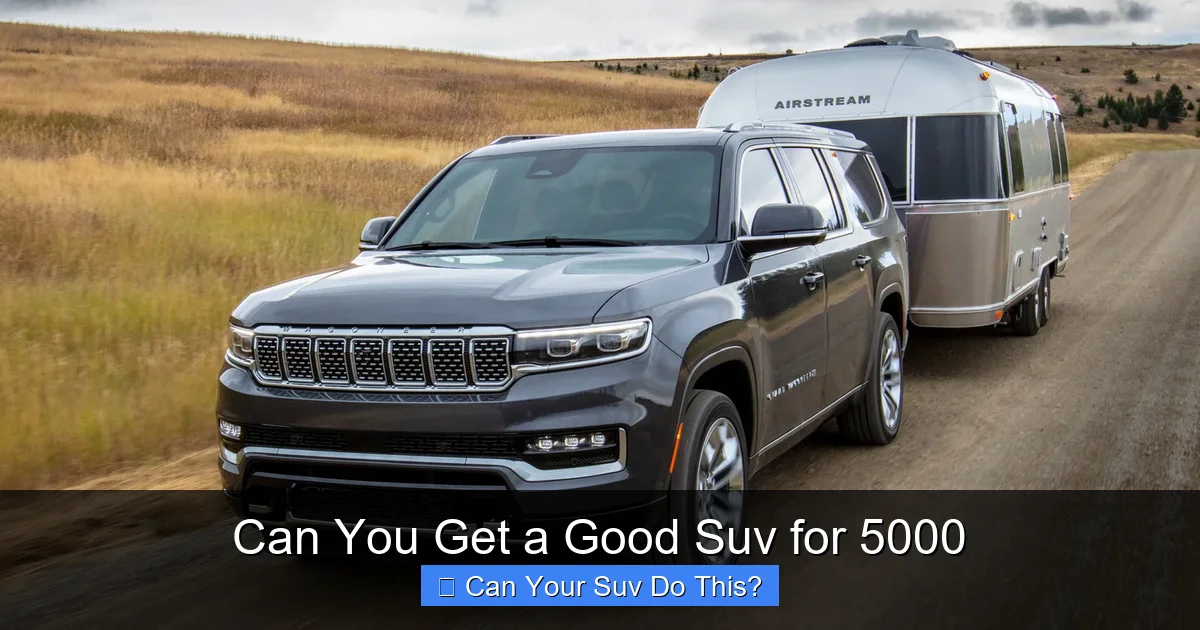
Visual guide about Can You Get a Good Suv for 5000
Image source: slashgear.com
Not all SUVs are created equal—especially when you’re shopping on a tight budget. Some models are known for their longevity, low repair costs, and strong resale value, even after 150,000 miles. Here are a few of the best options to look for when hunting for a good SUV for $5,000.
Toyota RAV4 (2006–2012)
The Toyota RAV4 is a legend in the compact SUV world—and for good reason. Known for its reliability, fuel efficiency, and low maintenance costs, the RAV4 is a top pick for budget buyers. The third-generation model (2006–2012) offers a smooth ride, decent cargo space, and optional all-wheel drive.
Look for models with the 2.4L or 2.5L four-cylinder engine—they’re proven workhorses. Avoid the V6 unless you find one with a full service history, as it can be thirstier and more expensive to maintain. The RAV4 also has a strong reputation for surviving high mileage with minimal issues, especially if it’s been well cared for.
One thing to watch for: some early 2000s RAV4s had issues with the rear suspension and rust in colder climates. A thorough inspection can help you avoid these pitfalls.
Honda CR-V (2002–2011)
Like the RAV4, the Honda CR-V is a compact SUV that punches above its weight in reliability. The second and third generations (2002–2011) are especially popular among budget buyers. They offer excellent fuel economy, a spacious interior, and a reputation for lasting well over 200,000 miles.
The 2.4L engine is smooth and efficient, and the all-wheel-drive system is simple but effective for light off-roading or snowy conditions. The CR-V also has a large cargo area and rear seats that fold flat, making it great for hauling gear.
One common issue to check for is the automatic transmission, which can develop problems around 120,000–150,000 miles if not properly maintained. Ask for service records and consider a transmission fluid change if it hasn’t been done recently.
Ford Escape (2008–2012)
The Ford Escape is another solid choice in the $5,000 range. The third-generation model (2008–2012) improved significantly over earlier versions, with better build quality, fuel economy, and handling. The 2.5L four-cylinder engine is reliable and pairs well with the six-speed automatic transmission.
Look for models with the optional all-wheel drive if you live in a snowy or rural area. The Escape also offers good visibility and a comfortable ride, making it a great daily driver.
One downside: some Escapes from this era had issues with the power steering pump and electrical systems. A pre-purchase inspection can help uncover any hidden problems.
Subaru Forester (2003–2008)
If you need all-wheel drive as standard, the Subaru Forester is a standout option. Known for its ruggedness and capability, the Forester handles snow, mud, and rough roads with ease. The 2.5L four-cylinder engine is durable, and the boxer design gives it a low center of gravity for better stability.
The second-generation Forester (2003–2008) is especially popular among outdoor enthusiasts. It has a roomy interior, excellent visibility, and a reputation for lasting well with regular maintenance.
Watch out for head gasket issues, which were common in early 2000s Subarus. Many have been repaired, but it’s important to verify the work was done correctly. Also, check for rust on the undercarriage, especially in areas with road salt.
Jeep Liberty (2002–2007)
For buyers who want a bit more off-road capability, the Jeep Liberty is worth considering. The first-generation model (2002–2007) offers a boxy design, decent ground clearance, and optional four-wheel drive. It’s not as refined as some competitors, but it’s tough and capable.
The 2.4L or 3.7L V6 engines are available, with the V6 offering more power for towing or rough terrain. The Liberty also has a fold-flat front passenger seat, which is great for hauling long items.
Downsides include lower fuel economy and a stiffer ride. Also, some models had issues with the transfer case and electrical systems. Still, for the right buyer, the Liberty can be a fun and functional choice.
What to Avoid When Buying a $5,000 SUV
Just as important as knowing what to look for is knowing what to avoid. At this price point, you’re more likely to encounter vehicles with hidden problems, high repair costs, or poor reliability. Here are some red flags and models to steer clear of.
Luxury and Performance SUVs
Avoid brands like BMW, Mercedes-Benz, Audi, and Land Rover in this price range. Even if they seem like a great deal, the cost of repairs and parts can quickly spiral out of control. A $500 repair on a Toyota can easily become a $2,000 repair on a German luxury SUV.
For example, a 2005 BMW X5 might look tempting, but it could need a new suspension, electrical work, or engine repairs—none of which are cheap. The same goes for a 2006 Mercedes ML350. These vehicles were built for performance and comfort, not budget-friendly ownership.
High-Mileage Vehicles Without Service Records
A high-mileage SUV isn’t automatically a bad buy—but only if it has a solid maintenance history. If the seller can’t provide records of oil changes, timing belt replacements, or transmission service, walk away. These are critical for longevity, especially in engines that rely on timing belts (like many Hondas and Subarus).
A vehicle with 180,000 miles and full records is often a better bet than one with 120,000 miles and no history. Maintenance matters more than mileage.
Vehicles with Rust or Frame Damage
Rust is a silent killer of used vehicles, especially in northern states where salt is used on roads in winter. Check the undercarriage, wheel wells, and door sills for signs of corrosion. Surface rust can be treated, but structural rust—especially around the frame or suspension mounts—can compromise safety and be expensive to fix.
Also, avoid any SUV with a salvage title or history of major accidents. Even if it looks fine, hidden frame damage can affect handling and safety.
Models with Known Recalls or Chronic Issues
Some SUVs have well-documented problems that make them risky buys. For example, the 2002–2005 Ford Explorer had issues with the rear suspension and tire recalls. The 2001–2004 Chevrolet TrailBlazer was known for transmission and engine problems.
Do your homework. Check the National Highway Traffic Safety Administration (NHTSA) website for recalls and common complaints. A little research can save you from a money pit.
How to Inspect a Used SUV Before Buying
You’ve found a promising SUV under $5,000—now it’s time to make sure it’s worth your money. A thorough inspection can reveal hidden problems and give you confidence in your purchase. Here’s how to do it right.
Start with the Exterior
Walk around the vehicle and look for signs of damage, mismatched paint, or uneven panel gaps—these can indicate past accidents. Check the tires for uneven wear, which might suggest alignment or suspension issues.
Open and close all doors, the hood, and the trunk to make sure they operate smoothly. Look for rust, especially around the wheel wells, rocker panels, and under the doors.
Check the Interior
Inside, test all the controls: lights, wipers, windows, locks, and the radio. Smell for mildew or smoke, which can be hard to remove. Check the seats for tears, stains, or excessive wear.
Look under the floor mats for water stains or dampness—this could indicate a leak or flood damage. Also, check the spare tire and jack to make sure they’re present and in good condition.
Pop the Hood
Inspect the engine bay for leaks, cracked hoses, or worn belts. The oil should be clean and at the proper level—dark, sludgy oil is a red flag. Check the transmission fluid (if accessible) for a burnt smell or dark color.
Look for signs of recent repairs or aftermarket parts, which could indicate past problems.
Take It for a Test Drive
Listen for unusual noises—squeaks, rattles, or grinding—while driving. Pay attention to how the SUV accelerates, brakes, and handles. Does it pull to one side? Is the steering loose? These could signal alignment or suspension issues.
Test the four-wheel or all-wheel drive system if equipped. Engage it on a loose surface (like gravel) to make sure it engages smoothly.
Get a Pre-Purchase Inspection
This is the most important step. Hire a trusted mechanic to inspect the SUV before you buy. They’ll check the engine, transmission, suspension, brakes, and electrical systems for hidden problems.
A good inspection costs $100–$150 but can save you thousands in repairs. It also gives you leverage to negotiate the price if issues are found.
Where to Find the Best Deals on $5,000 SUVs
Knowing where to look can make all the difference in finding a good SUV for $5,000. While dealerships offer convenience, private sellers often provide better value and more transparency.
Online Marketplaces
Websites like Craigslist, Facebook Marketplace, and OfferUp are great places to start. You can filter by price, mileage, and location, and often communicate directly with the owner. Be cautious of scams—never wire money or buy without seeing the vehicle in person.
Local Classifieds and Newspapers
Don’t overlook traditional methods. Local newspapers and community bulletin boards sometimes have hidden gems from people who aren’t tech-savvy but want to sell quickly.
Auction Sites
Sites like eBay Motors and CarGurus let you search nationwide and often have detailed listings with photos and vehicle history reports. Some vehicles are sold at auction prices, which can be lower than retail.
Word of Mouth
Let friends, family, and coworkers know you’re looking. Sometimes the best deals come from people who want to sell quickly and avoid the hassle of listing online.
Final Tips for a Smart Purchase
Before you hand over your $5,000, keep these final tips in mind:
– Always get a vehicle history report (like Carfax or AutoCheck) to check for accidents, title issues, and odometer discrepancies.
– Negotiate the price. Most sellers expect some haggling, especially at this price point.
– Consider the total cost of ownership, including insurance, fuel, and potential repairs.
– Don’t rush. Take your time to find the right vehicle—patience pays off.
– Trust your gut. If something feels off, walk away. There are plenty of other SUVs out there.
With the right approach, you can absolutely find a good SUV for $5,000. It might not have all the latest features, but it can be safe, reliable, and ready for years of service. The key is doing your homework, inspecting thoroughly, and choosing a model with a proven track record.
In the end, a $5,000 SUV isn’t about compromise—it’s about smart shopping. You’re not settling for less; you’re getting more value for your money. And that’s something to feel good about every time you hit the road.
Frequently Asked Questions
Can you really get a reliable SUV for $5,000?
Yes, you can find a reliable SUV for $5,000 if you focus on older models from trusted brands like Toyota, Honda, and Subaru. These vehicles often have strong engines and durable builds, especially if they’ve been well maintained.
What’s the best year for a used SUV under $5,000?
Models from 2006 to 2012 are often the best value in this price range. They’re old enough to be affordable but new enough to have modern safety features and better build quality than earlier versions.
Should I avoid high-mileage SUVs?
Not necessarily. A high-mileage SUV with a full service history and no major issues can be a great buy. Maintenance matters more than mileage—look for records of oil changes, timing belt replacements, and transmission service.
Is it safe to buy a used SUV from a private seller?
Yes, as long as you take precautions. Always meet in a public place, inspect the vehicle thoroughly, and get a pre-purchase inspection. Private sellers often offer better prices and more honest descriptions than dealerships.
What’s the most important thing to check before buying?
A pre-purchase inspection by a trusted mechanic is the most important step. It can uncover hidden problems like engine issues, transmission wear, or frame damage that aren’t obvious during a test drive.
Can I finance a $5,000 SUV?
It’s possible, but financing a used vehicle under $5,000 can be difficult. Many lenders have minimum loan amounts or higher interest rates for older cars. Paying in cash or using a personal loan may be your best option.