
Yes, you can harness a dog in the back of an SUV—but it must be done safely and legally. Using crash-tested restraints or barriers keeps your dog secure, prevents distractions, and protects everyone in the vehicle during sudden stops or accidents.
Key Takeaways
- Safety First: Always use a crash-tested dog harness or barrier system designed for SUVs to prevent injury during sudden stops or crashes.
- Legal Compliance: Many states and countries require pets to be restrained while driving—failing to do so can result in fines or penalties.
- Comfort Matters: Choose breathable, padded harnesses and ensure your dog has enough space to sit, lie down, and turn around comfortably.
- Ventilation & Visibility: Never cover windows completely; ensure airflow and avoid leaving your dog alone in a parked SUV, especially in warm weather.
- Training Helps: Gradually acclimate your dog to the harness and car rides to reduce anxiety and make travel smoother.
- Alternative Options: Consider crates, cargo barriers, or pet hammocks if a harness isn’t the best fit for your dog’s size or behavior.
- Emergency Prep: Keep water, a first-aid kit, and your dog’s ID accessible in case of unexpected delays or roadside emergencies.
📑 Table of Contents
- Can You Harness a Dog in the Back of an SUV? The Truth About Safe Pet Travel
- Why Restraining Your Dog in an SUV Isn’t Optional—It’s Essential
- Types of Dog Restraints for SUVs: Which One Is Right for You?
- How to Properly Harness Your Dog in the Back of an SUV
- Legal and Ethical Considerations: What the Law Says
- Training Your Dog to Love the Harness and Car Rides
- Common Mistakes to Avoid When Harnessing Your Dog
- Conclusion: Safe Travel Starts with a Secure Harness
Can You Harness a Dog in the Back of an SUV? The Truth About Safe Pet Travel
So, you’ve got your SUV loaded up for a weekend adventure—cooler packed, snacks ready, and your furry best friend wagging at the door. But before you hit the road, there’s one big question: *Can you harness a dog in the back of an SUV?*
The short answer is yes—but not just any old leash tied to a seatbelt loop will do. Transporting your dog safely in the back of an SUV requires more than just opening the tailgate and hoping for the best. In fact, unrestrained pets are one of the leading causes of distracted driving and in-vehicle injuries. According to the American Automobile Association (AAA), over 60% of dog owners admit to driving with their pets unrestrained—putting themselves, their passengers, and their four-legged companions at serious risk.
That’s why understanding how—and why—to properly harness your dog in the back of an SUV is essential. Whether you’re heading to the park, on a cross-country road trip, or just running errands around town, keeping your pup secure isn’t just about comfort—it’s about safety, legality, and peace of mind.
Why Restraining Your Dog in an SUV Isn’t Optional—It’s Essential
Visual guide about Can You Harness a Dog in the Back Od Suv
Image source: petterritory.com
Let’s get real: dogs are curious, energetic, and sometimes unpredictable. Even the calmest pup can leap toward a squirrel, bark at a passing cyclist, or scramble into the front seat when they spot their favorite treat. Now imagine that happening while you’re driving 65 mph on the highway. That moment of distraction could lead to a swerve, a collision, or worse.
But it’s not just about driver distraction. Unrestrained dogs become dangerous projectiles in the event of a sudden stop or crash. Studies from the Center for Pet Safety show that a 50-pound dog unrestrained in a 30 mph crash can exert over 2,000 pounds of force—enough to seriously injure both the dog and anyone nearby. That’s like having a small refrigerator flying through the cabin at high speed.
Using a proper harness or restraint system in the back of your SUV dramatically reduces these risks. It keeps your dog contained, minimizes movement during turns or braking, and ensures they stay in a safe zone away from airbags and driver controls. Plus, many modern SUVs are designed with pet-friendly features like low cargo floors, fold-flat seats, and tie-down anchors—making it easier than ever to create a secure travel space.
The Risks of Going Unrestrained
Let’s break down what can go wrong when your dog is loose in the back of your SUV:
- Distracted Driving: Dogs often try to climb into the front seat, nuzzle the driver, or react to outside stimuli. Even a few seconds of distraction can lead to accidents.
- Injury in Crashes: As mentioned, unrestrained pets can become deadly projectiles. They can also be crushed if cargo shifts during impact.
- Escape Risk: An open window or unlatched tailgate could allow your dog to jump out—especially if they’re excited or scared.
- Heatstroke Danger: If you leave your dog in the back of a parked SUV (even with windows cracked), temperatures can rise rapidly, leading to heatstroke or death.
- Legal Consequences: In states like California, New York, and Illinois, driving with an unrestrained pet can result in fines up to $500 or more.
Real-Life Example: The Case of Max the Golden Retriever
Take Max, a 70-pound Golden Retriever from Colorado. His owner, Sarah, always let him ride loose in the back of her SUV, believing he was “calm enough” to handle it. One day, while merging onto the highway, Max lunged toward the front when he saw a dog outside. Sarah instinctively turned to grab him—and swerved into the next lane, nearly causing a multi-car pileup. Thankfully, no one was hurt, but the incident shook her so much that she immediately invested in a crash-tested harness. “I never realized how dangerous it was until it almost cost us everything,” she said.
Stories like Max’s are far too common. The good news? They’re entirely preventable with the right gear and habits.
Types of Dog Restraints for SUVs: Which One Is Right for You?
Now that we’ve established why restraint is crucial, let’s talk about *how* to do it right. There are several effective ways to harness a dog in the back of an SUV, and the best choice depends on your dog’s size, temperament, vehicle layout, and travel needs.
1. Crash-Tested Dog Harnesses
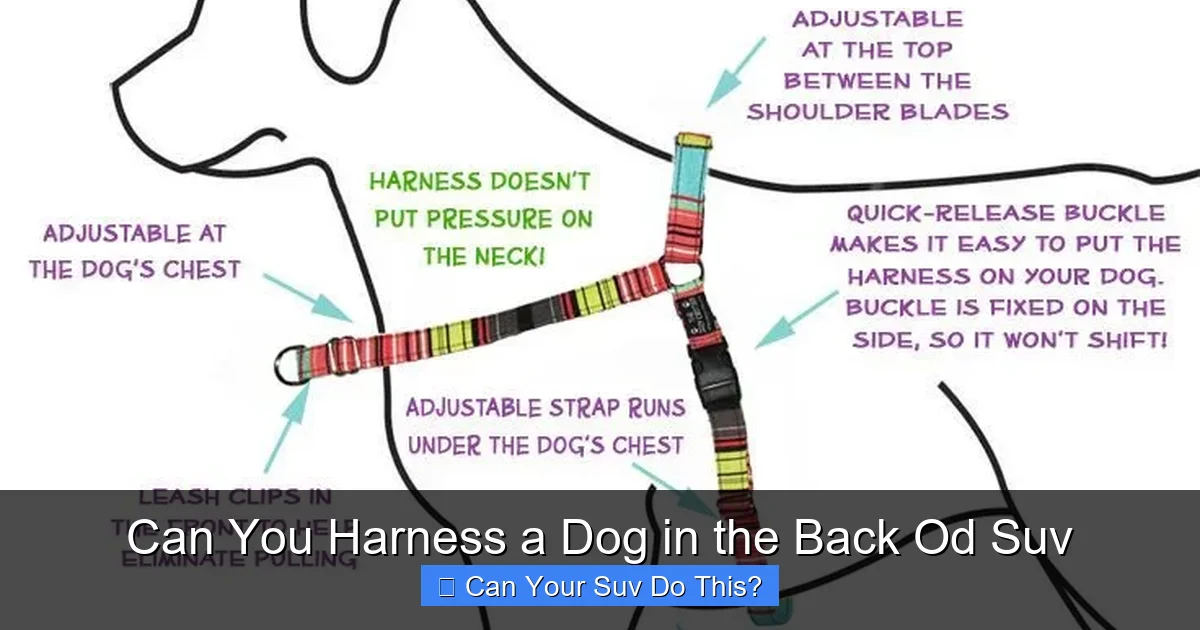
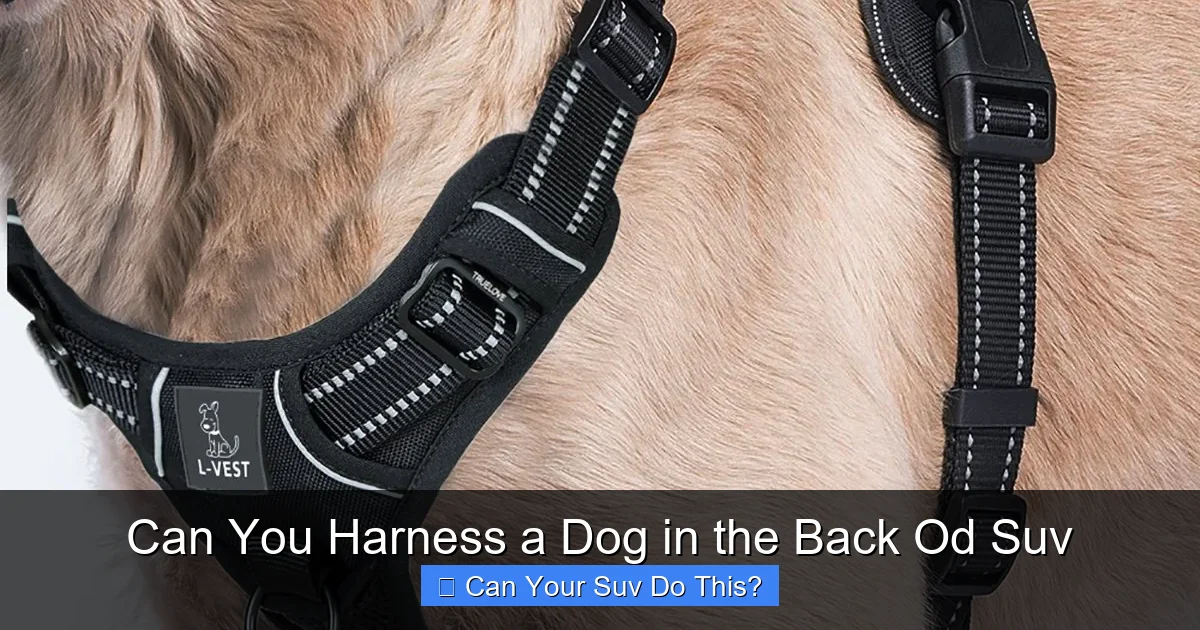
These are wearable vests or straps that clip directly into your SUV’s seatbelt system or LATCH anchors. Unlike regular leashes, crash-tested harnesses are engineered to absorb impact and distribute force across the dog’s body—similar to how human seatbelts work.
Best for: Medium to large dogs, frequent travelers, and safety-conscious owners.
Top Brands: Sleepypod Clickit Sport, RuffRider Roadie, and Kurgo Tru-Fit Smart Harness.
Pros:
- Easy to install and remove
- Allows some movement while keeping the dog secure
- Many are compatible with seatbelt buckles or anchor points
Cons:
- Can be pricey ($80–$150)
- May not fit all dog breeds perfectly (e.g., deep-chested breeds like Greyhounds)
- Requires proper sizing and adjustment
Tip: Always check for certification from the Center for Pet Safety (CPS) or similar organizations. Look for labels like “CPS Certified” or “Crash Tested.”
2. Cargo Barriers and Pet Gates
These are physical dividers installed between the back seats and the cargo area. They prevent your dog from jumping into the passenger cabin while still giving them room to move around.
Best for: Large SUVs with spacious cargo areas, dogs who don’t like being confined, or multi-pet households.
Top Brands: PetSafe Happy Ride, Kurgo Backseat Barrier, and Solvit Pet Barrier.
Pros:
- Provides maximum space and freedom
- Easy to install and remove (many are tension-mounted)
- Works well with other restraints (e.g., a harness + barrier combo)
Cons:
- Doesn’t fully restrain the dog during sudden stops
- May block access to cargo or rear seats
- Not suitable for small dogs who could slip through gaps
Tip: Combine a barrier with a tether or harness for added safety. This gives your dog room to roam while preventing dangerous lunges.
3. Pet Crates and Carriers
Hard-sided or soft-sided crates secured in the cargo area offer a fully enclosed space for your dog. They’re especially useful for anxious dogs, small breeds, or long trips.
Best for: Small to medium dogs, nervous travelers, or dogs prone to car sickness.
Top Brands: Varikennel, Sherpa Original Deluxe, and PetAmi.
Pros:
- Maximum containment and protection
- Reduces anxiety with a familiar, den-like space
- Can double as a travel kennel for hotels or vet visits
Cons:
- Takes up significant cargo space
- Requires anchoring with straps or seatbelts
- Not ideal for large dogs or extended travel without breaks
Tip: Use non-slip mats inside the crate and secure it with ratchet straps or seatbelt loops to prevent shifting.
4. Pet Hammocks and Seat Covers
While not restraints themselves, pet hammocks protect your seats and create a comfortable, non-slip surface. They often include side flaps to prevent dogs from falling into footwells.
Best for: Owners who want to protect upholstery while using a harness or barrier.
Top Brands: URPOWER, Active Pets, and PawJect.
Pros:
- Easy to install and clean
- Prevents scratches, fur, and spills
- Adds comfort with padded layers
Cons:
- Does not restrain the dog
- Can shift during sharp turns
Tip: Use a hammock in combination with a harness or barrier for full protection.
How to Properly Harness Your Dog in the Back of an SUV
So you’ve chosen your restraint system—now what? Proper installation and use are just as important as the gear itself. Here’s a step-by-step guide to safely harness your dog in the back of your SUV.
Step 1: Choose the Right Harness Size
Measure your dog’s chest girth (just behind the front legs) and neck size. Most brands provide sizing charts—don’t guess! A harness that’s too tight can cause chafing; one that’s too loose won’t provide adequate restraint.
Pro Tip: Try the “two-finger rule”—you should be able to fit two fingers between the harness and your dog’s body for a snug but comfortable fit.
Step 2: Secure the Harness to a Strong Anchor Point
Never clip a dog harness to a headrest or flimsy hook. Instead, use:
- Seatbelt buckle (if compatible)
- LATCH anchors (common in SUVs for child seats)
- Dedicated tie-down points in the cargo area
Avoid using the rear seatbelt for the dog—it’s designed for human passengers and may not lock properly.
Step 3: Limit Movement Without Restricting Comfort
The goal is to allow your dog to sit, lie down, and turn—but not stand, jump, or reach the front seats. A good rule of thumb: the tether should be short enough to prevent lunging but long enough for natural movement (usually 12–18 inches).
Step 4: Test Before You Travel
Take a short test drive around the block. Watch how your dog behaves—do they seem stressed? Is the harness rubbing? Adjust as needed. Reward calm behavior with treats to create positive associations.
Step 5: Never Leave Your Dog Unattended
Even with a harness, never leave your dog alone in a parked SUV—especially in warm weather. Temperatures can rise 20–30 degrees in just 10 minutes, leading to heatstroke. If you must stop, park in the shade, leave windows cracked, and bring water.
Legal and Ethical Considerations: What the Law Says
While pet safety is a personal responsibility, it’s also regulated in many places. Laws vary by state and country, but the trend is clear: unrestrained pets are increasingly seen as a traffic hazard.
U.S. State Laws
- California: Pets must be secured in a carrier or restrained by a harness. Fines up to $250.
- New York: Dogs must be restrained while driving. Violations can result in tickets.
- Illinois: Unrestrained pets can lead to distracted driving citations.
- Texas: No statewide law, but some cities (like Austin) have local ordinances.
International Regulations
- United Kingdom: The Highway Code requires pets to be secured so they don’t distract the driver.
- Australia: Most states mandate pet restraints in vehicles.
- Canada: Provinces like Ontario and British Columbia have strict pet transport laws.
Even if your area doesn’t have strict laws, ethical pet ownership means prioritizing your dog’s safety. Think of it like child passenger safety—just because it’s not illegal doesn’t mean it’s safe.
Training Your Dog to Love the Harness and Car Rides
Let’s face it—some dogs hate car rides. Others panic at the sight of a harness. But with patience and positive reinforcement, you can turn travel time into a fun, stress-free experience.
Start Slow: Acclimate to the Harness
Don’t wait until travel day to introduce the harness. Let your dog sniff it, wear it around the house, and reward them with treats. Gradually increase wear time from 5 minutes to 30 minutes.
Practice Short Trips
Begin with 5–10 minute drives to the park or around the block. Pair each trip with a favorite toy or treat. Over time, your dog will associate the car with positive experiences.
Use Calming Aids (If Needed)
For anxious dogs, consider:
- Calming chews or supplements (consult your vet)
- Thundershirts or anxiety wraps
- Soothing music or white noise
Avoid sedatives unless prescribed by a veterinarian—they can impair your dog’s ability to brace during sudden stops.
Maintain Routine
Dogs thrive on predictability. Try to travel at the same time of day, use the same harness, and follow a similar route when possible.
Common Mistakes to Avoid When Harnessing Your Dog
Even well-meaning owners make errors that compromise safety. Here are the top mistakes to watch out for:
1. Using a Regular Leash or Collar
A standard leash clipped to a collar can snap under pressure or cause neck injuries. Always use a harness designed for car travel.
2. Improper Anchoring
Clipping to a headrest, loose strap, or weak hook can fail in a crash. Always use certified anchor points.
3. Over-Tightening the Harness
This can restrict breathing or cause discomfort. Follow the two-finger rule and check for redness or irritation after rides.
4. Ignoring Weather Conditions
Never leave your dog in a hot or cold SUV—even with a harness. Temperature extremes are deadly.
5. Skipping Regular Checks
Inspect your harness, straps, and anchors before every trip. Look for fraying, rust, or loose stitching.
Conclusion: Safe Travel Starts with a Secure Harness
So, can you harness a dog in the back of an SUV? Absolutely—and you should. Whether you choose a crash-tested harness, a cargo barrier, or a secure crate, the key is to prioritize safety, comfort, and legality. Your dog isn’t just a passenger—they’re family. And just like you’d buckle up your child, you owe it to your pup to keep them protected on every journey.
Investing in the right gear, training your dog, and following best practices doesn’t just prevent accidents—it builds trust, reduces stress, and makes every road trip more enjoyable for everyone. So next time you’re loading up the SUV, remember: a secure dog is a happy dog. And a happy dog makes for a smoother, safer ride.
Frequently Asked Questions
Is it legal to drive with an unrestrained dog in an SUV?
Laws vary by location, but many states and countries require pets to be restrained while driving. In places like California and New York, driving with an unrestrained dog can result in fines. Always check local regulations to stay compliant.
Can I use a regular dog leash to secure my dog in the back of an SUV?
No, regular leashes are not designed for crash safety and can break or cause injury. Always use a crash-tested harness or approved restraint system specifically made for vehicle travel.
What’s the safest way to transport a large dog in an SUV?
The safest option is a combination of a crash-tested harness and a cargo barrier. This allows the dog room to move while preventing dangerous lunges or falls into the passenger area.
Can I leave my dog in the back of an SUV with the windows cracked?
No, never leave your dog unattended in a parked SUV—even with windows cracked. Temperatures can rise rapidly, leading to heatstroke or death within minutes.
How do I know if a dog harness is crash-tested?
Look for certifications from organizations like the Center for Pet Safety (CPS). Reputable brands will clearly label their products as “crash-tested” or “CPS Certified” on packaging and websites.
What should I do if my dog gets anxious during car rides?
Gradually acclimate your dog to the harness and short trips. Use positive reinforcement, calming aids, and familiar items like a favorite toy. Consult your vet if anxiety persists.