
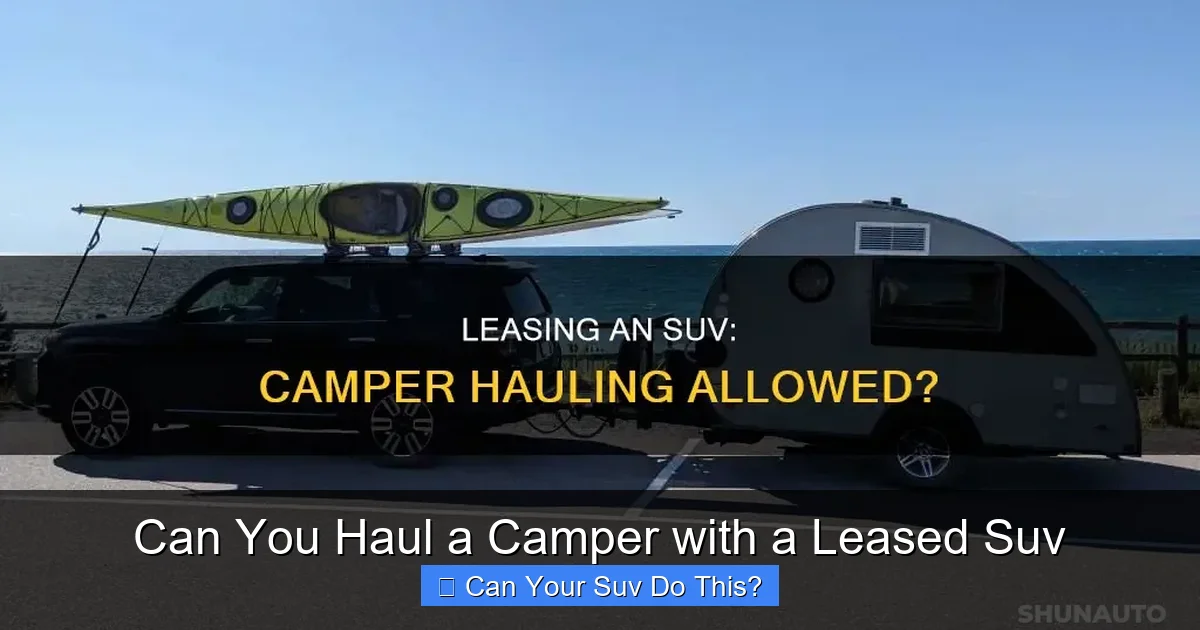
Yes, you can haul a camper with a leased SUV—but it’s not always straightforward. While many leased SUVs have the towing capacity, you must check your lease terms, insurance coverage, and vehicle specs to avoid penalties or damage claims.
So, you’ve got a shiny leased SUV and a dream of hitting the open road with a cozy camper in tow. Maybe you’re planning a weekend getaway to the mountains, a cross-country adventure, or just want the flexibility of having your own mobile home base. But before you hitch up and roll out, there’s one big question: Can you haul a camper with a leased SUV?
The short answer? Possibly. But it’s not as simple as just hooking up and driving off. Leasing an SUV comes with specific terms and conditions that can impact your ability—and your right—to tow a camper. Unlike owning a vehicle outright, where you’re free to modify and use it as you please, a leased SUV is technically still the property of the leasing company. That means you’re borrowing it under strict guidelines, and violating those guidelines could cost you—big time.
In this guide, we’ll walk you through everything you need to know about towing a camper with a leased SUV. We’ll cover the legal and contractual considerations, the mechanical requirements, safety tips, and smart alternatives if towing isn’t in the cards. Whether you’re driving a compact crossover or a full-size SUV, this article will help you make an informed decision—so you can enjoy your adventures without risking your lease or your safety.
Key Takeaways
- Check your lease agreement first: Most leases prohibit modifications or excessive wear, and towing a camper may fall under these restrictions.
- Verify towing capacity: Not all SUVs can safely tow campers—match your SUV’s Gross Combined Weight Rating (GCWR) with the camper’s weight.
- Use proper towing equipment: A weight-distributing hitch, brake controller, and sway control are essential for safe towing.
- Review insurance coverage: Standard policies may not cover towing-related damage—confirm with your insurer before hitting the road.
- Avoid permanent modifications: Installing a hitch permanently could violate lease terms; opt for bolt-on or removable hitches instead.
- Monitor wear and tear: Frequent towing increases brake, tire, and transmission wear—document condition at lease return to avoid excess fees.
- Consider alternatives: If towing isn’t allowed, explore rental trucks, camper trailers designed for lighter loads, or upgrading to a tow-capable vehicle.
📑 Table of Contents
Understanding Your Lease Agreement
Before you even think about attaching a trailer, the first step is to read your lease agreement carefully. This document is your rulebook, and it often contains clauses that directly affect your ability to tow a camper.
Most lease agreements include restrictions on vehicle use. Common prohibitions include using the vehicle for commercial purposes, racing, off-roading, or “excessive wear and tear.” Towing a camper—especially a heavy one—can easily fall into that last category. Why? Because towing puts extra strain on the engine, transmission, brakes, and suspension. Over time, this can lead to accelerated wear, which the leasing company will notice when you return the vehicle.
Look for specific language about modifications. Many leases forbid any permanent alterations to the vehicle, including installing a trailer hitch. Even if you’re careful, drilling holes into the frame or bumper to mount a hitch could be considered a violation. Some leases allow “minor modifications” if they’re reversible, but it’s best to get written confirmation from the leasing company before making any changes.
Also, check the mileage limits. Towing a camper typically reduces fuel efficiency and may cause you to rack up miles faster than usual. If you exceed your annual mileage allowance, you could face hefty per-mile charges at the end of the lease.
What to Look For in Your Lease
When reviewing your lease, pay close attention to these key sections:
- Permitted Use: Does it allow recreational towing? Some leases explicitly permit light towing for personal use.
- Modifications Clause: Are you allowed to install a hitch? Is it considered a permanent modification?
- Wear and Tear Policy: How is “excessive wear” defined? Will towing be considered normal or excessive?
- Insurance Requirements: Does your policy need to cover towing-related incidents?
- Early Termination Fees: If towing causes damage that leads to early return, what are the penalties?
If you’re unsure about any clause, don’t guess—contact your leasing company. Ask specifically: “Am I allowed to tow a camper with this leased SUV?” Get their answer in writing. This protects you in case of a dispute later.
Assessing Your SUV’s Towing Capacity
Visual guide about Can You Haul a Camper with a Leased Suv
Image source: shunauto.com
Even if your lease allows towing, your SUV must be physically capable of handling the load. Not all SUVs are created equal when it comes to towing. A compact SUV like a Honda CR-V or Toyota RAV4 may only tow 1,500 to 3,500 pounds, while a full-size SUV like a Ford Expedition or Chevrolet Tahoe can handle 8,000 pounds or more.
To determine if your leased SUV can safely haul a camper, you need to understand three key numbers:
Gross Vehicle Weight Rating (GVWR): The maximum weight your SUV can safely carry, including passengers, cargo, and fuel.
Gross Combined Weight Rating (GCWR): The total weight your SUV and trailer can safely handle together.
Towing Capacity: The maximum weight your SUV can pull, as specified by the manufacturer.
These numbers are usually found in your owner’s manual, on a sticker inside the driver’s door jamb, or on the manufacturer’s website. Never exceed the towing capacity—doing so can damage your vehicle, void your warranty, and create dangerous driving conditions.
Matching Your SUV to the Right Camper
Let’s say you have a leased Toyota Highlander with a towing capacity of 5,000 pounds. That sounds like plenty, right? But you need to account for more than just the camper’s dry weight.
Camper weights include:
- Dry Weight: The weight of the camper without water, gear, or fuel.
- Loaded Weight: The total weight when fully equipped for travel (often 1,000–2,000 pounds more than dry weight).
- Tongue Weight: The downward force the trailer exerts on the hitch (typically 10–15% of the trailer’s total weight).
For example, a lightweight travel trailer might have a dry weight of 3,500 pounds. But once you add water, food, bikes, and camping gear, it could easily reach 5,000 pounds—right at your SUV’s limit. That leaves no room for error, and it puts your vehicle under constant stress.
A safer approach is to choose a camper that weighs no more than 75–80% of your SUV’s towing capacity. So if your SUV can tow 5,000 pounds, aim for a camper under 4,000 pounds loaded. This gives you a buffer for hills, wind, and unexpected loads.
Real-World Example: The Ford Explorer
Let’s look at a real-world scenario. You’re leasing a Ford Explorer with a towing capacity of 5,600 pounds (when properly equipped). You’re eyeing a 25-foot travel trailer advertised at 4,800 pounds dry weight.
At first glance, it seems fine. But when you load it up—water tanks full, generator, outdoor furniture, and two passengers’ worth of gear—the weight climbs to 6,200 pounds. That’s over your SUV’s limit.
Now, imagine driving up a mountain pass. The engine strains, the brakes overheat, and the SUV struggles to maintain speed. This isn’t just uncomfortable—it’s dangerous. Over time, this kind of stress can lead to transmission failure, brake wear, and suspension damage.
The lesson? Always plan for the worst-case scenario. Weigh your fully loaded camper at a truck scale (many campgrounds and recycling centers offer this service) before committing to a trip.
Choosing the Right Towing Equipment
Even if your SUV can handle the weight and your lease allows towing, you still need the right equipment to do it safely. Towing a camper isn’t like pulling a small utility trailer—it requires specialized gear to control sway, distribute weight, and ensure braking power.
Essential Towing Components
Here’s what you’ll need:
- Class III or IV Hitch: A receiver hitch that matches your SUV’s towing capacity. Never use a hitch rated for less than your trailer’s weight.
- Weight-Distributing Hitch: This spreads the trailer’s weight across all four tires of your SUV, improving stability and control.
- Sway Control Device: Reduces side-to-side movement, especially in windy conditions or when passed by large trucks.
- Brake Controller: Required if your camper has electric brakes. It syncs the trailer’s brakes with your SUV’s, preventing jackknifing.
- Safety Chains: Always cross them under the hitch tongue to catch the trailer if it detaches.
- Trailer Wiring Harness: Connects your SUV’s lights to the trailer’s brake, turn, and running lights.
Installation: Permanent vs. Removable
This is where leasing gets tricky. Most leased SUVs come without a factory-installed hitch. If you want one, you’ll need to install it—but how?
Permanent hitches are bolted directly to the frame and often require drilling. This can violate lease terms, especially if the leasing company considers it a modification. Even if you remove it before returning the vehicle, the holes may still be visible and count as damage.
A better option? Removable or bolt-on hitches that don’t require welding or drilling. Some aftermarket hitches are designed to attach using existing frame holes or clamping systems. These are easier to remove and leave minimal trace.
Always check with your leasing company before installation. Some may require pre-approval or even specify approved installers. Keep all receipts and documentation in case you need to prove the hitch was professionally installed and removed.
Professional Installation Is Worth It
Don’t try to install a hitch yourself unless you’re highly experienced. A poorly installed hitch can fail catastrophically, causing accidents, injuries, or vehicle damage. Professional installers ensure the hitch is rated correctly, aligned properly, and secured with the right torque.
They’ll also help you choose the right brake controller and wiring harness for your SUV model. Many offer warranties on their work, which adds peace of mind.
Insurance and Liability Considerations
Towing a camper increases your risk on the road. If something goes wrong—like a trailer sway accident or brake failure—the consequences can be severe. That’s why it’s crucial to review your insurance policy before towing.
Does Your Policy Cover Towing?
Most standard auto insurance policies cover liability and collision for your SUV, but they may not automatically extend to towing-related incidents. For example:
- If your trailer causes damage to another vehicle, is that covered?
- If your SUV is damaged while towing, will your collision coverage apply?
- If the trailer detaches and causes an accident, who’s liable?
Some insurers offer “towing endorsements” or “recreational vehicle coverage” that specifically address these scenarios. Others may require you to add the trailer to your policy as a separate item.
Liability and Lease Implications
If you’re involved in an accident while towing, and it’s determined that the towing setup contributed to the incident, your leasing company could hold you responsible for damages beyond normal wear and tear. In extreme cases, they might even terminate your lease early.
Additionally, if your insurance doesn’t cover the full extent of the damage, you could be on the hook for thousands of dollars out of pocket.
What to Do
Call your insurance agent and ask:
- “Does my current policy cover towing a travel trailer?”
- “Do I need additional coverage for the trailer itself?”
- “Are there any exclusions related to leased vehicles?”
Get everything in writing. If you need to upgrade your policy, do it before your first trip.
Managing Wear and Tear on a Leased SUV
One of the biggest concerns with towing a camper in a leased SUV is accelerated wear and tear. Leasing companies inspect vehicles thoroughly at return, and they charge for anything beyond “normal” use.
Towing puts extra strain on several key systems:
- Transmission: Towing generates heat, which can degrade transmission fluid and lead to premature failure.
- Brakes: Stopping a heavier load wears down brake pads and rotors faster.
- Tires: Increased weight and load can cause uneven wear or blowouts.
- Suspension: Springs and shocks take a beating when hauling heavy loads.
- Engine: Constant high RPMs and load can reduce engine life.
How to Minimize Damage
You can’t eliminate wear, but you can reduce it:
- Use synthetic fluids: High-quality engine oil and transmission fluid handle heat better.
- Install a transmission cooler: This helps regulate temperature during long tows.
- Rotate tires regularly: Prevents uneven wear from the added weight.
- Check brakes before and after trips: Replace pads if they’re thinning.
- Avoid overloading: Stick to the 75–80% towing capacity rule.
Document Everything
Before you start towing, take photos of your SUV’s condition—especially the undercarriage, tires, and hitch area. Keep a log of maintenance, fluid changes, and inspections. When you return the vehicle, provide this documentation to show that any wear was due to normal use, not negligence.
If the leasing company claims excessive damage, you’ll have evidence to dispute unfair charges.
Alternatives If Towing Isn’t Allowed
What if your lease prohibits towing, or your SUV simply can’t handle the load? Don’t worry—there are still ways to enjoy camping without breaking the rules or risking your vehicle.
Rent a Tow Vehicle
Many outdoor retailers and RV rental companies offer tow-capable trucks or SUVs for short-term use. You can rent a truck for the weekend, hitch up your camper, and return it afterward. This keeps your leased SUV clean and untouched.
Use a Lightweight or Fold-Down Camper
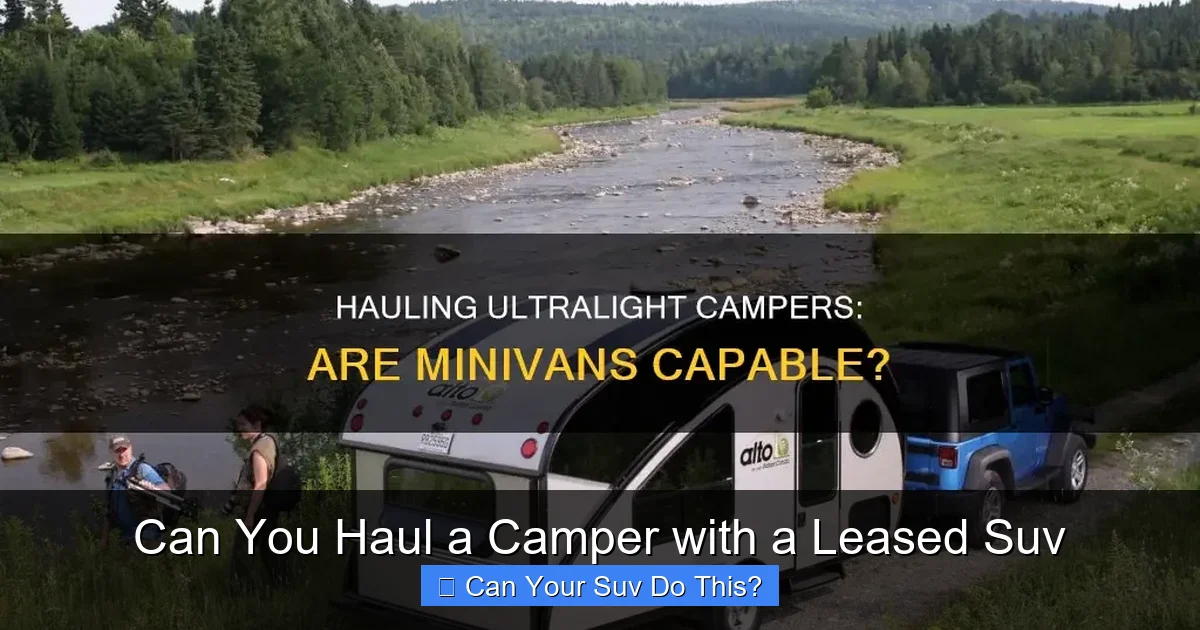
Some campers are designed specifically for smaller vehicles. Pop-up campers, teardrop trailers, and truck campers can weigh as little as 1,000 pounds. If your SUV has a modest towing capacity, one of these might be a perfect fit.
Consider a Roof-Top Tent
Roof-top tents attach directly to your SUV’s roof rack and don’t require towing at all. They’re lightweight, easy to set up, and ideal for overlanding or dispersed camping. While not as spacious as a full camper, they offer a comfortable sleeping solution without modifying your vehicle.
Upgrade Your Lease
If you love camping and plan to do it regularly, consider leasing a more capable vehicle next time. Many full-size SUVs and trucks come with factory towing packages, integrated brake controllers, and reinforced frames—all designed for heavy loads.
Some leasing companies even offer “adventure-ready” packages that include hitches, coolers, and roof racks. These are often pre-approved for towing, making life much easier.
Final Thoughts: Tow Smart, Stay Safe
So, can you haul a camper with a leased SUV? The answer is: Yes, but only if you do your homework. Check your lease, know your SUV’s limits, use the right equipment, and protect yourself with proper insurance.
Towing a camper can be an incredible way to explore the outdoors, bond with family, and create lasting memories. But it’s not worth risking your financial security or safety by cutting corners. A little preparation goes a long way.
Remember, your leased SUV is a temporary asset—but the lessons you learn about responsible towing will last a lifetime. Whether you’re cruising down the highway or parked by a serene lake, do it the right way. Your vehicle, your wallet, and your peace of mind will thank you.
Frequently Asked Questions
Can I install a trailer hitch on a leased SUV?
It depends on your lease agreement. Some leases allow removable hitches if they don’t cause permanent damage, while others prohibit any modifications. Always get written approval from your leasing company before installing a hitch.
Will towing a camper void my lease?
Not necessarily, but excessive wear or damage from towing could result in fees at lease return. If your lease prohibits towing or modifications, doing so could be considered a violation.
What happens if my leased SUV breaks down while towing?
Your roadside assistance may cover towing, but repairs due to overloading or improper use might not be covered. Check your lease and insurance policy for details on mechanical failures related to towing.
Can I tow a camper if my SUV doesn’t have a factory hitch?
Yes, but you’ll need to install an aftermarket hitch. Make sure it’s rated for your trailer’s weight and installed by a professional to avoid safety risks or lease violations.
Do I need special insurance to tow a camper?
Your standard policy may not cover towing-related incidents. Contact your insurer to add coverage for the trailer and confirm that towing is permitted under your plan.
What’s the safest way to tow a camper with a leased SUV?
Use a weight-distributing hitch, brake controller, and sway control. Never exceed your SUV’s towing capacity, and always drive slower than usual, especially on hills and in wind.