
Yes, you can haul a washer and dryer in a SUV—but it depends on your vehicle size, cargo space, and preparation. With proper planning, tie-downs, and possibly removing doors or using ramps, many SUVs can handle the job safely.
So, you just bought a shiny new washer and dryer—or maybe you’re moving and need to transport your trusty old ones. You’ve got an SUV parked in the driveway, and you’re wondering: *Can I haul a washer and dryer in my SUV?* It’s a fair question, and one that many homeowners and renters ask when facing a move or appliance upgrade.
The short answer? **Yes, you can haul a washer and dryer in a SUV—but it’s not always easy, and it definitely requires some planning.** Unlike a pickup truck or cargo van, most SUVs aren’t designed with heavy-duty hauling in mind. That said, with the right preparation, tools, and a bit of elbow grease, many SUVs can get the job done. Whether you’re driving a compact crossover like a Honda CR-V or a full-size beast like a Toyota Sequoia, there are ways to make it work.
But before you start loading up, it’s important to understand the limitations and risks. Washers and dryers are heavy, bulky, and fragile. A standard top-loading washer can weigh between 150 and 300 pounds, while a dryer often tips the scales at 150 to 250 pounds. Add in packaging, tools, and other moving supplies, and you’re looking at a significant load. Plus, these appliances aren’t exactly aerodynamic—they’re boxy, awkward to maneuver, and can easily damage your SUV’s interior if not protected.
In this guide, we’ll walk you through everything you need to know about hauling a washer and dryer in a SUV. From measuring your cargo space to securing your load safely, we’ll cover the practical steps, common mistakes to avoid, and when it might be smarter to call in the pros. Whether you’re a DIY mover or just curious about your SUV’s capabilities, this article will help you decide if your vehicle is up to the task.
Key Takeaways
- SUV size matters: Larger SUVs like the Ford Expedition or Chevrolet Tahoe offer enough cargo space for a washer and dryer, while compact models may struggle.
- Weight limits are crucial: Most SUVs can handle 400–700 lbs of cargo, but always check your owner’s manual to avoid overloading.
- Disassembly helps: Removing doors, control panels, or transport bolts can reduce size and prevent damage during transport.
- Secure everything properly: Use ratchet straps, moving blankets, and anchor points to keep appliances from shifting during transit.
- Ramps and dollies are essential: Loading heavy appliances without assistance is risky—use equipment to avoid injury.
- Consider professional help: If your SUV isn’t up to the task, renting a truck or hiring movers might be safer and more efficient.
- Plan your route: Avoid low bridges, narrow roads, or rough terrain that could damage your vehicle or cargo.
📑 Table of Contents
Understanding Your SUV’s Cargo Capacity
Before you even think about loading a washer and dryer into your SUV, you need to understand what your vehicle can realistically handle. Not all SUVs are created equal—some are built for off-roading and family road trips, while others are more like tall wagons with limited cargo space. The key factors to consider are **cargo volume**, **payload capacity**, and **interior dimensions**.
Let’s start with cargo volume. This is the amount of space available behind the rear seats when they’re folded down. For example, a midsize SUV like the Toyota Highlander offers about 84 cubic feet of cargo space with the second and third rows folded. That sounds like a lot, but a standard washer is roughly 27 inches wide, 27 inches deep, and 39 inches tall—about 15 cubic feet on its own. Add a dryer of similar size, and you’re looking at 30 cubic feet or more. That leaves little room for anything else, and you’ll need to angle or tilt the appliances to fit.
Now consider payload capacity. This is the maximum weight your SUV can carry, including passengers, luggage, and cargo. Most SUVs have a payload rating between 1,000 and 1,500 pounds. Subtract the weight of passengers and gear, and you might only have 600–800 pounds left for your appliances. A washer and dryer together can easily weigh 300–500 pounds, especially if they’re front-loading models with stainless steel drums. That’s cutting it close, especially if you’re driving on rough roads or uphill.
Interior dimensions also matter. Even if your SUV has enough volume, the shape of the cargo area might not accommodate large, rigid boxes. For instance, the rear hatch opening on a compact SUV like the Mazda CX-5 is only about 36 inches wide—too narrow for most washers and dryers. You’d need to remove the doors or tilt the appliances at an angle, which increases the risk of damage.
Measuring Your SUV’s Interior
To determine if your SUV can fit a washer and dryer, grab a tape measure and check the following:
– **Cargo floor length** (from the back of the front seats to the tailgate)
– **Cargo width** (at the narrowest point, usually between the wheel wells)
– **Cargo height** (from the floor to the roof, with seats folded)
– **Hatch opening width and height**
Compare these measurements to the dimensions of your appliances. Most washers and dryers are around 27” x 27” x 39”, but front-loading models can be deeper—up to 32 inches. If your SUV’s cargo area is shorter than 5 feet long or narrower than 40 inches, you’ll likely need to remove doors or use creative loading techniques.
Payload vs. Towing Capacity
Don’t confuse payload with towing capacity. Towing refers to how much weight your SUV can pull behind it (like a trailer), while payload is what it can carry inside. Most SUVs can tow 3,500 to 8,000 pounds, but their payload is much lower—usually under 1,500 pounds. Overloading your SUV can damage the suspension, brakes, and tires, and it’s also a safety hazard.
Check your owner’s manual or the door jamb sticker for your vehicle’s exact payload rating. Then, weigh your appliances if possible. Many retailers list the weight in the product specs, or you can call the manufacturer. If the combined weight of your washer, dryer, and other cargo exceeds your SUV’s payload, it’s time to consider alternatives.
Preparing Your Washer and Dryer for Transport
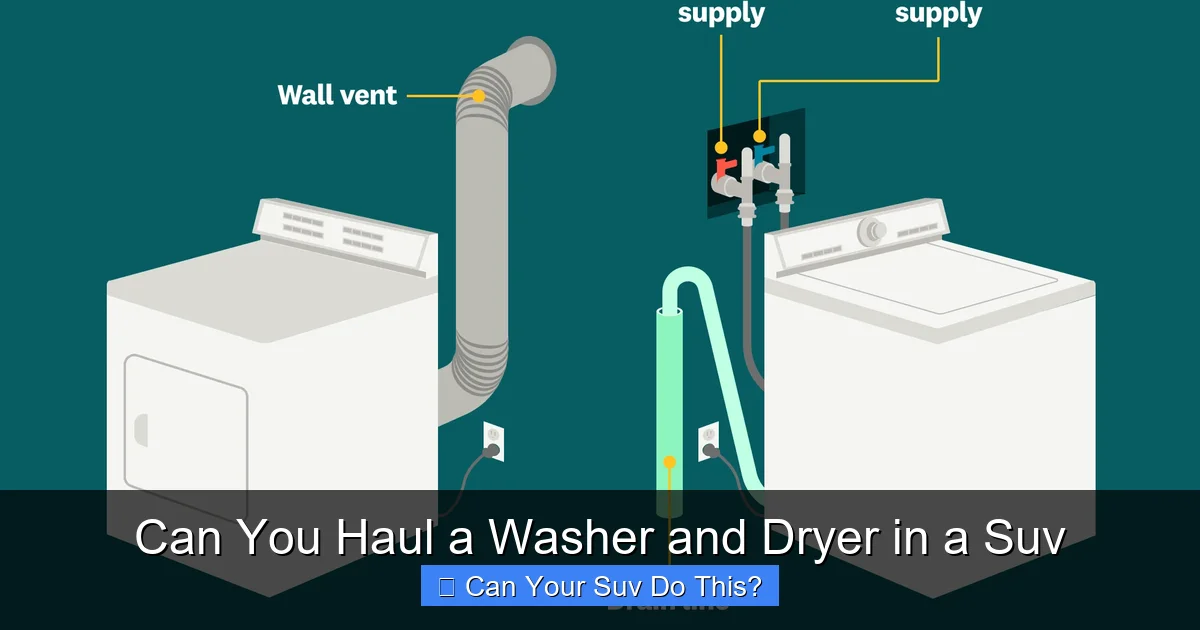
Visual guide about Can You Haul a Washer and Dryer in a Suv
Image source: dryerenthusiast.com
Once you’ve confirmed your SUV can handle the load, the next step is preparing the appliances for transport. Washers and dryers aren’t designed to be moved frequently, so they need special care to avoid damage—both to the machines and your vehicle.
Drain and Secure the Washer
Water is the enemy during transport. Even a small amount left in the drum or hoses can leak and ruin your SUV’s interior. Before loading, make sure the washer is completely drained:
– Run a spin cycle to remove excess water.
– Disconnect and drain the inlet hoses.
– Tip the washer slightly to drain any water trapped in the pump or tub.
– Use a wet/dry vacuum to suck out residual water if needed.
Next, secure the drum. Most washers have transport bolts that lock the drum in place during shipping. If you’re moving a used washer, you may need to reinstall these bolts. If they’re missing, you can buy replacements online or use straps to immobilize the drum. Without this step, the drum can shift during transit, damaging internal components.
Protect the Dryer’s Vent and Controls
Dryers are less prone to water damage, but their vents and control panels are vulnerable. Remove the lint trap and clean it thoroughly—lint is flammable and can clog your SUV’s air vents. If your dryer has a gas line, turn off the gas supply and disconnect the line using a wrench. For electric dryers, unplug the power cord and secure it with tape.
Cover the control panel with plastic wrap or a moving blanket to prevent scratches. If the dryer has a glass door, consider removing it or padding it heavily. Glass can crack under pressure or vibration.
Wrap and Pad the Appliances
Even with careful handling, appliances can get dinged or scratched during loading and unloading. Use moving blankets, bubble wrap, or cardboard to protect the surfaces. Pay special attention to corners, handles, and control panels. Secure the padding with tape or straps, but avoid covering vents or labels.
For extra protection, place the appliances on a piece of plywood or a furniture dolly before loading. This creates a smooth surface and reduces friction.
Loading Techniques for SUVs
Loading a washer and dryer into an SUV isn’t as simple as tossing them in the back. These appliances are heavy, awkward, and easy to drop. Without the right technique, you could injure yourself or damage your vehicle.
Use a Ramp or Lift
The safest way to load heavy appliances is with a ramp. A portable loading ramp can be placed against the SUV’s tailgate, creating a gradual incline. You can then roll the washer or dryer up the ramp using a dolly. Look for ramps rated for at least 500 pounds and made of durable aluminum or steel.
If you don’t have a ramp, you can use a piece of plywood as a makeshift ramp—just make sure it’s long enough and securely braced. Never try to lift a 300-pound washer straight into the SUV without assistance. Even with help, it’s risky.
Enlist Help
Never attempt to load a washer or dryer alone. These appliances are too heavy and bulky for one person to manage safely. Recruit at least one helper—preferably two—to assist with lifting and guiding. Wear gloves and closed-toe shoes to protect your hands and feet.
When lifting, bend your knees and keep your back straight. Lift with your legs, not your back. Communicate clearly with your helpers—use simple commands like “lift,” “slide,” and “stop.”
Positioning in the SUV
Once inside, position the appliances carefully. Place the heavier item (usually the washer) closer to the front of the cargo area to balance the weight. Angle the appliances diagonally if needed to maximize space. Avoid stacking them unless you have a very large SUV and proper support.
If you’re transporting both a washer and dryer, consider loading one at a time. This gives you more control and reduces the risk of dropping or damaging either appliance.
Securing the Load Safely
An unsecured washer or dryer can become a dangerous projectile during sudden stops or turns. Even at low speeds, a 300-pound appliance can cause serious damage—or injury—if it shifts.
Use Ratchet Straps and Anchor Points
Your SUV should have built-in anchor points in the cargo area—usually D-rings or hooks near the floor. Use high-quality ratchet straps (rated for at least 500 pounds) to secure the appliances. Loop the straps around the washer and dryer frames (not hoses or cords) and tighten them until the load is snug.
Avoid using bungee cords or rope—they can stretch or snap under pressure. Check the straps periodically during the trip, especially after the first few miles.
Fill Gaps with Moving Blankets or Foam
Even with straps, appliances can shift slightly. Fill any gaps between the machines and the SUV’s walls with moving blankets, foam blocks, or cardboard. This prevents side-to-side movement and reduces noise.
If you’re transporting other items, pack them around the appliances to create a stable load. Avoid placing fragile items on top of the washer or dryer.
Drive Cautiously
Once everything is loaded and secured, drive carefully. Avoid sudden accelerations, hard braking, and sharp turns. The added weight will affect your SUV’s handling, especially on hills or curves. Give yourself extra stopping distance and check your mirrors frequently.
If possible, take back roads or highways with smooth pavement. Avoid potholes, speed bumps, and rough terrain that could jostle the load.
When to Call in the Pros
Despite your best efforts, there are times when hauling a washer and dryer in a SUV just isn’t practical—or safe. If your SUV is too small, too old, or already loaded with passengers and gear, it’s better to hire professionals.
Rent a Truck or Trailer
Many home improvement stores and rental companies offer pickup trucks or cargo vans for a day or weekend. A standard pickup truck bed is usually 6–8 feet long and can easily accommodate a washer and dryer side by side. Some companies even provide loading assistance.
Alternatively, you can rent a trailer and tow it behind your SUV. Just make sure your vehicle’s towing capacity is sufficient and that you have the proper hitch and wiring.
Hire Professional Movers
If you’re moving house or don’t want the hassle, consider hiring professional movers. They have the equipment, experience, and insurance to transport appliances safely. While it costs more than DIY, it’s often worth it for peace of mind.
Some appliance retailers also offer delivery and installation services. For a fee, they’ll bring your new washer and dryer to your home, haul away the old ones, and set everything up. This is the easiest option if you’re upgrading.
Real-World Examples and Tips
Let’s look at a few real-world scenarios to see how different SUVs handle washer and dryer transport.
Scenario 1: Full-Size SUV (Ford Expedition)
The Ford Expedition has a massive cargo area—over 100 cubic feet with the seats folded. It can easily fit a washer and dryer side by side, even with room for other items. With a payload capacity of 1,800 pounds, it can handle the weight without issue. A ramp and two helpers make loading straightforward.
Scenario 2: Midsize SUV (Honda Pilot)
The Honda Pilot offers about 84 cubic feet of cargo space. It can fit a washer and dryer, but you’ll need to angle them or remove the third-row seats. Payload is around 1,400 pounds, so it’s doable—but tight. Use moving blankets and secure everything carefully.
Scenario 3: Compact SUV (Toyota RAV4)
The RAV4 has only 69 cubic feet of cargo space and a payload of about 1,200 pounds. It’s possible to fit one appliance at a time, but hauling both is a stretch. You’d need to remove doors, use a ramp, and drive very carefully. In this case, renting a truck is probably the better choice.
Pro Tips
– **Remove doors:** If your SUV’s hatch is too narrow, consider removing the washer or dryer door temporarily. Most doors are held on with screws and can be reattached later.
– **Use a furniture dolly:** A dolly with straps makes it easier to move heavy appliances across flat surfaces.
– **Protect your SUV:** Line the cargo area with cardboard or moving blankets to prevent scratches and dents.
– **Check local laws:** Some areas have weight limits for vehicles on certain roads or bridges. Make sure you’re compliant.
Conclusion
So, can you haul a washer and dryer in a SUV? The answer is a cautious **yes**—if you plan carefully, prepare properly, and respect your vehicle’s limits. Larger SUVs like the Chevrolet Suburban or Nissan Armada are well-suited for the task, while compact models may struggle.
The key is to measure your cargo space, check your payload, and use the right tools and techniques. Always secure your load, drive safely, and don’t hesitate to ask for help. And if your SUV just isn’t up to the job, don’t force it—rent a truck or hire movers instead.
Transporting appliances doesn’t have to be a nightmare. With the right approach, your SUV can rise to the occasion and get the job done. Just remember: safety first, preparation second, and never underestimate the weight of a wet washer.
Frequently Asked Questions
Can I fit a washer and dryer in a Honda CR-V?
It’s unlikely. The CR-V has limited cargo space (around 75 cubic feet) and a narrow hatch opening. You might fit one appliance at a time with doors removed, but hauling both is not recommended.
Do I need to drain the washer before transport?
Yes. Any water left in the drum, hoses, or pump can leak during transit and damage your SUV’s interior. Always run a spin cycle and drain hoses before loading.
Can I transport a gas dryer in my SUV?
Yes, but you must turn off the gas supply and disconnect the gas line. Use a wrench to cap the line and secure the dryer carefully to prevent leaks or damage.
What’s the best way to secure appliances in an SUV?
Use ratchet straps anchored to the SUV’s cargo tie-down points. Wrap the appliances in moving blankets and fill gaps with foam or cardboard to prevent shifting.
Is it safe to drive with a washer in the back of my SUV?
Yes, if the load is properly secured and within your vehicle’s payload limit. Drive cautiously, avoid sudden movements, and check straps during the trip.
Should I remove the washer drum before transport?
No, but you should secure it with transport bolts or straps. The drum must be immobilized to prevent internal damage during transit.