
Yes, you can jump start a SUV with a car—but only if you follow the correct safety procedures. While SUVs often have larger batteries and higher electrical demands, a standard car with a healthy battery can usually provide enough power to get your SUV running again. The key is using proper jumper cables, connecting them in the right order, and avoiding common mistakes that could damage electronics or cause injury.
[FEATURED_IMAGE_PLACEHOUND]
Key Takeaways
- Yes, it’s possible: A regular car can jump start most SUVs, even those with larger engines, as long as both vehicles have 12-volt electrical systems.
- Use quality jumper cables: Thick, insulated cables with strong clamps ensure efficient power transfer and reduce sparking risks.
- Follow the correct connection order: Connect positive to positive, then negative to the donor car’s battery and the dead SUV’s engine block—not the negative terminal.
- Let the donor car run: Keep the working car’s engine running at 1500–2000 RPM for 5–10 minutes to charge the dead battery before attempting to start the SUV.
- Watch for warning signs: If the SUV doesn’t start after 3–5 attempts, or if you smell burning or see smoke, stop immediately—there may be a deeper issue.
- Modern SUVs need extra care: Many newer models have sensitive electronics; avoid connecting cables while either vehicle is on, and consider using a portable jump starter instead.
- Prevention beats rescue: Regularly check your SUV’s battery health, especially in cold weather, to avoid needing a jump in the first place.
📑 Table of Contents
- Can You Jump Start a SUV with a Car? The Short Answer
- Why Jump Starting Works—Even for Big SUVs
- Step-by-Step Guide: How to Jump Start a SUV with a Car
- Safety Tips and Common Mistakes to Avoid
- When Jump Starting Won’t Work—And What to Do Instead
- Modern SUVs and Jump Starting: What’s Changed?
- Prevention: How to Avoid Needing a Jump Start
- Conclusion: Yes, You Can—But Do It Right
Can You Jump Start a SUV with a Car? The Short Answer
Picture this: It’s a cold winter morning, you’re running late for work, and your SUV won’t start. The dashboard lights flicker weakly, and the engine just clicks when you turn the key. Your first thought? “Can I jump start my SUV with my friend’s sedan?” The good news is—yes, you usually can. But like most things in life, it’s not quite that simple.
Jump starting a SUV with a car is not only possible but also a common roadside rescue tactic. SUVs, despite their size and power, still rely on standard 12-volt lead-acid batteries—just like most passenger cars. That means the basic principles of jump starting apply across vehicle types. However, SUVs often have larger engines, more electronics, and sometimes dual-battery systems, which can complicate things if you’re not careful.
The real question isn’t whether it’s *possible*—it’s whether it’s *safe* and *effective*. With the right tools, knowledge, and a bit of patience, you can safely revive your SUV using another vehicle. But skip a step, use the wrong cables, or connect things out of order, and you could end up with fried electronics, a damaged alternator, or even a dangerous spark explosion.
So, let’s break it down. In this guide, we’ll walk you through everything you need to know about jump starting a SUV with a car—from understanding why it works to mastering the step-by-step process, avoiding common pitfalls, and knowing when it’s time to call a professional. Whether you’re a weekend warrior or a daily commuter, this knowledge could save you time, money, and a whole lot of stress.
Why Jump Starting Works—Even for Big SUVs
Visual guide about Can You Jump Start a Suv with a Car
Image source: media.hswstatic.com
At its core, jump starting is about borrowing electrical power from a healthy battery to give a dead one enough juice to turn over the engine. It’s like giving your SUV a quick energy boost so it can restart its own charging system (the alternator). But why does this work even for large, heavy SUVs with powerful engines?
The answer lies in the electrical system. Most SUVs—whether they’re compact crossovers like the Honda CR-V or full-size beasts like the Ford Expedition—use a 12-volt electrical system, just like your average sedan. The battery’s job is to provide the initial burst of power to start the engine. Once the engine is running, the alternator takes over, recharging the battery and powering the vehicle’s electronics.
So even though an SUV might have a bigger engine and higher compression ratio (making it harder to turn over), the battery only needs to supply enough current to get the starter motor spinning. A typical car battery can deliver 400–600 cold cranking amps (CCA)—more than enough to help start most SUVs, especially if the donor car’s engine is running and the battery is in good condition.
Understanding Cold Cranking Amps (CCA)
Cold cranking amps (CCA) measure how much current a battery can deliver at 0°F for 30 seconds while maintaining at least 7.2 volts. SUVs often require higher CCA ratings than smaller cars because their engines are larger and harder to start in cold weather. For example, a Toyota Camry might need 500 CCA, while a Chevy Tahoe could need 700–800 CCA.
But here’s the key: when you jump start, you’re not relying solely on the dead battery. You’re combining the power of both batteries (and the donor car’s running alternator) to deliver that initial surge. So even if your SUV’s battery is completely dead, a healthy car battery can often provide enough extra current to get things moving.
The Role of the Alternator
Once the SUV’s engine starts, its alternator begins generating electricity to recharge the battery and power the vehicle. This is why it’s important to let the SUV run for at least 15–20 minutes after a jump start—so the alternator has time to restore the battery’s charge. If you turn it off too soon, the battery may not have enough power to start the engine again.
Step-by-Step Guide: How to Jump Start a SUV with a Car
Now that you know it’s possible, let’s get practical. Jump starting a SUV with a car isn’t rocket science, but it does require attention to detail. Follow these steps carefully to ensure a safe and successful jump.
What You’ll Need
- Jumper cables (at least 10–12 feet long, 4–6 gauge recommended)
- A working car with a charged 12-volt battery
- Safety glasses (optional but recommended)
- Gloves (to protect your hands)
- A clear, flat area to park both vehicles
Step 1: Position the Vehicles Safely
Park the working car close enough to the SUV so the jumper cables can reach both batteries—but not so close that the vehicles touch. Turn off both engines, set the parking brakes, and put both vehicles in Park (or Neutral for manual transmissions). Turn off all lights, radios, and accessories to reduce electrical load.
Step 2: Locate the Batteries
Most SUVs have the battery under the hood, but some newer models (like certain BMWs or Mercedes) may hide it in the trunk, under a seat, or behind a panel. Check your owner’s manual if you’re unsure. Once located, remove any plastic covers or battery terminals caps.
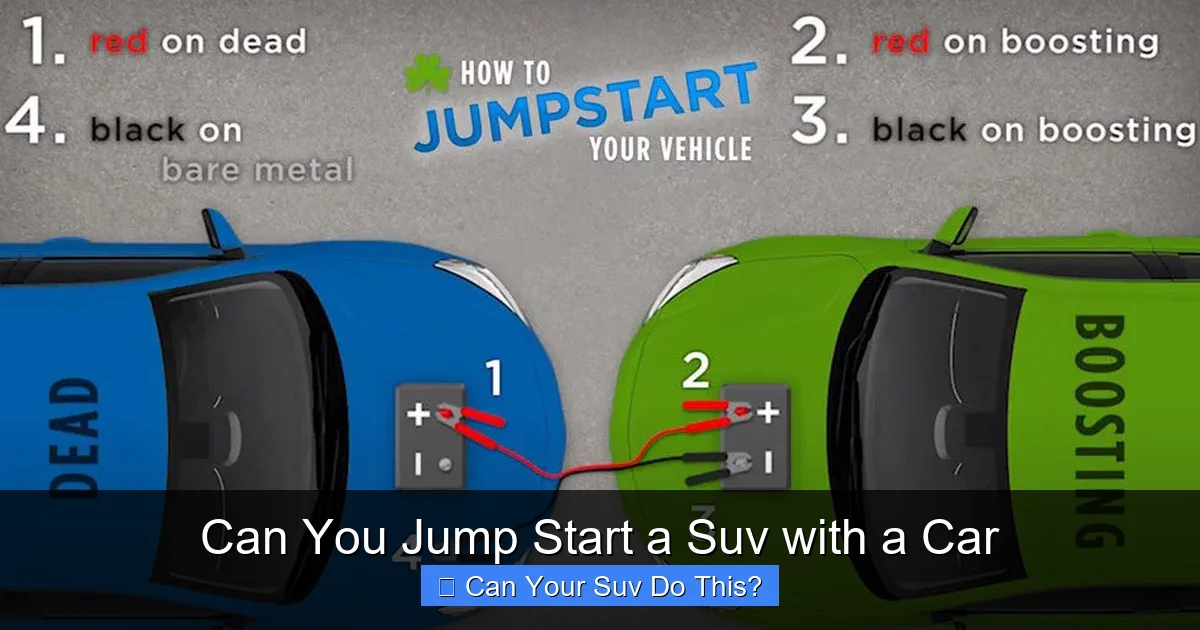
Step 3: Connect the Jumper Cables in the Correct Order
This is where many people go wrong. The order matters—both for safety and effectiveness.
- Connect the red (positive) clamp to the dead SUV’s positive terminal. It’s usually marked with a “+” sign and covered in red.
- Connect the other red clamp to the donor car’s positive terminal.
- Connect the black (negative) clamp to the donor car’s negative terminal.
- Connect the final black clamp to an unpainted metal surface on the SUV’s engine block—not the negative terminal. This is called “grounding” and helps prevent sparks near the battery, which could ignite hydrogen gas.
Step 4: Start the Donor Car and Let It Run
Start the working car and let it idle for 5–10 minutes. For better results, rev the engine slightly (around 1500–2000 RPM) to increase alternator output. This helps push more current into the dead battery.
Step 5: Attempt to Start the SUV
After the charging period, try starting the SUV. If it doesn’t start within 10–15 seconds, wait another 2–3 minutes and try again. Avoid cranking for more than 15 seconds at a time to prevent overheating the starter.
Step 6: Disconnect the Cables in Reverse Order
Once the SUV is running, disconnect the cables in the reverse order:
- Remove the black clamp from the SUV’s engine block.
- Remove the black clamp from the donor car’s negative terminal.
- Remove the red clamp from the donor car’s positive terminal.
- Remove the red clamp from the SUV’s positive terminal.
Let the SUV run for at least 15–20 minutes to allow the alternator to recharge the battery. If possible, drive it instead of idling—driving generates more alternator output.
Safety Tips and Common Mistakes to Avoid
Jump starting seems straightforward, but small mistakes can lead to big problems. Here are the most common pitfalls and how to avoid them.
Don’t Connect to the Dead Battery’s Negative Terminal
One of the biggest mistakes is connecting the final black clamp to the dead SUV’s negative terminal. This can cause sparks near the battery, which is dangerous because batteries emit hydrogen gas—a highly flammable byproduct of charging. Always ground the final clamp to a clean, unpainted metal part of the engine block, such as a bolt or bracket.
Use Quality Jumper Cables
Cheap, thin cables may not carry enough current, especially for larger SUVs. Look for cables labeled 4-gauge or 6-gauge with thick insulation and strong clamps. Longer cables (10–15 feet) give you more flexibility in positioning the vehicles.
Don’t Jump Start a Swollen or Leaking Battery
If the SUV’s battery is swollen, cracked, or leaking fluid, do not attempt to jump start it. These are signs of internal damage or overcharging, and attempting a jump could cause the battery to explode. Call a tow truck or roadside assistance instead.
Watch for Warning Lights After Starting
After a successful jump, some SUVs may display warning lights (like the check engine light or battery light) temporarily. This is normal as the vehicle’s computer resets. However, if lights stay on or the SUV runs poorly, there may be an underlying issue with the battery, alternator, or electrical system.
Avoid Jump Starting in Extreme Conditions
Jump starting in heavy rain, snow, or near flammable materials increases the risk of shock or fire. If possible, move to a dry, well-ventilated area. Never jump start a vehicle near open flames or gasoline fumes.
When Jump Starting Won’t Work—And What to Do Instead
Despite your best efforts, sometimes a jump start just won’t do the trick. Here are a few reasons why, and what you can do about it.
The Battery Is Completely Dead or Sulfated
If the battery is more than 3–5 years old and has been deeply discharged multiple times, it may no longer hold a charge. Sulfation—the buildup of lead sulfate crystals—can permanently reduce capacity. In this case, jump starting might get the engine running, but the battery won’t stay charged. You’ll need a replacement.
The Alternator Is Faulty
If the SUV starts with a jump but dies again shortly after, the alternator may not be charging the battery. Test the alternator with a multimeter or have it checked at an auto parts store. A bad alternator can drain a new battery in days.
Parasitic Drain or Electrical Issue
Sometimes, a component (like a glove box light or aftermarket stereo) continues to draw power even when the vehicle is off, draining the battery overnight. This is called a parasitic drain. A mechanic can perform a parasitic draw test to identify the culprit.
Extreme Cold Weather
In sub-zero temperatures, even a healthy battery can struggle to deliver enough current. If the SUV won’t start after multiple jump attempts, the battery may be too cold. Try warming the battery with a battery warmer or moving the vehicle to a garage.
Modern SUVs and Jump Starting: What’s Changed?
Newer SUVs come packed with advanced electronics—infotainment systems, adaptive cruise control, start-stop technology, and more. These systems are more sensitive to voltage fluctuations, which means jump starting requires extra caution.
Start-Stop Systems and AGM Batteries
Many modern SUVs use Absorbent Glass Mat (AGM) batteries, which are designed for start-stop systems that frequently turn the engine on and off. AGM batteries are more efficient but also more sensitive to improper charging. Using standard jumper cables on an AGM battery can damage it. If your SUV has an AGM battery, consider using a smart jump starter or consult your owner’s manual for specific instructions.
Electronic Control Modules (ECMs)
Sudden voltage spikes during jump starting can damage the SUV’s ECM—the brain that controls engine performance. To reduce risk, ensure both vehicles are off before connecting cables, and avoid touching the clamps together.
Hybrid and Electric SUVs
Hybrid SUVs (like the Toyota RAV4 Hybrid) have high-voltage battery packs, but their 12-volt auxiliary batteries can still die. You can jump start the 12-volt system just like a regular car, but never attempt to jump the high-voltage traction battery—that requires specialized equipment and training.
Fully electric SUVs (like the Tesla Model Y) don’t have traditional 12-volt batteries that can be jump started in the same way. They use DC-DC converters to charge the 12-volt system from the main battery pack. If the 12-volt battery dies, you’ll need a portable jump starter or roadside assistance.
Prevention: How to Avoid Needing a Jump Start
The best jump start is the one you never need. Here’s how to keep your SUV’s battery in top shape.
Check Battery Health Regularly
Most auto parts stores offer free battery testing. Have yours checked once a year, especially before winter. Look for signs of corrosion (white or green powder on terminals), loose connections, or a battery that’s more than 3–5 years old.
Drive Regularly
Short trips don’t give the alternator enough time to fully recharge the battery. If you only drive short distances, consider using a battery maintainer or trickle charger to keep the battery topped up.
Turn Off Accessories When Idling
Running the radio, headlights, or climate control while the engine is off can drain the battery quickly. Avoid using accessories for more than 10–15 minutes without the engine running.
Protect Against Extreme Temperatures
Cold weather slows chemical reactions in the battery, reducing its ability to deliver current. Hot weather accelerates corrosion and evaporation. Park in a garage when possible, or use a battery insulation blanket in winter.
Consider a Portable Jump Starter
A portable jump starter is a compact, battery-powered device that can jump start your SUV without another vehicle. They’re especially useful if you’re stranded alone. Look for models with at least 1000 peak amps and built-in safety features like reverse polarity protection.
Conclusion: Yes, You Can—But Do It Right
So, can you jump start a SUV with a car? Absolutely. With the right tools, knowledge, and caution, it’s a reliable way to get your SUV back on the road. The key is respecting the process: use quality cables, follow the correct connection order, and prioritize safety at every step.
Remember, not all dead batteries are created equal. If your SUV won’t start after a proper jump, or if it keeps dying, there’s likely a deeper issue that needs professional attention. And while jump starting is a great skill to have, prevention is always better than rescue.
Keep your battery maintained, drive regularly, and consider investing in a portable jump starter for peace of mind. That way, the next time you’re staring at a silent SUV on a cold morning, you’ll know exactly what to do—and how to do it safely.
Frequently Asked Questions
Can I jump start a SUV with a small car?
Yes, as long as both vehicles have 12-volt electrical systems. A small car with a healthy battery can usually provide enough power to start most SUVs, especially if the donor car’s engine is running.
What if my SUV has a dual battery system?
Some large SUVs (like the Ford F-150 Raptor or Toyota Land Cruiser) have dual batteries. In most cases, you only need to jump the primary battery. Check your owner’s manual to identify the correct battery and follow the same jump-starting steps.
Can I use a portable jump starter instead of another car?
Yes, portable jump starters are a great alternative. They’re compact, easy to use, and don’t require another vehicle. Just make sure the jump starter has enough power (at least 1000 peak amps) for your SUV.
How long should I let the SUV run after a jump start?
Let it run for at least 15–20 minutes, or better yet, drive it. This gives the alternator time to recharge the battery. Idling alone may not generate enough power, especially in stop-and-go traffic.
Is it safe to jump start a hybrid SUV?
Yes, but only the 12-volt auxiliary battery. Never attempt to jump the high-voltage traction battery. Use standard jumper cables on the 12-volt system, and follow the same safety precautions.
What should I do if the SUV still won’t start after a jump?
If it doesn’t start after 3–5 attempts, or if you smell burning or see smoke, stop immediately. There may be a faulty alternator, parasitic drain, or internal battery damage. Call a mechanic or roadside assistance.