
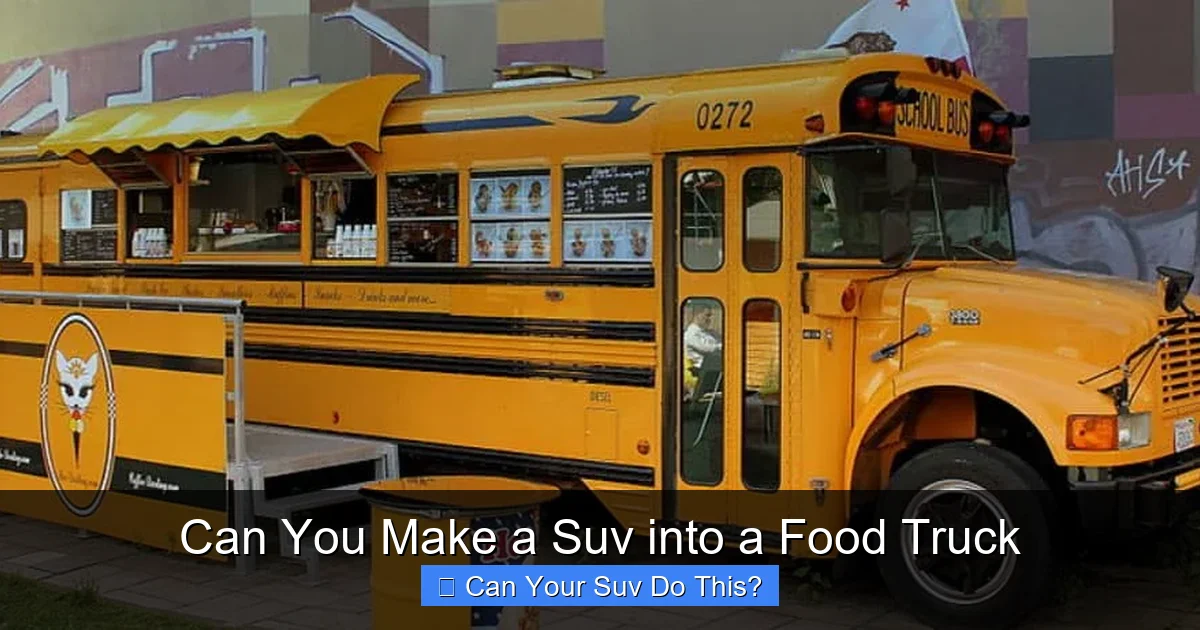
You absolutely can make a SUV into a food truck—with the right planning, tools, and permits. From compact pop-up setups to full mobile kitchens, your SUV can become a profitable food business on wheels. It’s affordable, flexible, and perfect for entrepreneurs on a budget.
Key Takeaways
- SUVs are ideal for food truck conversions: Their cargo space, fuel efficiency, and versatility make them great for mobile food businesses.
- You don’t need a full kitchen inside: Many successful SUV food trucks use external setups like pop-up tents, grills, or food carts.
- Permits and regulations matter: Every city has rules for mobile food vendors—check local health, safety, and zoning laws before launching.
- Power and storage are key challenges: Plan for generators, battery systems, and smart storage to keep food fresh and equipment organized.
- Start small and scale up: Begin with a simple menu and basic setup, then expand as your business grows.
- Branding turns heads: A bold wrap, catchy name, and social media presence help your SUV food truck stand out.
- It’s a low-cost entry into food entrepreneurship: Converting an SUV costs far less than buying a traditional food truck, making it ideal for beginners.
📑 Table of Contents
- Can You Really Turn Your SUV Into a Food Truck?
- Why an SUV Makes a Great Food Truck
- How to Convert Your SUV into a Food Truck
- Permits, Licenses, and Legal Stuff
- Creative Setup Ideas for SUV Food Trucks
- Cost Breakdown: How Much Does It Really Cost?
- Tips for Success: Running Your SUV Food Truck
- Conclusion: Yes, Your SUV Can Be a Food Truck
Can You Really Turn Your SUV Into a Food Truck?
Imagine pulling up to a farmers market, a music festival, or a busy downtown corner—your SUV parked proudly, a colorful awning extended, and the smell of sizzling tacos or gourmet grilled cheese filling the air. Sounds like a dream, right? But here’s the truth: you don’t need a massive, custom-built food truck to make it happen. In fact, with a little creativity and planning, you can turn your SUV into a fully functional, head-turning food truck.
Yes, you read that right—your SUV can become a mobile kitchen. Whether you drive a Honda CR-V, a Toyota RAV4, a Ford Explorer, or even a lifted Jeep Grand Cherokee, the space, power, and versatility of modern SUVs make them surprisingly capable food service vehicles. You don’t need to gut the interior or install a full commercial kitchen. Instead, smart design, portable equipment, and a solid business plan can transform your ride into a profitable food venture.
This isn’t just a wild idea—it’s a growing trend. Entrepreneurs across the U.S. and beyond are ditching the high cost of traditional food trucks (which can run $50,000 to $200,000+) and opting for SUV conversions that cost a fraction of the price. These “mini food trucks” are nimble, fuel-efficient, and perfect for pop-up events, street vending, and catering gigs. And the best part? You can often use your personal SUV, meaning no extra vehicle purchase.
Why an SUV Makes a Great Food Truck
Visual guide about Can You Make a Suv into a Food Truck
Image source: foodtruckya.com
So, why are SUVs such a smart choice for food truck conversions? Let’s break it down.
First, space. Most SUVs offer 60 to 80 cubic feet of cargo space with the rear seats folded down. That’s enough room for a compact prep station, a small refrigerator, cooking equipment, and storage bins. Even compact SUVs like the Subaru Forester or Mazda CX-5 can handle a well-organized setup.
Second, accessibility. Unlike boxy food trucks, SUVs are easy to drive, park, and maneuver. You can squeeze into tight spots, navigate city streets, and even take your food business on road trips. Plus, many SUVs have all-wheel drive, making them ideal for outdoor events in rain or snow.
Third, cost. A used SUV can cost as little as $10,000, and converting it into a food truck might run you another $3,000 to $8,000—depending on your equipment. Compare that to a new food truck, which often starts at $70,000, and the savings are clear.
Fourth, stealth and flexibility. An SUV doesn’t scream “food truck” at first glance. That means you can park in residential areas, drive through neighborhoods, and set up in places where traditional food trucks might be restricted. It’s the perfect blend of function and discretion.
Real-World Examples of SUV Food Trucks
Take Sarah, a former teacher from Austin, Texas. She turned her 2018 Toyota Highlander into a gourmet grilled cheese truck called “Melted Moments.” Using a foldable counter, a portable induction cooktop, and a small fridge, she serves up artisanal sandwiches at local parks and weekend markets. Her startup cost? Under $7,000.
Then there’s Marcus, a foodie in Portland who converted his Ford Expedition into a mobile pho cart. He uses a propane-powered rice cooker, a collapsible prep table, and a custom-built awning. He parks near office buildings during lunch hours and has built a loyal customer base in just six months.
These stories aren’t rare. Across the country, entrepreneurs are proving that you don’t need a massive vehicle to serve great food. All you need is a solid plan and the right tools.
How to Convert Your SUV into a Food Truck
Ready to get started? Here’s a step-by-step guide to turning your SUV into a mobile food business.
Step 1: Plan Your Menu and Service Style
Before you buy a single piece of equipment, decide what you’ll sell. Your menu will dictate your setup. For example:
– Grilled items (burgers, kebabs, sandwiches) need a grill or griddle.
– Cold items (salads, smoothies, ice cream) require refrigeration.
– Hot beverages (coffee, tea) need a brewer and hot water source.
Keep it simple at first. A focused menu means less equipment, fewer permits, and easier operations. Think: “three great items” instead of “twenty decent ones.”
Also, decide how you’ll serve customers. Will you use a pop-up tent with a serving window? A side hatch setup? Or a rear liftgate counter? Your service style affects your layout and equipment choices.
Step 2: Design Your Layout
Your SUV’s interior is your kitchen. Plan it like a tiny home. Here’s a sample layout for a compact setup:
– Rear cargo area: Main prep station with countertop, sink (optional), and storage.
– Fold-down seats: Used for additional storage or seating (if allowed).
– Side door or rear hatch: Serving window or customer interaction point.
Use modular, lightweight furniture. Think foldable tables, stackable bins, and magnetic knife strips. Every inch counts.
Step 3: Choose the Right Equipment
You don’t need restaurant-grade gear—just reliable, portable tools. Here’s what you might need:
– **Cooking:** Portable induction burner, propane grill, or electric griddle.
– **Refrigeration:** 12V cooler or small fridge (powered by battery or inverter).
– **Power:** Deep-cycle battery or portable generator (see next section).
– **Water:** Collapsible water jug with hand pump or foot pump sink.
– **Storage:** Stackable containers, spice racks, and utensil holders.
Look for equipment labeled “commercial” or “food service” if you plan to get health permits. But for casual vending, consumer-grade tools often work fine.
Step 4: Solve the Power Problem
This is a big one. Most cooking equipment needs electricity. Your SUV’s battery won’t cut it for long. Here are your options:
– **Portable generator:** Quiet, gas-powered models like the Honda EU2200i can run a fridge and cooktop.
– **Deep-cycle battery + inverter:** A marine battery connected to a power inverter can provide 120V power. Charge it at home or with a solar panel.
– **Dual-battery system:** Install a second battery in your SUV dedicated to food equipment. It charges while you drive.
Pro tip: Calculate your wattage needs. A fridge uses about 100–200 watts, a cooktop 1,000–1,800 watts. Don’t overload your system.
Step 5: Add Storage and Organization
Clutter kills efficiency. Use every space wisely:
– Install shelves or racks on the sides of the cargo area.
– Use drawer organizers for utensils and spices.
– Hang aprons, towels, or tools on hooks.
– Label everything—time is money when you’re serving customers.
Consider a “launching pad” system: everything you need for service is in one bin. When you arrive, you unpack the bin, set up in 10 minutes, and start cooking.
Permits, Licenses, and Legal Stuff
Here’s the part no one likes to talk about—but it’s essential. You can’t just start selling food from your SUV without permission. Every city, county, and state has rules for mobile food vendors.
Health Department Permits
Most places require a food handler’s permit and a mobile food unit license. You’ll need to pass a health inspection, which may include:
– Handwashing station with soap and running water.
– Food storage at safe temperatures (below 40°F or above 140°F).
– Protection from contamination (e.g., covered food, gloves).
– Waste disposal plan.
Some jurisdictions allow “cottage food” operations for low-risk items (like baked goods), which have fewer rules. Check your local health department website.
Business License and Insurance
Register your business name and get a general business license. You’ll also need liability insurance—typically $1 million in coverage—to protect against accidents or foodborne illness claims.
Zoning and Parking Rules
You can’t park and sell just anywhere. Some areas ban food trucks near schools, restaurants, or residential zones. Others require permits for specific locations (like parks or festivals). Always check local ordinances.
Pro tip: Partner with event organizers. Many festivals and markets offer vendor spots with pre-approved permits—less hassle for you.
Creative Setup Ideas for SUV Food Trucks
Your SUV doesn’t need to look like a traditional food truck to be effective. Here are some creative setups that work:
Pop-Up Tent with Side Service
Park your SUV, extend a pop-up canopy, and set up a serving counter beside it. Use the SUV for storage and prep, and the tent for customer interaction. This keeps your vehicle clean and gives you shade.
Rear Hatch Kitchen
Modify your rear hatch with a fold-down counter or serving window. Some people install a small awning that attaches to the liftgate. Customers order through the back—simple and efficient.
Side Door Service Window
If your SUV has a side door (like a minivan or larger SUV), cut a small service window. Add a flap or shutter for weather protection. This creates a true “food truck” feel.
Trailer Hitch Setup
Attach a small trailer to your SUV with a full kitchen setup. The trailer holds the grill, fridge, and sink, while the SUV carries supplies. This keeps your vehicle clean and gives you more space.
“Ghost Kitchen on Wheels”
Use your SUV for prep and storage, then deliver food via bike, scooter, or foot. Popular in dense urban areas, this model reduces parking needs and increases speed.
Cost Breakdown: How Much Does It Really Cost?
Let’s talk numbers. Here’s a realistic budget for converting an SUV into a food truck:
| Item | Estimated Cost |
|——|—————-|
| Used SUV (2015–2020 model) | $10,000–$20,000 |
| Portable cooking equipment | $500–$1,500 |
| Refrigeration (12V fridge/cooler) | $200–$600 |
| Power system (battery + inverter or generator) | $300–$1,000 |
| Water system (jug, pump, sink) | $50–$150 |
| Storage and organization | $100–$300 |
| Branding (wrap, signs, menu board) | $500–$1,500 |
| Permits and licenses | $200–$800 |
| Insurance (first year) | $500–$1,200 |
| **Total** | **$12,350–$27,050** |
Compare that to a new food truck ($70,000–$200,000), and the savings are huge. Even a used food truck costs $30,000–$60,000. Your SUV conversion is not only cheaper—it’s also more flexible.
And remember: you can start small. Begin with a $5,000 setup and reinvest profits into upgrades.
Tips for Success: Running Your SUV Food Truck
Turning your SUV into a food truck is just the beginning. Here’s how to make it a success.
Start with a Test Run
Before launching, do a dry run. Set up your equipment, cook a full meal, and serve friends or family. Time yourself. Fix any bottlenecks. This is your chance to work out the kinks.
Focus on Speed and Simplicity
Customers want fast service. Limit your menu to 3–5 items that can be made in under 5 minutes. Use pre-prepped ingredients (chopped veggies, pre-marinated meats) to save time.
Branding Matters
Your SUV is your billboard. Invest in a bold vehicle wrap, a catchy name, and a clear menu board. Use social media to post your location and daily specials. A strong brand builds loyalty.
Track Your Numbers
Keep a simple log of sales, costs, and customer feedback. What’s selling? What’s not? Adjust your menu and pricing based on data—not guesswork.
Be Consistent
Show up at the same places at the same times. Regular customers come back. Build a schedule and stick to it.
Stay Legal and Safe
Renew permits on time. Keep your equipment clean. Follow food safety rules. One violation can shut you down.
Conclusion: Yes, Your SUV Can Be a Food Truck
So, can you make a SUV into a food truck? The answer is a resounding yes. With smart planning, the right equipment, and a solid understanding of local rules, your SUV can become a mobile kitchen that serves delicious food and turns a profit.
It’s not just possible—it’s practical. SUVs offer the perfect balance of space, affordability, and flexibility. You don’t need a massive vehicle or a huge budget. You just need passion, creativity, and the willingness to start small.
Whether you’re selling gourmet coffee, vegan tacos, or homemade ice cream, your SUV can be the foundation of a thriving food business. So clean out those back seats, grab your favorite recipes, and get ready to hit the road. Your food truck dream is closer than you think.
Frequently Asked Questions
Can I legally sell food from my SUV?
Yes, but you’ll need permits from your local health department, a business license, and possibly a mobile food vendor permit. Rules vary by location, so check with your city or county.
Do I need a commercial kitchen in my SUV?
No. Most SUV food trucks use portable equipment like induction burners, small fridges, and pop-up tents. You don’t need a full built-in kitchen to serve safe, delicious food.
How do I power my cooking equipment in an SUV?
Use a portable generator, a deep-cycle battery with an inverter, or a dual-battery system. Calculate your wattage needs and choose a power source that can handle your equipment.
What’s the cheapest way to start an SUV food truck?
Start with a used SUV, a simple menu, and basic portable gear. Focus on low-cost, high-margin items like coffee, sandwiches, or baked goods. Reinvest profits to grow.
Can I use my personal SUV for a food business?
Yes, as long as it’s properly insured and meets local regulations. Some people convert their daily driver, while others buy a second SUV just for business.
How much space do I really need in an SUV?
Even compact SUVs can work. Aim for at least 60 cubic feet of cargo space. Use vertical storage, foldable furniture, and smart organization to maximize every inch.