
Finding the right vehicle to safely and comfortably transport eight people isn’t just about size—it’s about smart engineering, thoughtful design, and long-term reliability. Whether you’re shuttling kids to soccer practice, hosting extended family for weekend getaways, or managing a growing household, an 8-passenger SUV can be a game-changer. But with so many options flooding the market in 2026—from rugged body-on-frame titans to sleek unibody crossovers—it’s easy to feel overwhelmed. That’s why this guide exists: to cut through the noise, decode the specs, and help you make a confident, informed decision that fits your lifestyle, budget, and driving needs.
In this comprehensive buying guide, you’ll learn exactly what to prioritize when shopping for an 8-passenger SUV. We’ll break down the most critical factors—from seating configuration and cargo space to fuel efficiency and safety tech—so you know what matters most. You’ll also discover how different vehicle types stack up against each other, avoid common pitfalls that cost buyers time and money, and get expert-backed tips on timing your purchase for maximum value. By the end, you’ll have a clear roadmap to finding the perfect large SUV that doesn’t just meet your needs today, but will continue delivering comfort, performance, and peace of mind for years to come.
The 8-passenger SUV market has evolved dramatically over the past decade. Once dominated by bulky, truck-based behemoths like the Chevrolet Tahoe and Ford Expedition, today’s segment blends traditional capability with modern refinement. Automakers now offer hybrid powertrains, advanced driver-assistance systems (ADAS), third-row accessibility improvements, and even luxury-grade interiors—all while maintaining the spaciousness families demand. With rising fuel prices and environmental concerns, efficiency has become a bigger priority, pushing brands to innovate without sacrificing utility. Whether you’re eyeing a full-size workhorse or a more maneuverable three-row crossover, 2026 offers more compelling choices than ever before.

What to Look for When Buying Buying Guide
1. Seating Configuration & Third-Row Accessibility
The hallmark of any true 8-passenger SUV is its ability to seat eight adults comfortably—not just eight bodies crammed in. Most vehicles achieve this with a 2-3-3 layout: two front seats, three in the second row, and three in the third row. However, not all third rows are created equal. Some are little more than glorified jump seats, suitable only for small children, while others offer enough legroom and headroom for teens or even average-sized adults on shorter trips.
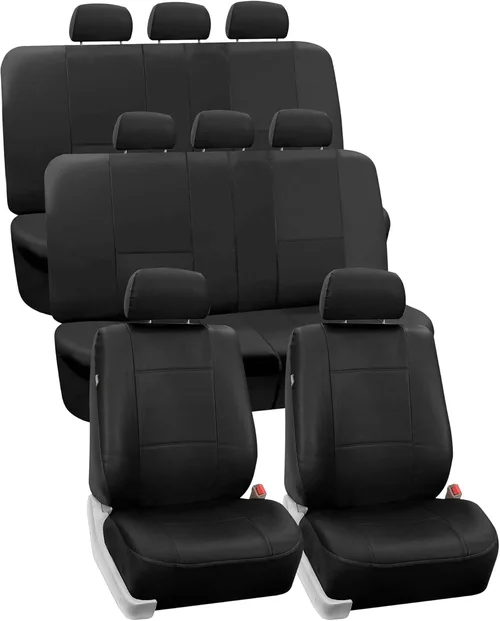
When evaluating seating, pay close attention to how easy it is to access the third row. Sliding second-row seats, wide door openings, and well-designed footwells make a huge difference, especially if you’ll be loading passengers frequently. Look for features like one-touch fold-and-tumble mechanisms or power-folding second rows—these aren’t just conveniences; they’re necessities for daily usability. Also consider seat materials: leather or synthetic leather may look premium but can get uncomfortably hot in summer climates, whereas cloth or performance fabric offers better breathability.
2. Cargo Space & Flexibility
An 8-passenger SUV must balance passenger volume with practical storage. Even with all seats occupied, you should still have room for essentials like groceries, luggage, or sports gear. Check the cargo volume behind the third row—ideally, you want at least 15–20 cubic feet. If you plan to travel with full passenger loads regularly, look for models with underfloor storage, fold-flat third rows, or even rear cargo management systems.
Flexibility is key. Many modern SUVs offer 60/40 or 40/20/40 split-folding second and third rows, allowing you to customize space on the fly. For example, you might fold down just one section of the third row to carry a long item while keeping two seats available. Some vehicles also include clever features like hidden compartments, tie-down hooks, or built-in organizers—small touches that add up to big convenience over time.
3. Performance & Towing Capacity
Power matters when you’re hauling eight people plus cargo. A weak engine will struggle on hills, during highway merges, or when towing a trailer. Most 8-passenger SUVs in 2026 come with V6 or turbocharged four-cylinder engines, though full-size models often retain V8 options for maximum torque. Hybrid variants are gaining traction, offering improved fuel economy without sacrificing towing prowess—some can still pull 5,000–8,000 pounds.
Towing capacity is especially important if you own a boat, camper, or trailer. Always verify the vehicle’s maximum towing rating (with proper equipment) and ensure it aligns with your needs. Note that towing reduces fuel economy significantly, so factor in real-world driving conditions. Also consider drivetrain: rear-wheel drive (RWD) is standard on many trucks, but all-wheel drive (AWD) or four-wheel drive (4WD) is essential for snowy, muddy, or off-road conditions.
4. Fuel Efficiency & Powertrain Options
With gas prices fluctuating and sustainability becoming a household concern, fuel economy is no longer an afterthought—it’s a deciding factor. Traditional V8 SUVs average 14–18 mpg combined, which can add hundreds of dollars to your annual fuel bill. In contrast, newer turbocharged V6s and hybrid systems can deliver 20–28 mpg, making them far more economical for daily driving.
Hybrid and plug-in hybrid (PHEV) options are increasingly common in this segment. For instance, the Toyota Highlander Hybrid and Ford Explorer Hybrid offer respectable efficiency without compromising space. PHEVs like the upcoming Chrysler Pacifica Hybrid (if offered in 8-seat config) provide electric-only driving for short commutes, reducing emissions and fuel costs. However, hybrids often come at a premium, so calculate whether the long-term savings justify the upfront cost based on your mileage habits.
5. Safety Ratings & Driver-Assistance Tech
Safety is non-negotiable when transporting a full house. All top contenders in the 8-passenger SUV category earn high marks from the National Highway Traffic Safety Administration (NHTSA) and Insurance Institute for Highway Safety (IIHS). Look for models with “Top Safety Pick+” or 5-star overall ratings—these indicate robust crash protection and advanced safety systems.
Modern driver-assistance features are now standard or widely available, including automatic emergency braking, blind-spot monitoring, lane-keeping assist, adaptive cruise control, and rear cross-traffic alert. Some luxury models even offer semi-autonomous driving modes (like GM’s Super Cruise or Ford’s BlueCruise) for highway use. These technologies don’t just prevent accidents—they reduce driver fatigue on long trips, which is crucial when you’re responsible for eight lives.
6. Interior Quality & Technology
The cabin environment directly impacts comfort, especially on long drives. Pay attention to material quality: soft-touch plastics, genuine wood or metal trim, and well-bolstered seats signal a premium experience. Noise insulation is another subtle but important factor—cheaper SUVs can feel loud and tinny at highway speeds, while higher-end models use acoustic glass and active noise cancellation.
Infotainment systems should be intuitive and responsive. A 10-inch or larger touchscreen with wireless Apple CarPlay and Android Auto is ideal. Avoid systems that rely solely on touch controls for climate or audio—physical knobs and buttons are safer and easier to use while driving. Rear-seat entertainment options (like dual screens or streaming capabilities) can be lifesavers on road trips, though they’re more common in premium trims.
7. Reliability & Long-Term Ownership Costs
An 8-passenger SUV is a major investment, so reliability is paramount. Brands like Toyota, Honda, and Subaru consistently rank high in long-term dependability studies, while domestic manufacturers have improved significantly in recent years. Check J.D. Power Vehicle Dependability Studies and Consumer Reports reliability scores before deciding.
Consider total cost of ownership beyond the sticker price: maintenance, insurance, depreciation, and repair frequency all add up. Vehicles with longer warranties (e.g., Hyundai’s 10-year/100,000-mile powertrain coverage) can offer peace of mind. Also, research common issues—some models have known transmission or electrical problems that could lead to expensive fixes down the road.
8. Brand Reputation & Dealer Support
Not all automakers treat large families the same way. Some brands have decades of experience building full-size SUVs and understand the unique demands of multi-passenger travel. Others treat three-row crossovers as an afterthought. A strong dealer network with service centers near you ensures easier maintenance and quicker repairs.
Read owner forums and reviews to gauge real-world satisfaction. Are parts readily available? Do dealers offer loaner vehicles during service? How responsive is customer support? These details matter when you’re relying on your SUV for school runs, vacations, and emergencies. Brands with dedicated family-focused marketing (like Kia’s “Family First” campaigns) often prioritize features that matter most to large households.
Different Types of Buying Guide

Common Buying Mistakes to Avoid
❌ Mistake: Prioritizing Style Over Practicality
Why it’s bad: A sleek exterior or flashy infotainment screen won’t matter if the third row is unusable or cargo space is inadequate. Many buyers fall in love with a vehicle’s looks only to regret it when trying to load strollers or suitcases.
What to do instead: Always test the third row with real passengers (or at least measure your own legs). Bring a suitcase or grocery bags to the dealership to simulate real-world loading. Prioritize function—you can always add style later with accessories.
❌ Mistake: Ignoring Real-World Fuel Economy
Why it’s bad: EPA estimates are optimistic. An SUV rated at 22 mpg might only deliver 17–18 mpg in mixed driving, especially with a full load. Over five years, that difference could cost you $2,000+ in extra fuel.
What to do instead: Check independent reviews (like Edmunds or Cars.com) for real-world mpg tests. Consider hybrid options if you drive mostly in stop-and-go traffic. Use fuel cost calculators to compare annual expenses across models.
❌ Mistake: Overlooking Maintenance and Repair Costs
Why it’s bad: Luxury brands and high-performance engines often come with steep service bills. A $100 oil change or $800 brake job can sneak up on unprepared owners.
What to do instead: Research average maintenance costs using sites like RepairPal. Look for vehicles with included maintenance plans or extended warranties. Avoid niche powertrains with limited dealer support.
❌ Mistake: Buying Based Solely on MSRP
Why it’s bad: The sticker price doesn’t reflect true cost. Dealer markups, financing rates, insurance premiums, and depreciation vary widely between models.
What to do instead: Calculate total cost of ownership using tools from Kelley Blue Book or Edmunds. Factor in resale value—Toyotas and Hondas typically hold value better than domestic brands.
❌ Mistake: Skipping the Test Drive with Full Load
Why it’s bad: An SUV may feel fine with two people but become sluggish or noisy when fully loaded. Suspension, braking, and acceleration all change under weight.
What to do instead: If possible, test drive with friends or family to simulate real conditions. Pay attention to how the vehicle handles hills, wind, and highway speeds with extra weight.
❌ Mistake: Forgetting About Insurance Costs
Why it’s bad: Larger, more powerful SUVs often carry higher insurance premiums—sometimes hundreds more per year.
What to do instead: Get insurance quotes for your top choices before buying. Safety features like automatic braking can lower rates, so highlight them when speaking with agents.
❌ Mistake: Not Researching Trim Levels Thoroughly
Why it’s bad: Base models may lack essential features like AWD, advanced safety tech, or usable third rows. Upgrading later can be expensive or impossible.
What to do instead: Compare trim levels side-by-side. Sometimes mid-tier trims offer the best value—premium features without luxury markups.
Budget Guidelines: How Much Should You Spend?
Entry-Level ($35,000–$50,000): At this price point, expect basic 8-passenger crossovers like the Kia Telluride LX or Hyundai Palisade SE. These offer solid value with good safety ratings, decent interiors, and usable third rows—but may lack advanced tech, premium materials, or strong towing capacity. Ideal for budget-conscious families who prioritize space and reliability over luxury.
Mid-Range ($50,000–$65,000): This is the sweet spot for most buyers. Models like the Toyota Highlander Limited, Honda Pilot Elite, or Ford Explorer ST deliver a balanced mix of comfort, technology, and capability. You’ll find standard AWD, robust infotainment, strong safety suites, and respectable fuel economy. Many include hybrid options, making them economical for daily use.
Premium ($65,000–$85,000): Here, you enter the realm of near-luxury and enhanced performance. Think Chevrolet Tahoe RST, GMC Yukon SLT, or Nissan Armada Platinum. These offer V8 power, upscale interiors, advanced towing packages, and more cargo space. Perfect for those who need serious hauling ability or frequently drive in challenging conditions.
Luxury ($85,000+): For buyers seeking the ultimate in comfort and prestige, luxury 8-passenger SUVs like the Lincoln Navigator, Cadillac Escalade, or Mercedes-Benz GLS deliver. Expect hand-stitched leather, massaging seats, panoramic roofs, and semi-autonomous driving aids. These are less about utility and more about statement-making—ideal for executives, large families with high disposable income, or those who value refinement above all.

Expert Tips for Getting the Best Deal
- Time your purchase strategically: End-of-year clearance events (November–January) often bring the deepest discounts as dealers clear inventory for new models. Avoid spring and summer when demand peaks.
- Negotiate based on invoice price, not MSRP: Use resources like TrueCar or Edmunds to find what others in your area paid. Aim to pay near invoice—not sticker—especially on slow-selling trims.
- Consider certified pre-owned (CPO): Late-model CPO SUVs can save 15–20% off new while offering extended warranties and rigorous inspections. Great for getting luxury features at mid-range prices.
- Bundle financing and trade-in: Dealers often offer better rates if you finance through them and trade in your old vehicle. But always compare with bank or credit union offers first.
- Insist on a pre-purchase inspection: Even on new vehicles, a third-party inspection can catch manufacturing defects or assembly issues before you drive off the lot.
- Read the fine print on warranties: Understand what’s covered (and for how long). Powertrain vs. bumper-to-bumper coverage makes a big difference in long-term costs.
- Use online configurators wisely: Build your ideal SUV on the manufacturer’s website, then email the quote to local dealers. This creates competition and often yields better pricing.
- Don’t rush add-ons: Extended warranties, paint protection, and VIN etching are often overpriced at the dealership. Decline them initially—you can always add similar services later for less.

Frequently Asked Questions
Q: Can all 8-passenger SUVs actually fit eight adults comfortably?
A: Not necessarily. While most advertise 8 seats, the third row in many crossovers is best suited for children or short trips. Full-size SUVs like the Chevrolet Suburban or Ford Expedition offer more adult-friendly third rows. Always measure your own height and test the space personally.
Q: Are hybrid 8-passenger SUVs worth the extra cost?
A: It depends on your driving habits. If you log 15,000+ miles annually, especially in city traffic, a hybrid can pay for itself in fuel savings within 3–5 years. For low-mileage drivers, the savings may not justify the premium.
Q: What’s the difference between AWD and 4WD in large SUVs?
A: AWD is optimized for on-road traction in rain or light snow and operates full-time. 4WD is designed for off-road or severe conditions, often with low-range gearing. Most families only need AWD unless they live in rural or mountainous areas.
Q: How much cargo space should I expect with all seats occupied?
A: Aim for at least 15 cubic feet behind the third row. The Toyota Highlander offers ~16 cu ft, while the Suburban provides ~41 cu ft—enough for multiple suitcases or large coolers.
Q: Do I really need an 8-passenger SUV, or would a 7-seater work?
A: If you regularly transport seven or more people, an 8-seater eliminates the need to leave someone behind or take two vehicles. However, if your max group is six, a 7-seater with more cargo space (like the Acura MDX) might be more practical.
Q: Are minivans really better than SUVs for large families?
A: Minivans excel in interior space, sliding doors, and ease of access—but lack the rugged image and ground clearance some families prefer. If you don’t need off-road capability, a minivan like the Chrysler Pacifica is hard to beat for pure utility.
Q: How long do 8-passenger SUVs typically last?
A: With proper maintenance, most modern SUVs can reach 200,000–300,000 miles. Toyota and Honda models are especially known for longevity. Regular oil changes, timely transmission service, and rust prevention are key.
Q: Can I install car seats in the third row?
A: Yes, but check LATCH anchor availability. Some vehicles only have anchors in the second row. Also, ensure the third-row seatbacks are rigid enough to support car seat installation—some are too soft or reclined.
Q: What’s the best way to clean and maintain third-row upholstery?
A: Use fabric protectors on cloth seats and condition leather regularly. Vacuum frequently to remove crumbs and debris. Consider waterproof seat covers if you have young children or pets.
Q: Are there any upcoming 8-passenger EVs in 2026?
A: While full EVs with 8 seats are still rare, the Rivian R1S (7 seats) and upcoming Tesla Cybertruck-based SUV (rumored) may expand options. For now, hybrids remain the most viable electrified choice for large families.
Our Final Recommendations
Best for Budget-Conscious Buyers: Kia Telluride LX – Starting around $42,000, the Telluride delivers exceptional value with a spacious interior, top safety scores, and a smooth ride. Its third row is among the most usable in its class, and the warranty is industry-leading.
Best Overall Value: Toyota Highlander Hybrid Limited – Combining reliability, fuel efficiency (36 mpg combined), and Toyota’s reputation for durability, this SUV offers everything a growing family needs. The hybrid system is seamless, and the interior is thoughtfully designed.
Best Premium Option: Ford Expedition Max Limited – With a powerful EcoBoost V6, best-in-class towing (9,300 lbs), and a cavernous interior, the Expedition Max is ideal for those who need serious capability without sacrificing comfort. The available BlueCruise hands-free driving is a standout feature.
Best for Beginners: Honda Pilot EX-L – Easy to drive, packed with standard safety tech (Honda Sensing), and backed by Honda’s legendary reliability. The Pilot’s intuitive controls and comfortable ride make it perfect for first-time large SUV owners.
Best for Advanced Users: Lincoln Navigator Black Label – For those who want the pinnacle of luxury and technology, the Navigator delivers with massaging seats, Revel audio, and a whisper-quiet cabin. Its adaptive suspension and 450-hp twin-turbo V6 make it as capable as it is opulent.
Conclusion: Making the Right Choice
Choosing the best 8-passenger SUV in 2026 isn’t about finding the biggest or most expensive vehicle—it’s about aligning your purchase with your real-life needs, budget, and values. Whether you prioritize fuel efficiency, towing power, or plush interiors, the key is to focus on what you’ll actually use every day. Don’t let marketing hype or flashy features distract you from essentials like third-row comfort, cargo flexibility, and long-term reliability.
Take your time, do your research, and never skip the test drive—especially with a full load. Remember, this vehicle will likely be part of your family’s life for a decade or more. By weighing the factors we’ve outlined, avoiding common pitfalls, and leveraging expert tips, you’ll be well-equipped to make a decision that brings convenience, safety, and joy to every journey. Your perfect 8-passenger SUV is out there—now go find it.