
You absolutely can start a junk removal business with a SUV—no truck required. With smart planning, the right tools, and a focus on residential clients, your SUV can become a mobile junk-hauling machine that generates real income.
So, you’ve got an SUV sitting in your driveway. Maybe it’s a Honda CR-V, a Toyota RAV4, or even a Ford Explorer. It’s great for road trips, school drop-offs, and weekend adventures. But have you ever thought—could it also be the key to starting your own junk removal business?
The answer is a resounding yes. You don’t need a massive dump truck or a commercial fleet to launch a profitable junk removal service. In fact, many successful junk removal entrepreneurs started exactly where you are—with just a vehicle, a strong back, and a plan. Your SUV might be more capable than you think, especially if you’re smart about how you use it.
Junk removal is a growing industry. With more people decluttering, downsizing, or renovating their homes, demand for quick, reliable junk hauling is higher than ever. And the best part? The barrier to entry is low. You don’t need a warehouse, a team of employees, or a $50,000 vehicle. All you need is a reliable SUV, some basic tools, and the willingness to hustle.
In this guide, we’ll walk you through everything you need to know about starting a junk removal business with a SUV—from what you can haul to how to price your services, market your brand, and scale up over time. Whether you’re looking for a side hustle or a full-time venture, your SUV could be the perfect launchpad.
Key Takeaways
- SUVs are surprisingly capable: Many modern SUVs have foldable seats, high payloads, and towing capacity—perfect for hauling furniture, appliances, and yard waste.
- Low startup costs: Starting with an SUV reduces upfront investment compared to buying a truck or trailer, making it ideal for first-time entrepreneurs.
- Target the right jobs: Focus on small residential cleanouts, garage cleanups, and appliance removals that fit within your SUV’s capacity.
- Use smart packing techniques: Learn to maximize space by disassembling items, using tarps, and stacking efficiently.
- Legal and safety first: Check local regulations, get proper insurance, and always wear protective gear when handling junk.
- Scale smartly: Reinvest profits into equipment like dollies, straps, and eventually a trailer or second vehicle as demand grows.
- Eco-friendly edge: Offer recycling and donation services to stand out and reduce landfill waste—customers love this.
Quick Answers to Common Questions
Can I really make money with just an SUV?
Yes! Many junk removal entrepreneurs start with an SUV and earn $500–$1,500 per week. With low overhead and high demand, it’s a profitable side hustle or full-time business.
What kind of SUV is best for junk removal?
Mid-size to full-size SUVs with foldable seats and good payload capacity—like the Toyota Highlander, Ford Explorer, or Subaru Outback—are ideal. Even compact SUVs can work for smaller jobs.
Do I need a special license to start?
No special license is required in most areas, but you’ll need a general business license and commercial auto insurance. Check your local regulations.
How do I find customers?
Start with word-of-mouth, social media, and local flyers. Join Facebook groups, claim your Google My Business listing, and partner with real estate agents or contractors.
What if my SUV gets damaged from hauling junk?
Use moving blankets, tarps, and floor mats to protect your vehicle. Invest in commercial insurance to cover wear and tear or accidents.
📑 Table of Contents
Why an SUV Is a Great Starting Point
You might be wondering—why an SUV? After all, junk removal seems like a job for big trucks and heavy-duty equipment. But here’s the truth: most junk removal jobs are small to medium in size. Think about it—how often do people need to clear out an entire warehouse? Most residential customers just need help getting rid of old furniture, broken appliances, or a garage full of clutter.
That’s where your SUV shines. Modern SUVs are built for versatility. They offer ample cargo space, especially when you fold down the rear seats. Many models can carry over 70 cubic feet of cargo—enough to fit a couch, a mattress, a few bags of trash, and some tools. Plus, SUVs are easier to park, more fuel-efficient than trucks, and often more comfortable to drive daily.
Another advantage? Lower upfront costs. A used pickup truck can cost $15,000 or more, not including maintenance, insurance, and fuel. But if you already own an SUV, you’re saving thousands right off the bat. That means you can invest that money into marketing, equipment, or savings instead.
And let’s not forget about branding. An SUV with a clean wrap, your logo, and a professional look can be a rolling billboard. People notice vehicles on the road, and a well-branded SUV can build trust and recognition in your community.
Real-World Example: Sarah’s Side Hustle
Take Sarah, a mom of two from Austin, Texas. She started her junk removal service, “ClearSpace Austin,” using her 2018 Subaru Outback. At first, she only took on weekend jobs—helping neighbors clear out garages, hauling away old TVs, and picking up yard waste. She charged $100–$150 per job and used social media to find clients.
Within six months, she was booking 3–4 jobs a week. She reinvested her earnings into a dolly, moving straps, and a tarp. By year one, she had saved enough to buy a small trailer, which doubled her hauling capacity. Today, she employs two part-time helpers and runs a six-figure business—all started with an SUV.
Sarah’s story isn’t unique. Across the U.S., people are turning their SUVs into profitable junk removal machines. The key is starting small, staying consistent, and delivering great service.
What You Can Haul in an SUV
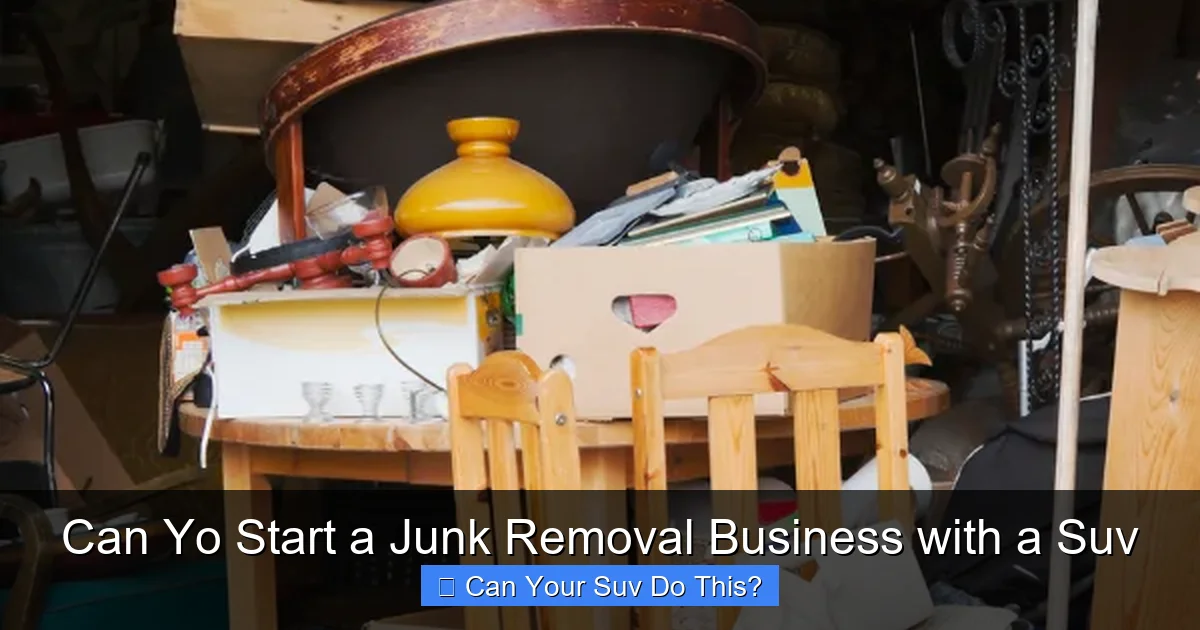
Visual guide about Can Yo Start a Junk Removal Business with a Suv
Image source: freshstartjunkremovalinc.com
Now, let’s talk about what your SUV can actually carry. The answer depends on the make and model, but most mid-size to full-size SUVs can handle a surprising amount of junk.
For example, a Toyota Highlander can carry up to 84.3 cubic feet of cargo with the seats folded down. That’s enough space for:
– A queen-sized mattress and box spring
– A sectional sofa (disassembled)
– Several large trash bags
– A mini-fridge or microwave
– A few boxes of books or clothes
Even compact SUVs like the Honda CR-V (58.8 cubic feet) or the Mazda CX-5 (59.6 cubic feet) can handle smaller jobs like:
– Old electronics (TVs, computers, printers)
– Small furniture (chairs, end tables, lamps)
– Yard debris (branches, bags of leaves)
– Appliance removal (small washers, dryers, dishwashers)
Of course, weight matters too. Most SUVs have a payload capacity between 1,000 and 1,500 pounds. That means you can’t haul a full-size refrigerator and a couch in one trip—but you can do multiple smaller loads or schedule follow-up visits.
Smart Loading Tips
To make the most of your SUV’s space, use these loading strategies:
– **Disassemble when possible:** Remove legs from tables, take apart bed frames, and break down furniture. This saves space and makes items easier to carry.
– **Use vertical space:** Stack items vertically and secure them with straps. Don’t leave gaps—every inch counts.
– **Protect your vehicle:** Use moving blankets or thick tarps to prevent scratches and dents. Line the floor with cardboard or rubber mats.
– **Load heavy items first:** Place heavy items like appliances low and toward the front of the cargo area to maintain balance.
– **Secure everything:** Use ratchet straps or bungee cords to keep items from shifting during transit. A loose couch can damage your SUV—or worse, cause an accident.
With practice, you’ll learn how to pack your SUV like a pro. It’s like a puzzle—every job is different, but the principles stay the same.
Legal and Safety Considerations
Before you start hauling junk, it’s important to cover your bases legally and safely. You don’t want to get halfway through a job only to realize you’re breaking a rule or putting yourself at risk.
Licensing and Insurance
First, check your local regulations. In most states, you don’t need a special license to start a junk removal business, but you may need a general business license or permit. Contact your city or county clerk’s office to find out what’s required.
Next, get the right insurance. Your personal auto insurance likely won’t cover commercial use. You’ll need a commercial auto policy that includes liability and cargo coverage. This protects you if someone gets injured during a job or if your vehicle is damaged while hauling junk.
You should also consider general liability insurance. This covers accidents that happen on a client’s property—like if you accidentally break a window or damage a driveway. A few hundred dollars a year can save you thousands in the long run.
Safety First
Junk removal can be physically demanding and potentially dangerous. Always wear protective gear:
– **Gloves:** Heavy-duty work gloves protect your hands from cuts, splinters, and sharp edges.
– **Closed-toe shoes:** Steel-toe boots are ideal, but sturdy sneakers or work shoes will do.
– **Back brace:** If you’re lifting heavy items, a back support belt can prevent injury.
– **Masks and goggles:** When dealing with dusty items or hazardous materials (like old paint or chemicals), protect your lungs and eyes.
Never lift more than you can handle. Use a dolly, hand truck, or ask for help. Remember: it’s better to make two trips than to throw out your back.
Also, be cautious about what you haul. Avoid hazardous materials like asbestos, chemicals, or biohazards unless you’re certified to handle them. If a client asks you to remove something unsafe, politely decline and refer them to a licensed professional.
Pricing Your Services
One of the biggest questions new junk removal entrepreneurs ask is: “How much should I charge?”
The answer depends on several factors: the size of the job, the type of items, your location, and your operating costs. But here’s a simple pricing model to get you started:
Flat-Rate Pricing
Many junk removal services charge by the truckload or by the job. Since your SUV isn’t a full truck, you can price based on volume or time.
For example:
– **Small job (1–2 items):** $75–$125
– **Medium job (furniture + boxes):** $150–$250
– **Large job (garage cleanout):** $300–$500+
You can also offer hourly rates ($75–$125/hour) for jobs that are hard to estimate. This works well for estate cleanouts or jobs with unknown clutter levels.
Factors That Affect Pricing
– **Distance:** Charge extra for jobs outside your service area (e.g., $1 per mile beyond 10 miles).
– **Heavy or awkward items:** Appliances, pianos, or large furniture may require a surcharge.
– **Hazardous materials:** If you’re certified to handle them, charge a premium.
– **Same-day service:** Offer rush pricing for urgent requests.
Always provide a free estimate before starting work. Walk through the job with the client, take photos, and give a firm quote. This builds trust and avoids disputes later.
Example Pricing Scenario
Let’s say a client wants you to remove:
– 1 old couch
– 2 mattresses
– 5 bags of trash
– 1 broken TV
You estimate this will take 1.5 hours and fill about half your SUV. You charge $125 for the job, plus $25 for the TV (electronics often require special disposal). Total: $150.
You arrive, load everything in 45 minutes, and leave the site clean. The client is happy, you made a profit, and your SUV is ready for the next job.
Marketing Your SUV Junk Removal Business
Now that you’re ready to work, how do you find customers? Marketing doesn’t have to be expensive or complicated. In fact, some of the most effective strategies are free or low-cost.
Start Local
Your first customers will likely come from your own community. Tell friends, family, and neighbors about your new business. Offer them a discount for referrals.
Put up flyers at local coffee shops, libraries, and community centers. Include your phone number, services, and a photo of your SUV (with your logo, if you have one).
Leverage Social Media
Create a Facebook page and Instagram account for your business. Post before-and-after photos of your jobs, customer testimonials, and tips for decluttering.
Join local Facebook groups like “Buy Nothing [Your City]” or “[Your City] Yard Sale.” People often post items they want to give away or need help hauling. Offer your services politely and professionally.
Google My Business
Claim your free Google My Business listing. This puts your business on Google Maps and local search results. When someone searches “junk removal near me,” your SUV-based service could appear at the top.
Encourage happy customers to leave reviews. Five-star reviews build credibility and help you rank higher in search results.
Partner with Local Businesses
Reach out to real estate agents, property managers, and contractors. They often need junk removed from homes before listings or renovations. Offer them a commission or referral fee for sending you work.
You can also partner with thrift stores or recycling centers. If you donate usable items on behalf of clients, they may be willing to promote your service to their customers.
Scaling Up: When to Upgrade from an SUV
Starting with an SUV is smart, but as your business grows, you may need more capacity. Here’s how to know when it’s time to upgrade.
Signs You’re Ready to Expand
– You’re turning down jobs because your SUV is too small.
– You’re making multiple trips for a single job.
– Clients are asking for larger cleanouts (e.g., entire houses or offices).
– You’re consistently booked 5+ days a week.
Your Next Steps
When you’re ready to scale, consider these options:
– **Add a trailer:** A small utility trailer (5×8 or 6×10 feet) can double your hauling capacity. Many SUVs can tow up to 3,500–5,000 pounds.
– **Lease or buy a truck:** A used pickup truck with a bed cover can handle larger jobs while still being fuel-efficient.
– **Hire help:** Bring on a part-time helper to assist with loading and driving.
– **Invest in equipment:** Buy a power dolly, hydraulic lift, or dumpster bag system to increase efficiency.
But don’t rush. Many successful junk removal companies started with an SUV and grew slowly. Reinvest your profits wisely, and let demand guide your decisions.
Eco-Friendly Junk Removal: A Competitive Edge
One of the biggest trends in junk removal is sustainability. More customers want to know that their unwanted items won’t end up in a landfill.
By offering eco-friendly disposal, you can stand out from the competition and attract environmentally conscious clients.
Donate What You Can
Before throwing anything away, ask: “Can this be reused?” Many items—furniture, clothes, electronics, toys—can be donated to charities, shelters, or thrift stores.
Keep a list of local donation centers and their hours. Some even offer pickup services, which can save you time.
Recycle Responsibly
Set up relationships with local recycling facilities. Many accept:
– Metal (appliances, tools)
– Electronics (TVs, computers)
– Cardboard and paper
– Plastics and glass
Some items, like mattresses and tires, require special recycling. Research your area’s options and charge a small fee for eco-disposal.
Tell Your Story
Let customers know you’re committed to sustainability. Add a line to your website or flyers: “We recycle or donate 80% of what we haul.”
This not only builds trust but can also justify slightly higher prices. People are willing to pay more for services that align with their values.
Conclusion
Starting a junk removal business with a SUV isn’t just possible—it’s a smart, low-risk way to launch a profitable service. Your SUV gives you the flexibility to handle residential jobs, keep costs low, and build a brand from the ground up.
With the right tools, pricing, and marketing, you can turn your vehicle into a money-making machine. Focus on great customer service, stay safe, and always look for ways to improve.
Remember, every big business started small. Sarah from Austin didn’t have a fleet—she had an Outback and a dream. You can do the same.
So clean out your garage, fold down those seats, and get ready to haul. Your junk removal journey starts now.
Frequently Asked Questions
Can I start a junk removal business with a small SUV like a Honda CR-V?
Absolutely. Compact SUVs like the CR-V have enough cargo space for small to medium jobs. Focus on furniture, electronics, and yard waste, and use smart packing techniques to maximize space.
Do I need to charge sales tax on junk removal services?
It depends on your state. Some states tax junk removal as a service, while others don’t. Check with your state’s Department of Revenue to determine your tax obligations.
Can I haul hazardous materials in my SUV?
No, unless you’re certified. Items like paint, chemicals, asbestos, or biohazards require special handling and disposal. Refer these jobs to licensed professionals.
How much should I charge for a typical junk removal job?
Most jobs range from $75 to $500, depending on size and location. Charge by the job or hourly, and always provide a free estimate before starting work.
Is junk removal a seasonal business?
It can be. Demand often increases in spring and summer during moving and renovation seasons. Offer year-round services like estate cleanouts to maintain steady income.
Can I run this business part-time?
Yes! Many junk removal entrepreneurs start as a side hustle. Schedule jobs on weekends or evenings, and scale up as demand grows.