
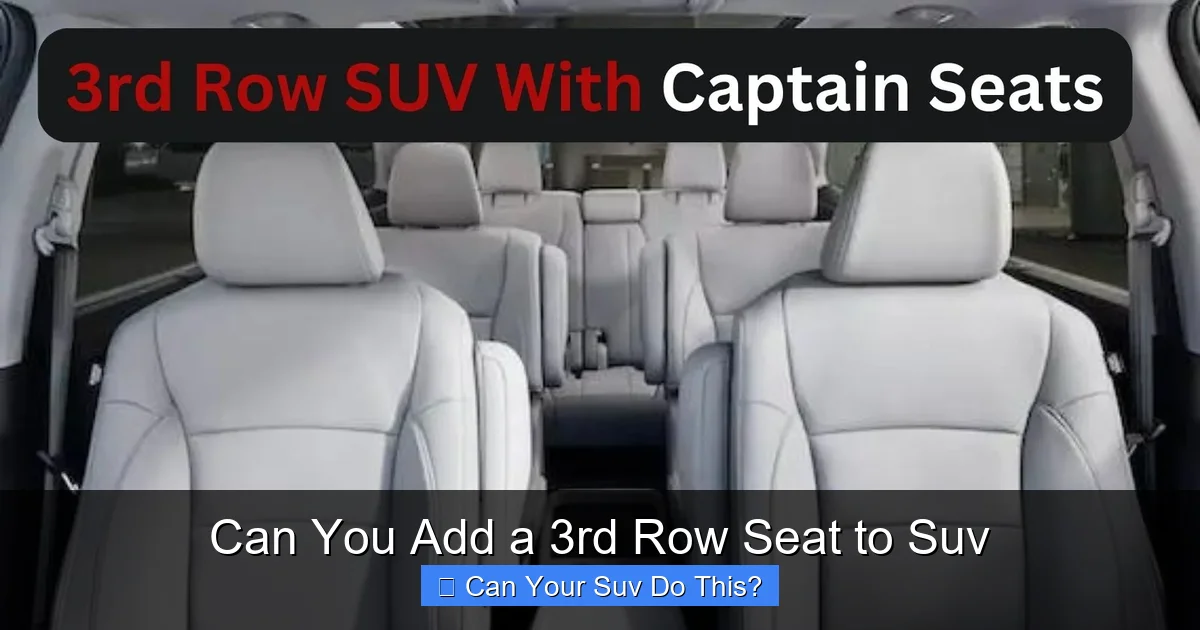
Adding a third-row seat to an SUV isn’t always straightforward—but it’s not impossible. While some models allow factory or aftermarket upgrades, others lack the space, structure, or safety certification. This guide breaks down what works, what doesn’t, and how to make smart decisions for your family’s needs.
So, you’ve got an SUV—maybe a midsize like a Toyota RAV4 or a Honda CR-V—and you’re staring at your growing family with a mix of hope and panic. You love your ride, but suddenly seven seats feel like a necessity, not a luxury. The big question on your mind: *Can you add a 3rd row seat to your SUV?*
It’s a fair question, and one that pops up more often than you’d think. With carpool duties, weekend road trips, and extended family visits, the demand for extra seating is real. But here’s the truth: while the idea sounds simple, the reality is far more complicated. Adding a third row isn’t like slapping on a roof rack or swapping out tires. It involves structural changes, safety regulations, and serious engineering considerations.
In this guide, we’ll walk you through everything you need to know about adding a third-row seat to your SUV—what’s possible, what’s risky, and what’s just plain unrealistic. Whether you’re driving a compact crossover or a rugged off-roader, we’ll help you figure out if your SUV can truly do this.
Key Takeaways
- Not all SUVs can safely accommodate a third row: Structural design, floor pan strength, and crash safety standards limit which vehicles can be modified.
- Factory-installed third rows are the safest and most reliable option: If your SUV wasn’t built with one, retrofitting may compromise safety and void warranties.
- Aftermarket conversions exist but come with risks: Companies offer kits for certain models, but installation requires professional expertise and may not meet federal safety standards.
- Space and legroom matter more than just seat count: Even if you add a third row, cramped seating can make long trips uncomfortable for passengers.
- Check your vehicle’s GVWR and payload capacity: Adding seats and passengers increases weight, which can affect braking, handling, and tire wear.
- Consider alternatives like larger SUVs or minivans: Trading up may be more cost-effective and safer than modifying your current vehicle.
- Always consult a certified mechanic or dealership: Before attempting any modification, get expert advice to avoid legal, insurance, or safety issues.
📑 Table of Contents
- Understanding SUV Seating: Why Third Rows Aren’t Universal
- Factory Options vs. Aftermarket Modifications
- Space, Comfort, and Practicality: The Hidden Challenges
- Safety, Legal, and Insurance Considerations
- Cost Analysis: Is It Worth It?
- Better Alternatives: What to Do Instead
- Final Verdict: Should You Add a Third Row?
Understanding SUV Seating: Why Third Rows Aren’t Universal
Not all SUVs are created equal—especially when it comes to seating. You might assume that because your vehicle has a high roof and decent cargo space, it can easily fit a third row. But that’s not how automotive design works.
SUVs come in different sizes and classifications: compact, midsize, full-size, and even three-row crossovers. The ones that come standard with a third row—like the Honda Pilot, Toyota Highlander, or Ford Explorer—are built from the ground up with that configuration in mind. Their frames, floor pans, airbag systems, and even fuel tanks are engineered to support the extra weight and passenger load.
On the other hand, compact and many midsize SUVs—such as the Mazda CX-5, Subaru Forester, or Nissan Rogue—are designed primarily for five passengers. Their wheelbases are shorter, and the rear cargo area doubles as the footwell for a theoretical third row. Trying to squeeze in two more seats here often means sacrificing legroom, cargo space, or both.
The Role of Vehicle Architecture
At the heart of the issue is vehicle architecture. SUVs that offer optional third rows typically have a longer wheelbase and a reinforced underbody. This allows manufacturers to install seats without compromising structural integrity. For example, the Chevrolet Traverse shares a platform with the GMC Acadia and Buick Enclave—all of which are built to handle seven or eight passengers.
But if your SUV wasn’t designed with that in mind, retrofitting a third row means altering the floor, reinforcing the chassis, and possibly rerouting wiring or exhaust systems. These aren’t DIY projects. They require precision engineering and often cost thousands of dollars.
Safety Standards and Crash Testing
Another major hurdle is safety. The National Highway Traffic Safety Administration (NHTSA) and other regulatory bodies require that all seating positions meet strict crash protection standards. That means seat belts, airbags, head restraints, and anchorage points must be properly installed and tested.
If you add a third row without factory support, you risk creating “weak zones” in the vehicle’s safety cage. In a collision, improperly anchored seats could collapse or fail to restrain passengers, leading to serious injury. Even if the seats are bolted in, they may not integrate with the vehicle’s side-curtain airbags or rollover protection systems.
Factory Options vs. Aftermarket Modifications

Visual guide about Can You Add a 3rd Row Seat to Suv
Image source: i.ytimg.com
When it comes to adding a third row, you generally have two paths: factory-installed options or aftermarket conversions. Let’s break down both.
Factory-Installed Third Rows: The Gold Standard
If your SUV was available with an optional third row from the manufacturer, that’s your best bet. For example, the Toyota 4Runner offers a third-row seat as an option on certain trims. Similarly, the Ford Explorer and Hyundai Palisade give buyers the choice at purchase.
These factory-installed seats are engineered to match the vehicle’s safety systems, weight distribution, and interior layout. They’re also covered under warranty and won’t affect your insurance or resale value. Plus, they’re designed to fold flat when not in use, maximizing cargo space.
But here’s the catch: if your specific model and trim didn’t come with the third row, you usually can’t just “add it later” through the dealership. Manufacturers don’t typically offer retrofit kits for seating configurations that weren’t originally available. So if you bought a base-model RAV4 without the optional third row (which, by the way, the RAV4 doesn’t even offer), you’re out of luck with factory parts.
Aftermarket Conversions: A Risky Gamble
This is where things get tricky. A handful of companies specialize in aftermarket seating modifications for SUVs. Brands like Masterack, AutoExec, and even some custom fabricators offer third-row conversion kits for select models.
These kits often include custom-built seats, reinforced mounting brackets, and modified floor pans. Some are designed for commercial use—like shuttle vans or fleet vehicles—while others target families wanting more seating.
But proceed with caution. Aftermarket conversions are rarely street-legal in all 50 states. Many don’t meet Federal Motor Vehicle Safety Standards (FMVSS), especially regarding seat belt anchorage and child restraint systems. Insurance companies may also deny claims if an accident occurs in a modified vehicle, arguing that the changes compromised safety.
Additionally, these conversions can cost anywhere from $3,000 to $10,000—sometimes more than the value of the SUV itself. And if you ever decide to sell the vehicle, the modification could scare off buyers or reduce resale value.
Real-World Examples of Aftermarket Success (and Failure)
There are a few documented cases where aftermarket third-row installations have worked—mostly on larger SUVs like the Ford Expedition or Chevrolet Tahoe. These vehicles have the space and structural strength to handle the modification, especially when done by a certified shop.
For instance, some owners of the older Ford Excursion (a massive SUV from the early 2000s) have successfully added a fourth row using custom builds. But again, these are exceptions, not the rule.
On the flip side, attempts to add third rows to smaller SUVs—like the Jeep Cherokee or Hyundai Santa Fe—often result in cramped, unsafe seating. Passengers end up with their knees pressed against the back of the second row, and there’s little room for luggage or emergency exits.
Space, Comfort, and Practicality: The Hidden Challenges
Even if you manage to install a third row, comfort and usability are major concerns. Let’s be honest: not all third rows are created equal. Some are spacious enough for adults; others are better suited for small children or short trips.
Legroom and Headroom: The Make-or-Break Factors
Legroom is the biggest issue. In many SUVs with factory third rows—like the Kia Telluride or Volkswagen Atlas—the rearmost seats offer decent space, especially if the second row slides forward. But in retrofitted setups, you’re often working with limited real estate.
For example, trying to add a third row to a Honda CR-V means sacrificing almost all cargo space behind the second row. The new seats might only have 24–28 inches of legroom—enough for kids under 10, but not for teens or adults on a long drive.
Headroom is another concern. SUVs with panoramic sunroofs or high rooflines may have enough vertical space, but compact models often don’t. Tall passengers could end up with their heads brushing the ceiling, especially if the seats are mounted high for foot clearance.
Access and Egress: Can Anyone Actually Get In?
Getting into a third row isn’t always easy—even in factory-equipped SUVs. In many cases, you have to fold or slide the second-row seats forward, creating a narrow passage. In a retrofitted vehicle, this process can be even more awkward if the seats aren’t designed to move smoothly.
Imagine trying to buckle a toddler into a rear seat while contorting yourself through a tight gap. It’s doable, but it’s not convenient. And in an emergency, quick exits could be compromised.
Cargo Space: The Trade-Off You Can’t Ignore
Adding a third row almost always means losing cargo room. Even when the seats are folded, the floor may not sit flush, creating uneven storage. And if the seats are permanently installed, you’ll have zero trunk space behind them.
For families who frequently travel with strollers, sports gear, or groceries, this can be a dealbreaker. You might find yourself making extra trips or leaving essentials behind.
Safety, Legal, and Insurance Considerations
Before you even think about modifying your SUV, you need to understand the legal and safety implications.
Federal and State Regulations
In the U.S., vehicle modifications must comply with FMVSS regulations. These cover everything from seat belt strength to crashworthiness. If your aftermarket third row doesn’t meet these standards, your vehicle could fail inspection or be deemed unroadworthy.
Some states have additional rules. California, for example, requires all modifications to be CARB-compliant and may require certification from a licensed engineer. Other states may not allow non-factory seating configurations at all.
Insurance and Liability Risks
Your auto insurance policy likely doesn’t cover unauthorized modifications. If you’re in an accident and the insurer discovers an illegal or unsafe third-row installation, they could deny your claim—leaving you on the hook for thousands in damages or medical bills.
Even if your policy does cover modifications, you’ll need to disclose them upfront. Failure to do so could be considered fraud.
Warranty Implications
Most manufacturers void warranties if you make significant structural changes to your vehicle. That means if your transmission fails or your airbags malfunction, the dealer might refuse service—even if the issue has nothing to do with the third row.
Always check your warranty terms before making any modifications.
Cost Analysis: Is It Worth It?
Let’s talk money. Adding a third row isn’t cheap—and it might not be the smartest financial move.
Estimated Costs of Aftermarket Conversions
Here’s a rough breakdown of what you might pay:
– Custom seat fabrication: $1,500–$4,000
– Reinforced floor and mounting hardware: $800–$2,000
– Professional installation: $1,000–$2,500
– Legal certification and inspections: $300–$1,000
Total: $3,600–$9,500
Compare that to the price of a used three-row SUV. You can find a clean, low-mileage Honda Pilot or Toyota Highlander for $15,000–$25,000. That’s often less than the cost of modifying your current vehicle—and you get a factory-safe, warranty-backed solution.
Long-Term Value and Resale
Modified vehicles are harder to sell. Most buyers prefer stock configurations, and a custom third row could raise red flags about safety or legality. You might have to sell at a steep discount or keep the vehicle longer than planned.
Better Alternatives: What to Do Instead
If adding a third row isn’t practical, consider these alternatives:
Trade Up to a Three-Row SUV
This is often the best option. Modern three-row SUVs offer excellent fuel economy, advanced safety features, and spacious interiors. Models like the Subaru Ascent, Mazda CX-9, or even the electric Hyundai Ioniq 5 (with optional third row) provide comfort and reliability without the risks of modification.
Rent or Borrow When Needed
For occasional use—like family vacations or holiday gatherings—renting a minivan or large SUV might be more cost-effective. Many rental companies offer seven- or eight-passenger vehicles for under $100 per day.
Use a Trailer or Cargo Carrier
If you only need extra space for gear, not people, consider a roof box or hitch-mounted cargo carrier. This keeps your SUV’s seating intact while expanding storage.
Explore Minivans
Don’t write off minivans. Vehicles like the Toyota Sienna, Honda Odyssey, or Chrysler Pacifica offer superior third-row comfort, sliding doors, and abundant cargo space. They’re often more practical than SUVs for large families.
Final Verdict: Should You Add a Third Row?
So, can you add a 3rd row seat to your SUV? Technically, yes—but should you?
The answer depends on your vehicle, your budget, and your priorities. If you drive a large SUV with ample space and can find a certified aftermarket solution, it might be feasible. But for most people, the risks outweigh the rewards.
Factory-installed third rows are always the safest and most reliable choice. If your SUV doesn’t have one, your best bet is to upgrade to a model that does. It’s safer, more comfortable, and often more affordable in the long run.
Remember: your family’s safety is worth more than a few extra seats. Don’t compromise on engineering, crash protection, or peace of mind. When in doubt, consult a professional—and drive smart.
Frequently Asked Questions
Can I legally add a third-row seat to my SUV?
It depends on your vehicle and local laws. In many cases, aftermarket third rows don’t meet federal safety standards and may not be street-legal. Always check with your state’s DMV and a certified mechanic before proceeding.
How much does it cost to add a third-row seat?
Aftermarket conversions typically cost between $3,600 and $9,500, including parts, labor, and certification. This often exceeds the value of the SUV itself, making it a questionable investment.
Will adding a third row void my warranty?
Yes, most manufacturers void warranties if you make structural modifications. Even unrelated repairs may be denied if the dealer discovers unauthorized changes.
Are there any SUVs that can safely be converted?
A few larger models, like the Ford Expedition or Chevrolet Tahoe, have been successfully modified by certified shops. However, these are exceptions and still carry safety and legal risks.
What’s the safest way to get a third row?
The safest option is to purchase an SUV that comes with a factory-installed third row. These are engineered for safety, comfort, and compliance with all regulations.
Can I install a third row myself?
No. Adding a third row involves structural changes, electrical work, and safety systems. It requires professional expertise and should never be attempted as a DIY project.