

Adding a power liftgate to your SUV is not only possible but increasingly common, especially on mid- to high-end models. With the right tools, professional installation, or DIY kits, you can enjoy hands-free access and enhanced convenience—no matter your vehicle’s original specs.
So, you’re standing in the grocery store parking lot, arms full of bags, trying to juggle your keys while reaching for the liftgate handle on your SUV. Sound familiar? You’ve probably seen other drivers effortlessly wave their foot under the bumper and watch their trunk pop open like magic. That’s the power liftgate in action—and it’s one of those features that once you experience, you wonder how you ever lived without it.
But here’s the big question: Can you add a power liftgate to your SUV if it didn’t come with one? The short answer is yes—but it’s not always a simple plug-and-play upgrade. Whether you drive a rugged Ford Explorer, a sleek Toyota Highlander, or a compact Honda CR-V, there are options to bring this modern convenience to your ride. From factory retrofits to third-party aftermarket kits, the possibilities are expanding every year.
In this guide, we’ll walk you through everything you need to know about adding a power liftgate to your SUV. We’ll cover what it is, how it works, the different types available, installation options, costs, compatibility concerns, and even tips for maintaining your new feature. By the end, you’ll know whether this upgrade is right for you—and how to get it done safely and effectively.
Key Takeaways
- Power liftgates can be added to most SUVs: Whether factory-installed or aftermarket, this feature is widely compatible with many makes and models.
- Professional installation is recommended: While DIY kits exist, improper setup can damage electronics or void warranties—expert help ensures safety and functionality.
- Costs vary by method and vehicle: Factory retrofits may cost $800–$1,500, while aftermarket solutions range from $300–$800 depending on features.
- Hands-free operation is a game-changer: Sensors and foot-activated triggers make loading groceries, gear, or kids easier—especially when your hands are full.
- Check compatibility first: Not all SUVs support power liftgates due to structural or electrical limitations—always verify with your dealer or installer.
- Resale value may improve: This modern convenience is a sought-after feature that can boost your SUV’s market appeal.
- Maintenance matters: Like any motorized part, power liftgates require occasional cleaning, lubrication, and sensor checks to keep working smoothly.
📑 Table of Contents
What Is a Power Liftgate?
A power liftgate—sometimes called a power tailgate or automatic liftgate—is an electronically operated rear door on an SUV or crossover that opens and closes without manual effort. Instead of lifting the heavy door yourself, you trigger it using a button on the key fob, inside the cabin, or via a foot sensor under the bumper.
This feature has become increasingly popular over the past decade, especially in family-oriented and luxury SUVs. It’s not just about convenience; it’s also about safety and accessibility. For parents juggling kids and groceries, people with mobility challenges, or anyone who frequently loads heavy items, a power liftgate can make a real difference in daily life.
How Does It Work?
At its core, a power liftgate system consists of several key components:
– **Electric motor**: Mounted inside the liftgate or along the strut, this motor does the heavy lifting.
– **Control module**: The brain of the system, it receives signals from buttons, sensors, or the key fob and activates the motor.
– **Struts or hinges with built-in actuators**: These replace or supplement traditional gas struts and provide the lifting force.
– **Sensors**: Proximity sensors detect obstacles to prevent the gate from closing on objects or people. Some systems also include foot sensors for hands-free operation.
– **Wiring harness**: Connects the liftgate to the vehicle’s electrical system, often integrating with the central computer.
When you press the button or wave your foot, the control module sends power to the motor, which slowly raises or lowers the liftgate. Most systems include safety features like auto-reverse—if the gate encounters resistance while closing, it stops and reverses direction to prevent injury or damage.
Types of Power Liftgates
Not all power liftgates are created equal. There are two main types:
1. **Full Power Liftgate**: The entire door opens and closes automatically. This is the most common and user-friendly option.
2. **Power-Assist Liftgate**: The door still requires some manual effort to open or close, but the system provides assistance—making it lighter and easier to handle.
Additionally, some systems offer **split liftgates**, where the glass window opens separately from the main door—useful for quick access without opening the full gate.
Many modern systems also include **programmable height settings**, so you can adjust how high the liftgate opens based on your garage ceiling or personal preference.
Can You Add a Power Liftgate to Any SUV?
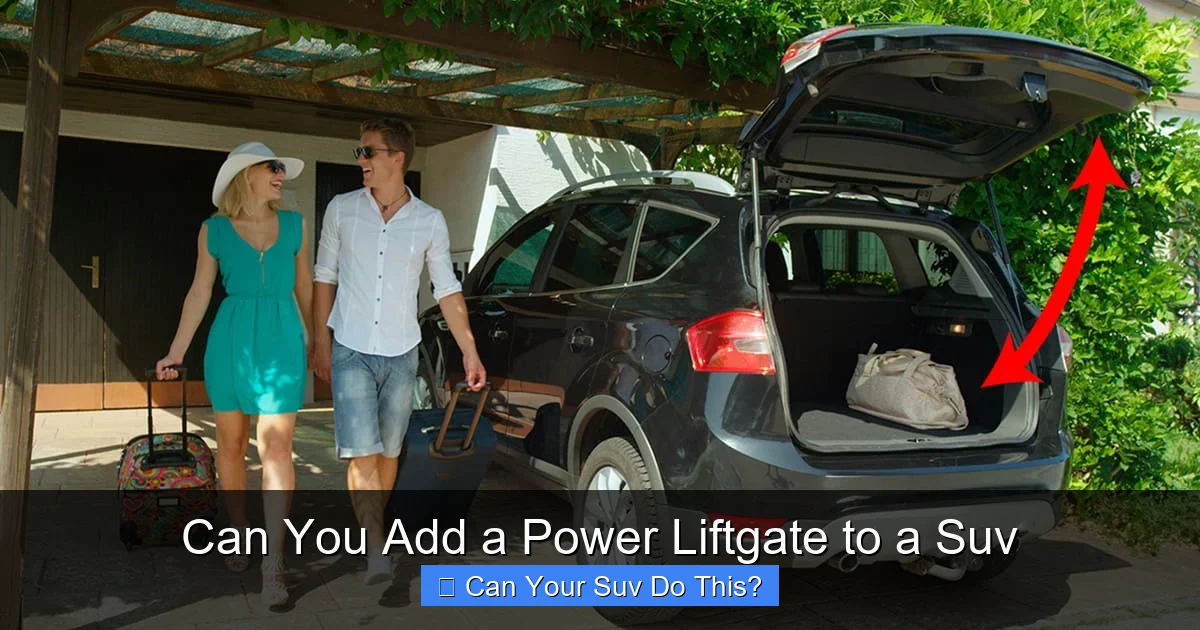
Visual guide about Can You Add a Power Liftgate to a Suv
Image source: bestcaraudio.com
This is the million-dollar question—and the answer isn’t a simple yes or no. While most SUVs can be retrofitted with a power liftgate, compatibility depends on several factors, including your vehicle’s make, model, year, and existing electrical architecture.
Factory vs. Aftermarket Options
There are two main paths to adding a power liftgate:
– **Factory Retrofit**: Some automakers offer official power liftgate kits for models that didn’t originally include the feature. These are designed specifically for your vehicle and often integrate seamlessly with the existing electronics.
– **Aftermarket Kits**: Third-party companies like Rostra, AutoLoc, or Rostra Precision Controls sell universal or vehicle-specific kits that can be installed on a wide range of SUVs.
Factory retrofits are typically more reliable and come with better support, but they’re only available for certain models and can be expensive. Aftermarket kits are more flexible and often more affordable, but they may require more customization and carry a higher risk of compatibility issues.
Compatibility Factors to Consider
Before you start shopping, ask yourself these questions:
– **Does your SUV have the necessary wiring?** Power liftgates require a connection to the vehicle’s CAN bus (Controller Area Network), which controls electronics like lights, locks, and sensors. Older or base-model SUVs may lack this infrastructure.
– **Is there space for the motor and struts?** The liftgate must have enough room to accommodate the new hardware without interfering with trim panels or cargo space.
– **Are the hinges and structure strong enough?** The liftgate must support the added weight and force of the motorized system.
– **Does your key fob support the feature?** Some systems require a new fob or programming to enable remote operation.
For example, a 2020 Toyota RAV4 LE (base trim) may not support a factory retrofit due to limited wiring, but an aftermarket kit could still work with some modifications. On the other hand, a 2022 Ford Explorer XLT might be eligible for a Ford-approved power liftgate upgrade.
Popular SUVs That Support Power Liftgate Upgrades
Many popular SUVs are good candidates for power liftgate installation, including:
– **Honda CR-V** (2017 and newer): Aftermarket kits are widely available.
– **Toyota RAV4** (2019 and newer): Factory retrofits possible on higher trims.
– **Ford Explorer** (2016 and newer): Ford offers official upgrade kits.
– **Chevrolet Traverse** (2018 and newer): Compatible with several aftermarket systems.
– **Subaru Outback** (2020 and newer): Aftermarket kits with foot sensor support.
Always check with your dealer or a certified installer to confirm compatibility before purchasing.
Installation Options: DIY vs. Professional
Once you’ve confirmed your SUV can support a power liftgate, the next decision is how to install it. You have two main options: do it yourself or hire a professional.
DIY Installation: Pros and Cons
Installing a power liftgate yourself can save money—kits often cost between $300 and $600, compared to $800–$1,500 for professional installation. Many aftermarket kits come with detailed instructions, video guides, and customer support.
However, DIY installation isn’t for everyone. It requires:
– Basic mechanical skills
– Familiarity with automotive electronics
– Tools like torque wrenches, wire strippers, and multimeters
– Time—most installations take 4–8 hours
Common challenges include:
– Routing wires through tight spaces
– Programming the control module
– Calibrating sensors and height settings
– Avoiding damage to interior trim or wiring
If you’re handy and enjoy tinkering with your vehicle, DIY can be a rewarding project. But if you’re unsure, it’s better to leave it to the experts.
Professional Installation: Why It’s Worth It
A certified technician or dealership can ensure your power liftgate is installed correctly, safely, and in compliance with your vehicle’s systems. Benefits include:
– **Warranty protection**: Many installers offer a labor warranty (1–2 years).
– **Seamless integration**: Professionals can sync the liftgate with your key fob, infotainment system, and safety features.
– **Troubleshooting support**: If something goes wrong, you have someone to call.
– **Preserved resale value**: A professionally installed upgrade looks factory-original and may boost your SUV’s value.
Dealerships often charge more, but they use OEM (original equipment manufacturer) parts and have access to technical service bulletins and software updates.
What to Expect During Installation
Whether you DIY or go pro, the installation process generally follows these steps:
1. **Remove the interior trim panels** to access the liftgate structure.
2. **Install the motor and actuator struts**, securing them to the hinges and body.
3. **Route the wiring harness** from the liftgate to the vehicle’s fuse box or control module.
4. **Connect to the CAN bus** and program the system using a diagnostic tool.
5. **Install sensors** (if included) and calibrate the opening/closing height.
6. **Test the system** thoroughly, checking for smooth operation, safety features, and remote functionality.
After installation, you’ll need to reset the system and possibly update your vehicle’s software.
Cost Breakdown: How Much Does It Really Cost?
The cost of adding a power liftgate to your SUV varies widely based on the method, vehicle, and features you choose. Here’s a realistic breakdown:
Aftermarket Kits: $300–$800
These kits include the motor, struts, wiring, and sometimes a foot sensor. Brands like Rostra and AutoLoc offer vehicle-specific kits with plug-and-play designs. For example:
– **Rostra Power Liftgate Kit for Honda CR-V**: ~$450
– **AutoLoc Universal Power Tailgate Kit**: ~$350 (requires more customization)
Installation tools and additional parts (like relays or fuses) may add $50–$100.
Professional Installation: $400–$1,000
Labor costs depend on your location and the shop’s expertise. Dealerships typically charge more ($800–$1,500), while independent shops may offer competitive rates ($400–$700).
Factory Retrofit: $800–$1,500
If your automaker offers an official upgrade, expect to pay a premium. For example:
– **Ford Power Liftgate Retrofit for Explorer**: ~$1,200 (parts + labor)
– **Toyota Power Tailgate Upgrade for Highlander**: ~$1,400
These kits often include better integration, longer warranties, and dealer support.
Optional Add-Ons: $50–$200
You can enhance your system with:
– **Foot sensor**: ~$100
– **Smartphone app control**: ~$150
– **Rain sensor (auto-close in bad weather)**: ~$80
Is It Worth the Cost?
For many owners, the convenience and safety of a power liftgate justify the expense. If you frequently carry heavy loads, have young children, or live in a rainy climate, the upgrade can save time and reduce strain. Plus, it adds a modern, high-tech feel to your SUV.
However, if you rarely use your liftgate or drive an older vehicle with low resale value, the cost may not be worth it.
Benefits and Drawbacks of Adding a Power Liftgate
Like any modification, adding a power liftgate has pros and cons. Let’s break them down.
Top Benefits
– **Hands-free convenience**: Open the trunk with a foot wave—perfect when your hands are full.
– **Improved safety**: Reduces strain and risk of injury from lifting heavy doors.
– **Enhanced accessibility**: Great for people with arthritis, back problems, or limited mobility.
– **Modern appeal**: Makes your SUV feel more premium and up-to-date.
– **Increased resale value**: Buyers often look for this feature in used SUVs.
– **Smart features**: Some systems include auto-close, height memory, and obstacle detection.
Potential Drawbacks
– **Higher upfront cost**: Especially with professional installation.
– **Electrical complexity**: Adds another system that can fail or require maintenance.
– **Battery drain**: If the liftgate malfunctions and stays open, it can drain your battery.
– **Weather sensitivity**: Snow, ice, or dirt can interfere with sensors or motor function.
– **Voided warranties**: DIY installations may void parts of your vehicle’s warranty.
– **Repair costs**: If the motor or sensors fail, repairs can be expensive.
Real-World Examples
– **Sarah, mom of two**: “I added a power liftgate to my 2019 RAV4 after my second baby. Now I can load the stroller with one hand and hold my toddler with the other. It’s been a lifesaver.”
– **Mike, outdoor enthusiast**: “I use my SUV for camping trips. The foot sensor lets me open the trunk while carrying gear—no more fumbling with keys.”
– **Linda, senior driver**: “I have arthritis, and lifting the old door was painful. The power liftgate has made driving so much more enjoyable.”
Maintenance and Troubleshooting Tips
Once your power liftgate is installed, a little maintenance goes a long way.
Routine Care
– **Clean the sensors monthly** with a soft cloth to remove dirt, snow, or ice.
– **Lubricate hinges and struts** every 6 months with silicone spray (avoid grease—it attracts dirt).
– **Check wiring connections** for corrosion or looseness.
– **Test the system regularly** to ensure smooth operation.
Common Issues and Fixes
– **Liftgate won’t open**: Check the fuse, battery, or key fob battery. Reset the system.
– **Slow or jerky movement**: May indicate low battery, worn struts, or obstructed sensors.
– **Auto-reverse not working**: Clean sensors or recalibrate the system.
– **Foot sensor not responding**: Ensure it’s clean and unobstructed. Some systems require a specific kicking motion.
If problems persist, consult your installer or dealer. Most issues are fixable, but ignoring them can lead to bigger problems.
Future of Power Liftgates: What’s Next?
Power liftgates are evolving fast. Newer systems include:
– **AI-powered gesture control**: Open with a hand wave or voice command.
– **Integration with smart home systems**: Sync with your garage door or security system.
– **Solar-assisted motors**: Reduce battery drain in electric SUVs.
– **Predictive opening**: Uses GPS to open the liftgate when you approach with groceries.
As SUVs become more connected and automated, expect power liftgates to become standard—even on base models.
Conclusion
So, can you add a power liftgate to your SUV? Absolutely—if your vehicle is compatible and you choose the right installation method. Whether you go with a factory retrofit, an aftermarket kit, or a professional install, this upgrade can transform your daily driving experience.
It’s not just about convenience; it’s about making your SUV safer, more accessible, and more enjoyable to use. From busy parents to outdoor adventurers to seniors, a power liftgate offers real-world benefits that go beyond flashy tech.
Before you dive in, do your research. Check compatibility, compare costs, and decide whether DIY or professional installation is right for you. And remember: a little maintenance keeps your liftgate working like new for years to come.
If you’ve been dreaming of that hands-free trunk opening, now’s the time to make it happen. Your future self—standing in the rain with arms full of groceries—will thank you.
Frequently Asked Questions
Can I add a power liftgate to an older SUV?
Yes, many older SUVs can be retrofitted with aftermarket power liftgate kits, but compatibility depends on the vehicle’s electrical system and structural design. Always consult a professional before purchasing.
Will adding a power liftgate void my warranty?
DIY installations may void parts of your warranty, especially if they involve cutting wires or modifying the electrical system. Professional installations using OEM parts are less likely to cause issues.
How long does it take to install a power liftgate?
Professional installations typically take 3–6 hours. DIY projects can take 4–8 hours or more, depending on your experience and the complexity of the kit.
Do power liftgates work in cold weather?
Yes, but extreme cold can slow the motor or freeze sensors. Regular cleaning and using silicone-based lubricants help maintain performance in winter.
Can I open the liftgate manually if the power fails?
Most power liftgates include a manual release mechanism, usually located inside the liftgate or accessible with a key. This allows you to open it even if the battery dies.
Are power liftgates safe for kids and pets?
Yes, modern systems include obstacle detection and auto-reverse features to prevent injury. However, always supervise children and pets near the liftgate to ensure safety.