
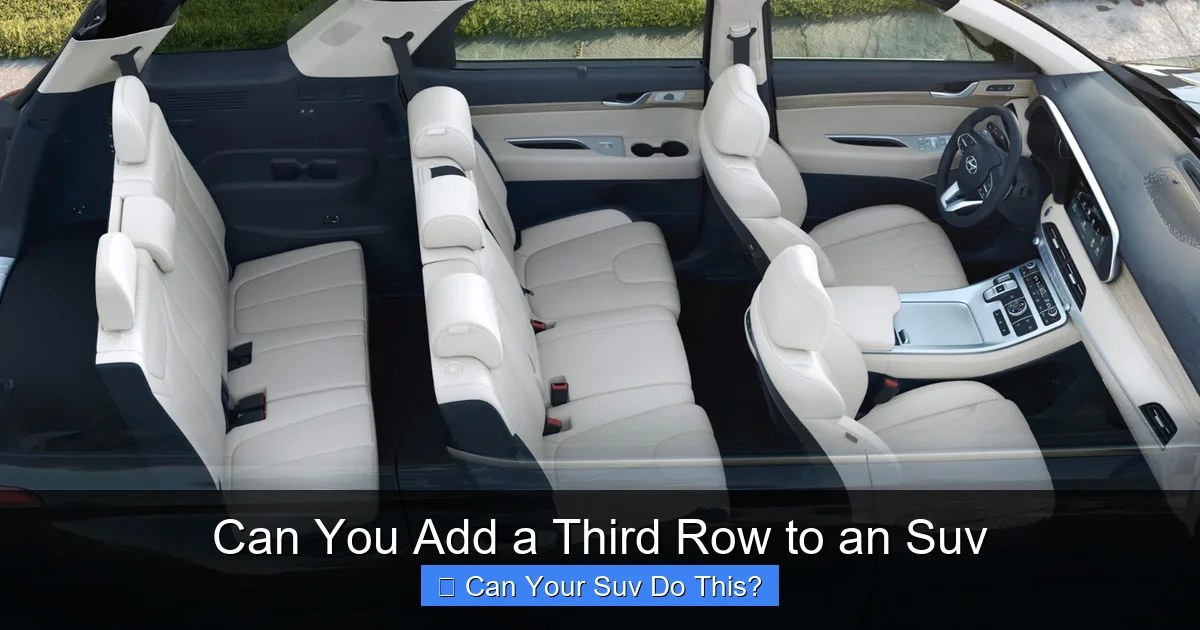
Adding a third row to an SUV isn’t always possible—and rarely recommended—unless the vehicle was designed for it. While some aftermarket solutions exist, they often compromise safety, legality, and comfort. Your best bet? Choose an SUV that already comes with three rows or consider a larger vehicle from the start.
So, you’ve got a growing family, a carpool full of kids, or maybe you just love hosting weekend adventures with friends. Your current SUV handles most days just fine—but when it comes to squeezing in that extra passenger, you’re stuck. You start wondering: *Can you add a third row to an SUV?* It’s a question more drivers ask than you might think, especially as lifestyles evolve and vehicle needs shift.
At first glance, it seems logical. SUVs are spacious, boxy, and built for utility—so why not just pop in another bench seat in the back? But the reality is far more complicated. Unlike adding roof racks or upgrading sound systems, modifying your SUV’s seating layout isn’t a simple bolt-on job. It involves structural changes, safety systems, legal compliance, and serious engineering considerations. And while the idea of turning your two-row SUV into a seven-seater sounds appealing, the risks often outweigh the rewards.
In this guide, we’ll break down exactly what it takes to add a third row to an SUV—whether it’s even possible, what your real options are, and why buying a vehicle designed for three rows is almost always the smarter move. Whether you’re driving a compact crossover like a Toyota RAV4 or a midsize SUV like a Ford Explorer, we’ll help you understand the limitations, explore alternatives, and make the best decision for your family and safety.
Key Takeaways
- Most SUVs aren’t built to support a third row: Structural design, floor pan depth, and crash safety systems limit retrofitting.
- Aftermarket third-row kits are rare and risky: Few manufacturers offer them, and installation can void warranties or fail inspections.
- Safety is the biggest concern: Improperly installed seats may not protect passengers in a crash and could interfere with airbags.
- Legroom and comfort suffer in converted vehicles: Even if you add seats, passengers may feel cramped due to limited space.
- Factory three-row SUVs are the safest and most practical choice: Models like the Honda Pilot or Toyota Highlander are engineered for seven or eight passengers.
- Consider a minivan or full-size SUV instead: If you need regular third-row seating, these offer better space, access, and safety.
- Always consult a certified mechanic or dealer: Never attempt DIY modifications without professional guidance.
📑 Table of Contents
- Why Adding a Third Row Isn’t as Simple as It Sounds
- Aftermarket Third-Row Solutions: Do They Exist?
- Safety Risks of DIY or Aftermarket Conversions
- Factory Three-Row SUVs: The Smart Alternative
- When a Minivan or Full-Size SUV Makes More Sense
- What to Do If You Really Need More Seating
- Final Thoughts: Think Safety, Not Just Space
Why Adding a Third Row Isn’t as Simple as It Sounds
You might think, “It’s just another seat—how hard can it be?” But vehicle seating isn’t just about comfort. It’s deeply tied to the SUV’s structural integrity, crash protection, and overall design. Most SUVs on the road today—especially compact and midsize models—are built with only two rows in mind. That means the floor pan (the metal base beneath your feet), the frame, and the safety systems are engineered specifically for that configuration.
Structural Limitations
The floor of your SUV isn’t just flat metal—it’s shaped to support weight, absorb impact, and house critical components like the fuel tank, exhaust system, and wiring. Adding a third row requires deepening the floor or raising the seating area, both of which can compromise the vehicle’s structural strength. In a collision, a weakened frame could fail to protect occupants properly. Plus, the rear suspension and drivetrain weren’t designed to handle the extra weight and shifting load of additional passengers.
Safety System Conflicts
Modern SUVs rely on a network of sensors, airbags, and seatbelt pretensioners that activate during crashes. These systems are calibrated for the exact number and placement of seats. Adding a third row—especially one not factory-installed—can interfere with side-curtain airbags, rear impact sensors, or even the vehicle’s electronic stability control. If the SUV doesn’t detect the new seats correctly, safety features might not deploy when needed, putting passengers at serious risk.
Legal and Regulatory Hurdles
In the U.S., the National Highway Traffic Safety Administration (NHTSA) sets strict standards for vehicle modifications. Any change that affects seating, restraints, or structural integrity must meet Federal Motor Vehicle Safety Standards (FMVSS). Retrofitting a third row typically requires recertification, which is rarely granted for aftermarket installations. Even if you manage to install the seats, your vehicle could fail state inspections or be deemed unsafe in the event of an accident—leaving you liable.
Aftermarket Third-Row Solutions: Do They Exist?
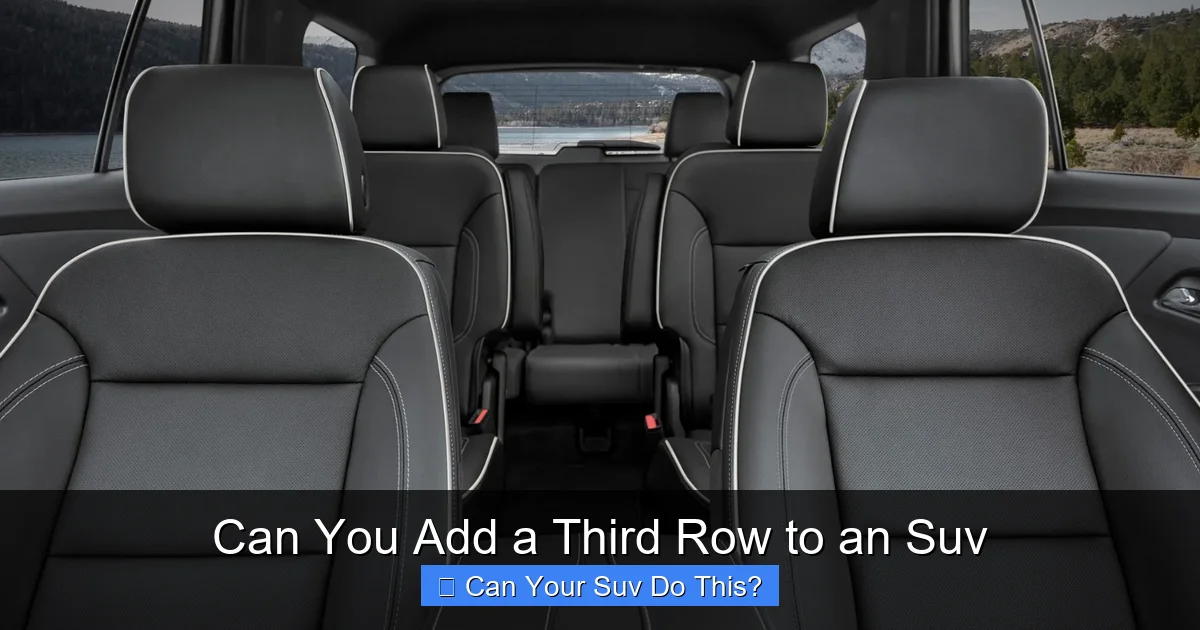
Visual guide about Can You Add a Third Row to an Suv
Image source: cdn.drivingline.com
Given the challenges, you might be wondering: *Are there any aftermarket companies that actually sell third-row kits for SUVs?* The short answer is yes—but they’re extremely rare, expensive, and come with major caveats.
Limited Availability
Only a handful of specialty manufacturers offer third-row conversion kits, and they’re usually targeted at specific models like the Jeep Wrangler or older SUVs with more open cargo space. For example, some companies have created fold-flat rear benches for the Wrangler Unlimited, effectively turning the cargo area into a third row. But even these are niche products, often requiring custom fabrication and professional installation.
High Cost and Complex Installation
Expect to pay anywhere from $3,000 to $8,000 for a third-row conversion—and that’s before labor. Installation involves cutting into the floor, reinforcing the frame, adding seatbelt anchors, and integrating new seating with the vehicle’s electrical and safety systems. Most dealerships won’t touch these modifications, so you’ll need a certified automotive engineer or specialty shop. And once it’s done, your factory warranty is almost certainly voided.
Comfort and Practicality Issues
Even if you manage to install a third row, don’t expect the same comfort as a factory-built SUV. Legroom is often minimal—especially for adults—and headroom can be tight, particularly in vehicles with sloping rooflines. Access to the third row is another hurdle: without sliding or folding second-row seats, climbing in and out becomes a chore. And don’t forget cargo space—adding seats means sacrificing storage, which defeats the purpose for many SUV buyers.
Safety Risks of DIY or Aftermarket Conversions
This might be the most important section: safety. When it comes to vehicle modifications, cutting corners can have life-threatening consequences. Adding a third row isn’t like installing new floor mats—it directly impacts how your SUV protects you in a crash.
Improper Seat Anchoring
Seats must be securely anchored to the vehicle’s frame using high-strength bolts and reinforced mounting points. In a factory SUV, these anchors are tested to withstand forces of up to 3,000 pounds per seat in a collision. Aftermarket installations often use weaker materials or incorrect mounting techniques, which can cause seats to detach during impact. That means passengers in the third row could be thrown forward, injuring themselves and others.
Airbag and Restraint System Failure
Modern SUVs use sophisticated sensor networks to detect seat occupancy and adjust airbag deployment accordingly. If you add a third row without updating the vehicle’s software or sensor array, the system might not recognize the new passengers. This could result in airbags failing to deploy—or deploying incorrectly—during a crash. Additionally, seatbelts must be properly routed and tensioned. Improperly installed belts can slip, loosen, or fail to lock during sudden stops.
Liability and Insurance Implications
If you’re involved in an accident and it’s discovered that your SUV was modified with an unauthorized third row, your insurance claim could be denied. Insurers often void coverage for vehicles with uncertified alterations, especially those affecting safety systems. And if someone is injured, you could face legal liability for knowingly operating an unsafe vehicle.
Factory Three-Row SUVs: The Smart Alternative
Instead of trying to retrofit your current SUV, consider this: why not buy one that already has three rows? Manufacturers design these vehicles from the ground up to safely and comfortably accommodate seven or eight passengers. They come with reinforced frames, optimized seating layouts, and integrated safety systems—all tested and certified by regulators.
Popular Three-Row SUV Models
There’s a wide range of factory three-row SUVs to choose from, depending on your budget and needs:
– **Compact Three-Row SUVs**: The Hyundai Palisade, Kia Telluride, and Mazda CX-9 offer three rows in a midsize package. While the third row is best suited for children, they provide a good balance of space and fuel efficiency.
– **Midsize SUVs**: The Toyota Highlander, Honda Pilot, and Ford Explorer are excellent family haulers with comfortable third rows and ample cargo space.
– **Full-Size SUVs**: If you need maximum room, consider the Chevrolet Tahoe, GMC Yukon, or Ford Expedition. These vehicles offer true adult-sized third-row seating, powerful engines, and towing capability.
Benefits of Factory-Installed Third Rows
– **Safety First**: Every seat is crash-tested and integrated with airbags, seatbelts, and stability systems.
– **Better Access**: Sliding second-row seats and wide rear doors make it easier to get in and out.
– **More Cargo Flexibility**: Fold-flat seats allow you to switch between passengers and gear.
– **Warranty Protection**: Your vehicle remains under factory warranty, and repairs are covered.
– **Resale Value**: Factory three-row SUVs hold their value better than modified vehicles.
When a Minivan or Full-Size SUV Makes More Sense
If you regularly need to transport six or more people, it’s worth considering whether an SUV is even the best choice. Minivans and full-size SUVs are specifically engineered for high-capacity passenger transport—and they do it better than most modified or compact SUVs.
The Case for Minivans
Minivans like the Honda Odyssey, Toyota Sienna, or Chrysler Pacifica are the ultimate family vehicles. They offer:
– Spacious, comfortable third rows with ample legroom
– Sliding doors for easy access in tight parking spots
– Best-in-class cargo space, even with all seats up
– Advanced safety features and family-friendly tech
While some drivers dislike the “minivan image,” modern models are stylish, efficient, and packed with features. The Toyota Sienna, for example, is available as a hybrid, offering up to 36 mpg—better than many SUVs.
Full-Size SUVs for Maximum Space
If you need towing power, off-road capability, or true adult seating in all three rows, a full-size SUV is the way to go. These vehicles sit higher, have longer wheelbases, and offer more interior volume. They’re ideal for large families, road trips, or hauling gear. Plus, many come with luxury features like heated third-row seats, rear entertainment systems, and advanced driver aids.
What to Do If You Really Need More Seating
So, what if you’re stuck with your current two-row SUV and can’t afford a new vehicle right now? Here are some practical, safe alternatives:
Rent a Larger Vehicle
For occasional use—like family vacations or holiday gatherings—rent a three-row SUV or minivan. Companies like Enterprise, Hertz, and Turo offer affordable daily rates, and you can choose a vehicle that fits your needs. It’s a cost-effective way to handle extra passengers without committing to a new car.
Use a Trailer or Cargo Carrier
If you’re transporting gear more than people, consider a roof box or hitch-mounted cargo carrier. This frees up interior space for passengers without modifying your SUV. Just make sure your vehicle is rated for the added weight and aerodynamics.
Coordinate Carpooling or Rideshares
For school runs or weekend activities, organize a carpool with other parents or use rideshare apps like Uber or Lyft. Splitting the load across multiple vehicles reduces stress and keeps everyone safe.
Upgrade When You Can
Start saving for a factory three-row SUV or minivan. Even a used model can offer excellent value and reliability. Look for certified pre-owned vehicles with good safety ratings and low mileage.
Final Thoughts: Think Safety, Not Just Space
At the end of the day, the question “Can you add a third row to an SUV?” has a clear answer: technically, maybe—but practically, it’s rarely a good idea. The risks to safety, legality, and comfort far outweigh the benefits of a few extra seats. Vehicle design is a complex science, and manufacturers spend millions ensuring every component works together to protect you.
If you truly need more seating, your best move is to choose a vehicle that was built for it from the start. Whether it’s a midsize SUV like the Honda Pilot, a full-size beast like the Chevrolet Tahoe, or a practical minivan like the Toyota Sienna, there’s a safe, reliable option out there for your family.
Don’t gamble with your safety—or your passengers’. Skip the DIY mods, avoid sketchy aftermarket kits, and invest in a vehicle that’s engineered to do what you need. Your peace of mind—and your loved ones—are worth it.
Frequently Asked Questions
Can I legally add a third row to my SUV?
In most cases, no. Adding a third row requires structural modifications that must meet federal safety standards. Without proper certification from the NHTSA, the modification is illegal and could result in fines or failed inspections.
Are there any SUVs that can be converted to three rows?
A few specialty companies offer conversion kits for specific models like the Jeep Wrangler Unlimited, but these are rare, expensive, and not recommended for daily use. Most SUVs cannot be safely or legally converted.
Will adding a third row void my warranty?
Yes, almost certainly. Any major modification that affects the frame, seating, or safety systems will void your factory warranty. Dealers and manufacturers won’t cover repairs on altered vehicles.
Is it safe to install a third-row seat myself?
No. DIY installations lack the engineering, testing, and certification required for safe operation. Improperly anchored seats can detach in a crash, causing serious injury.
What’s the best alternative if I need more seats?
Buy a factory three-row SUV or minivan. These vehicles are designed, tested, and certified for safe passenger transport and offer better comfort, access, and safety than any modified vehicle.
Can I use a cargo area as a third row?
While some people try to place benches in the cargo area, this is extremely unsafe. Cargo floors aren’t designed to support seated passengers, and there are no proper seatbelts or airbag protections. It’s illegal in most states and highly dangerous.