

Adding nitrous to an SUV is technically possible, but it comes with serious risks and considerations. While nitrous oxide can deliver a thrilling power boost, it demands proper installation, engine compatibility, and responsible use to avoid costly damage or safety hazards.
So, you’ve got an SUV—maybe a rugged Ford Explorer, a sleek Jeep Grand Cherokee, or a turbocharged BMW X5—and you’re wondering: *Can I make this beast fly with nitrous?* You’ve seen it in movies, heard it in car meets, and maybe even smelled that sweet, metallic scent of nitrous oxide (N₂O) at the drag strip. The idea of instantly adding 50, 100, or even 200 horsepower with the push of a button is undeniably tempting. But before you start shopping for nitrous bottles and nozzles, let’s talk real talk: *Can you add nitrous to an SUV?* And more importantly—*should you?*
The short answer is yes, you can. Nitrous oxide systems aren’t picky about vehicle type—they work on cars, trucks, motorcycles, and yes, even SUVs. But the real question isn’t just about possibility. It’s about practicality, safety, cost, and long-term reliability. SUVs are built for versatility—towing, off-roading, family trips, and daily commuting. They’re not typically designed for high-performance racing. So while slapping on a nitrous kit might give you that adrenaline rush, it could also turn your reliable family hauler into a ticking time bomb if done wrong.
In this guide, we’ll break down everything you need to know about adding nitrous to your SUV—from how it works, to what it takes to do it safely, to whether it’s even worth it in the long run. Whether you’re a weekend warrior looking to dominate the local drag strip or just curious about performance mods, this article will give you the straight facts—no hype, no fluff.
Key Takeaways
- Yes, you can add nitrous to an SUV: Nitrous oxide systems can be installed on most internal combustion engines, including those in SUVs, provided the engine is in good condition and properly tuned.
- Engine strength matters: Stock SUV engines may not handle high nitrous doses without internal upgrades like forged pistons, stronger rods, and improved cooling systems.
- Installation requires expertise: A professional tuner or mechanic should install the system to ensure proper fuel delivery, timing, and safety controls.
- Legal and insurance implications: Nitrous systems may void your warranty, affect insurance coverage, and violate emissions laws in some regions.
- Use is best for short bursts: Nitrous is ideal for quick acceleration bursts (e.g., drag racing), not sustained highway driving, due to heat and fuel demands.
- Maintenance increases: Running nitrous regularly accelerates engine wear and requires more frequent oil changes, spark plug checks, and system inspections.
- Cost vs. benefit: While nitrous is cheaper than turbocharging or supercharging upfront, long-term reliability and repair costs can add up quickly.
📑 Table of Contents
- How Nitrous Oxide Works in an Engine
- Can Your SUV Handle Nitrous? Engine and Drivetrain Considerations
- Installation: DIY or Professional?
- Legal, Insurance, and Warranty Implications
- Performance Gains: Real-World Examples
- Alternatives to Nitrous for SUV Performance
- Conclusion: Should You Add Nitrous to Your SUV?
How Nitrous Oxide Works in an Engine
Before we dive into SUV-specific concerns, let’s get back to basics: *What is nitrous oxide, and how does it make your engine more powerful?*
Nitrous oxide, commonly called “nitrous” or “NOS” (a popular brand name), is a chemical compound made of nitrogen and oxygen (N₂O). When injected into an engine’s intake system, it cools the incoming air and releases extra oxygen when heated. This allows more fuel to be burned, which creates a bigger explosion in the combustion chamber—resulting in a significant power boost.
Think of it like this: your engine is a campfire. Normally, it burns wood (fuel) with the oxygen in the air. Add nitrous, and it’s like throwing a bucket of pure oxygen on the fire—suddenly, the flames roar to life. That’s the magic of nitrous: it lets your engine burn more fuel more efficiently, and that equals horsepower.
There are two main types of nitrous systems:
Wet Nitrous Systems
These systems inject both nitrous oxide and additional fuel into the intake manifold. The extra fuel is crucial—without it, the extra oxygen from the nitrous would cause a lean condition (too much air, not enough fuel), which can lead to engine knock, overheating, and catastrophic failure. Wet systems are more common and generally safer for beginners because they’re self-contained and easier to tune.
Dry Nitrous Systems
Dry systems inject only nitrous oxide, relying on the engine’s existing fuel system to compensate for the extra oxygen. This requires a fuel system that can handle increased demand—like larger injectors or a higher-flow fuel pump. Dry systems are more complex and typically used in high-horsepower applications or when space is limited.
Both systems use a pressurized bottle (usually mounted in the trunk or cargo area) that stores liquid nitrous. When you hit the activation switch—often a button on the dash or steering wheel—the nitrous and fuel are sprayed into the engine through nozzles near the intake manifold. The result? Instant power surge.
But here’s the catch: this power doesn’t come free. Nitrous creates extreme heat and pressure inside the engine. That’s why it’s usually used in short bursts—like a 10-second drag run—not for cruising down the highway. And that’s especially important when we’re talking about SUVs.
Can Your SUV Handle Nitrous? Engine and Drivetrain Considerations
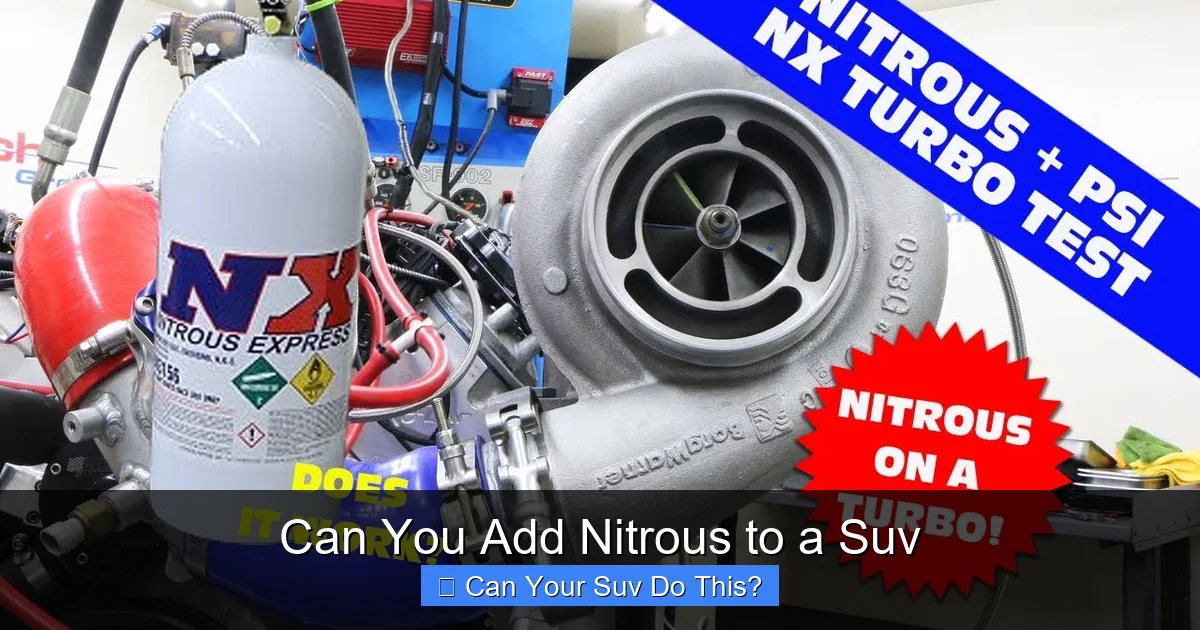
Visual guide about Can You Add Nitrous to a Suv
Image source: bangshift.com
Now that you know how nitrous works, let’s talk about whether your SUV is up to the task. Not all engines are created equal, and SUVs—especially modern ones—come with a wide range of engine types, from small turbocharged four-cylinders to big V8s.
The first thing to ask is: *Is your engine strong enough?*
Most stock SUV engines are built for durability and efficiency, not high-stress performance. They use cast pistons, standard connecting rods, and factory cooling systems—none of which are designed to handle the sudden spike in heat and pressure that nitrous delivers.
Engine Type Matters
If your SUV has a naturally aspirated V6 or V8 (like in a Toyota 4Runner or Ford Expedition), it might handle a mild nitrous shot (50–75 hp) with minimal risk—*if* it’s in excellent condition and properly tuned. But if you’re pushing 100+ hp, you’re entering dangerous territory without internal upgrades.
Turbocharged or supercharged SUVs (like the Audi SQ5 or Mercedes-AMG GLE) are a different story. These engines already operate under boost, so adding nitrous can be like doubling down on stress. While some tuners successfully run nitrous on boosted engines, it requires extreme caution, precise tuning, and often upgraded internals.
Transmission and Drivetrain Stress
Here’s something many people forget: it’s not just the engine that takes a hit. Your transmission, differential, and driveshaft also feel the strain when you suddenly add 100+ horsepower. SUVs often have heavy-duty drivetrains, but even those have limits.
For example, a stock automatic transmission in a mid-size SUV might handle a 50-hp nitrous shot fine, but a 150-hp blast could lead to slipping, overheating, or even failure—especially if you’re towing or driving off-road. Manual transmissions are even more vulnerable, as the clutch can’t always handle the sudden torque spike.
Cooling and Heat Management
Nitrous creates a lot of heat. Your SUV’s cooling system—radiator, water pump, thermostat—wasn’t designed for sustained high loads. Even a short nitrous burst can push coolant temperatures into the red if the system isn’t up to par.
If you’re serious about running nitrous, consider upgrading to a high-capacity radiator, an auxiliary oil cooler, and a performance thermostat. Also, make sure your fans are working properly and your coolant is fresh.
Fuel System Upgrades
Remember: nitrous needs more fuel. If your fuel pump, injectors, or fuel lines can’t keep up, you’ll run lean—and that’s a one-way ticket to engine damage.
Most nitrous kits include a fuel solenoid and recommend a minimum fuel pressure, but it’s wise to upgrade your fuel system if you’re going beyond a mild shot. A high-flow fuel pump (like a Walbro 255 lph) and larger injectors (e.g., 42 lb/hr or higher) are common upgrades for nitrous users.
Installation: DIY or Professional?
So, you’ve decided your SUV can handle nitrous. Now comes the big question: *Should you install it yourself?*
The short answer: **No—unless you’re a trained mechanic or tuner with experience in forced induction systems.**
Nitrous installation isn’t just about bolting on a bottle and running some lines. It involves:
– Drilling into the intake manifold for nozzle placement
– Routing high-pressure nitrous and fuel lines safely
– Installing solenoids, relays, and activation switches
– Tuning the engine to handle the extra fuel and timing adjustments
– Ensuring fail-safes are in place (like a window switch or RPM limiter)
Why Professional Installation Matters
A poorly installed nitrous system can lead to:
– Fuel leaks (fire hazard)
– Nitrous leaks (asphyxiation risk in enclosed spaces)
– Engine detonation from incorrect timing or lean conditions
– Electrical shorts from improper wiring
Even small mistakes—like a loose fuel line or a misaligned nozzle—can cause catastrophic failure. We’re talking melted pistons, blown head gaskets, or even engine seizure.
That’s why most reputable nitrous companies (like ZEX, Nitrous Express, or NOS) recommend professional installation. A certified tuner will also dyno-test your SUV before and after installation to ensure the system is working safely and efficiently.
Cost of Installation
Expect to pay anywhere from $800 to $2,500 for a complete nitrous installation on an SUV, depending on the system type, engine size, and whether upgrades are needed. That’s on top of the $300–$800 for the kit itself.
But here’s the thing: cutting corners to save money can cost you tenfold in repairs later. Invest in quality parts and professional labor—it’s not just about performance; it’s about safety.
Legal, Insurance, and Warranty Implications
Now, let’s talk about the fine print—because adding nitrous isn’t just a mechanical decision. It’s a legal and financial one too.
Is Nitrous Legal?
In most U.S. states, owning and installing a nitrous system is legal—*as long as it’s not used on public roads*. That means you can have it in your SUV, but you can’t legally hit the button while driving down Main Street.
Some states (like California) have stricter emissions laws. If your SUV is subject to smog checks, a nitrous system—especially one that alters fuel delivery—could cause you to fail inspection. Even if the system is disabled during testing, inspectors may flag it.
Insurance Concerns
Here’s a hard truth: most standard auto insurance policies **do not cover damage caused by nitrous oxide systems**. If your engine blows up from a nitrous backfire, your insurer might deny the claim, calling it “intentional modification” or “racing activity.”
Some specialty insurers (like Hagerty or Grundy) offer coverage for modified vehicles, but you’ll need to declare the nitrous system and pay higher premiums. Don’t assume your current policy will protect you.
Warranty Voidance
If your SUV is still under manufacturer warranty, installing nitrous will almost certainly void it. Automakers don’t cover damage from aftermarket performance parts, and nitrous is a red flag.
Even if you remove the system before taking it to the dealer, forensic analysis can often detect signs of nitrous use—like altered fuel trims or melted spark plugs.
So ask yourself: Is the thrill worth losing your warranty and risking a denied insurance claim? For many, the answer is no—especially if the SUV is still relatively new or financed.
Performance Gains: Real-World Examples
Okay, let’s say you’ve weighed the risks and decided to go for it. What kind of performance can you expect?
Let’s look at a few real-world examples:
Example 1: 2020 Ford Explorer with 2.3L EcoBoost
Stock horsepower: ~300 hp
With a 75-hp nitrous shot: ~375 hp
0–60 mph improvement: ~0.8 seconds (from 6.5 to ~5.7 seconds)
Best for: Quick overtakes, drag racing, weekend fun
This setup works well because the EcoBoost engine is turbocharged and already tuned for performance. With proper fuel upgrades and a wet kit, it can handle mild nitrous safely.
Example 2: 2018 Jeep Grand Cherokee SRT with 6.4L V8
Stock horsepower: ~475 hp
With a 100-hp nitrous shot: ~575 hp
0–60 mph improvement: ~0.5 seconds (from 4.4 to ~3.9 seconds)
Best for: High-speed runs, track days
The SRT’s forged internals and robust cooling make it a better candidate for nitrous. Still, even here, sustained use can shorten engine life.
Example 3: 2022 Toyota RAV4 Hybrid
Stock horsepower: ~219 hp (combined)
With nitrous: Not recommended
Why? Hybrid systems are complex, and the electric motor complicates fuel and timing tuning. Plus, the small 2.5L engine isn’t built for high stress. Adding nitrous here is risky and likely not worth it.
Tips for Safe Nitrous Use
– Always use a purge kit to clear air from the nitrous line before activation
– Install a window switch to limit nitrous use to certain RPM ranges (e.g., above 3,000 RPM)
– Use high-quality spark plugs (one heat range colder than stock)
– Never use nitrous in cold engines—let it warm up first
– Keep a fire extinguisher in the vehicle
– Re-tune after any major changes (e.g., headers, camshaft)
Alternatives to Nitrous for SUV Performance
Before you commit to nitrous, consider whether there are better ways to boost your SUV’s performance—especially if you want reliability and daily drivability.
Performance Tuning (ECU Flash)
A simple ECU reflash can add 20–50 hp with no hardware changes. It’s safe, reversible, and often improves throttle response and fuel economy. For many SUV owners, this is the best first step.
Cold Air Intake and Exhaust Upgrades
These mods improve airflow and sound, adding 5–15 hp. They’re affordable, easy to install, and don’t stress the engine.
Turbo or Supercharger Kits
For serious power, forced induction is more sustainable than nitrous. A turbo kit can double your horsepower, and while it’s more expensive ($3,000–$8,000), it’s designed for continuous use—not just short bursts.
Suspension and Brake Upgrades
More power is useless if you can’t handle it. Upgrading shocks, springs, and brakes ensures your SUV can stop and corner safely at higher speeds.
Conclusion: Should You Add Nitrous to Your SUV?
So, can you add nitrous to an SUV? Absolutely. Should you? That depends.
If you’re a performance enthusiast with a strong engine, proper upgrades, and a willingness to accept the risks, nitrous can be a thrilling addition. It’s perfect for weekend racing, car shows, or just impressing your friends at the stoplight.
But if you rely on your SUV for daily driving, family trips, or towing, nitrous might be more trouble than it’s worth. The potential for engine damage, warranty voidance, and insurance issues is real—and costly.
Before you make a decision, ask yourself:
– Is my engine in top condition?
– Can I afford the installation and potential repairs?
– Am I prepared to maintain the system regularly?
– Do I have a safe, legal place to use it?
If you answered “no” to any of these, consider milder performance mods instead. But if you’re ready for the challenge—and the thrill—then yes, your SUV *can* do this. Just do it smart, do it safe, and respect the power you’re unleashing.
Frequently Asked Questions
Can I install nitrous on a hybrid SUV?
It’s technically possible, but not recommended. Hybrid systems are complex, and adding nitrous can interfere with the electric motor and battery management. The risks outweigh the benefits for most hybrid SUVs.
How long does a nitrous bottle last?
A standard 10-pound bottle can provide about 8–10 seconds of continuous nitrous use at full power. Most drivers use it in short 3–5 second bursts, so one bottle can last multiple runs.
Will nitrous damage my SUV’s engine?
It can, if used improperly. Running lean, using too high a shot, or activating nitrous on a cold engine can cause detonation, overheating, or piston damage. Proper tuning and maintenance are essential.
Can I use nitrous while towing?
No. Towing already stresses the engine and transmission. Adding nitrous increases the risk of overheating and mechanical failure. It’s best to avoid nitrous when carrying heavy loads.
Do I need to upgrade my fuel system for nitrous?
Yes, especially for shots over 75 hp. A high-flow fuel pump and larger injectors help ensure adequate fuel delivery and prevent lean conditions.
Is nitrous safe for daily driving?
Not really. Nitrous is designed for short bursts, not continuous use. Running it daily increases wear and the risk of failure. It’s best reserved for occasional performance use.