
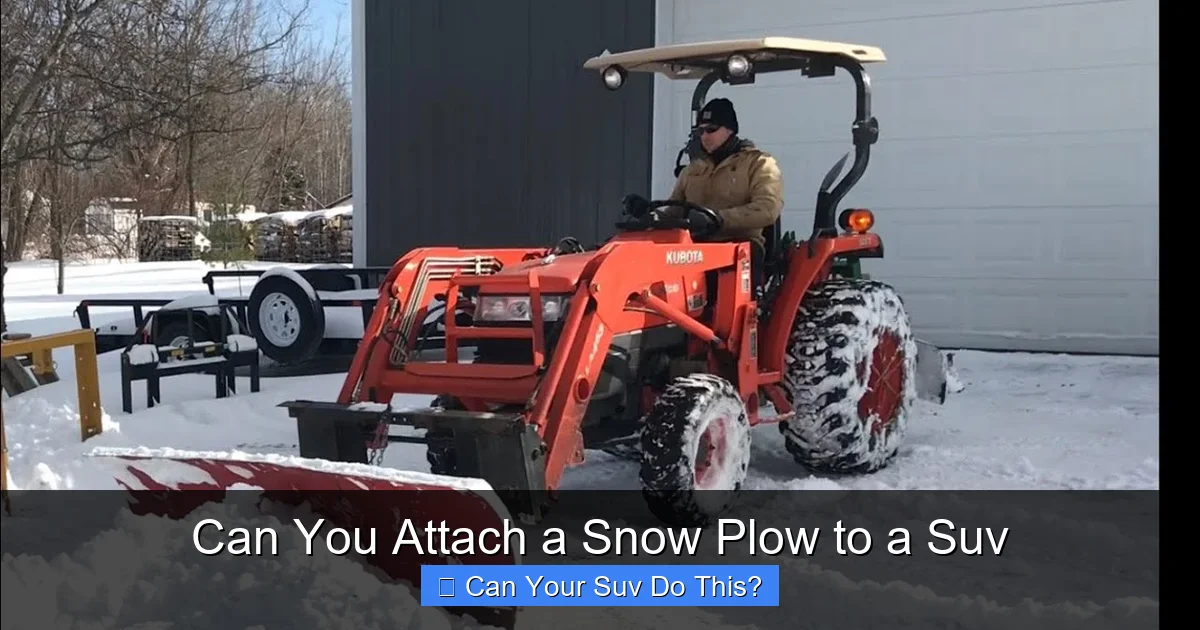
Yes, you can attach a snow plow to many SUVs—but not all models are suitable. With the right equipment, proper weight distribution, and compatible hitch systems, some SUVs can handle light to moderate plowing tasks. However, it’s crucial to check your vehicle’s specs, choose the correct plow type, and prioritize safety to avoid damage or accidents.
Key Takeaways
- Not all SUVs are built for plowing: Compact and crossover SUVs often lack the power, weight, and frame strength needed for safe snow plowing.
- Full-size and heavy-duty SUVs work best: Models like the Ford Expedition, Chevrolet Tahoe, and Toyota Sequoia have the towing capacity and durability for plow attachments.
- Plow type matters: Straight blades are ideal for most SUVs, while V-plows offer more versatility but may require more power.
- Installation requires a compatible hitch and wiring: A Class III or IV hitch and proper electrical connections are essential for safe operation.
- Weight distribution is critical: Adding a plow shifts your SUV’s center of gravity forward, affecting handling and braking.
- Regular maintenance is a must: Plowing strains your SUV’s suspension, steering, and drivetrain—routine checks prevent long-term damage.
- Check local laws and insurance: Some areas regulate plow use on public roads, and your insurance may not cover commercial plowing.
📑 Table of Contents
- Can You Attach a Snow Plow to a SUV? The Real Answer
- Understanding SUV Types and Plow Compatibility
- Types of Snow Plows for SUVs
- Installation Requirements and Modifications
- Safety and Handling Considerations
- Real-World Examples and Case Studies
- Maintenance and Long-Term Care
- Legal and Insurance Considerations
- Conclusion
Can You Attach a Snow Plow to a SUV? The Real Answer
Winter brings snow, ice, and the inevitable chore of clearing driveways and roads. For many, a snow plow is the ultimate tool to tackle heavy snowfall quickly and efficiently. But if you don’t own a truck, you might be wondering: can you attach a snow plow to a SUV? The short answer is yes—but with important caveats.
SUVs come in all shapes and sizes, from compact crossovers to full-size, body-on-frame giants. While some are more than capable of handling a snow plow, others simply aren’t built for the job. The key lies in understanding your SUV’s capabilities, the type of plow you’re considering, and the modifications required to make it work safely. This guide will walk you through everything you need to know—from compatibility and installation to safety tips and real-world examples—so you can decide if plowing with your SUV is a smart move.
Whether you’re a homeowner looking to clear your driveway or a small business owner offering winter services, knowing whether your SUV can handle a plow is essential. Let’s dive into the details and separate fact from fiction.
Understanding SUV Types and Plow Compatibility
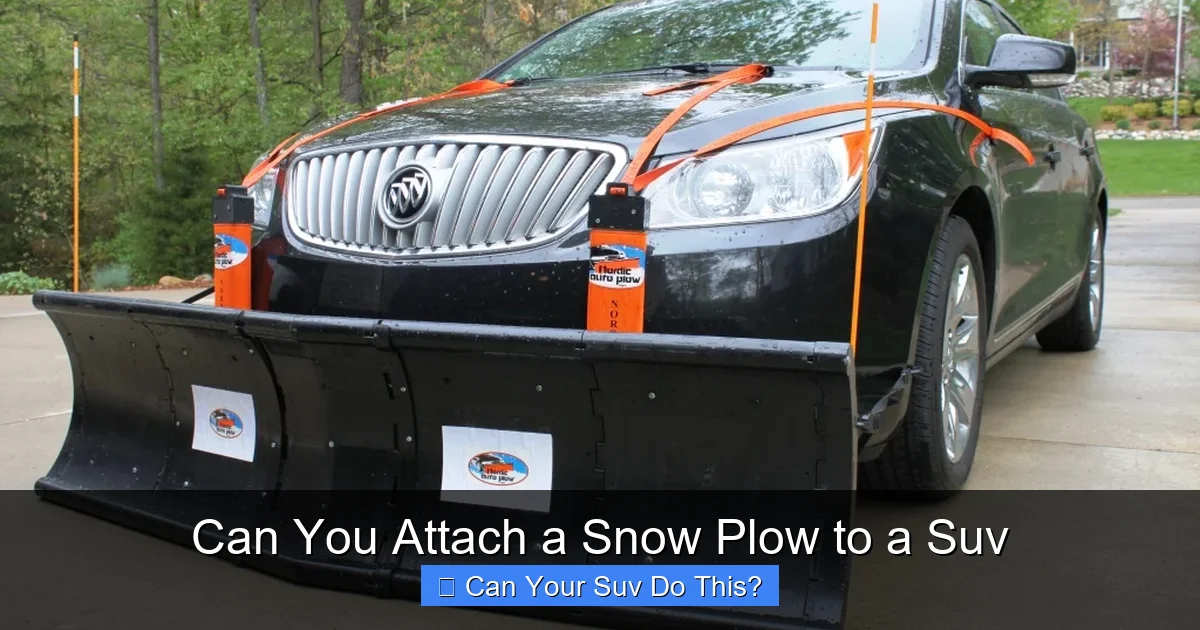
Visual guide about Can You Attach a Snow Plow to a Suv
Image source: nordicplow.com
Not all SUVs are created equal when it comes to snow plowing. The first step in determining whether you can attach a snow plow to a SUV is understanding the different types of SUVs and their structural differences.
Compact and Crossover SUVs: Proceed with Caution
Compact SUVs like the Honda CR-V, Toyota RAV4, and Nissan Rogue are popular for their fuel efficiency, comfort, and urban-friendly size. However, they’re generally not recommended for snow plowing. These vehicles are built on car platforms, meaning they lack the heavy-duty frames and powerful engines needed to handle the stress of pushing snow.
Their lighter weight also makes them less stable when a plow is mounted. Adding a 300- to 500-pound plow to the front can throw off the vehicle’s balance, making it harder to control, especially on icy or uneven surfaces. Additionally, their suspension systems aren’t designed for the constant impact and strain of plowing.
That said, some compact SUVs with higher trim levels and all-wheel drive might handle very light plowing—think occasional light snow on a short driveway. But even then, it’s risky. Manufacturers rarely endorse plow use on these models, and doing so could void your warranty.
Mid-Size SUVs: A Gray Area
Mid-size SUVs like the Ford Explorer, Jeep Grand Cherokee, and Hyundai Santa Fe fall into a gray area. Some models, particularly those with V6 or V8 engines and body-on-frame construction, can handle light plowing with the right setup.
For example, the Ford Explorer with the available 3.0L EcoBoost V6 and Class III hitch might be able to manage a small straight-blade plow. However, it’s still not ideal. These SUVs often have independent front suspension, which isn’t as robust as solid axles found in trucks. Repeated plowing can lead to premature wear on ball joints, control arms, and steering components.
If you’re considering plowing with a mid-size SUV, consult your owner’s manual and contact the manufacturer. Some companies, like Ford, offer specific guidelines for plow prep packages on certain models.
Full-Size and Heavy-Duty SUVs: The Best Candidates
If you’re serious about plowing, full-size SUVs are your best bet. Vehicles like the Ford Expedition, Chevrolet Tahoe, GMC Yukon, and Toyota Sequoia are built on truck platforms, meaning they share many components with pickup trucks. This gives them the strength, power, and durability needed for snow plowing.
These SUVs typically come with V8 engines, heavy-duty suspensions, and robust frames. Many are available with factory-installed plow prep packages, which include reinforced front ends, upgraded cooling systems, and wiring harnesses for plow lights.
For example, the Ford Expedition with the available “Plow Prep” package is specifically designed for snow removal. It includes a heavy-duty radiator, upgraded alternator, and a front suspension tuned for plow use. This makes it one of the few SUVs that can safely and effectively handle a full-sized plow.
Types of Snow Plows for SUVs
Once you’ve determined your SUV is capable of plowing, the next step is choosing the right type of snow plow. Not all plows are created equal, and selecting the wrong one can lead to poor performance or vehicle damage.
Straight-Blade Plows: Simple and Effective
Straight-blade plows are the most common type and are ideal for most SUV applications. They feature a single, flat blade that can be angled left or right to push snow to the side. These plows are relatively lightweight, easy to operate, and well-suited for driveways, parking lots, and light commercial use.
For SUVs, a straight-blade plow in the 6.5- to 7.5-foot range is typically the best fit. Anything larger may be too heavy or require more power than your SUV can provide. Brands like Meyer, Western, and Fisher offer SUV-compatible straight-blade models designed for vehicles with lower ground clearance and less horsepower.
One advantage of straight-blade plows is their simplicity. They have fewer moving parts than V-plows, which means less maintenance and fewer things that can go wrong. They’re also easier to install and remove, making them a good choice for seasonal use.
V-Plows: Versatile but Demanding
V-plows, also known as V-shaped or adjustable plows, have two hinged blades that can be positioned in a “V” for breaking through deep snow or straightened for wide, straight pushes. This versatility makes them excellent for heavy snowfall and large areas.
However, V-plows are heavier and require more hydraulic power to operate. They’re typically used on trucks with high horsepower and heavy-duty suspensions. While some full-size SUVs can handle a V-plow, it’s rare and not recommended unless your vehicle is specifically rated for it.
The added weight and complexity of a V-plow can strain an SUV’s front end, especially if it wasn’t designed for plowing. You’ll also need a more robust hydraulic system and electrical setup, which may require professional installation.
Rear-Mount and Tow-Behind Plows: Alternatives for Smaller SUVs
If your SUV isn’t suitable for a front-mounted plow, consider alternative options. Rear-mount plows attach to the back of the vehicle and are pulled behind like a trailer. These are less common but can work for light snow removal on flat surfaces.
Tow-behind plows, often used with ATVs or small tractors, can also be adapted for SUVs with a trailer hitch. They’re easier on the vehicle since the weight is distributed behind the axle, but they offer less control and maneuverability than front-mounted plows.
These options are best for occasional use and light snow. They won’t replace a front plow for heavy-duty work, but they can be a creative solution if your SUV can’t handle a traditional setup.
Installation Requirements and Modifications
Installing a snow plow on an SUV isn’t as simple as bolting it on and hitting the road. It requires careful planning, the right equipment, and often professional help.
Hitch and Mounting System
The foundation of any plow setup is a compatible hitch and mounting system. Most front-mounted plows require a Class III or Class IV hitch, which can handle the weight and stress of a plow. Your SUV must have a hitch receiver that matches the plow’s mounting bracket.
Some plows come with universal mounts that fit multiple vehicle types, while others are vehicle-specific. Always check compatibility before purchasing. Brands like Boss and Western offer detailed fit guides on their websites.
In addition to the hitch, you’ll need a plow-specific mounting kit. This includes brackets, pins, and hardware that secure the plow to the vehicle. Improper installation can lead to detachment, damage, or injury.
Electrical and Hydraulic Systems
Snow plows require power to operate the lift, angle, and sometimes the trip-edge functions. This means you’ll need to connect the plow to your SUV’s electrical system.
Most plows use a 7-pin connector to link to the vehicle’s wiring harness. This powers the plow lights, hydraulic pump, and control switches. If your SUV doesn’t have a pre-wired harness, you’ll need to install one. This involves tapping into the vehicle’s fuse box and running wires to the front bumper.
Hydraulic systems are another consideration. Plows use hydraulic cylinders to lift and angle the blade. These are powered by a small pump that runs off the vehicle’s battery. The pump must be mounted securely and connected to the plow’s hydraulic lines.
Some SUVs may need an upgraded alternator or battery to handle the extra electrical load. Plowing can drain your battery quickly, especially in cold weather, so ensuring your electrical system is up to the task is crucial.
Front-End Reinforcement
Adding a plow increases stress on your SUV’s front suspension, steering, and frame. To prevent damage, many plow manufacturers recommend reinforcing the front end.
This can include installing a heavy-duty front stabilizer bar, upgrading shock absorbers, or adding a plow-specific suspension kit. Some SUVs, like the Ford Expedition with the Plow Prep package, come with these reinforcements from the factory.
If your SUV doesn’t have factory reinforcements, consult a mechanic or plow installer. They can assess your vehicle and recommend necessary upgrades.
Safety and Handling Considerations
Plowing with an SUV changes how your vehicle behaves on the road. Understanding these changes is essential for safe operation.
Weight Distribution and Balance
A snow plow can weigh between 300 and 800 pounds, depending on the model. Mounting this weight to the front of your SUV shifts the center of gravity forward. This affects handling, braking, and stability.
You may notice that your SUV feels “nose-heavy” or less responsive when turning. Braking distances can increase, especially on slippery surfaces. To compensate, drive slower and leave extra space between vehicles.
Some plow systems include a weight distribution hitch or rear suspension airbags to help balance the load. These can improve ride quality and handling, but they’re not a substitute for cautious driving.
Ground Clearance and Approach Angle
SUVs generally have better ground clearance than cars, but not all are created equal. When a plow is mounted, the front end sits lower, reducing clearance further.
This can be a problem when driving over curbs, speed bumps, or uneven terrain. Hitting an obstacle with the plow can cause serious damage to the blade, hydraulics, or vehicle frame.
Before plowing, assess your driveway and surrounding area for potential hazards. Avoid steep inclines or rough surfaces unless your SUV is specifically designed for off-road use.
Visibility and Lighting
Plowing often happens in low-light conditions—early morning, late evening, or during a snowstorm. Good visibility is essential for safety.
Most plows come with LED lights that mount to the blade and connect to your SUV’s electrical system. These lights illuminate the plow path and make your vehicle more visible to others.
Ensure your SUV’s headlights and taillights are in good working order. Consider adding auxiliary lights if you frequently plow in dark or stormy conditions.
Operator Training and Best Practices
Even with the right equipment, plowing requires skill and experience. If you’ve never operated a plow before, take time to learn the basics.
Start in an open, snow-free area to practice lifting, lowering, and angling the blade. Get familiar with the controls and how your SUV responds.
Always plow in low gear and avoid sudden movements. Push snow, don’t lift it—lifting heavy snow can strain the hydraulics and damage the plow.
Never plow on icy or uneven surfaces at high speed. And always disengage the plow when driving on roads without snow.
Real-World Examples and Case Studies
To illustrate how different SUVs handle plowing, let’s look at a few real-world examples.
Case Study 1: Ford Expedition with Plow Prep
John, a homeowner in upstate New York, owns a Ford Expedition with the factory Plow Prep package. He uses a 7.5-foot Western straight-blade plow to clear his 200-foot driveway and a small parking lot for his business.
He reports that the Expedition handles the plow well, thanks to the reinforced front end and upgraded cooling system. He drives slowly and avoids deep snow, but says the setup is reliable and effective.
“It’s not a dump truck, but it gets the job done,” John says. “I wouldn’t try to plow a whole street, but for my needs, it’s perfect.”
Case Study 2: Honda CR-V Attempt
Sarah, a college student in Minnesota, tried to install a small 6-foot plow on her Honda CR-V. She used a universal mount and a lightweight blade, hoping to clear her apartment’s parking lot.
After two uses, she noticed her front suspension was making noise, and the plow struggled with anything more than a few inches of snow. She eventually removed the plow and switched to a snowblower.
“It just wasn’t built for it,” she says. “The CR-V is great for driving in snow, but not for pushing it.”
Case Study 3: Toyota Sequoia Conversion
Mike, a contractor in Colorado, converted his Toyota Sequoia into a plow vehicle. He installed a Boss V-plow, upgraded the alternator, and added airbags to the rear suspension.
He uses the Sequoia to plow driveways for clients during winter. While it’s not as powerful as his F-350, he says it’s more than capable for residential work.
“It’s a beast,” Mike says. “Takes a beating, but keeps going.”
Maintenance and Long-Term Care
Plowing puts extra strain on your SUV. To keep it running smoothly, regular maintenance is essential.
Post-Plow Inspection
After each plowing session, inspect the plow and vehicle for damage. Check for bent blades, loose bolts, or hydraulic leaks. Look for signs of stress on the front suspension and frame.
Clean the plow and undercarriage to remove salt, dirt, and debris. Salt accelerates rust, so rinse thoroughly, especially in the spring.
Seasonal Storage
When winter ends, store the plow properly. Disconnect it from the vehicle and clean it thoroughly. Apply grease to moving parts and store it in a dry, covered area.
Inspect the SUV’s suspension, steering, and drivetrain. Plowing can accelerate wear, so address any issues before they become major problems.
Professional Servicing
Consider having your plow and SUV inspected by a professional at the start and end of each season. They can spot potential issues and ensure everything is in working order.
Legal and Insurance Considerations
Before you start plowing, check local laws and your insurance policy.
Some municipalities regulate the use of plows on public roads. You may need a permit or license to operate commercially.
Your auto insurance may not cover damage caused by plowing, especially if used for business. Talk to your agent about adding coverage or a commercial policy.
Conclusion
So, can you attach a snow plow to a SUV? The answer is yes—but only if your SUV is the right type, properly equipped, and used responsibly. Full-size, body-on-frame SUVs with plow prep packages are the best candidates, while compact crossovers should generally avoid plowing altogether.
With the right plow, installation, and safety practices, your SUV can be a valuable tool for winter snow removal. But remember: plowing is hard work that demands respect for your vehicle’s limits. When in doubt, consult a professional or consider hiring a plowing service.
Whether you’re clearing your driveway or starting a small winter business, make informed decisions. Your SUV—and your safety—are worth it.
Frequently Asked Questions
Can I put a snow plow on a Toyota RAV4?
It’s not recommended. The RAV4 is a compact crossover with a unibody frame and limited power, making it unsuitable for snow plowing. Doing so could damage the suspension and void your warranty.
What size plow can I use on a Ford Expedition?
A 7.5-foot straight-blade plow is ideal for most Ford Expeditions, especially those with the factory Plow Prep package. Avoid V-plows unless your model is specifically rated for them.
Do I need a special hitch for a snow plow?
Yes, you’ll need a Class III or IV hitch receiver that’s compatible with your plow’s mounting system. Universal and vehicle-specific mounts are available from major plow brands.
Will plowing damage my SUV?
Plowing can strain your SUV’s suspension, steering, and drivetrain, especially if it’s not designed for it. Proper installation, maintenance, and cautious use can minimize damage.
Can I plow with an electric SUV like the Tesla Model Y?
No. Electric SUVs like the Model Y lack the necessary frame strength, hitch compatibility, and hydraulic systems for plow use. They’re not designed for snow plowing.
Is it legal to plow roads with my SUV?
It depends on local laws. Some areas require permits or restrict plowing on public roads. Always check with your city or county before plowing streets.