
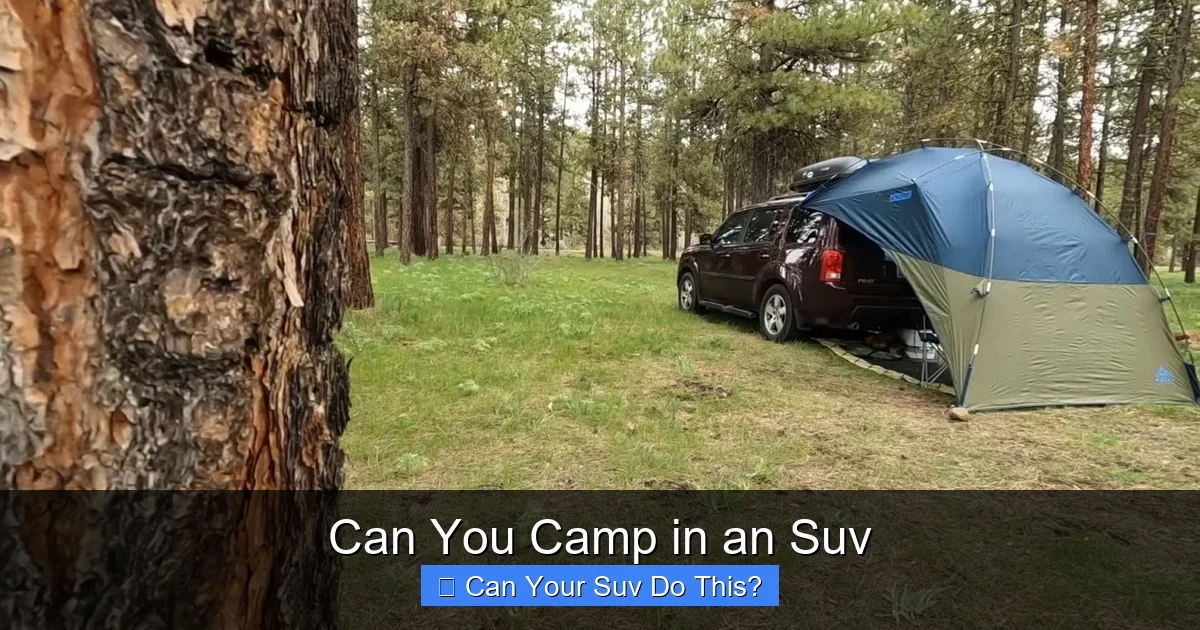
You absolutely can camp in an SUV—and it’s easier than you think. With smart planning, the right gear, and a few modifications, your SUV becomes a mobile basecamp for weekend getaways or extended road trips. From folding seats to rooftop tents, modern SUVs offer surprising comfort and versatility for overnight stays in nature.
Key Takeaways
- Most SUVs can be converted into sleeping spaces: Fold-down rear seats and flat floors create a surprisingly comfortable bed platform with minimal effort.
- SUV camping is budget-friendly: Skip pricey campground fees and gear rentals by using what you already own—your vehicle.
- Safety and legality matter: Always check local laws about overnight parking and camping, and prioritize ventilation to avoid carbon monoxide risks.
- Gear makes all the difference: Invest in a quality sleeping pad, compact bedding, and window shades for privacy and temperature control.
- Rooftop tents expand your options: These pop-up shelters offer elevated comfort, faster setup, and better insulation from cold ground.
- Not all SUVs are created equal: Larger models like the Toyota 4Runner or Subaru Outback offer more space, but even compact SUVs can work with clever organization.
- SUV camping suits various lifestyles: Whether you’re a solo adventurer, couple, or family, there’s an SUV camping setup that fits your needs.
📑 Table of Contents
- Can You Really Camp in an SUV? The Surprising Answer
- Why Choose SUV Camping? Benefits Beyond the Basics
- How to Turn Your SUV Into a Cozy Camper
- Essential Gear for SUV Camping
- Safety and Legal Considerations
- SUV Camping for Different Lifestyles
- Real-Life Examples: SUV Camping in Action
- Final Thoughts: Is SUV Camping Right for You?
Can You Really Camp in an SUV? The Surprising Answer
If you’ve ever found yourself staring at your SUV after a long hike, wondering if you could just crash there for the night, you’re not alone. The idea of camping in an SUV might sound unconventional—or even uncomfortable—but the truth is, it’s not only possible, it’s becoming increasingly popular. From weekend warriors to full-time van-lifers, more people are discovering the freedom and flexibility that comes with turning their SUV into a temporary home on wheels.
SUV camping blends the best of both worlds: the comfort and familiarity of your own vehicle, and the thrill of sleeping under the stars. You don’t need a massive RV or a custom-built camper van. With a few simple adjustments, your everyday SUV can become a cozy, functional sleeping space. Whether you’re parked at a designated campsite, a rest stop, or a quiet forest clearing (where legal), the experience can be surprisingly restful—and far more affordable than traditional camping setups.
But let’s be real: it’s not *quite* as simple as just lying down in the back. There’s strategy involved. From maximizing space to ensuring safety and comfort, successful SUV camping requires a bit of planning. The good news? Once you get the hang of it, you’ll wonder why you ever bothered with tents. In this guide, we’ll walk you through everything you need to know to camp in your SUV—safely, comfortably, and legally.
Why Choose SUV Camping? Benefits Beyond the Basics
Visual guide about Can You Camp in an Suv
Image source: campdotcom.com
So why would anyone choose to sleep in their SUV instead of pitching a tent or booking a cabin? The reasons are as varied as the people who do it, but several key advantages stand out.
First and foremost: **convenience**. Your SUV is always with you. No need to haul a tent, sleeping bag, and camping stove back and forth from the car. Everything you need is already packed—or can be stored neatly in the cargo area. This makes spontaneous trips easier and reduces setup time dramatically. Imagine arriving at a scenic overlook at sunset, folding down the seats, and drifting off to the sound of crickets—all within 10 minutes.
Another major perk is **cost savings**. Camping in an SUV eliminates the need for expensive gear rentals or nightly campground fees. Many public lands and rest areas allow free overnight parking, especially if you’re boondocking (camping without hookups). Over time, those savings add up—especially if you travel frequently.
Then there’s **safety and security**. Sleeping in your locked vehicle offers a level of protection that a tent simply can’t match. You’re shielded from wildlife, bad weather, and unwanted visitors. Plus, you have access to your car’s lights, heat, and even power outlets—perfect for charging devices or running a small fan on warm nights.
Finally, **SUV camping is incredibly versatile**. Whether you’re a solo traveler seeking solitude, a couple on a romantic road trip, or a family exploring national parks, your SUV can adapt. With the right setup, you can sleep comfortably, cook simple meals, and even work remotely using mobile Wi-Fi. It’s a gateway to adventure without sacrificing too much comfort.
How to Turn Your SUV Into a Cozy Camper
Now that you’re convinced SUV camping is worth trying, let’s talk about how to make it happen. The goal is to create a flat, comfortable sleeping surface while maximizing storage and maintaining safety.
Step 1: Clear Out the Clutter
Start by removing everything from your cargo area. This includes spare tires, tools, emergency kits, and any personal items you don’t need on the trip. The more space you free up, the better your sleeping platform will be. If you can’t remove the spare tire, consider investing in a tire relocation kit or a roof-mounted spare carrier to free up floor space.
Step 2: Create a Flat Sleeping Surface
Most SUVs have rear seats that fold down, but they rarely create a perfectly flat floor. To solve this, you’ll need a **sleeping platform**. This can be as simple as a piece of plywood cut to size, or as fancy as a custom-built modular system with storage drawers underneath.
For a DIY approach, measure the cargo area with the seats folded. Cut a piece of ½-inch plywood to fit, and cover it with foam padding or a thick moving blanket. You can also use interlocking foam floor tiles—like those used in gyms—to add cushioning and insulation.
If you prefer a ready-made solution, companies like **Sleepy Ride** and **CamperMate** offer SUV-specific bed platforms that snap into place without tools. These often include built-in storage and fold up for easy transport.
Step 3: Choose the Right Bedding
A good night’s sleep starts with the right mattress. While your SUV’s floor might be flat, it’s not soft. A high-quality **sleeping pad** or **inflatable mattress** is essential. Look for options designed for car camping, like the **Therm-a-Rest MondoKing** or **Exped MegaMat**, which offer excellent support and insulation.
For bedding, pack a compact sleeping bag or a set of lightweight sheets and a duvet. Bring a small pillow—or use a rolled-up jacket. If you’re camping in cooler weather, add a fleece blanket or a heated mattress pad (powered by your car’s 12V outlet).
Step 4: Maximize Storage and Organization
Space is tight, so every inch counts. Use **collapsible storage bins**, **hanging organizers**, and **seat-back pockets** to keep gear tidy. Store clothes in vacuum-sealed bags to save space. Keep frequently used items—like flashlights, snacks, and water—within easy reach.
Consider installing a **cargo barrier** or **net** to prevent items from sliding into the cabin while driving. This also helps separate your sleeping area from your gear.
Step 5: Ensure Ventilation and Privacy
Sleeping in a closed vehicle can get stuffy fast. Crack a window slightly—preferably on the downwind side—to allow airflow. For added ventilation, use a **12V fan** or a **solar-powered vent fan** on the roof.
For privacy, install **window shades** or **reflective covers**. These block prying eyes and help regulate temperature by reflecting sunlight during the day and retaining heat at night. Many are magnetic or suction-based, making them easy to install and remove.
Essential Gear for SUV Camping
While your SUV does most of the heavy lifting, the right gear can make or break your experience. Here’s a checklist of must-haves for a comfortable and safe trip.
Sleep System
– **Sleeping pad or mattress**: At least 2 inches thick for comfort.
– **Sleeping bag or bedding**: Rated for the expected temperature.
– **Pillow**: Compact and supportive.
– **Eye mask and earplugs**: For better sleep in noisy or bright areas.
Lighting and Power
– **LED lantern or string lights**: Battery-powered or USB-rechargeable.
– **Headlamp**: Hands-free lighting for nighttime tasks.
– **Portable power bank or car inverter**: To charge phones, cameras, or small appliances.
Cooking and Food
– **Compact camping stove**: Propane or butane models are reliable.
– **Cooler with ice packs**: For perishables.
– **Reusable utensils, plates, and cups**: Lightweight and eco-friendly.
– **Water jug or filtration system**: Stay hydrated without single-use bottles.
Safety and Comfort
– **First aid kit**: Include bandages, antiseptic, and any personal medications.
– **Fire extinguisher**: Small, vehicle-approved model.
– **Carbon monoxide detector**: Especially if using a heater or stove inside.
– **Emergency blanket and whistle**: For unexpected situations.
Extras That Make a Difference
– **Portable chair or camp stool**: For sitting outside your vehicle.
– **Tablet or e-reader**: For entertainment during downtime.
– **Trash bags and wet wipes**: Keep your space clean and hygienic.
Investing in quality gear pays off in comfort and durability. Look for multi-functional items—like a pot that doubles as a bowl—to save space.
Safety and Legal Considerations
Before you hit the road, it’s crucial to understand the rules and risks of SUV camping.
Know the Laws
Overnight parking and camping regulations vary widely by location. In the U.S., **public lands managed by the Bureau of Land Management (BLM)** and **U.S. Forest Service** often allow dispersed camping for up to 14 days. However, **national parks** typically require you to stay in designated campgrounds.
**Rest areas and truck stops** may permit overnight stays, but rules differ by state. Some allow it, while others prohibit it entirely. Always check local ordinances before settling in for the night.
Avoid private property unless you have explicit permission. Trespassing can lead to fines or worse.
Prioritize Safety
Never run your engine inside a closed garage or tightly enclosed space—carbon monoxide is deadly. If you use a heater, ensure it’s designed for indoor use and has an automatic shut-off feature.
Keep your doors locked, especially in unfamiliar areas. Park in well-lit, populated spots when possible. Let someone know your location and expected return time.
Respect the Environment
Practice **Leave No Trace** principles. Pack out all trash, avoid damaging vegetation, and use biodegradable soap. Never dump wastewater on the ground.
SUV Camping for Different Lifestyles
One of the best things about SUV camping is its adaptability. Whether you’re traveling alone or with a group, there’s a setup that works.
Solo Adventurers
For solo travelers, SUV camping offers independence and flexibility. You can change plans on a whim, sleep wherever it feels right, and enjoy solitude without sacrificing comfort. A compact SUV like a Honda CR-V or Mazda CX-5 is perfect for one person.
Couples
Couples can enjoy romantic getaways with minimal gear. A midsize SUV like a Toyota RAV4 or Subaru Forester provides enough space for two people to sleep side by side. Add a small table and some fairy lights for ambiance.
Families
Families might find SUV camping challenging due to space, but it’s doable with planning. Use a larger SUV like a Ford Explorer or Chevrolet Tahoe. Kids can sleep in the back while parents take the front seats or use a rooftop tent. Bring games, books, and snacks to keep little ones entertained.
Remote Workers
With mobile hotspots and laptop stands, SUV camping can double as a mobile office. Park near a scenic overlook, set up your laptop on the hood, and enjoy a coffee with a view. Just remember to take breaks and enjoy nature!
Real-Life Examples: SUV Camping in Action
Let’s look at a few real-world scenarios to see how SUV camping works in practice.
**Example 1: Weekend Getaway in the Mountains**
Sarah, a freelance photographer, drives her Subaru Outback to a remote trailhead in Colorado. She folds down the rear seats, sets up her foam mattress, and uses a portable stove to make dinner. She sleeps comfortably with the windows cracked and wakes up to a sunrise over the peaks.
**Example 2: Family Road Trip**
The Johnsons take their Ford Expedition on a cross-country trip. They use a rooftop tent for the kids and sleep in the back themselves. They cook meals on a camp stove and use a cooler for food. The kids love the adventure, and the parents appreciate the savings on hotels.
**Example 3: Solo Female Traveler**
Maria, a digital nomad, lives out of her Jeep Grand Cherokee. She uses a custom bed platform with under-bed storage and a solar panel to charge her devices. She parks at BLM land near Moab, Utah, and works remotely during the day, exploring national parks by afternoon.
These stories show that SUV camping isn’t just a backup plan—it’s a lifestyle choice for many.
Final Thoughts: Is SUV Camping Right for You?
So, can you camp in an SUV? Absolutely. With a little creativity and the right gear, your SUV can become a cozy, mobile retreat that opens up a world of adventure. It’s affordable, convenient, and surprisingly comfortable—especially once you dial in your setup.
Whether you’re escaping for a night or embarking on a months-long journey, SUV camping offers freedom without the hassle of traditional camping. It’s perfect for spontaneous trips, budget-conscious travelers, and anyone who loves the open road.
Start small. Try a one-night trip close to home. See how it feels. Adjust your gear and setup as needed. Before long, you might find yourself preferring your SUV over any hotel room.
The great outdoors is calling—and your SUV is ready to answer.
Frequently Asked Questions
Is it legal to sleep in your SUV overnight?
It depends on where you are. Many public lands and rest areas allow overnight parking, but national parks and private property often have restrictions. Always check local laws before settling in.
Do I need a special mattress to sleep in my SUV?
While you can use a regular air mattress, a high-density sleeping pad or custom-fit platform offers better support and insulation. Look for options designed for car camping.
Can I run my car’s heater while sleeping?
No—running the engine in a closed space risks carbon monoxide poisoning. Use a safe, enclosed heater designed for indoor use, and always ensure proper ventilation.
What’s the best SUV for camping?
Larger SUVs like the Toyota 4Runner, Ford Explorer, or Subaru Outback offer the most space. However, even compact models can work with smart organization and a rooftop tent.
How do I stay warm while camping in my SUV?
Use a thick sleeping pad, a warm sleeping bag, and extra blankets. Reflective window covers help retain heat, and a heated mattress pad (powered by your car) adds comfort.
Can I cook inside my SUV?
It’s not recommended due to fire and carbon monoxide risks. Cook outside using a portable stove, and always ensure proper ventilation if using any heating device.