
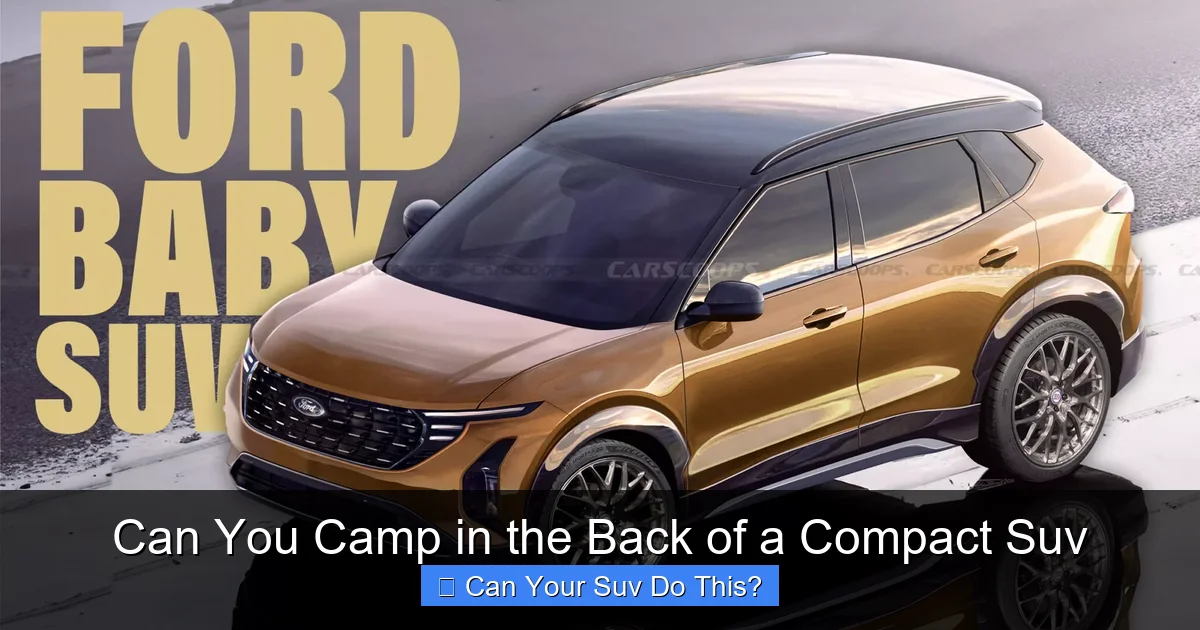
Yes, you can camp in the back of a compact SUV—many adventurers do it regularly. With smart planning, the right gear, and a few modifications, even small vehicles like the Honda CR-V or Toyota RAV4 can become cozy overnight shelters for solo travelers or couples.
Key Takeaways
- Compact SUVs can work for camping: With rear seats folded flat, most compact SUVs offer enough space for one or two people to sleep comfortably.
- Proper gear makes all the difference: A quality sleeping pad, compact sleeping bag, and space-saving bedding are essential for comfort and warmth.
- Ventilation and safety are critical: Always crack a window and use a carbon monoxide detector if running a heater or generator inside the vehicle.
- Weather protection matters: Use window covers, rain tarps, or a rooftop awning to stay dry and private during storms.
- Legal and ethical camping rules apply: Always check local laws—many cities ban overnight parking in residential areas or require permits for dispersed camping.
- Organization is key: Use storage bins, under-seat drawers, and overhead nets to keep gear tidy and accessible.
- It’s not just for solo travelers: Couples can camp in compact SUVs with creative layouts, though space will be tighter than in larger vehicles.
📑 Table of Contents
- Can You Really Camp in the Back of a Compact SUV?
- Why Choose a Compact SUV for Overlanding and Car Camping?
- How to Set Up Your Compact SUV for Overnight Camping
- What Gear Do You Really Need?
- Where Can You Legally Camp in Your Compact SUV?
- Tips for Couples and Families
- Common Challenges and How to Overcome Them
- Final Thoughts: Is It Worth It?
Can You Really Camp in the Back of a Compact SUV?
So, you’ve got a compact SUV—maybe a Subaru Forester, a Mazda CX-5, or a Ford Escape—and you’re wondering: can I actually sleep in this thing? The short answer? Absolutely. The longer answer? It takes a little planning, some smart gear choices, and a willingness to get creative. But thousands of van-lifers, weekend warriors, and digital nomads are already doing it, and they’re loving every minute.
Camping in the back of a compact SUV isn’t about luxury. It’s about freedom. It’s about waking up next to a mountain lake, rolling out of your makeshift bed, and brewing coffee while the sun rises over the trees. You don’t need a full-size van or an RV to enjoy that kind of experience. With the right setup, your compact SUV can become a cozy, mobile basecamp for adventures near and far.
But let’s be real—this isn’t a five-star hotel. You’ll be sleeping on a flat surface (hopefully padded), and you’ll need to be mindful of space, ventilation, and weather. Still, for solo travelers, couples, or even small families on a budget, it’s a fantastic way to explore without breaking the bank. And the best part? You’re already driving the vehicle. No extra rental fees, no towing, no complicated setup. Just pack your bags, fold the seats, and hit the road.
Why Choose a Compact SUV for Overlanding and Car Camping?
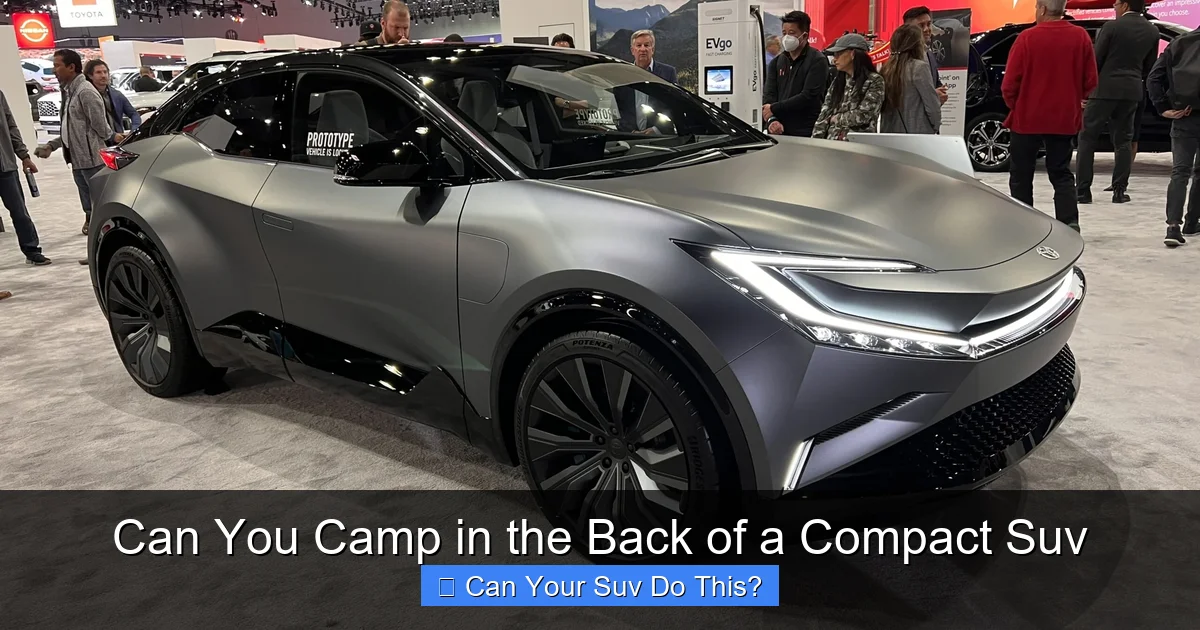
Visual guide about Can You Camp in the Back of a Compact Suv
Image source: evcentral.com.au
Compact SUVs have become the unsung heroes of the overlanding and car-camping world. They’re affordable, fuel-efficient, and surprisingly capable off the beaten path. Unlike massive trucks or RVs, they’re easy to park, maneuver in tight trails, and blend into regular traffic. And thanks to modern engineering, many compact SUVs now come with all-wheel drive, decent ground clearance, and robust suspension systems that can handle dirt roads and light off-roading.
One of the biggest advantages? Space efficiency. While they may not have the cavernous interiors of full-size SUVs or vans, compact SUVs are designed to maximize every inch. Fold down the rear seats, and you’ve got a flat(ish) platform that’s perfect for a sleeping area. Add a few storage solutions, and you’ve got room for clothes, food, cooking gear, and even a small fridge.
Another perk? They’re stealthy. If you’re camping in urban areas or parking overnight in rest stops, a compact SUV doesn’t scream “I’m sleeping in my car.” It looks like any other family vehicle, which can help you avoid unwanted attention. Plus, many models come with features like panoramic sunroofs, heated seats, and advanced infotainment systems—small luxuries that make long drives and chilly mornings much more comfortable.
And let’s not forget cost. A new compact SUV typically costs between $25,000 and $40,000—far less than a camper van conversion or a Class B motorhome. Even used models hold their value well, making them a smart investment for weekend adventurers. When you factor in fuel efficiency (many get 25–30 MPG), low maintenance costs, and insurance rates, the total cost of ownership is hard to beat.
Popular Compact SUVs for Camping
Not all compact SUVs are created equal when it comes to camping. Some have flatter cargo floors, better headroom, or more versatile seating. Here are a few top picks among overlanders and car campers:
- Subaru Forester: Known for its standard all-wheel drive, high ground clearance, and nearly flat rear floor when seats are folded. The large rear hatch and panoramic sunroof make it a favorite for stargazing and ventilation.
- Toyota RAV4: Reliable, fuel-efficient, and available in hybrid versions. The RAV4 Adventure and TRD Off-Road trims offer extra ruggedness for off-grid trips.
- Honda CR-V: Spacious interior, excellent fuel economy, and a reputation for longevity. The rear seats fold flat with minimal gaps, creating a solid sleeping platform.
- Mazda CX-5: Stylish, fun to drive, and surprisingly roomy inside. While not as off-road capable as the Forester, it’s great for paved and light gravel roads.
- Ford Escape: Offers a comfortable ride and decent cargo space. The hybrid version is especially appealing for long-distance travelers.
When choosing a compact SUV for camping, consider cargo volume, seat-folding mechanism, ground clearance, and available roof rails. A flat, uninterrupted sleeping surface is ideal, so test how the seats fold in person if possible.
How to Set Up Your Compact SUV for Overnight Camping
Setting up your compact SUV for sleeping doesn’t require a full van conversion. With a few smart modifications and the right gear, you can create a comfortable, functional sleeping space in under an hour. The key is simplicity and efficiency.
Step 1: Create a Flat Sleeping Platform
The first step is flattening the rear cargo area. Most compact SUVs allow the rear seats to fold down, but there’s often a gap between the seatbacks and the cargo floor. This gap can make sleeping uncomfortable. To fix it, you have a few options:
- Use a platform board: Cut a piece of plywood or use a pre-made camping platform (like those from companies like CamperMate or DIY kits) to bridge the gap. Secure it with straps or bungee cords.
- Fill the gap with gear: Stack duffel bags, coolers, or storage bins to level the surface. This works in a pinch but isn’t as stable.
- Buy a custom-fit bed platform: Some companies offer vehicle-specific platforms that snap into place and include storage drawers underneath.
Once the platform is level, cover it with a high-quality sleeping pad. A 2.5- to 4-inch thick foam or inflatable pad (like the Therm-a-Rest NeoAir or Exped MegaMat) will make a huge difference in comfort. Pair it with a compact sleeping bag rated for the expected temperatures. For colder climates, consider a quilt-style bag or a sleeping bag liner for extra warmth.
Step 2: Organize Your Gear
Space is limited, so organization is everything. Use clear, stackable storage bins to keep clothes, toiletries, and cooking supplies tidy. Label them so you can find what you need quickly. Under-seat storage drawers (like those from CargoEase or DIY solutions) are great for hiding valuables and keeping the floor clear.
Install overhead nets or bungee cords to hold lightweight items like hats, gloves, or maps. Magnetic strips can hold small metal tools or utensils. And don’t forget a small trash bag—keeping your space clean makes camping more enjoyable.
For cooking, a portable camp stove (like the Jetboil or Coleman Classic) fits easily in a corner. Store fuel canisters safely away from heat sources. A collapsible sink or wash basin helps with cleanup. If you’re boondocking, a 5-gallon water jug with a spigot is a simple way to stay hydrated.
Step 3: Maximize Ventilation and Privacy
Sleeping in a vehicle can get stuffy fast. To keep air flowing, crack a window slightly—even in cold weather. Use window deflectors or rain guards to allow airflow without letting in rain. For privacy, install removable window covers. Options include:
- Reflective insulation panels: Cut to fit and held in place with suction cups or magnets. They block light and provide insulation.
- Custom-fit shades: Companies like VanEssential or RV SnapShades offer vehicle-specific covers that install in minutes.
- DIY fabric curtains: Sew or Velcro fabric panels to match your interior. Add blackout lining for better sleep.
A small battery-powered fan can also help circulate air, especially on warm nights. Just make sure it’s charged or runs on replaceable batteries.
Step 4: Stay Safe and Comfortable
Safety should always come first. Never run a gas heater or generator inside the vehicle—carbon monoxide is deadly and odorless. If you need heat, use an electric blanket (powered by a portable battery or inverter) or wear warm layers.
Keep a fire extinguisher, first-aid kit, and emergency tools (like a tire repair kit and jumper cables) within reach. A door alarm or motion sensor can deter unwanted visitors. And always let someone know your location when camping remotely.
For comfort, add small touches like a travel pillow, earplugs, and an eye mask. A portable phone charger ensures you stay connected. And don’t forget entertainment—download podcasts, audiobooks, or movies for downtime.
What Gear Do You Really Need?
You don’t need to go overboard with gear. Focus on essentials that maximize comfort and functionality. Here’s a checklist of must-haves for camping in a compact SUV:
- Sleeping system: Sleeping pad, sleeping bag, pillow, and optional top sheet or quilt.
- Storage solutions: Stackable bins, under-seat drawers, and overhead nets.
- Cooking setup: Portable stove, fuel, cookware, utensils, and a lightweight pot.
- Water and hydration: Collapsible water jug, water filter, and reusable bottles.
- Lighting: Headlamp, lantern, and backup flashlight.
- Safety and tools: First-aid kit, fire extinguisher, multi-tool, and emergency blanket.
- Power: Portable power station or car inverter for charging devices.
- Weather protection: Window covers, rain tarp, and a small awning if needed.
Avoid bulky items like full-sized coolers or large chairs. Opt for compact, multi-use gear. For example, a pot that doubles as a bowl, or a jacket that compresses into its own pocket.
Budget-Friendly Tips
You don’t need to spend thousands to get started. Many camping essentials can be found at discount stores or secondhand. Look for sales on sleeping pads, use old blankets as insulation, and repurpose household items (like a shoe organizer for toiletries). DIY solutions—like building your own platform or sewing window covers—can save money and add a personal touch.
Where Can You Legally Camp in Your Compact SUV?
One of the biggest challenges of car camping is finding legal, safe places to park overnight. Rules vary widely by location, so always do your research before settling in for the night.
Public Lands and National Forests
In the U.S., Bureau of Land Management (BLM) and National Forest lands often allow dispersed camping—free, primitive camping outside designated campgrounds. These areas are usually first-come, first-served, and you can typically stay up to 14 days in a 30-day period. Just follow Leave No Trace principles: pack out all trash, don’t damage vegetation, and camp at least 200 feet from water sources.
Popular dispersed camping spots include:
- Moab, Utah (near Arches and Canyonlands)
- San Juan National Forest, Colorado
- Gifford Pinchot National Forest, Washington
- Ocala National Forest, Florida
Always check local regulations—some areas require permits or have seasonal closures.
Rest Stops and Truck Stops
Many interstate rest areas allow overnight parking, but rules vary by state. Some ban overnight stays entirely, while others permit it for short periods. Truck stops like Pilot or Love’s are often more lenient, especially if you’re a customer. They usually have restrooms, showers, and food options—great for long road trips.
Walmart and Retail Parking Lots
Walmart famously allows overnight parking in many of its locations, though it’s best to ask the manager first. Other retailers like Cracker Barrel, Cabela’s, and Home Depot may also permit it. These spots are convenient but can be noisy and lack privacy.
Designated Campgrounds
For a more traditional experience, book a spot at a public or private campground. Many offer tent sites that accommodate car campers. Some even have electrical hookups, showers, and Wi-Fi. Apps like Campendium, The Dyrt, or iOverlander can help you find options.
Urban and Residential Areas
Sleeping in your car in cities or neighborhoods is often illegal or frowned upon. Many cities have ordinances against “vehicle habitation” or overnight parking in residential zones. If you must park in an urban area, choose well-lit, busy locations and avoid drawing attention. Never sleep in a car in a driveway without the owner’s permission.
Tips for Couples and Families
Camping in a compact SUV as a couple is doable, but space will be tight. You’ll need to prioritize comfort and organization. Here are some tips:
- Use a wider sleeping platform: Extend the platform into the footwells or use a wider board to accommodate two people side by side.
- Sleep diagonally: In some SUVs, sleeping diagonally across the cargo area gives you more length.
- Share gear: Use one large sleeping bag or two quilts zipped together. Share a single cooking setup.
- Store gear outside: Use a rooftop cargo box or trailer for bulky items like coolers or chairs.
- Take turns driving: This gives each person a chance to stretch and rest during long trips.
For families with small children, compact SUVs are less ideal—space is simply too limited. Consider a midsize SUV like the Honda Pilot or Toyota Highlander, or look into rooftop tents that free up interior space.
Common Challenges and How to Overcome Them
Camping in a compact SUV isn’t without its hurdles. Here are some common issues and practical solutions:
Noise and Light Pollution
Traffic, neighbors, or streetlights can disrupt sleep. Use earplugs, an eye mask, and blackout curtains. Park in quieter areas when possible, and consider white noise apps on your phone.
Temperature Control
Vehicles get hot in the sun and cold at night. Use reflective window covers during the day to block heat. At night, layer clothing and use a sleeping bag rated for low temperatures. In summer, a portable fan or battery-powered cooler can help.
Security Concerns
Keep valuables out of sight. Use a steering wheel lock or door alarms. Park in well-lit, populated areas when possible. Never leave food or scented items inside—they can attract animals.
Odors and Cleanliness
Cooking and sweating can create odors. Use odor-neutralizing sprays, store food in sealed containers, and air out the vehicle daily. Keep a small broom and dustpan for quick cleanups.
Final Thoughts: Is It Worth It?
Camping in the back of a compact SUV is a practical, affordable, and adventurous way to explore the outdoors. It’s not for everyone—those who crave space, luxury, or long-term living might prefer a van or RV. But for weekend getaways, road trips, or solo adventures, it’s hard to beat the convenience and freedom of a compact SUV.
With the right setup, you can sleep comfortably, cook meals, and store all your gear—all while staying mobile and budget-friendly. It’s a minimalist approach to travel that emphasizes experience over excess. And in a world of rising travel costs and crowded campgrounds, that’s more valuable than ever.
So, can you camp in the back of a compact SUV? Yes. Should you? If you love the open road, value simplicity, and enjoy making the most of what you have—absolutely. Pack your bags, fold those seats, and see where the journey takes you.
Frequently Asked Questions
Can you sleep comfortably in a compact SUV?
Yes, many people sleep comfortably in compact SUVs with a flat platform and a quality sleeping pad. It may not be as spacious as a van, but with proper setup, it’s perfectly adequate for short trips.
Is it legal to sleep in your car overnight?
It depends on the location. Sleeping in your car is legal in many public lands, rest stops, and some retail parking lots, but banned in many cities and residential areas. Always check local laws.
Do I need a special mattress for car camping?
You don’t need a special mattress, but a thick sleeping pad or foam mattress topper makes a big difference in comfort. Inflatable or self-inflating pads are popular choices.
How do you stay warm while sleeping in a car?
Use a warm sleeping bag, wear thermal layers, and consider an electric blanket powered by a portable battery. Avoid gas heaters due to carbon monoxide risk.
Can two people sleep in a compact SUV?
Yes, but space will be tight. You’ll need a wider platform and may need to sleep diagonally or share a large sleeping bag. It’s doable for short trips.
What’s the best compact SUV for camping?
The Subaru Forester and Toyota RAV4 are top choices due to their flat cargo floors, all-wheel drive, and reliability. The Honda CR-V and Mazda CX-5 are also strong contenders.