
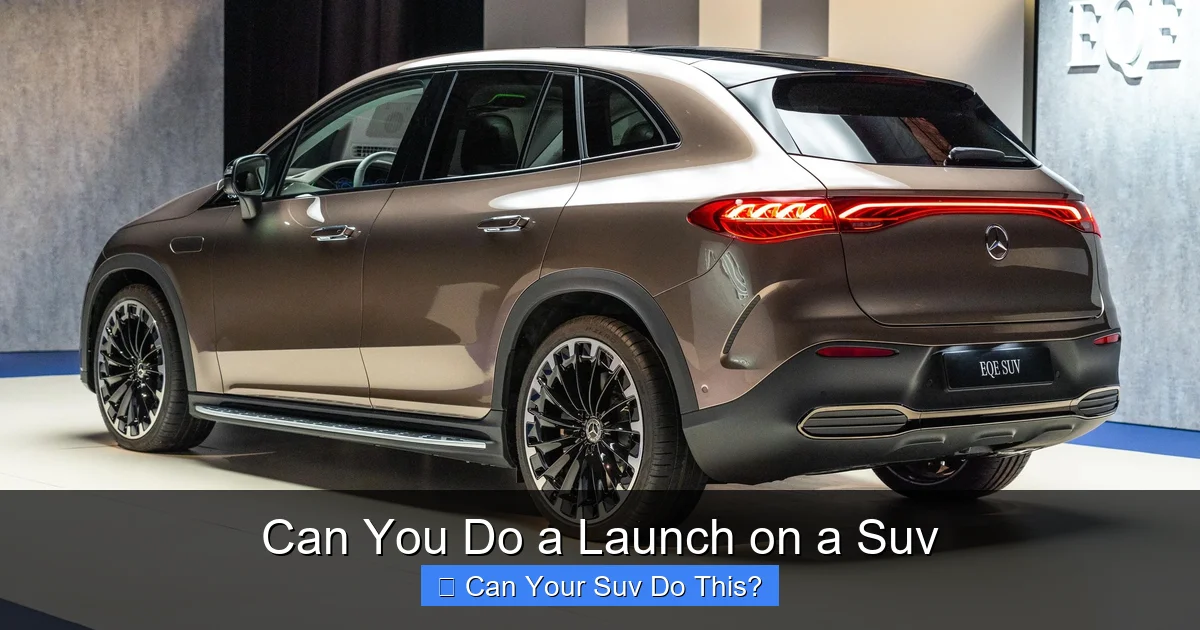
Yes, you can do a launch on an SUV—but it’s not as simple as flooring the gas. While many modern SUVs are built for power and torque, launching effectively requires understanding your vehicle’s drivetrain, traction control, and weight distribution. Whether you’re merging onto a highway or showing off at a stoplight, knowing how to launch safely and efficiently makes all the difference.
So, you’re behind the wheel of your SUV, foot hovering over the gas pedal, wondering: *Can you do a launch on a SUV?* Maybe you’ve seen sports cars rocket from 0 to 60 in under four seconds and thought, “Can my big, boxy ride do that too?” The short answer? Yes—but it’s not quite as simple as slamming the accelerator and hoping for the best.
SUVs have come a long way from their rugged, off-road-only roots. Today’s models blend power, technology, and versatility in ways that would’ve seemed impossible a decade ago. From luxury crossovers to high-performance beasts, many SUVs are engineered to deliver impressive acceleration. But launching—meaning a quick, controlled start from a standstill—requires more than just horsepower. It demands understanding your vehicle’s mechanics, traction systems, and limitations.
Think of it this way: launching in an SUV is like asking a linebacker to run a 40-yard dash. Sure, he’s big and strong, but he’s not built like a wide receiver. With the right technique and conditions, he can still surprise you—but it’ll take some finesse. That’s where this guide comes in. We’ll break down everything you need to know about launching your SUV safely and effectively, whether you’re merging onto a highway, racing a friend (responsibly, of course), or just curious about what your vehicle can do.
Key Takeaways
- SUVs can launch, but performance varies: Not all SUVs are created equal—some are built for speed, while others prioritize comfort and cargo space.
- All-wheel drive (AWD) improves traction: AWD systems help distribute power to all wheels, reducing wheel spin and improving launch grip.
- Launch control isn’t just for sports cars: High-performance SUVs like the Porsche Cayenne or Tesla Model X offer launch control features for maximum acceleration.
- Weight affects acceleration: Heavier SUVs take longer to reach high speeds, so launching requires more patience and throttle control.
- Traction control is your friend: Keeping it on during normal driving helps prevent loss of control, but turning it off (if safe) can improve launch performance on dry pavement.
- Proper tire pressure and tread matter: Underinflated or worn tires reduce grip, making launches less effective and more dangerous.
- Safety first: Always launch in a controlled environment—never on public roads or in unsafe conditions.
📑 Table of Contents
- What Does “Launch” Mean in a Vehicle Context?
- Can Your SUV Actually Launch?
- How to Launch Your SUV Safely and Effectively
- Common Mistakes to Avoid When Launching an SUV
- Real-World Examples: SUVs That Launch Like Sports Cars
- Is Launching Bad for Your SUV?
- Conclusion: Yes, You Can Launch Your SUV—But Do It Right
What Does “Launch” Mean in a Vehicle Context?
Before we dive into whether your SUV can launch, let’s clarify what we mean by “launch.” In automotive terms, a launch refers to the act of accelerating rapidly from a standstill—typically from 0 mph to a higher speed in the shortest possible time. It’s commonly associated with drag racing, performance driving, or even just getting up to speed quickly when merging onto a freeway.
A successful launch isn’t just about raw power. It’s about managing traction, weight transfer, and throttle input to maximize acceleration without losing control. In sports cars, this often involves techniques like revving the engine, modulating the clutch (in manuals), or using launch control systems. But SUVs—with their higher center of gravity, heavier frames, and varied drivetrains—require a different approach.
Why Launching Matters for SUVs
You might be wondering: why would anyone want to launch an SUV? After all, they’re not exactly known for their nimble handling or lightning-fast acceleration. But the truth is, many modern SUVs are surprisingly quick. Take the Tesla Model X Plaid, for example—it can go from 0 to 60 mph in under 3 seconds, thanks to its tri-motor electric setup. Or consider the Lamborghini Urus, a super-SUV that rivals many sports cars in straight-line performance.
Even more mainstream models like the Ford Explorer ST or the BMW X5 M50i offer turbocharged engines and responsive transmissions that make launching not just possible, but fun. For drivers who value both utility and performance, being able to launch effectively adds a new dimension to the driving experience.
The Science Behind a Good Launch
At its core, a launch is all about physics. When you press the gas, your engine sends power to the wheels. But if that power exceeds the available traction, the wheels spin instead of gripping the road. That’s why traction is the most critical factor in any launch.
In an SUV, weight distribution plays a big role. Most SUVs are front-heavy due to the engine placement, but they also carry more mass overall. This means more inertia to overcome, which translates to slower initial acceleration compared to lighter vehicles. However, modern SUVs often come with advanced all-wheel-drive (AWD) systems that help distribute power more evenly, improving grip and reducing wheel slip.
Another key element is weight transfer. When you accelerate hard, the vehicle’s weight shifts to the rear, increasing traction on the rear wheels. In rear-wheel-drive (RWD) SUVs, this can be beneficial. But in front-wheel-drive (FWD) models, the front wheels lose grip, making launches less effective. That’s why AWD SUVs generally perform better during launches—they can send power to all four wheels, maximizing available traction.
Can Your SUV Actually Launch?
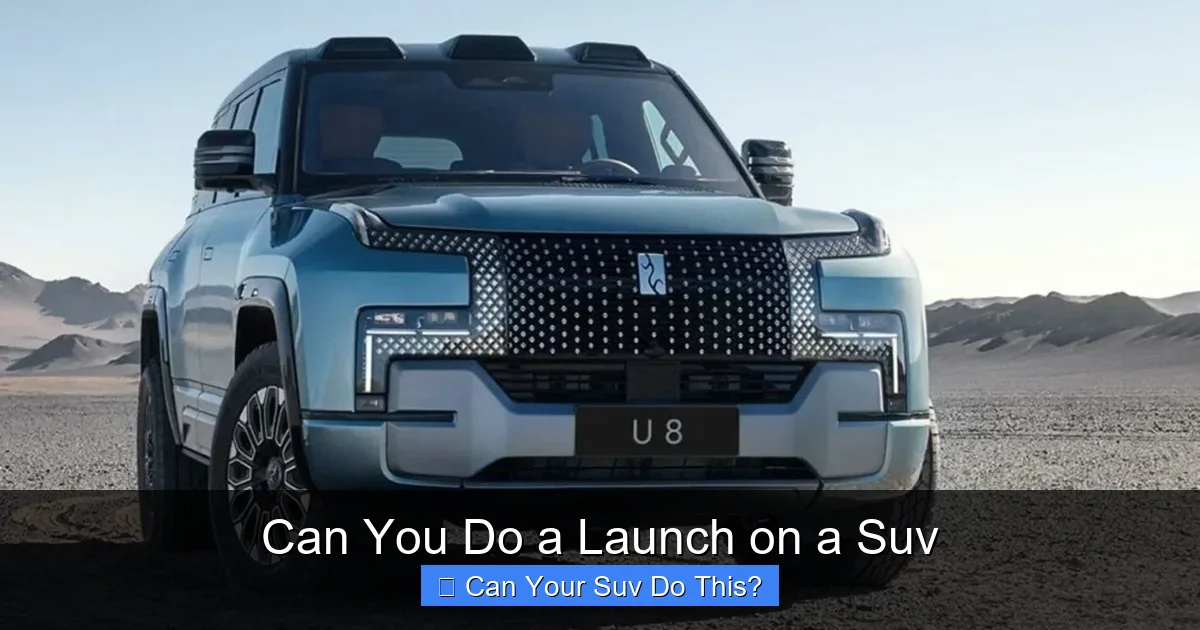
Visual guide about Can You Do a Launch on a Suv
Image source: carsguide-res.cloudinary.com
Now for the big question: can your SUV do a launch? The answer depends on several factors, including your vehicle’s make, model, drivetrain, and performance capabilities.
Performance SUVs: Built for Speed
If you’re driving a high-performance SUV—think Porsche Cayenne Turbo, Audi RS Q8, or Mercedes-AMG GLE 63—then yes, your SUV is absolutely designed to launch. These vehicles come equipped with powerful engines, sport-tuned suspensions, and advanced launch control systems that optimize acceleration from a standstill.
Launch control, in particular, is a game-changer. It’s a feature that allows the driver to achieve maximum acceleration by managing engine RPM, torque delivery, and traction control. To use it, you typically hold the brake, press the accelerator to a certain RPM, then release the brake. The system takes over, delivering power smoothly and efficiently to prevent wheel spin.
For example, the Porsche Cayenne Turbo can hit 60 mph in just 3.7 seconds using launch control. That’s faster than many sports cars from just a few years ago. So if you’re driving one of these performance beasts, launching isn’t just possible—it’s encouraged (in the right setting, of course).
Mainstream SUVs: Capable, But Cautious
What if you’re driving a more common SUV like a Toyota Highlander, Honda Pilot, or Subaru Outback? Can you still launch? Technically, yes—but with caveats.
These SUVs are built for comfort, fuel efficiency, and everyday usability, not track performance. They may have adequate power (especially turbocharged variants), but they lack the specialized systems found in performance models. Launching in one of these vehicles is possible, but it won’t be as smooth or fast.
For instance, the turbocharged Subaru Ascent can reach 60 mph in around 6.5 seconds—decent for an SUV, but not exactly neck-snapping. Launching it requires careful throttle input to avoid wheel spin, especially on wet or uneven surfaces. And because these vehicles don’t have launch control, you’ll need to rely on feel and experience to get the best start.
Electric SUVs: Instant Torque, Instant Fun
Electric SUVs are changing the game when it comes to launching. Thanks to instant torque delivery from electric motors, EVs can accelerate faster than many gas-powered vehicles—even heavy SUVs.
The Tesla Model Y Performance, for example, can go from 0 to 60 mph in just 3.5 seconds. That’s because electric motors deliver maximum torque the moment you press the accelerator, with no lag from a transmission or turbo spool-up. Plus, many electric SUVs have dual-motor AWD setups that provide excellent traction.
Even non-performance electric SUVs like the Hyundai Ioniq 5 or Ford Mustang Mach-E offer brisk acceleration that makes launching not only possible but enjoyable. And because there’s no engine noise or gear shifts, the experience is smooth and surprisingly quiet—until you realize how fast you’re going.
How to Launch Your SUV Safely and Effectively
So you’ve confirmed your SUV can launch—now how do you do it right? Launching isn’t just about speed; it’s about control, safety, and maximizing performance without damaging your vehicle.
Step 1: Know Your Vehicle’s Capabilities
Before attempting a launch, understand your SUV’s specs. Check the owner’s manual for information on launch control (if available), recommended tire pressure, and traction control settings. If your SUV has different drive modes (like Sport or Track), familiarize yourself with how they affect performance.
For example, putting your BMW X3 in Sport+ mode sharpens throttle response and stiffens the suspension, making it more responsive during a launch. Similarly, Tesla’s “Ludicrous Mode” (on older models) or “Plaid Mode” unlocks maximum acceleration.
Step 2: Choose the Right Conditions
Never launch on public roads, wet pavement, gravel, or uneven surfaces. Ideal conditions include a dry, flat, private road or a closed track. Avoid launching in traffic or near pedestrians—safety should always come first.
Also, make sure your tires are in good condition. Worn tread or low tire pressure reduces grip and increases the risk of losing control. Inflate tires to the manufacturer’s recommended PSI, and consider performance tires if you plan to launch regularly.
Step 3: Use Proper Technique
If your SUV has launch control, follow the manufacturer’s instructions. Typically, this involves:
– Coming to a complete stop.
– Holding the brake firmly.
– Pressing the accelerator to a preset RPM (often indicated by a dashboard light or message).
– Releasing the brake to initiate the launch.
If your SUV doesn’t have launch control, you’ll need to modulate the throttle manually. Start by pressing the brake and gently increasing engine RPM to around 1,500–2,500 (depending on the vehicle). Then, release the brake while maintaining steady throttle input. The goal is to balance power and traction—too much throttle causes wheel spin; too little results in a sluggish start.
Step 4: Manage Traction Control
Traction control is designed to prevent wheel spin by reducing engine power or applying brakes to slipping wheels. While this is great for everyday driving, it can limit launch performance.
Many SUVs allow you to partially or fully disable traction control. In performance models, this is often done through a dedicated button or drive mode. However, only do this on dry pavement and in a safe environment. Disabling traction control increases the risk of losing control, especially in heavier vehicles with high torque.
A good rule of thumb: keep traction control on unless you’re on a track or in a controlled setting. And never disable it in wet or icy conditions.
Step 5: Practice and Patience
Launching takes practice. Even experienced drivers need to adjust their technique based on the vehicle, surface, and conditions. Start slow, pay attention to how your SUV responds, and gradually increase aggression as you gain confidence.
Remember, the goal isn’t just to go fast—it’s to go fast *safely*. A smooth, controlled launch is often more impressive (and safer) than a wild, wheel-spinning start.
Common Mistakes to Avoid When Launching an SUV
Even with the best intentions, it’s easy to make mistakes when launching an SUV. Here are some common pitfalls to watch out for:
Over-Revving the Engine
One of the biggest mistakes is revving the engine too high before releasing the brake. This can cause excessive wheel spin, especially in high-torque vehicles. It also puts unnecessary stress on the transmission and drivetrain.
Instead, aim for a moderate RPM range—usually between 1,500 and 3,000, depending on the SUV. Let the traction and power delivery do the work, not brute force.
Ignoring Weight Distribution
SUVs are heavy, and that weight affects how they launch. If you’re carrying passengers or cargo, the added mass can slow acceleration and shift the center of gravity. Be mindful of your load, and adjust your expectations accordingly.
For example, launching a fully loaded Suburban will feel very different from launching an empty one. The extra weight increases inertia and reduces responsiveness.
Launching on Poor Surfaces
Gravel, wet asphalt, or uneven pavement drastically reduce traction. Launching on these surfaces increases the risk of skidding, fishtailing, or even rolling over—especially in tall, top-heavy SUVs.
Always launch on dry, level pavement. If you’re unsure about the surface, don’t do it.
Neglecting Maintenance
A poorly maintained SUV won’t launch well—no matter how powerful it is. Worn brake pads, low transmission fluid, or dirty air filters can all impact performance.
Regular maintenance ensures your SUV is in peak condition for launching. Check fluids, inspect tires, and follow the recommended service schedule.
Real-World Examples: SUVs That Launch Like Sports Cars
To put things in perspective, let’s look at some real-world examples of SUVs that can launch with the best of them.
Tesla Model X Plaid
The Tesla Model X Plaid is arguably one of the fastest SUVs ever made. With three electric motors producing over 1,000 horsepower, it rockets from 0 to 60 mph in just 2.5 seconds. That’s faster than a Lamborghini Huracán.
Launching the Model X is as simple as selecting “Plaid Mode” and flooring the accelerator. The instant torque and AWD system deliver breathtaking acceleration, all while remaining whisper-quiet.
Porsche Cayenne Turbo GT
Porsche’s Cayenne Turbo GT is a track-focused SUV that blurs the line between utility and performance. It features a 631-horsepower twin-turbo V8 and a launch control system that enables 0-60 mph in 3.1 seconds.
On the Nürburgring, it set a lap record for production SUVs—proof that launching isn’t just about straight-line speed.
Ford Explorer ST
For a more affordable option, the Ford Explorer ST offers a 3.0-liter twin-turbo V6 with 400 horsepower. It can reach 60 mph in about 5.5 seconds—impressive for a family-sized SUV.
While it doesn’t have launch control, careful throttle modulation allows for strong, controlled launches on dry pavement.
Is Launching Bad for Your SUV?
A common concern is whether launching damages your SUV. The short answer: it can, if done excessively or improperly.
Potential Risks
Repeated hard launches put stress on the transmission, drivetrain, and suspension. Over time, this can lead to premature wear, fluid overheating, or even mechanical failure.
Additionally, aggressive launches increase brake wear due to the need for hard stops afterward. And if you’re launching frequently, your tires will wear out faster.
How to Minimize Damage
To reduce risk, limit hard launches to occasional use—especially on a track or private road. Allow the engine and transmission to warm up before launching, and avoid doing it when the vehicle is cold.
Using the correct drive mode, maintaining proper tire pressure, and following the owner’s manual guidelines can also help protect your SUV.
When It’s Worth It
For most drivers, the occasional launch is harmless—and even fun. It’s a way to experience your SUV’s full potential and enjoy the thrill of acceleration. Just remember: moderation is key.
Conclusion: Yes, You Can Launch Your SUV—But Do It Right
So, can you do a launch on a SUV? Absolutely. From high-performance electric models to turbocharged family haulers, many SUVs are capable of impressive acceleration when launched correctly.
But launching isn’t just about flooring the gas and hoping for the best. It’s about understanding your vehicle’s strengths and limitations, using the right techniques, and prioritizing safety above all else.
Whether you’re merging onto a highway, showing off at a car meet, or just curious about what your SUV can do, launching can be a rewarding experience—when done responsibly. So go ahead, give it a try. Just remember: with great power comes great responsibility.
Frequently Asked Questions
Can any SUV do a launch?
Most modern SUVs can launch to some degree, but performance varies widely. High-performance and electric SUVs are best suited for aggressive launches, while mainstream models require more caution and technique.
Is it safe to launch an SUV on public roads?
No, launching on public roads is unsafe and often illegal. Always perform launches in controlled environments like private tracks or closed courses to avoid accidents and legal issues.
Do I need special tires to launch my SUV?
While not required, performance or all-season tires with good tread improve traction and launch effectiveness. Avoid worn or underinflated tires, as they reduce grip and increase risk.
Can launching damage my SUV’s transmission?
Repeated hard launches can stress the transmission and drivetrain, potentially leading to premature wear. Occasional launches are generally safe, but avoid excessive use.
Do all SUVs have launch control?
No, launch control is typically found only in high-performance or luxury SUVs like Porsche, Tesla, or BMW models. Most mainstream SUVs require manual throttle control for launching.
Should I turn off traction control when launching?
Only on dry pavement and in safe conditions. Disabling traction control can improve launch performance but increases the risk of losing control. Use caution and re-enable it afterward.