
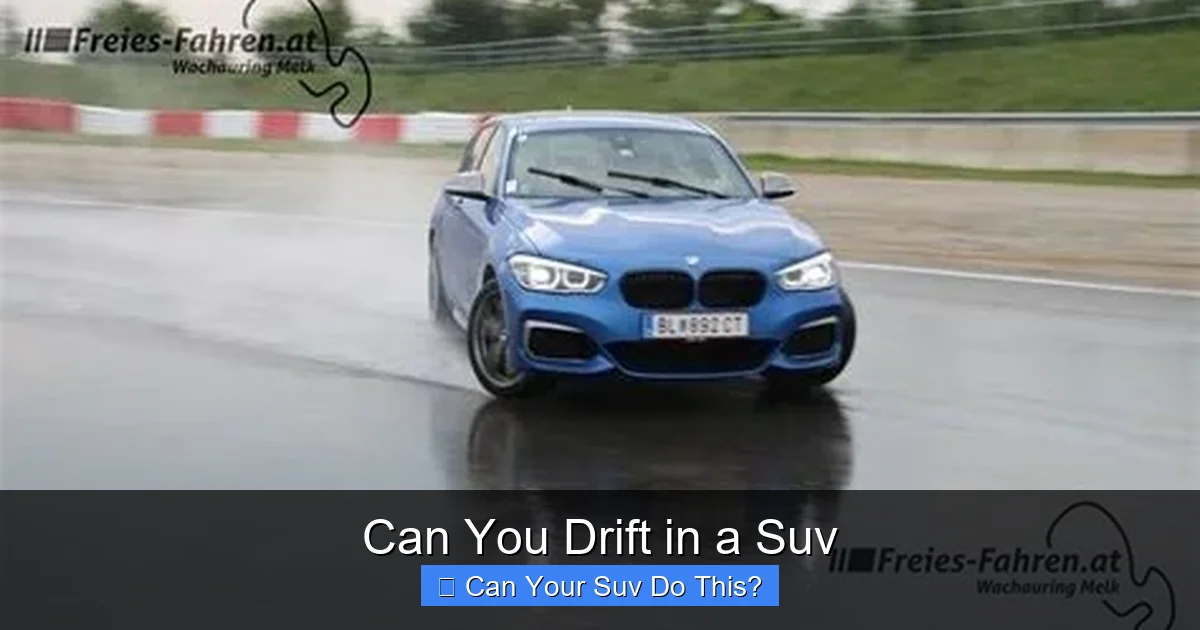
Yes, you can drift in a SUV—but it’s not as simple as in a sports car. While most SUVs aren’t built for sliding, certain models with rear-wheel drive or performance tuning can pull it off. Drifting a SUV requires skill, the right setup, and a safe environment.
Key Takeaways
- Not all SUVs can drift: Rear-wheel drive (RWD) or all-wheel drive (AWD) with rear bias are best suited for drifting. Front-wheel drive SUVs are nearly impossible to drift.
- Weight is a challenge: SUVs are heavier than sports cars, making them harder to initiate and control during a drift.
- Performance SUVs lead the way: Models like the Ford Mustang Mach-E GT, Tesla Model Y Performance, and BMW X5 M are more drift-capable due to power and torque.
- Modifications help: Upgrading tires, suspension, and adding a limited-slip differential can improve drift potential.
- Safety first: Drifting should only be done in controlled environments like tracks or closed courses—never on public roads.
- Electronic aids must be disabled: Stability control and traction control systems must be turned off to allow wheel slip.
- Skill matters more than vehicle: Even the best SUV won’t drift without proper throttle, steering, and balance control from the driver.
📑 Table of Contents
Can You Drift in a SUV? The Surprising Truth
You’ve probably seen it in movies or viral videos: a massive SUV sliding sideways through a corner, tires smoking, dust flying. It looks cool—maybe even a little crazy. But is it real? Can you actually drift in a SUV?
The short answer? Yes, you can. But it’s not as easy—or as common—as drifting in a lightweight rear-wheel-drive sports car like a Nissan 240SX or a Ford Mustang. SUVs are bigger, heavier, and often built for comfort and utility, not high-angle cornering. Still, with the right vehicle, setup, and skill, drifting a SUV is not only possible—it can be a thrilling experience.
Let’s break it down. Drifting is the art of intentionally oversteering so that the rear wheels lose traction and the car slides through a turn while maintaining control. It’s a skill that requires precise throttle, steering, and balance. Traditionally, it’s been the domain of low, lightweight, rear-wheel-drive cars. But as SUVs have evolved—especially high-performance and electric models—the line between “family hauler” and “track toy” has started to blur.
So, can your SUV do this? Maybe. It depends on what kind of SUV you have, how it’s powered, and whether you’re willing to push its limits in a safe, legal way. In this article, we’ll explore the mechanics of drifting, the types of SUVs that can drift, the challenges involved, and how to do it safely—if you’re daring enough.
What Makes a Vehicle Drift-Capable?
Visual guide about Can You Drift in a Suv
Image source: wikihow.com
Before we dive into SUVs, let’s understand what makes any vehicle capable of drifting. Drifting isn’t just about power—it’s about balance, traction, and control. Here are the key factors that determine whether a car (or SUV) can drift:
1. Drivetrain Layout
The drivetrain is the most critical factor. Rear-wheel drive (RWD) vehicles are the gold standard for drifting because power is sent to the rear wheels, making it easier to break traction and initiate a slide. All-wheel drive (AWD) vehicles can also drift, especially if they have a rear-biased power split—meaning more power goes to the rear wheels. Front-wheel drive (FWD) vehicles are extremely difficult to drift because the front wheels handle both steering and power, making it hard to induce oversteer.
2. Weight Distribution
Ideally, a drift car has a near 50/50 weight distribution—half the weight over the front axle, half over the rear. This balance helps the car rotate smoothly through a corner. SUVs, however, tend to be front-heavy due to their engines and taller bodies. This makes them more prone to understeer (pushing wide in a turn) than oversteer (sliding the rear out), which is essential for drifting.
3. Suspension and Handling
Stiff suspension, responsive steering, and a low center of gravity all help with drifting. Most SUVs have soft suspension tuned for comfort, which can make them feel sluggish and unpredictable when pushed hard. Lowering the center of gravity—either through design or modifications—can improve stability during a drift.
4. Tire Grip and Type
Drifting requires a delicate balance of grip and slip. You need enough grip to maintain control, but not so much that the tires won’t break loose. Performance tires with a softer compound can help, but many drifters use older or worn tires to reduce grip intentionally. Tire width also matters—wider rear tires can handle more power and help initiate a drift.
5. Power and Torque
More power makes it easier to break traction, especially in heavier vehicles like SUVs. High torque at low RPMs—common in turbocharged engines and electric motors—can help initiate a drift quickly. However, too much power without control can lead to spins or loss of control.
6. Driver Skill
No matter how capable the vehicle, drifting is a driver’s sport. It requires precise throttle control, quick steering inputs, and the ability to feel the car’s balance. Even the best SUV won’t drift without a skilled driver behind the wheel.
SUVs and Drifting: The Challenges
Now that we know what makes a vehicle drift-capable, let’s look at why SUVs face unique challenges when it comes to drifting.
Weight: The Biggest Hurdle
SUVs are heavy. Even compact SUVs can weigh over 3,500 pounds, while full-size models like the Chevrolet Tahoe or Ford Expedition can tip the scales at 5,500 pounds or more. That extra mass makes it harder to initiate a drift because more force is needed to break the rear tires loose. It also makes the car harder to control once it’s sliding—momentum can carry it wide or cause it to spin if not managed carefully.
High Center of Gravity
SUVs sit higher off the ground than sedans or sports cars. This raises the center of gravity, increasing the risk of rollover during aggressive maneuvers. When you drift, the car leans into the turn, and a high center of gravity can make that lean more pronounced. In extreme cases, this can lead to tipping—especially in older or taller SUVs.
Understeer Tendency
Most SUVs are designed to understeer—meaning they tend to push straight ahead when cornering hard, rather than rotating or sliding. This is a safety feature, but it works against drifting. To drift, you need oversteer, where the rear end steps out. Overcoming the natural understeer of an SUV requires skill and often modifications.
Suspension Tuning
Factory suspension in SUVs is typically tuned for comfort, not performance. Soft springs and dampers absorb bumps well but don’t respond quickly to rapid weight transfers during a drift. This can make the car feel floaty or unpredictable when sliding.
Electronic Safety Systems
Modern SUVs come loaded with electronic aids like electronic stability control (ESC), traction control (TCS), and rollover mitigation. These systems are designed to prevent loss of control—exactly what you’re trying to achieve when drifting. To drift, you must disable these systems, which not all SUVs allow, or do so only in specific drive modes.
Tire Limitations
Many SUVs come with all-season or all-terrain tires that prioritize longevity and quiet ride over grip. These tires may not provide the consistent slip needed for controlled drifting. Switching to performance tires or even track-focused rubber can help, but it’s an added expense.
Which SUVs Can Actually Drift?
Not all SUVs are created equal when it comes to drifting. Some are better suited than others. Here’s a look at the types of SUVs that have the best chance of pulling off a drift.
Rear-Wheel Drive (RWD) SUVs
If your SUV is rear-wheel drive, you’re already ahead of the game. RWD provides the foundation for drifting. Examples include:
– **Ford Bronco (older models):** The classic two-door Bronco with a solid rear axle and RWD layout is a favorite among off-roaders and drifters alike. Its simplicity and ruggedness make it a great platform for modification.
– **Toyota 4Runner (RWD versions):** While most 4Runners are AWD, earlier models offered RWD variants. With a powerful V6 and live rear axle, they can be tuned for drifting.
– **Chevrolet K5 Blazer:** Another vintage RWD SUV with a strong following in the drifting and off-road communities.
All-Wheel Drive (AWD) with Rear Bias
Some modern AWD systems send more power to the rear wheels, making them more drift-friendly. These include:
– **Subaru WRX STI (with SUV-like variants):** While not a traditional SUV, the WRX STI has a high ride height and AWD system that can be tuned for drifting. The Symmetrical AWD system can be modified to allow more rear slip.
– **Audi RS Q8:** This high-performance SUV has a rear-biased quattro AWD system and over 590 horsepower. With the right setup, it can drift—though it’s not cheap to repair if things go wrong.
– **Porsche Cayenne Turbo:** Porsche’s performance SUV has a rear-biased AWD system and exceptional handling for its size. Enthusiasts have successfully drifted Cayennes on track days.
Electric SUVs with Dual Motors
Electric SUVs are changing the game. With instant torque and independent motor control, they can deliver power precisely where it’s needed. Some models are surprisingly drift-capable:
– **Tesla Model Y Performance:** With dual motors and over 450 horsepower, the Model Y Performance can break rear traction easily. Tesla’s “Track Mode” allows drivers to adjust power distribution and disable stability controls, making drifting possible.
– **Ford Mustang Mach-E GT:** This electric SUV has a rear-biased AWD system and 480 horsepower. Its low center of gravity (thanks to the battery pack) and responsive handling make it a surprisingly good drifter.
– **Rivian R1S:** With four independent motors (one per wheel), the R1S can send power exactly where needed. While not designed for drifting, its torque vectoring system allows for controlled slides.
Modified and Custom SUVs
Some of the most impressive SUV drifts come from heavily modified vehicles. Enthusiasts have turned everything from Land Rovers to Jeep Grand Cherokees into drift machines. Common modifications include:
– Installing a limited-slip differential (LSD) or welded differential
– Upgrading to performance suspension and sway bars
– Lowering the ride height
– Swapping in a more powerful engine
– Using lightweight wheels and sticky tires
These builds often blur the line between SUV and race car, but they prove that with enough effort, almost any SUV can drift.
How to Drift a SUV: Techniques and Tips
If you’re serious about drifting your SUV, here’s how to get started—safely and effectively.
1. Choose the Right Location
Never drift on public roads. Find a closed course, racetrack, or large empty parking lot (with permission). Safety is paramount—drifting is dangerous, and SUVs are less predictable than smaller cars.
2. Disable Electronic Aids
Turn off traction control, stability control, and any rollover mitigation systems. Most SUVs have a “sport” or “track” mode that disables these features. If your SUV doesn’t allow full disablement, drifting may not be possible.
3. Use the Right Tires
Start with older or worn rear tires to reduce grip. You can also use performance tires with a softer compound. Avoid all-terrain or winter tires—they’re too grippy or inconsistent for drifting.
4. Master the Clutch Kick (for Manual Transmissions)
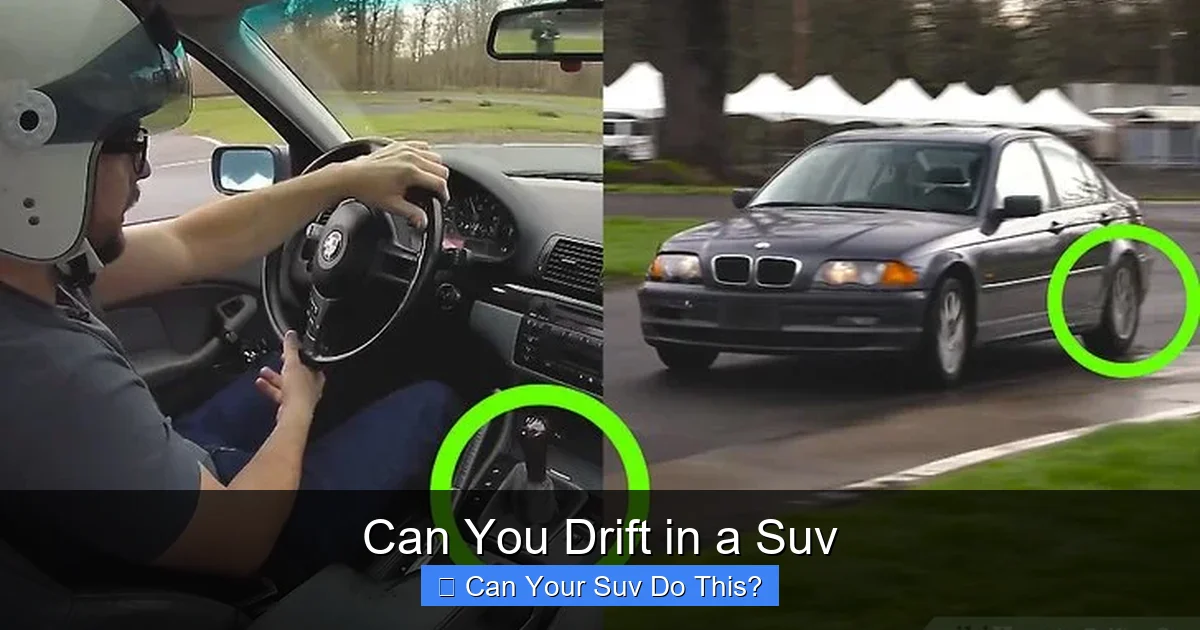
If your SUV has a manual transmission, the clutch kick is a classic drift initiation technique. While in a turn, quickly press and release the clutch while giving a burst of throttle. This shocks the rear wheels and breaks traction. Not all SUVs have manuals anymore, but if yours does, this is a useful skill.
5. Use Throttle Steering
In automatic or AWD SUVs, throttle steering is key. As you enter a turn, apply steady throttle to shift weight to the rear. Then, ease off slightly to induce oversteer. Once the rear starts to slide, modulate the throttle to control the angle and speed of the drift.
6. Countersteer Quickly
When the rear end steps out, turn the steering wheel in the opposite direction (countersteer) to catch the slide. The faster you react, the more control you’ll have. Practice in a safe area until it becomes instinct.
7. Start Small
Begin with gentle slides at low speeds. Focus on balance and control before attempting high-speed drifts. SUVs take longer to respond, so patience is important.
8. Consider Modifications
If you’re serious about drifting, consider these upgrades:
– **Limited-slip differential (LSD):** Helps both rear wheels spin together, improving traction and control.
– **Stiffer suspension:** Reduces body roll and improves responsiveness.
– **Lowering springs or coilovers:** Lowers the center of gravity.
– **Performance brake pads:** Helps you slow down quickly after a drift.
– **Roll cage (for track use):** Adds safety in case of a rollover.
Safety First: Risks of Drifting a SUV
Drifting is inherently risky, and SUVs add extra challenges. Here’s what to watch out for:
Rollover Risk
The high center of gravity in SUVs increases the chance of tipping during a drift, especially in sharp turns or on uneven surfaces. Always drift on flat, smooth pavement.
Loss of Control
SUVs are harder to correct once they start spinning. A moment of overcorrection can lead to a crash. Stay calm and focus on smooth inputs.
Damage to the Vehicle
Drifting puts extreme stress on tires, suspension, drivetrain, and brakes. Expect increased wear and potential damage. Regular maintenance is essential.
Legal and Insurance Issues
Drifting on public roads is illegal and can result in fines, license suspension, or accidents. Even on private property, check local laws. Most insurance policies won’t cover damage from intentional drifting.
Environmental Impact
Burning rubber creates smoke and releases particulate matter. Drift in designated areas and respect noise and air quality regulations.
Real-World Examples: SUVs That Drift
Let’s look at some real-world examples of SUVs being drifted—proving it’s not just a theoretical possibility.
The “Drift Bronco”
In the off-road and drifting communities, the Ford Bronco has gained a cult following. Enthusiasts have built custom Bronco drift cars with lifted suspensions, welded differentials, and turbocharged engines. Videos show these SUVs sliding through desert tracks and rally courses with impressive control.
Tesla Model Y on the Track
Tesla owners have demonstrated drifting the Model Y Performance using Track Mode. With instant torque and precise motor control, the car can break rear traction and slide through corners. The low center of gravity helps keep it stable, even at high angles.
BMW X5 M on the Nürburgring
BMW’s high-performance SUV has been spotted drifting on the Nürburgring. With over 600 horsepower and a rear-biased AWD system, the X5 M can handle aggressive driving. Professional drivers have used it in track events, showing that even luxury SUVs can drift.
Subaru Baja: The Forgotten Drift SUV
The Subaru Baja, a crossover with AWD and a manual transmission, was a sleeper hit among drifters. Its lightweight body and rally-inspired design made it surprisingly agile. Though discontinued, it remains a favorite in the grassroots drifting scene.
Conclusion: Should You Drift Your SUV?
So, can you drift in a SUV? Absolutely—but it’s not for everyone. It requires the right vehicle, the right setup, and a healthy respect for the risks involved. While most SUVs aren’t designed for drifting, certain models—especially RWD, AWD with rear bias, or high-performance electric SUVs—can pull it off with skill and preparation.
Drifting a SUV is more than just a stunt; it’s a test of driver ability and vehicle dynamics. It challenges the notion that SUVs are just for hauling kids and groceries. With the rise of performance and electric SUVs, the line between utility and sport is fading.
But remember: drifting should always be done safely, legally, and responsibly. Use a closed course, wear safety gear, and never push beyond your limits. And if you’re not ready, that’s okay—there’s no shame in admiring the skill from the sidelines.
In the end, the question isn’t just “Can your SUV do this?” It’s “Are you ready to find out?”
Frequently Asked Questions
Can any SUV drift?
Not all SUVs can drift. Rear-wheel drive or all-wheel drive models with rear bias are the most capable. Front-wheel drive SUVs are extremely difficult to drift due to their drivetrain layout.
Is it safe to drift a SUV?
Drifting a SUV carries risks, especially rollover due to the high center of gravity. It should only be done in controlled environments like tracks, with safety gear and proper preparation.
Do I need to modify my SUV to drift?
Modifications like a limited-slip differential, performance suspension, and stickier tires can help, but they’re not always necessary. Some stock SUVs, like the Tesla Model Y Performance, can drift with the right settings.
Can electric SUVs drift?
Yes, electric SUVs with dual or quad motors can drift. Their instant torque and independent motor control make it easier to break rear traction and maintain a slide.
What’s the best SUV for drifting?
The best SUVs for drifting include the Ford Mustang Mach-E GT, Tesla Model Y Performance, and modified RWD models like the Ford Bronco or Toyota 4Runner.
Can I drift my SUV on the street?
No, drifting on public roads is illegal, dangerous, and can result in fines, accidents, or license suspension. Always use a closed course or track.