
Yes, you can drift in an SUV—but it’s not as simple as in a sports car. With the right setup, skill, and conditions, SUVs like the Ford Explorer ST or Nissan GT-R-based crossovers can slide sideways. However, weight, traction, and safety make it a challenge best left to experts.
Key Takeaways
- Drifting in an SUV is possible but difficult: Due to their high center of gravity and weight, SUVs aren’t naturally built for drifting, but skilled drivers can make it happen.
- All-wheel drive (AWD) helps but isn’t required: AWD systems can assist in maintaining control during slides, but rear-wheel drive (RWD) SUVs are often better for traditional drifting.
- Vehicle modifications are usually necessary: Upgrades like limited-slip differentials, performance tires, and suspension tuning greatly improve drifting capability.
- Not all SUVs are created equal: Performance-oriented models like the Porsche Cayenne, BMW X5 M, or Ford Explorer ST are better suited than standard family SUVs.
- Safety is paramount: Drifting should only be attempted on closed courses with proper safety gear and training—never on public roads.
- Weight distribution matters: Heavier SUVs require more throttle and precise steering input to initiate and maintain a drift.
- Drifting damages tires and components: Frequent drifting accelerates wear on tires, brakes, and drivetrain parts, increasing maintenance costs.
📑 Table of Contents
- Can You Drift in an SUV? The Surprising Answer
- What Is Drifting—And Why SUVs Aren’t Built for It
- Which SUVs Can Actually Drift?
- How to Drift in an SUV: A Step-by-Step Guide
- Modifications That Make SUV Drifting Easier
- The Risks and Realities of SUV Drifting
- Real-World Examples: SUVs That Drift
- Should You Drift Your SUV?
- Conclusion: Drifting in an SUV Is Possible—But Proceed with Caution
Can You Drift in an SUV? The Surprising Answer
You’ve probably seen it in movies: a sleek sports car screeching around a corner, tires smoking, rear end sliding out in a controlled drift. But what if you’re behind the wheel of a tall, boxy SUV? Can you drift in an SUV? The short answer is yes—but it’s not as easy, safe, or practical as it looks.
SUVs are built for space, comfort, and off-road capability, not high-speed cornering or tire-shredding slides. Their high center of gravity, heavy weight, and often front-heavy design make them less than ideal for drifting. Yet, with the right vehicle, modifications, and driver skill, drifting in an SUV isn’t just possible—it can be downright thrilling.
In this article, we’ll explore the mechanics of drifting, why SUVs aren’t the first choice for it, which models are best suited for the challenge, and how to do it safely and effectively. Whether you’re a weekend warrior or just curious about pushing your SUV to its limits, this guide will give you the real talk on SUV drifting.
What Is Drifting—And Why SUVs Aren’t Built for It
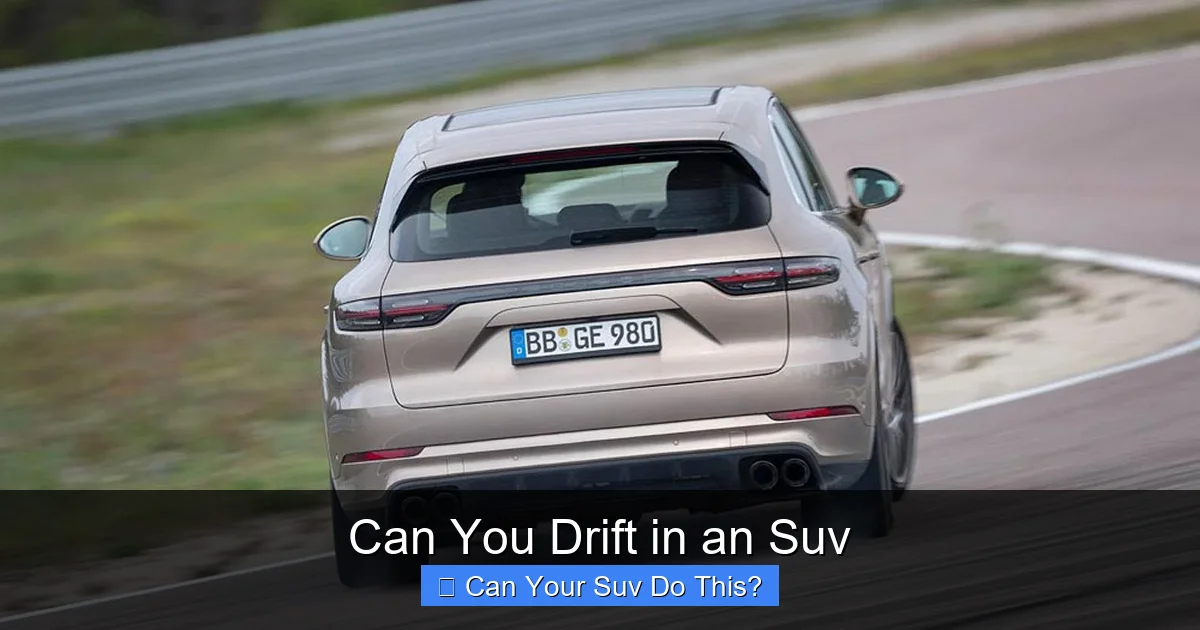
Visual guide about Can You Drift in an Suv
Image source: autoagora.gr
Drifting is a driving technique where the driver intentionally oversteers, causing the rear wheels to lose traction and the car to slide sideways through a turn. Unlike traditional racing, where the goal is to maintain grip and take the fastest line, drifting emphasizes style, control, and car control at the limit of adhesion.
The ideal drift car is typically lightweight, rear-wheel drive (RWD), with a balanced weight distribution and responsive steering. Think of a Toyota AE86, Nissan 240SX, or Mazda MX-5 Miata. These cars are nimble, predictable, and easy to slide—perfect for learning and mastering the art of drifting.
SUVs, on the other hand, are the polar opposite. Most are heavy—often weighing over 4,000 pounds—and have a high center of gravity due to their tall ride height. This makes them prone to rollover during aggressive maneuvers. Additionally, many SUVs are front-wheel drive (FWD) or all-wheel drive (AWD), which complicates the dynamics of initiating and maintaining a drift.
The Physics of SUV Drifting
To drift, a car must break rear-wheel traction while maintaining forward momentum and steering control. In a lightweight RWD car, this is achieved with a quick flick of the steering wheel, a lift off the throttle, or a sharp application of the handbrake. The rear end swings out, and the driver countersteers to balance the slide.
In an SUV, the extra mass means more momentum and inertia. That makes it harder to initiate a slide and harder to control once it starts. The high center of gravity increases the risk of tipping, especially during sharp turns or sudden weight transfers. And because many SUVs use electronic stability control (ESC) and traction control systems, these safety features often intervene to prevent loss of control—exactly what you don’t want when trying to drift.
Why Most SUVs Fight Back
Modern SUVs are packed with driver aids designed to keep you safe. Traction control limits wheel spin, electronic stability control applies brakes individually to correct oversteer or understeer, and all-wheel drive systems send power to the wheels with the most grip. All of these systems work against the principles of drifting.
Even if you manage to disable these systems (which is often difficult or impossible in factory settings), the inherent design of most SUVs—long wheelbase, soft suspension, and comfort-oriented tuning—makes them sluggish and unresponsive during high-speed slides. It’s like trying to dance in hiking boots.
Which SUVs Can Actually Drift?
Not all SUVs are created equal when it comes to drifting. While the average family hauler like a Honda CR-V or Toyota RAV4 would be a nightmare to drift, some high-performance SUVs are surprisingly capable.
These models combine power, rear-biased drivetrains, and sport-tuned suspensions that make drifting not just possible, but enjoyable.
Top Drift-Friendly SUVs
Let’s look at some of the best SUVs for drifting—vehicles that have the power, balance, and drivetrain setup to handle sideways action.
Porsche Cayenne Turbo GT: With over 630 horsepower and a rear-biased all-wheel-drive system, the Cayenne Turbo GT is a drift monster in disguise. Its adaptive suspension, rear-wheel steering, and launch control make it surprisingly agile. Porsche engineers have even admitted that the Cayenne can be driven like a sports car—drifting included.
BMW X5 M and X6 M: These M-powered SUVs pack up to 617 horsepower and feature an M xDrive all-wheel-drive system that can send up to 100% of torque to the rear wheels. With the right settings, they can break traction and slide with authority. The X6 M, in particular, has a lower, wider stance that improves handling.
Ford Explorer ST: While not as extreme as the others, the Explorer ST offers 400 horsepower and a sport-tuned suspension. With rear-wheel drive as an option and a responsive turbocharged engine, it’s one of the more accessible SUVs for drifting enthusiasts.
Mercedes-AMG GLE 63 S: This luxury rocket delivers 603 horsepower and features AMG Performance 4MATIC+ AWD with drift mode. Yes, you read that right—Mercedes actually includes a “Drift Mode” in some AMG models, which disables traction control and sends power rearward for controlled slides.
Nissan GT-R-Based SUVs (Concept Only): While not yet in production, Nissan has teased SUVs based on the GT-R platform. Given the GT-R’s legendary drifting ability, such a vehicle would be a dream for drift fans.
What Makes These SUVs Different?
So what sets these SUVs apart from the rest? It comes down to three key factors: power, drivetrain, and suspension tuning.
First, they have serious horsepower—often over 500 hp—which allows them to break rear-wheel traction easily. Second, their all-wheel-drive systems are rear-biased or can be switched to rear-wheel drive mode, mimicking the behavior of a traditional drift car. Third, they feature adaptive dampers, performance tires, and sport-tuned steering that improve responsiveness.
Even with these advantages, drifting in an SUV still requires skill. The weight and height are still working against you, so precision and timing are critical.
How to Drift in an SUV: A Step-by-Step Guide
If you’re serious about drifting your SUV, here’s how to do it safely and effectively. Remember: this should only be done on a closed track or private property with proper safety measures in place.
Step 1: Choose the Right Location
Never attempt to drift on public roads. Find a large, empty parking lot, a racetrack, or a dedicated drifting facility. Make sure the surface is dry and free of debris. Wet or icy conditions increase the risk of losing control.
Step 2: Prepare Your SUV
Before you start sliding, make sure your SUV is ready:
– Disable traction and stability control: This is essential. Look for a button or menu option to turn off ESC. Some performance SUVs have a “sport” or “track” mode that partially disables these systems.
– Check tire pressure: Slightly lower pressure (around 28–30 PSI) can improve grip and make it easier to break traction.
– Use performance tires: All-season tires won’t cut it. Summer performance tires or semi-slicks provide the grip needed for controlled slides.
– Ensure proper maintenance: Check brakes, suspension, and fluids. Drifting puts extra stress on all components.
Step 3: Master the Basics
Start with small slides to get a feel for how your SUV behaves. Here’s a simple method:
1. Approach a corner at moderate speed (30–40 mph).
2. Turn the steering wheel sharply while lifting off the throttle. This shifts weight forward and reduces rear grip.
3. Apply throttle smoothly to break rear traction. In AWD SUVs, this helps send power to the rear wheels.
4. Countersteer quickly to catch the slide and maintain control.
5. Balance throttle and steering to keep the drift going.
Step 4: Use the Handbrake (Optional)
For tighter corners or to initiate a drift from a standstill, use the handbrake. Pull it gently while turning to lock the rear wheels and induce a slide. Release it as you apply throttle to continue the drift.
Step 5: Practice, Practice, Practice
Drifting is a skill that takes time to develop. Start slow, focus on control, and gradually increase speed and angle. Watch videos of professional drifters to learn techniques like clutch kicking, feinting, and power-over.
Modifications That Make SUV Drifting Easier
While some SUVs can drift in stock form, modifications can significantly improve performance and control.
Limited-Slip Differential (LSD)
An LSD helps both rear wheels spin at the same speed during a drift, improving traction and stability. Many performance SUVs come with an electronic LSD, but aftermarket units can be installed for better performance.
Performance Suspension
Lowering springs, coilovers, and sway bars reduce body roll and improve handling. Stiffer suspension helps the SUV respond faster to steering inputs, making drifts more predictable.
Upgraded Tires and Wheels
Wider, stickier tires provide more grip and allow for longer, more controlled slides. Lightweight wheels reduce unsprung weight, improving acceleration and braking.
Brake Upgrades
Drifting wears out brakes quickly. High-performance brake pads, slotted rotors, and stainless steel brake lines improve stopping power and heat resistance.
Engine Tuning
A tune can increase horsepower and torque, making it easier to break traction. Be cautious—too much power can make the SUV harder to control.
Weight Reduction
Removing unnecessary weight (like rear seats or spare tires) lowers the center of gravity and improves agility. However, this may not be practical for daily drivers.
The Risks and Realities of SUV Drifting
While drifting in an SUV can be exciting, it’s not without risks—and costs.
Safety Concerns
SUVs are more prone to rollover than lower cars. A sudden slide combined with a high center of gravity can lead to a tip-over, especially on uneven surfaces. Always wear a helmet and use a roll cage if possible.
Mechanical Wear and Tear
Drifting is hard on your vehicle. Tires wear out quickly—expect to replace them after just a few sessions. Brakes, suspension components, and drivetrain parts also take a beating. Regular inspections and maintenance are essential.
Insurance and Legal Issues
Most insurance policies won’t cover damage from drifting, especially if done on public roads. Even on private property, you could face liability issues if someone is injured. Always check local laws and insurance terms.
Environmental Impact
Burning rubber releases particulate matter and contributes to air pollution. Be mindful of your impact and avoid drifting near residential areas or sensitive environments.
Real-World Examples: SUVs That Drift
Believe it or not, SUV drifting isn’t just a theory—it’s happening in the real world.
Professional Drift Events
In recent years, drifting competitions have started including SUV categories. Events like Formula Drift have seen modified SUVs compete alongside traditional drift cars. Teams have entered vehicles like the Ford Explorer ST and BMW X5 M, proving that with the right setup, SUVs can hold their own.
YouTube and Social Media
Search “SUV drift” on YouTube, and you’ll find countless videos of people sliding everything from Range Rovers to Toyota Highlanders. Some are impressive displays of skill; others are cautionary tales of lost control. These videos show that while SUV drifting is possible, it’s not for amateurs.
Manufacturer Demonstrations
Automakers like Mercedes-AMG and Porsche have showcased drifting capabilities in promotional videos. The AMG GLE 63 S’s “Drift Mode” was demonstrated at racetracks, with professional drivers sliding the SUV through tight corners. These demos highlight how far SUV performance has come.
Should You Drift Your SUV?
So, can you drift in an SUV? Yes. Should you? That depends.
If you’re an experienced driver with a high-performance SUV, the right equipment, and access to a safe environment, drifting can be a fun way to explore your vehicle’s limits. It’s a great way to improve car control, learn about weight transfer, and experience the thrill of sliding sideways.
But if you’re driving a standard family SUV, lack experience, or only have access to public roads, it’s best to leave drifting to the pros. The risks far outweigh the rewards.
Instead, consider track days, autocross events, or driving schools that teach performance driving. These are safer, more educational, and won’t destroy your tires or suspension.
Conclusion: Drifting in an SUV Is Possible—But Proceed with Caution
Drifting in an SUV is no longer a myth. With the rise of high-performance crossovers and advanced drivetrains, sliding a tall, heavy vehicle sideways is not only possible—it’s becoming more common. Models like the Porsche Cayenne Turbo GT, BMW X5 M, and Mercedes-AMG GLE 63 S have proven that SUVs can drift with style and power.
However, it’s not something to be taken lightly. The physics are against you, the risks are real, and the costs can be high. Drifting should only be attempted by skilled drivers in controlled environments with proper safety measures.
If you’re passionate about performance driving, consider investing in a dedicated drift car or attending a driving school. But if you’ve got a powerful SUV and a closed course, go ahead—give it a slide. Just remember: respect the machine, respect the road, and always prioritize safety.
Because while you can drift in an SUV, the real question isn’t “can you?”—it’s “should you?”
Frequently Asked Questions
Can you drift in a regular SUV like a Toyota RAV4?
Technically yes, but it’s extremely difficult and not recommended. The RAV4 is front-wheel drive, heavy, and equipped with stability control that will fight any attempt to slide. It lacks the power and rear-biased drivetrain needed for effective drifting.
Do you need a manual transmission to drift an SUV?
No, you don’t. Many modern SUVs with automatic or dual-clutch transmissions can drift just fine. In fact, some automatics have launch control and sport modes that make it easier to break traction and maintain slides.
Is drifting bad for your SUV?
Yes, drifting accelerates wear on tires, brakes, suspension, and drivetrain components. It can also void warranties and increase maintenance costs. Frequent drifting should be done with a dedicated track vehicle, not a daily driver.
Can all-wheel-drive SUVs drift?
Yes, especially if they have a rear-biased AWD system or a drift mode. Vehicles like the BMW X5 M and Mercedes-AMG GLE 63 S can send most of their power to the rear wheels, enabling controlled drifts.
What’s the best surface for drifting an SUV?
A dry, flat asphalt surface is ideal. Avoid gravel, wet pavement, or uneven terrain, as these increase the risk of losing control or rolling over. Closed tracks or large empty parking lots are best.
Can you learn to drift an SUV without damaging it?
Yes, with practice and caution. Start with small slides at low speeds, use proper techniques, and avoid aggressive maneuvers. Consider using a driving instructor or attending a performance driving school to learn safely.