
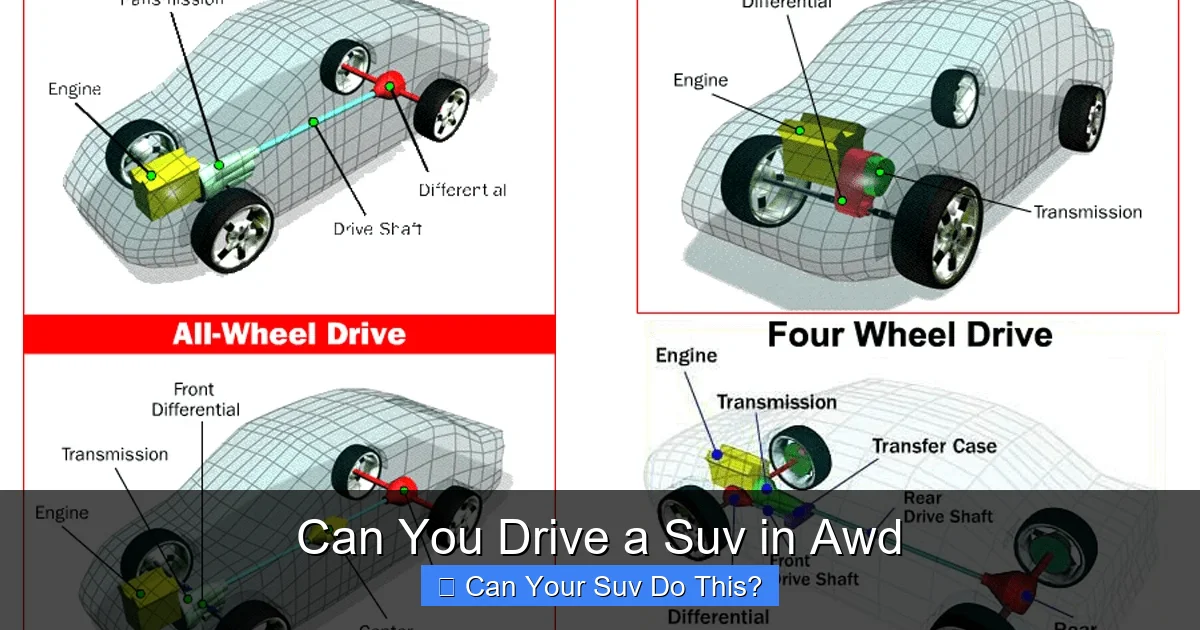
You absolutely can drive an SUV in AWD, and in many cases, it’s the smartest choice. Whether you’re navigating rain-slicked highways, snowy mountain passes, or muddy trails, all-wheel drive enhances traction, stability, and control. But understanding when and how to use AWD—and what it can’t do—is key to getting the most out of your vehicle.
So, you’ve got an SUV with all-wheel drive (AWD), and you’re wondering—can you actually drive it in AWD? The short answer? Absolutely. In fact, in most cases, you should. But like any advanced automotive feature, AWD comes with nuances. It’s not a magic button that makes your vehicle invincible. It’s a smart system designed to improve traction and stability, especially when the road gets tricky.
Let’s be real—most of us don’t drive off-road every day. We commute, run errands, pick up the kids, and maybe take a weekend trip. So why does AWD matter? Because weather and road conditions are unpredictable. A sudden downpour, a patch of black ice, or a gravel-covered curve can turn a routine drive into a nerve-wracking experience. That’s where AWD steps in. It automatically sends power to the wheels with the most grip, helping you maintain control when it matters most.
But here’s the thing: AWD isn’t just for snow-covered backroads or muddy trails. It’s useful in everyday driving, too. Whether you live in a rainy climate, drive on winding mountain roads, or simply want extra peace of mind, driving your SUV in AWD can make a real difference. The key is understanding how it works, when to rely on it, and what it can—and can’t—do for you.
Key Takeaways
- Yes, you can drive an SUV in AWD at all times: Most modern AWD systems are designed for continuous use, even on dry pavement.
- AWD improves traction, not braking or handling: It helps you accelerate better in slippery conditions but doesn’t shorten stopping distances.
- AWD is different from 4WD: AWD is automatic and always active, while 4WD is typically manually engaged and better for off-roading.
- Fuel economy may decrease slightly: AWD adds weight and mechanical drag, which can reduce gas mileage by 1–3 MPG.
- AWD works best with proper tires: Worn or mismatched tires can reduce the system’s effectiveness, even in ideal conditions.
- You still need to drive carefully: AWD doesn’t make your SUV invincible—speed limits and road conditions still apply.
- Maintenance matters: Regular servicing of the AWD system ensures it performs when you need it most.
📑 Table of Contents
What Is AWD and How Does It Work?
All-wheel drive, or AWD, is a drivetrain system that sends power to all four wheels of your SUV—front and rear—simultaneously. Unlike front-wheel drive (FWD) or rear-wheel drive (RWD), which only power two wheels, AWD dynamically distributes torque where it’s needed most. This means if one wheel starts to slip, the system can redirect power to the wheels with better traction.
Modern AWD systems are typically automatic and always active. You don’t need to flip a switch or push a button—it’s working behind the scenes every time you drive. Sensors monitor wheel speed, throttle input, steering angle, and other factors. If the system detects slippage, it instantly adjusts power distribution. For example, if your front wheels lose grip on a wet road during acceleration, the AWD system will send more power to the rear wheels to keep you moving smoothly.
There are different types of AWD systems, but most fall into two categories: full-time and part-time. Full-time AWD is always engaged, providing constant power to all four wheels. This is common in SUVs like the Subaru Outback, Honda CR-V, and Toyota RAV4. Part-time AWD, on the other hand, usually operates in two-wheel drive under normal conditions and only engages AWD when slippage is detected. Some high-performance SUVs, like certain Audi or BMW models, use sophisticated torque-vectoring AWD systems that can send power to individual wheels for even better handling.
One common misconception is that AWD is the same as four-wheel drive (4WD). While they sound similar, they serve different purposes. AWD is designed for on-road performance and everyday driving, offering better traction in rain, snow, and light off-road conditions. 4WD, often found in trucks and rugged SUVs like the Jeep Wrangler or Ford Bronco, is built for serious off-roading. It’s typically manually engaged and can lock the front and rear axles together for maximum traction in extreme conditions.
Can You Drive an SUV in AWD All the Time?
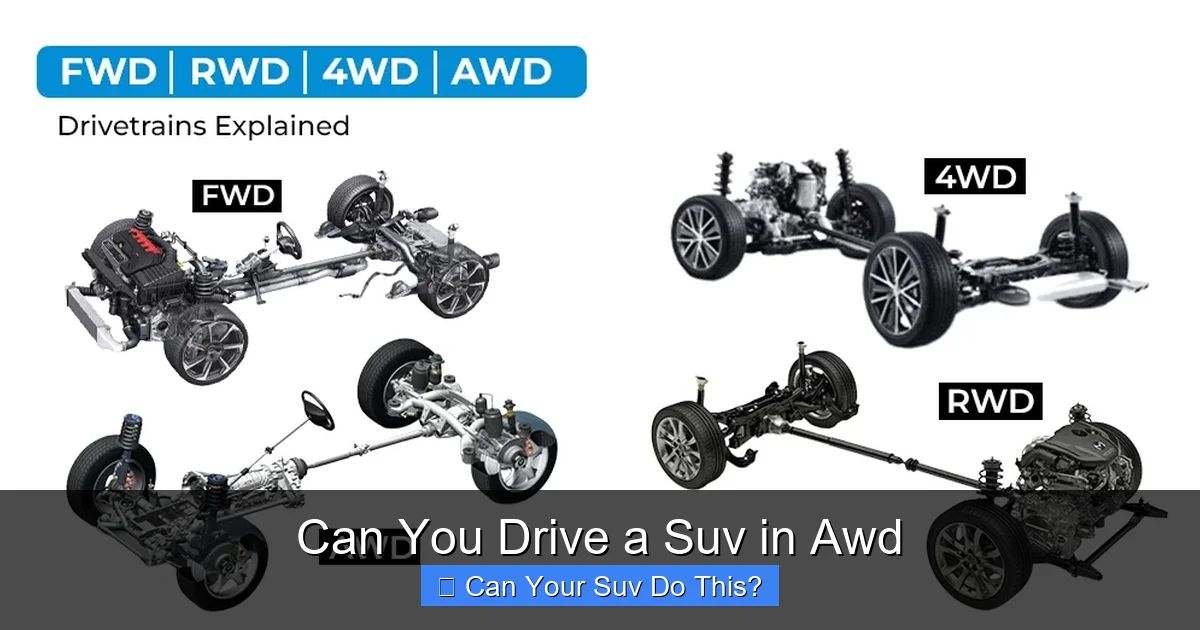
Visual guide about Can You Drive a Suv in Awd
Image source: content.carlelo.com
Yes—you can, and in most cases, you should. Unlike older 4WD systems that could damage the drivetrain if used on dry pavement, modern AWD systems are engineered for continuous use. They’re smart enough to adapt to different driving conditions without causing wear or reducing performance.
In fact, many SUVs with AWD are designed to operate in AWD mode full-time. The system constantly monitors road conditions and adjusts power distribution as needed. Whether you’re cruising down the highway on a sunny day or navigating a snowy driveway, AWD is working to keep your vehicle stable and responsive.
There’s no need to turn it off or switch to two-wheel drive unless your owner’s manual specifically recommends it (which is rare). In some older or part-time AWD systems, driving on dry, high-traction surfaces like asphalt could cause binding or increased wear. But today’s systems use advanced differentials and clutches to prevent this. They can seamlessly transfer power between axles without causing mechanical stress.
That said, there are a few exceptions. If you’re towing a heavy load or driving in deep mud or snow, your SUV might have a “4WD Lock” or “AWD Lock” mode. This locks the front and rear axles together for maximum traction. But even then, you should only use it when necessary and disengage it once conditions improve.
Driving in AWD all the time also means you’re always prepared. You never have to think about whether to engage it—it’s already on. This is especially helpful in areas with unpredictable weather. One minute it’s sunny, the next it’s pouring rain. With AWD, your SUV is ready for whatever comes its way.
Benefits of Driving Your SUV in AWD
So why bother with AWD? What’s the real advantage? Let’s break it down.
Improved Traction in Slippery Conditions
The biggest benefit of AWD is better traction. When roads are wet, icy, or covered in snow, two-wheel drive systems can struggle. One or two wheels may spin while the others lose grip. AWD helps prevent this by sending power to all four wheels, increasing your chances of maintaining control.
For example, imagine you’re accelerating from a stoplight on a rainy morning. With FWD, your front wheels might spin briefly before gaining traction. With AWD, power is distributed to all wheels, giving you a smoother, more confident launch. The same applies when climbing a snowy hill or driving through a puddle.
Enhanced Stability and Control
AWD doesn’t just help with acceleration—it improves overall vehicle stability. When you’re driving on uneven or loose surfaces, AWD helps keep the SUV balanced. This is especially useful on gravel roads, dirt paths, or during sudden maneuvers like swerving to avoid an obstacle.
The system’s ability to adjust power in real time means your SUV responds more predictably. You’re less likely to experience understeer (where the front wheels push wide) or oversteer (where the rear wheels slide out). This makes driving feel more secure, especially at higher speeds or in tight corners.
Better Performance in Adverse Weather
If you live in a region with frequent rain, snow, or ice, AWD is a game-changer. It doesn’t make your SUV immune to weather hazards, but it significantly reduces the risk of losing control. Studies have shown that vehicles with AWD have lower accident rates in winter conditions compared to two-wheel drive vehicles.
For instance, a driver in Minnesota might face icy roads every winter. With AWD, they can drive with more confidence, knowing their SUV can handle sudden slippage. Similarly, someone in the Pacific Northwest, where rain is constant, benefits from the added grip on slick highways.
Increased Resale Value
SUVs with AWD often have higher resale values. Buyers know that AWD adds safety and versatility, especially in regions with harsh weather. If you plan to sell or trade in your SUV later, having AWD can make it more attractive on the market.
Peace of Mind
Let’s not underestimate the psychological benefit. Knowing your SUV can handle tough conditions gives you peace of mind. You’re less likely to stress about weather forecasts or road conditions. Whether you’re commuting to work or taking a family road trip, AWD lets you focus on the drive, not the dangers.
When Should You Use AWD?
While AWD is always active in most modern SUVs, it’s helpful to know when it’s working hardest—and when you’ll notice the difference.
Rainy or Wet Roads
Water on the road reduces tire grip. AWD helps by distributing power to wheels with better traction. This is especially useful during heavy rain or when driving through standing water. You’ll notice smoother acceleration and less wheel spin.
Snow and Ice
Winter driving is where AWD really shines. Snow and ice create low-traction surfaces, making it easy for wheels to slip. AWD keeps power flowing to all four wheels, improving your ability to start, stop, and turn safely.
However, remember: AWD doesn’t improve braking. Your stopping distance is still determined by your tires and road conditions. So even with AWD, you should drive slower in snow and leave extra space between vehicles.
Mud, Gravel, and Dirt Roads
If you enjoy outdoor adventures or live in a rural area, AWD is invaluable. Loose surfaces like mud or gravel can cause wheels to spin. AWD helps maintain forward momentum by sending power to wheels that still have grip.
For example, if you’re driving on a muddy trail and your front wheels start to slip, the system will send more power to the rear wheels. This keeps you moving without getting stuck.
Highway Driving in Wind or Crosswinds
Strong winds can push your SUV off course, especially on open highways. AWD helps stabilize the vehicle by maintaining consistent power to all wheels. This reduces the effect of crosswinds and keeps your SUV tracking straight.
Mountain Roads and Steep Inclines
Driving uphill on a steep, winding road? AWD gives you better control and confidence. It prevents wheel slip during acceleration and helps maintain traction on loose or uneven surfaces.
Common Myths About AWD
Despite its benefits, AWD is often misunderstood. Let’s clear up some common myths.
Myth 1: AWD Makes You Invincible
No system can overcome physics. AWD improves traction, but it doesn’t make your SUV immune to accidents. You still need to obey speed limits, avoid distracted driving, and adjust your speed for conditions. AWD won’t help you stop faster on ice or prevent a rollover during a sharp turn.
Myth 2: AWD Is the Same as 4WD
As mentioned earlier, AWD and 4WD are not interchangeable. AWD is for on-road performance and light off-roading. 4WD is for serious off-road conditions like rock crawling or deep mud. Using 4WD on dry pavement can damage the drivetrain, but AWD is safe for everyday use.
Myth 3: AWD Means You Don’t Need Winter Tires
This is a dangerous myth. AWD helps with acceleration, but tires are what actually grip the road. Winter tires are made with softer rubber and deeper treads, giving them better traction in cold weather. Even with AWD, winter tires are essential for safe winter driving.
Myth 4: AWD Uses Way More Gas
While AWD does reduce fuel economy slightly—usually by 1–3 MPG—it’s not a huge difference. Modern systems are efficient, and the safety benefits often outweigh the minor fuel cost. If you drive mostly in the city or on highways with frequent stops, the impact is even smaller.
Myth 5: You Can’t Drive in AWD on Dry Pavement
This was true for older 4WD systems, but not for modern AWD. Today’s systems are designed to handle dry roads without issue. In fact, driving in AWD on dry pavement is perfectly normal and recommended.
Tips for Getting the Most Out of Your AWD SUV
To maximize the benefits of AWD, follow these practical tips.
Use the Right Tires
Your tires are the only part of your SUV that touches the road. Make sure they’re in good condition, properly inflated, and appropriate for the season. Mismatched or worn tires can reduce AWD effectiveness. For winter driving, invest in a set of winter or all-season tires with good tread depth.
Maintain Your AWD System
Like any mechanical system, AWD needs regular maintenance. Check your owner’s manual for service intervals. This may include fluid changes for the transfer case and differentials. Neglecting maintenance can lead to reduced performance or costly repairs.
Drive Smoothly
AWD works best when you drive smoothly. Avoid sudden acceleration, hard braking, or sharp turns, especially in slippery conditions. Gentle inputs give the system time to react and maintain control.
Know Your SUV’s Capabilities
Not all AWD systems are created equal. Some are better suited for light off-roading, while others are optimized for highway driving. Read your owner’s manual to understand your SUV’s limits. Don’t assume it can handle extreme conditions just because it has AWD.
Use Low Range When Needed
If your SUV has a “4WD Low” or “AWD Lock” mode, use it for steep climbs, deep snow, or heavy towing. This locks the axles together for maximum traction. But remember to disengage it once conditions improve.
Keep Weight Balanced
Proper weight distribution helps AWD work more effectively. Avoid overloading one side of the vehicle or placing heavy items high up, which can affect stability.
Conclusion
So, can you drive an SUV in AWD? The answer is a resounding yes—and you should. AWD is a smart, safe, and practical feature that enhances traction, stability, and control in a wide range of conditions. Whether you’re dealing with rain, snow, gravel, or just want extra confidence on the road, AWD has your back.
It’s not a cure-all, and it doesn’t replace safe driving habits. But when used correctly, it’s one of the best tools your SUV has to keep you and your passengers safe. Just remember to maintain your system, use the right tires, and drive with awareness.
In the end, AWD isn’t just about capability—it’s about peace of mind. Knowing your SUV can handle whatever the road throws at it lets you focus on the journey, not the obstacles. So go ahead—drive your SUV in AWD. It’s what it was built for.
Frequently Asked Questions
Can I drive my SUV in AWD every day?
Yes, you can and should drive your SUV in AWD every day. Modern AWD systems are designed for continuous use and work automatically to improve traction and stability in all conditions.
Does AWD improve fuel economy?
No, AWD typically reduces fuel economy slightly—by about 1–3 MPG—due to added weight and mechanical drag. However, the safety benefits often outweigh the small fuel cost.
Is AWD better than 4WD?
It depends on your needs. AWD is better for everyday driving and light off-roading, while 4WD is ideal for serious off-road conditions. AWD is automatic and always active; 4WD is usually manually engaged.
Do I need winter tires if my SUV has AWD?
Yes. AWD helps with acceleration, but tires determine braking and cornering grip. Winter tires provide better traction in cold weather, even with AWD.
Can AWD prevent accidents?
AWD reduces the risk of losing control in slippery conditions, but it doesn’t prevent all accidents. Safe driving, proper tires, and obeying speed limits are still essential.
Should I turn off AWD on dry roads?
No. Modern AWD systems are safe to use on dry pavement. There’s no need to turn it off unless your owner’s manual specifically recommends it.