
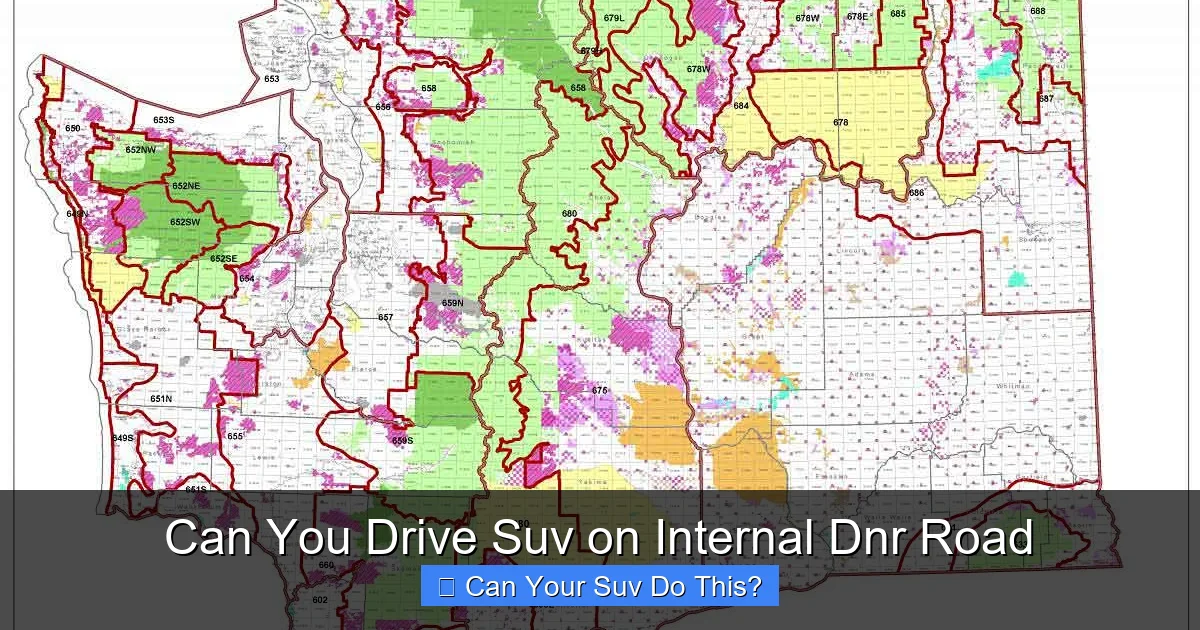
Driving an SUV on internal DNR (Department of Natural Resources) roads is often possible, but it depends on the specific road, vehicle type, season, and local regulations. While many SUVs are built for off-road capability, not all internal DNR roads are open to the public or suitable for standard vehicles.
Key Takeaways
- Check local DNR regulations: Access rules vary by state and even by specific forest or park. Always verify road status before heading out.
- Know your SUV’s capabilities: Not all SUVs are true off-roaders. Ground clearance, 4WD, and tire type matter on rugged DNR roads.
- Season and weather impact access: Many internal DNR roads close during wet seasons or winter due to mud, snow, or erosion risks.
- Permits may be required: Some DNR roads need special permits for entry, especially for commercial use or group travel.
- Respect the environment: Stay on designated roads to prevent habitat damage and avoid fines.
- Tow hooks and recovery gear are essential: Even capable SUVs can get stuck—always carry recovery equipment.
- Use GPS and offline maps: Cell service is unreliable; download maps in advance for safe navigation.
📑 Table of Contents
Understanding Internal DNR Roads: What Are They?
Internal DNR roads are unpaved or minimally maintained routes managed by state or federal Departments of Natural Resources. These roads wind through forests, wildlife refuges, state parks, and conservation areas. Unlike highways or city streets, they’re designed primarily for resource management—logging, fire control, wildlife monitoring, and conservation work—not public recreation.
But that doesn’t mean they’re off-limits to the public. In many states, certain internal DNR roads are open to motorized vehicles, including SUVs, during specific times of the year. However, access is often restricted to protect sensitive ecosystems, prevent erosion, and ensure public safety. For example, a road used by forest rangers to reach a remote fire tower might be open to hikers and bikers but closed to cars during rainy months when the surface turns to deep mud.
It’s also important to distinguish between “public” and “administrative” DNR roads. Public roads are generally marked and maintained for visitor access, while administrative roads are meant for agency use only. Driving on the latter without permission can result in fines or vehicle impoundment. Always look for signage at trailheads or entry points—these will tell you whether vehicles are allowed and under what conditions.
Can Your SUV Handle the Terrain?
Not all SUVs are created equal when it comes to off-road performance. A luxury crossover like a Lexus RX or a Honda CR-V may look rugged, but it’s built for city streets and light gravel paths—not deep ruts, rocky inclines, or muddy trails. On the other hand, true off-road SUVs like the Jeep Wrangler Rubicon, Toyota 4Runner TRD Pro, or Ford Bronco have features that make them better suited for internal DNR roads.
Visual guide about Can You Drive Suv on Internal Dnr Road
Image source: michigannewssource.com
Key SUV Features for DNR Roads
When evaluating whether your SUV can handle internal DNR roads, consider these critical components:
- Four-Wheel Drive (4WD) or All-Wheel Drive (AWD): 4WD is ideal for low-traction conditions like mud or snow. AWD helps with stability but isn’t as robust for serious off-roading.
- Ground Clearance: At least 8 inches is recommended to avoid scraping the undercarriage on rocks or ruts.
- Skid Plates: These protect the engine, transmission, and fuel tank from damage on rough terrain.
- All-Terrain or Mud-Terrain Tires: Standard highway tires can slip or puncture easily. Look for aggressive tread patterns and reinforced sidewalls.
- Approach, Departure, and Breakover Angles: These determine how steep an incline or decline your SUV can handle without getting stuck or damaged.
For example, a Subaru Outback with AWD and 8.7 inches of ground clearance can manage well-maintained DNR roads in dry weather. But if the road is washed out or covered in deep mud, even a capable SUV might struggle without proper preparation.
Real-World Example: A Weekend Adventure in Michigan’s Upper Peninsula
Last fall, a group of friends took their Toyota 4Runners on a trip through the Ottawa National Forest in Michigan. They planned to explore remote lakes and old logging roads managed by the DNR. Before leaving, they checked the Michigan DNR website and confirmed that several internal roads were open to motorized vehicles until November 15.
They packed recovery gear, extra fuel, and downloaded offline maps using the Gaia GPS app. One road, Forest Road 2201, had deep ruts and loose gravel. Their 4Runners, equipped with 4WD and all-terrain tires, handled it well. But halfway through, they encountered a section washed out by recent rains. They had to turn back—proof that even capable SUVs have limits.
Legal and Regulatory Considerations
Just because your SUV can handle a road doesn’t mean you’re allowed to drive on it. Laws governing internal DNR roads vary widely by state and even by individual forest or park. Some states, like Minnesota and Wisconsin, publish detailed maps showing which roads are open to vehicles, while others leave it to local ranger discretion.
Permits and Access Rules
In many cases, you’ll need a permit to drive on internal DNR roads. These aren’t always expensive—some cost as little as $5 for a day pass—but they’re essential for legal access. For example, in Washington State, the Department of Natural Resources requires a Discover Pass for vehicles entering state trust lands, including many internal roads. Without it, you could face a $124 fine.
Other states restrict access based on vehicle type. In parts of Oregon, only vehicles registered as “off-highway vehicles” (OHVs) can use certain DNR roads. Regular SUVs with standard license plates may not qualify, even if they’re 4×4 capable. Always check the specific rules for the area you plan to visit.
Seasonal Closures and Weather Restrictions
Many internal DNR roads are closed during spring thaw or heavy rain to prevent environmental damage. These “seasonal closures” protect wetlands, reduce erosion, and keep roads from turning into impassable quagmires. For instance, in Minnesota, numerous DNR roads in the Chippewa National Forest close from April to May due to muddy conditions.
Even if a road is technically open, driving during or after heavy rain can be dangerous. Mud can hide deep ruts, downed trees, or washed-out sections. Plus, getting stuck in a remote area with no cell service is a serious safety risk. Always check the weather forecast and road conditions before you go.
Safety Tips for Driving SUVs on DNR Roads
Safety should be your top priority when venturing onto internal DNR roads. These remote routes often lack cell service, signage, and emergency assistance. A little preparation can make the difference between a fun adventure and a costly rescue.
Essential Gear to Bring
Before you hit the trail, pack these essentials:
- Recovery Gear: Tow straps, a high-lift jack, and traction boards (like Maxtrax) can help you get unstuck.
- First Aid Kit: Include bandages, antiseptic, pain relievers, and any personal medications.
- Extra Fuel and Water: Some DNR roads are long and remote. Carry at least one extra gallon of gas and plenty of drinking water.
- Flashlight or Headlamp: With extra batteries. You don’t want to be stranded in the dark.
- Fire Extinguisher: Especially important if you’re driving through dry, forested areas.
- Satellite Communicator: Devices like Garmin inReach or SPOT allow you to send SOS signals when cell service is unavailable.
Navigation and Communication
GPS devices and smartphone apps are lifesavers on DNR roads. Download offline maps using apps like OnX Hunt, Gaia GPS, or Google Maps (in offline mode). These show road conditions, land ownership, and trail difficulty. Always carry a physical map and compass as a backup.
Let someone know your travel plans—where you’re going, your route, and when you expect to return. If you don’t check in, they can alert authorities. This simple step has prevented many search-and-rescue operations.
Driving Techniques for Rough Terrain
Even experienced drivers need to adjust their habits on DNR roads. Here are some tips:
- Go Slow: Speed increases the risk of losing control or damaging your vehicle. Take it easy, especially on uneven or loose surfaces.
- Use Low Range 4WD: When climbing steep hills or navigating deep mud, shift into low range for better torque and control.
- Avoid Sudden Movements: Steer and brake gently to maintain traction.
- Pick Your Line: Look ahead and choose the smoothest path. Avoid large rocks, deep ruts, or standing water when possible.
- Don’t Follow Too Closely: If traveling in a group, keep distance between vehicles in case one gets stuck or rolls backward on a hill.
Environmental Responsibility and Ethics
Driving on internal DNR roads comes with a responsibility to protect natural areas. These roads traverse sensitive habitats, including wetlands, old-growth forests, and wildlife corridors. Irresponsible driving can cause long-term damage.
Stay on Designated Roads
One of the most important rules is to never drive off designated roads. Creating new paths or “bushwhacking” can destroy vegetation, disturb wildlife, and lead to soil erosion. It’s also often illegal. Stick to established routes, even if they’re rough.
Practice Leave No Trace Principles
Follow the seven Leave No Trace principles:
- Plan ahead and prepare.
- Travel and camp on durable surfaces.
- Dispose of waste properly.
- Leave what you find.
- Minimize campfire impacts.
- Respect wildlife.
- Be considerate of other visitors.
This means packing out all trash, not feeding animals, and keeping noise levels down. Remember, you’re a guest in these wild spaces.
Report Damage or Illegal Activity
If you see downed trees, washed-out sections, or signs of illegal dumping or trespassing, report it to the local DNR office. Your input helps them maintain safe and sustainable access for everyone.
Alternatives and When to Turn Back
Not every internal DNR road is worth the risk. Sometimes, the smartest move is to turn around. Here are signs it’s time to head back:
- The road is visibly washed out or blocked by debris.
- Your SUV is bottoming out or struggling to maintain traction.
- Weather conditions are deteriorating rapidly.
- You’re lost or unsure of your location.
- You encounter “No Motor Vehicles” signs or locked gates.
It’s also worth considering alternatives. Many DNR areas offer maintained gravel roads or designated OHV trails that are safer and more accessible. For example, instead of tackling a remote internal road, you might enjoy a scenic drive on a forest service road that’s open to all vehicles.
If you’re new to off-roading, start with easier routes and work your way up. Take a 4×4 driving course or join a local off-road club to learn from experienced drivers. Practice in a safe, controlled environment before attempting remote DNR roads.
Conclusion: Can You Drive Your SUV on Internal DNR Roads?
The short answer is: it depends. Many SUVs can legally and safely drive on internal DNR roads—but only if the road is open, your vehicle is capable, and you follow the rules. Success comes down to preparation, respect for the environment, and knowing your limits.
Before you go, research the specific DNR area you plan to visit. Check for permits, seasonal closures, and road conditions. Equip your SUV with the right gear and drive responsibly. And remember, the goal isn’t just to reach the end of the road—it’s to enjoy the journey while protecting the wild places that make these adventures possible.
So, can your SUV do this? With the right knowledge and preparation, the answer might just be yes.
Frequently Asked Questions
Are all internal DNR roads open to SUVs?
No, not all internal DNR roads are open to SUVs. Access depends on location, season, and local regulations. Some roads are restricted to agency vehicles or require special permits.
Do I need a permit to drive my SUV on a DNR road?
It depends on the state and specific road. Many DNR areas require a vehicle access permit, such as a Discover Pass in Washington or a State Forest Permit in Minnesota. Always check local rules before traveling.
Can I drive a standard SUV like a Honda CR-V on DNR roads?
A standard SUV like a Honda CR-V may handle well-maintained DNR roads in dry conditions, but it’s not ideal for rough, muddy, or rocky terrain. Vehicles with 4WD, higher ground clearance, and all-terrain tires perform better.
What should I do if my SUV gets stuck on a DNR road?
Stay calm and assess the situation. Use recovery gear like tow straps or traction boards. If you can’t get unstuck, use a satellite communicator to call for help. Never leave your vehicle unattended in a remote area.
Are DNR roads safe to drive at night?
Driving DNR roads at night is not recommended due to poor visibility, lack of signage, and increased risk of wildlife crossings. If you must drive at night, use high-beam headlights and drive slowly.
Can I camp near internal DNR roads?
Camping regulations vary by location. Some DNR areas allow dispersed camping near roads, while others require designated campsites. Always check local rules and practice Leave No Trace principles.