

Yes, you can fit a tiller in an SUV—but it depends on the tiller size, SUV model, and how you prepare the cargo area. With proper planning, folding seats, and secure tie-downs, many mid-sized tillers can be transported safely without damage to your vehicle or equipment.
So, you’ve got a garden project coming up—maybe you’re breaking ground for a new veggie patch or prepping soil for a flower bed—and you’re wondering: *Can you fit a tiller in an SUV?* It’s a great question, and one that more homeowners and weekend gardeners are asking as they ditch trucks for more fuel-efficient, family-friendly SUVs.
The short answer? **Yes, you can fit a tiller in an SUV—but it’s not always as simple as just tossing it in the back.** It depends on several factors: the size and type of tiller, the make and model of your SUV, how much gear you’re already hauling, and how willing you are to get a little creative with space. Whether you’re driving a compact crossover or a full-size three-row SUV, there are smart ways to make it work.
But before you load up and hit the road, it’s important to understand the logistics. Tillers aren’t lightweight, fragile items like camping chairs or coolers. They’re heavy, often greasy, and have sharp tines that can damage your vehicle’s interior if not handled properly. Plus, many tillers are bulky and awkwardly shaped, making them tricky to maneuver into a vehicle without scratching paint or bending parts.
In this guide, we’ll walk you through everything you need to know about fitting a tiller in an SUV—from measuring your cargo space to choosing the right tiller, protecting your vehicle, and even exploring alternatives if your SUV just isn’t up to the task. Whether you’re a first-time tiller buyer or a seasoned gardener upgrading your ride, this article will help you make the smartest, safest choice for your next soil-turning adventure.
Key Takeaways
- Tiller size matters: Small walk-behind tillers fit easily in most SUVs; larger rear-tine models may require a trailer.
- SUV cargo space varies: Compact SUVs like the Honda CR-V offer less room than full-size models like the Ford Expedition.
- Fold and remove seats: Many SUVs allow rear seats to fold flat, creating a longer, uninterrupted cargo area.
- Protect your interior: Use moving blankets, tarps, or rubber mats to prevent oil, dirt, and scratches.
- Secure the load: Always use ratchet straps or cargo nets to prevent shifting during transit.
- Consider weight limits: Check your SUV’s payload capacity—some tillers weigh over 200 pounds.
- Alternative solutions: Roof racks, hitch-mounted carriers, or renting a trailer may be better for frequent use.
📑 Table of Contents
Understanding Tiller Sizes and Types
Not all tillers are created equal—and knowing the difference is the first step in figuring out whether yours will fit in your SUV. Tillers come in three main categories: mini (or cultivators), mid-tine, and rear-tine. Each varies significantly in size, weight, and intended use.
Mini Tillers and Cultivators
Mini tillers, often called cultivators, are the smallest and lightest option. They typically weigh between 20 and 50 pounds and are designed for light-duty tasks like weeding, aerating soil, or preparing small garden beds. These are the easiest to transport and are ideal for small yards or raised beds.
Because of their compact size, mini tillers can usually fit in the trunk of even the smallest SUVs—think Toyota RAV4, Honda CR-V, or Subaru Forester—without folding down any seats. They’re often no bigger than a large suitcase and can be carried by one person. Many models even come with foldable handles, making them even more space-efficient.
For example, the popular Mantis 7225-16-BE mini tiller weighs just 24 pounds and measures about 52 inches long when fully assembled. With the handle folded, it’s even shorter. This makes it a breeze to slide into the back of most SUVs, even with groceries or other cargo already loaded.
Mid-Tine Tillers
Mid-tine tillers are the workhorses of the home gardening world. They’re larger than mini tillers, typically weighing between 100 and 150 pounds, and are built for medium-sized gardens and tougher soil conditions. These models have the engine mounted above the tines, which helps with balance and maneuverability.
While still manageable for most SUVs, mid-tine tillers require more planning. You’ll likely need to fold down the rear seats to create a flat loading surface. The average mid-tine tiller is about 60 to 70 inches long and 24 to 30 inches wide—so you’ll need a cargo area that’s at least 6 feet long when the seats are down.
SUVs like the Ford Explorer, Jeep Grand Cherokee, or Hyundai Santa Fe have enough cargo space (around 40–50 cubic feet behind the second row) to accommodate a mid-tine tiller, especially if you angle it diagonally or remove the wheels (if detachable). However, you’ll want to protect the interior with a tarp or moving blanket to avoid oil stains or scratches from the tines.
Rear-Tine Tillers
Rear-tine tillers are the largest and most powerful consumer models, often used for large gardens, new lawn prep, or rocky soil. These machines can weigh 200 pounds or more and are significantly bulkier—some are over 7 feet long and 3 feet wide. They’re designed for serious digging and can turn over soil up to 12 inches deep.
Unfortunately, rear-tine tillers rarely fit in standard SUVs without major disassembly or a trailer. Even full-size SUVs like the Chevrolet Tahoe or Toyota Sequoia may struggle to accommodate one in the cargo area. The weight alone can exceed the payload capacity of many vehicles, and the length makes it nearly impossible to close the rear hatch.
If you own a rear-tine tiller, your best bet is a trailer, a pickup truck, or a cargo van. Some people have successfully transported them by removing the tines or handlebars, but this requires tools and mechanical know-how—and may void warranties or damage the machine if not done correctly.
Measuring Your SUV’s Cargo Capacity
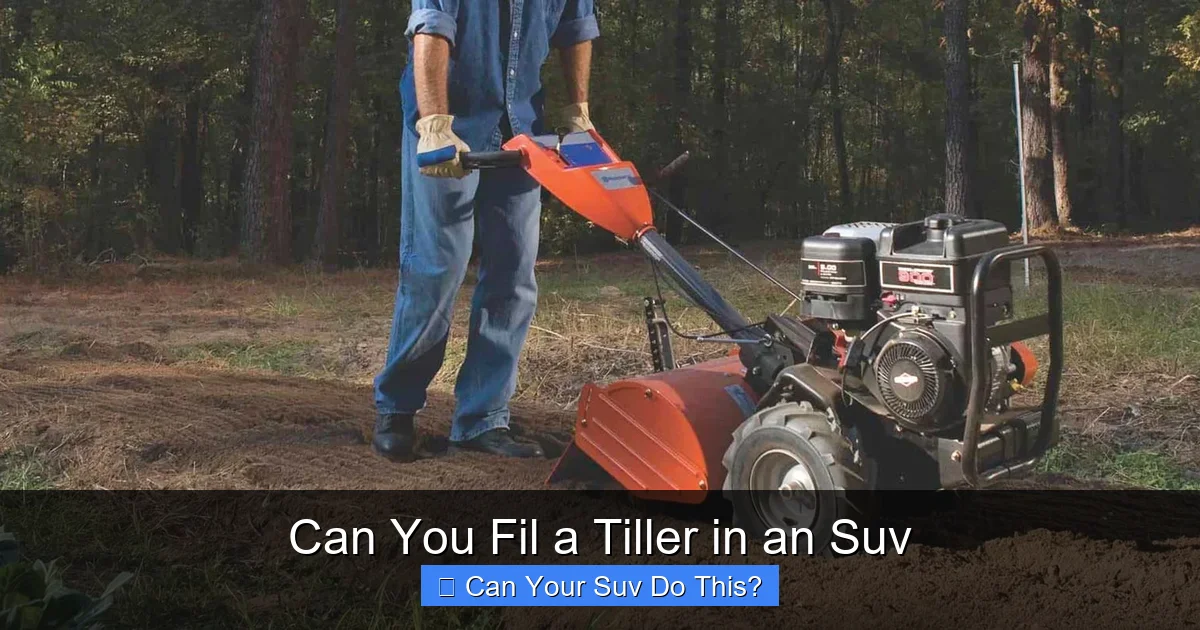
Visual guide about Can You Fil a Tiller in an Suv
Image source: barbaraiweins.com
Before you even think about loading a tiller, you need to know your SUV’s cargo dimensions and weight limits. Every vehicle has a maximum payload capacity—the total weight it can safely carry, including passengers, cargo, and fuel. Exceeding this limit can damage your suspension, brakes, and tires, and may even be illegal in some areas.
Cargo Volume and Dimensions
Start by measuring the cargo area with the rear seats up and then with them folded down. Use a tape measure to check the length (from the back of the front seats to the tailgate), width (between the wheel wells), and height (from the floor to the roof).
For example, the 2023 Honda CR-V offers about 39.2 cubic feet of cargo space behind the second row and up to 75.8 cubic feet with the seats folded. That’s plenty for a mini or mid-tine tiller, but tight for anything larger. In contrast, the Ford Expedition provides up to 104.6 cubic feet with all seats folded—enough room for a rear-tine tiller, though weight remains a concern.
Don’t forget to account for the shape of the cargo area. Some SUVs have high load floors, deep wells, or uneven surfaces that can make loading awkward. SUVs with flat-folding seats (like the Subaru Outback or Volvo XC90) are ideal for hauling long, heavy items.
Payload and Towing Capacity
Check your owner’s manual or the sticker on the driver’s side door jamb for the Gross Vehicle Weight Rating (GVWR) and payload capacity. Subtract the weight of passengers, fuel, and any existing cargo to determine how much weight you can safely add.
For instance, a typical midsize SUV might have a payload capacity of 1,200 to 1,500 pounds. If you and your passengers weigh 400 pounds combined, and you’ve got 100 pounds of other gear, you’ve only got about 700–1,000 pounds left for the tiller and any additional equipment.
Most mini and mid-tine tillers fall well within this range, but rear-tine models can push or exceed the limit—especially when you factor in gas, oil, and tools.
Loading and Securing the Tiller Safely
Once you’ve confirmed your SUV can handle the tiller, the next step is loading it safely and securely. This isn’t just about convenience—it’s about safety. An unsecured tiller can shift during sudden stops or turns, potentially injuring passengers or damaging your vehicle.
Preparing the Cargo Area
Start by clearing out any unnecessary items from the back of your SUV. Fold down the rear seats if needed, and lay down a protective layer. Use heavy-duty moving blankets, rubber mats, or a thick tarp to shield the carpet or upholstery from oil, dirt, and scratches.
If your tiller has gas or oil, make sure the tank is not overfilled and the cap is tight. It’s also a good idea to place a drip pan or absorbent pad underneath to catch any leaks during transport.
Loading Techniques
The best way to load a tiller is with a ramp or by using the tailgate as a lever. If your SUV has a low load floor (like many crossovers), you may be able to slide the tiller in directly. For heavier models, use a loading ramp or ask a friend to help lift it in.
Angle the tiller so the tines face the side or front of the vehicle—this reduces the risk of puncturing the interior. If possible, remove the tines or fold the handle to save space. Some tillers have quick-release tines that can be detached in minutes with basic tools.
Securing the Load
Never rely on just placing the tiller in the back and hoping for the best. Always use ratchet straps, cargo nets, or bungee cords to secure it. Anchor the straps to the SUV’s built-in tie-down points—usually located in the cargo floor or along the sides.
Loop the straps over the frame of the tiller, not the tines or engine, to avoid damage. Tighten them until the tiller doesn’t move when you push on it. For extra security, place wheel chocks or wooden blocks in front of and behind the wheels (if they’re not removed).
If you’re transporting the tiller for a long distance or on rough roads, check the straps periodically to ensure they haven’t loosened.
Alternative Transport Options
If your SUV just isn’t up to the task, don’t worry—there are several alternatives that can make transporting a tiller easier and safer.
Hitch-Mounted Cargo Carriers
A hitch-mounted cargo carrier can be a great solution for mid-sized tillers. These platforms attach to your SUV’s trailer hitch and provide a flat, stable surface for heavy items. Some models even have ramps for easy loading.
Look for carriers with a weight capacity of at least 300–500 pounds and a non-slip surface. You’ll still need to secure the tiller with straps, but the added height and stability make transport much safer.
Roof Racks and Cargo Boxes
While not ideal for heavy, bulky items like tillers, roof racks can work for mini cultivators—especially if they’re lightweight and compact. Use a sturdy cargo box or basket designed for heavy loads, and always double-check the weight limit.
Keep in mind that loading a tiller onto a roof rack requires lifting it overhead, which can be dangerous without help. Also, driving with a high center of gravity increases the risk of rollover, especially in windy conditions.
Renting a Trailer or Truck
For occasional use, renting a small utility trailer or pickup truck might be the most practical option. Many home improvement stores (like Home Depot or Lowe’s) offer hourly or daily rentals for trailers and trucks.
A 4×8 utility trailer can easily handle a rear-tine tiller and costs as little as $20–$40 per day. This is often cheaper and safer than risking damage to your SUV or overloading it.
Tips for First-Time Tiller Transporters
If you’ve never transported a tiller before, here are a few pro tips to make the process smoother:
– **Practice at home:** Before your first trip, practice loading and unloading the tiller in your driveway. This helps you identify any issues with fit, weight, or access.
– **Bring tools:** Pack a basic toolkit (wrenches, screwdrivers, pliers) in case you need to remove parts for transport.
– **Use gloves and protective gear:** Tillers have sharp edges and hot engines. Wear gloves and long sleeves when handling them.
– **Check local laws:** Some areas have regulations about transporting machinery on public roads. Make sure your load is covered or secured according to local requirements.
– **Plan your route:** Avoid narrow streets, low bridges, or rough terrain if you’re carrying a heavy load.
Real-World Examples: Which SUVs Can Handle a Tiller?
Let’s look at a few real-world examples to see how different SUVs stack up:
– **Honda CR-V:** Great for mini tillers. With seats folded, it can fit most mid-tine models if angled carefully. Payload capacity: ~1,100 lbs.
– **Toyota Highlander:** Spacious cargo area (84.3 cu ft max). Can handle mid-tine tillers easily. Payload: ~1,400 lbs.
– **Ford Explorer:** Offers 87.8 cu ft with seats down. Ideal for mid-tine tillers; may fit a small rear-tine with disassembly. Payload: ~1,500 lbs.
– **Chevrolet Tahoe:** Full-size SUV with 122.6 cu ft max cargo. Can fit a rear-tine tiller if seats are removed, but weight may be an issue. Payload: ~1,700 lbs.
– **Subaru Outback:** While technically a wagon, it’s SUV-like in function. Can fit mini and some mid-tine tillers. Payload: ~1,000 lbs.
Conclusion
So, can you fit a tiller in an SUV? The answer is a resounding **yes—for most mini and mid-tine models, and with the right preparation.** Compact and midsize SUVs are more than capable of handling the job, especially if you fold down seats, protect the interior, and secure the load properly.
However, if you’re working with a large rear-tine tiller, your SUV may not be the best option. In those cases, consider a trailer, cargo carrier, or rental truck to ensure safe and legal transport.
The key is planning ahead. Measure your cargo space, know your vehicle’s limits, and take the time to secure your equipment properly. With a little effort, you can turn your SUV into a capable gardening transport—without sacrificing safety or damaging your ride.
Whether you’re prepping soil for spring planting or tackling a backyard overhaul, your SUV can be a valuable ally. Just remember: it’s not just about whether it fits—it’s about whether it fits *safely*.
Frequently Asked Questions
Can I fit a rear-tine tiller in a standard SUV?
It’s unlikely without disassembly or a trailer. Rear-tine tillers are too large and heavy for most SUV cargo areas, and may exceed payload limits.
Do I need to remove the tines to transport a tiller?
Not always, but removing tines or folding handles can save space and prevent damage. Check your tiller’s manual for disassembly instructions.
What’s the best way to protect my SUV’s interior?
Use moving blankets, rubber mats, or a heavy-duty tarp to cover the cargo area. Place absorbent pads under the tiller to catch oil or fuel leaks.
Can I use a roof rack for a tiller?
Only for very lightweight mini tillers. Most tillers are too heavy and bulky for roof racks, and loading them overhead can be dangerous.
How do I secure a tiller in my SUV?
Use ratchet straps anchored to the vehicle’s tie-down points. Loop straps over the frame, not the tines, and tighten until the load doesn’t shift.
Should I rent a trailer instead of using my SUV?
If you have a large tiller or transport it frequently, yes. Renting a trailer is often safer, easier, and more cost-effective in the long run.