

Yes, you can fit two kayaks in the back of many SUVs—but it depends on your vehicle size, kayak dimensions, and how you load them. With the right technique and gear, even compact SUVs can handle tandem kayak transport safely and efficiently.
So, you’ve got two kayaks, a sense of adventure, and an SUV—but can you actually fit both kayaks inside? It’s a question that pops up every time friends plan a weekend paddle or families head to the lake. The short answer? Yes, you can often fit two kayaks in the back of an SUV—but it’s not always straightforward. Success depends on a mix of your vehicle’s cargo capacity, the size and type of your kayaks, and how cleverly you pack them.
Think of it like a puzzle. Some SUVs are naturally better suited for this task, while others require a bit of creativity. For example, a full-size SUV with fold-flat seats and a long wheelbase has a clear advantage over a subcompact crossover. But even smaller vehicles can pull it off with the right approach—especially if you’re using shorter or collapsible kayaks. The key is understanding your options and planning ahead.
In this guide, we’ll walk you through everything you need to know about fitting two kayaks inside your SUV. Whether you’re driving a rugged Jeep Grand Cherokee, a family-friendly Honda Pilot, or a nimble Mazda CX-5, we’ll help you figure out if your ride can handle the load—and how to do it safely and efficiently.
Key Takeaways
- SUV size matters: Larger SUVs like the Ford Explorer or Toyota Highlander offer more cargo space, making it easier to fit two kayaks inside.
- Kayak type and length are crucial: Shorter recreational kayaks (under 10 feet) are far easier to fit than long touring or fishing kayaks.
- Folding or inflatable kayaks are game-changers: These compact options can easily fit two units in almost any SUV without roof racks.
- Proper loading technique is essential: Angling kayaks diagonally or stacking them with padding reduces damage and maximizes space.
- Roof racks are a reliable backup: If interior space is tight, roof-mounted carriers offer a secure way to transport two kayaks without cramming.
- Safety and visibility come first: Never compromise rear visibility or secure loads improperly—always use straps and check local laws.
- Test before you travel: Do a dry run at home to ensure your setup works before heading to the water.
📑 Table of Contents
Understanding Your SUV’s Cargo Space
Before you even think about loading kayaks, you need to know what you’re working with. Not all SUVs are created equal when it comes to interior cargo room. Some boast cavernous trunks, while others prioritize passenger comfort over storage. Let’s break it down.
Measuring Your SUV’s Interior Dimensions
The first step is measuring your SUV’s cargo area. Grab a tape measure and check the following:
– **Length:** From the back of the rear seats (or folded seats) to the liftgate.
– **Width:** At the widest point, usually between the wheel wells.
– **Height:** From the floor to the ceiling, especially if you plan to stack kayaks.
Most mid-size SUVs offer around 35–40 cubic feet of cargo space with rear seats up, and 70–80 cubic feet with them folded. Full-size models like the Chevrolet Tahoe or Ford Expedition can exceed 90 cubic feet. That’s a big difference when you’re trying to squeeze in two 10-foot kayaks.
For example, the Toyota RAV4 has about 37 cubic feet behind the second row. That might be enough for two short kayaks if you angle them just right. But the Subaru Outback, with its longer roofline and flat load floor, offers more usable length—making it a favorite among outdoor enthusiasts.
Seat Configuration and Flexibility
Another major factor is seat flexibility. SUVs with 60/40 or 40/20/40 split-folding rear seats give you more options. You can fold down one side to create a long, narrow channel perfect for a kayak, while keeping the other side up for passengers or gear.
Some newer SUVs even have third-row seats that fold flat into the floor, creating a continuous cargo area. This is ideal for kayak transport. Vehicles like the Hyundai Palisade or Kia Telluride offer this feature, making them surprisingly capable for outdoor adventures.
Don’t forget about the front passenger seat. In a pinch, you can fold it forward to extend the cargo length—though this is less common and may not be safe or legal in all situations. Always check your owner’s manual before modifying seat positions for cargo.
Roof vs. Interior: Weighing the Options
While this article focuses on fitting kayaks inside, it’s worth mentioning that roof racks are a popular alternative. They free up interior space and work with almost any SUV. But they come with trade-offs: reduced fuel efficiency, wind noise, and the hassle of lifting heavy kayaks overhead.
Interior transport keeps your kayaks protected from weather and theft, and it’s easier to load and unload. Plus, you don’t have to worry about low-clearance bridges or garage doors. If you’re frequently transporting kayaks, interior loading might be the more convenient long-term solution—if your SUV can handle it.
Kayak Types and Their Impact on Fit
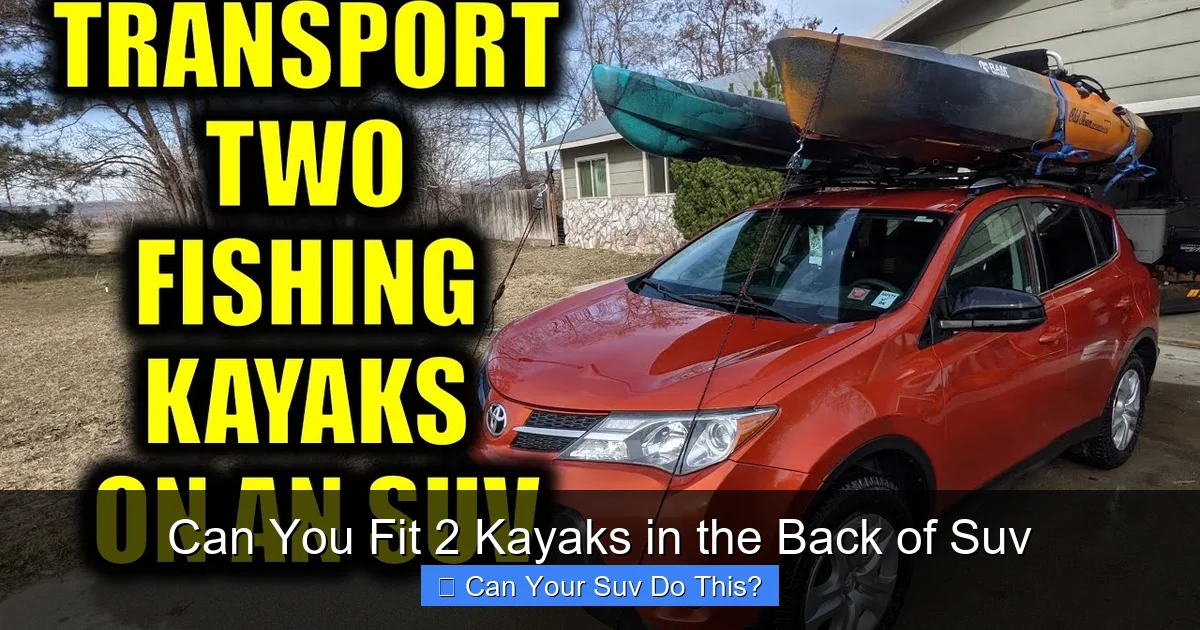
Visual guide about Can You Fit 2 Kayaks in the Back of Suv
Image source: i.ytimg.com
Not all kayaks are built the same. The type of kayak you own plays a huge role in whether two can fit inside your SUV. Let’s look at the most common styles and how they stack up.
Recreational Kayaks (8–10 feet)
These are the most beginner-friendly and widely used kayaks. They’re short, stable, and typically under 30 inches wide. Because of their compact size, two recreational kayaks can often fit inside a mid-size SUV with room to spare.
For example, a 9-foot Pelican Argo or a 10-foot Sun Dolphin Aruba can be laid diagonally across the cargo area, with the bow and stern extending into the footwells or under the front seats. With rear seats folded, you might even fit them lengthwise.
Touring and Sea Kayaks (12–16 feet)
These longer, narrower kayaks are built for speed and distance. Unfortunately, their length makes them a challenge for interior transport. A 14-foot sea kayak is longer than most SUVs are wide, so fitting two inside is nearly impossible without significant disassembly or creative angling.
In most cases, touring kayaks are better suited for roof racks. But if you’re determined to keep them inside, consider removing the seat and foot braces to shorten the effective length. Some kayaks even have removable bulkheads.
Fishing Kayaks (10–14 feet)
Fishing kayaks are often wider and heavier than recreational models, with built-in rod holders, storage hatches, and pedal drives. Their bulk makes them harder to maneuver in tight spaces. However, shorter models (under 11 feet) can still fit inside larger SUVs, especially if you remove accessories.
One tip: deflate or fold any removable components, like pedal systems or outriggers, to save space.
Inflatable and Folding Kayaks
Here’s where things get exciting. Inflatable kayaks like the Intex Explorer or Advanced Elements can be packed into bags the size of a large duffel. Two of these can easily fit in the trunk of a compact SUV—no folding seats required.
Folding kayaks, such as those from Oru Kayak, are similarly compact when disassembled. They unfold into sleek, rigid hulls but pack down flat. These are perfect for urban adventurers or those with limited storage space.
If you’re serious about kayaking but drive a smaller vehicle, investing in an inflatable or folding kayak might be the smartest move.
Smart Loading Techniques for Maximum Space
Even with the right SUV and kayaks, loading them properly is an art. A few smart techniques can make the difference between a tight squeeze and a perfect fit.
Diagonal Loading: The Diagonal Trick
One of the most effective methods is loading kayaks diagonally across the cargo area. By placing the bow of one kayak in the front passenger footwell and the stern near the liftgate on the opposite side, you maximize the use of available length and width.
This works best in SUVs with a wide cargo opening and minimal wheel well intrusion. You may need to angle the kayaks slightly upward to clear the wheel arches, but padding the contact points will prevent scratches.
Stacking Kayaks: Double-Decker Style
If your SUV has enough height, you can stack two kayaks on top of each other. Place the first kayak upside down on the floor, then lay the second one right-side up on top. Use foam padding or pool noodles between them to prevent damage.
This method works well in taller SUVs like the Toyota 4Runner or Ford Bronco. Just make sure the combined height doesn’t block your rearview mirror or interfere with the liftgate.
Removing Seats and Accessories
To gain extra space, consider removing non-essential items from the kayaks. Take off seats, paddles, and gear bags. Store them separately in duffels or bins. This reduces bulk and makes the kayaks easier to maneuver.
Some kayaks even allow you to remove the cockpit rim or foot braces. Check your owner’s manual to see what’s removable.
Using Cargo Liners and Padding
Protecting your SUV’s interior is just as important as protecting your kayaks. Use heavy-duty cargo liners, moving blankets, or foam mats to prevent scratches and dents. Secure the kayaks with ratchet straps or bungee cords, but avoid over-tightening, which can warp the hull.
Anchor the straps to sturdy tie-down points in the cargo area—never to plastic trim or seat frames.
Test Load Before You Go
Before hitting the road, do a dry run. Load the kayaks at home and check for:
– Clearance at the liftgate
– Visibility through the rear window
– Stability of the load
– Ease of unloading
Make adjustments as needed. It’s better to发现问题 at home than at the boat ramp.
Top SUVs for Fitting Two Kayaks Inside
Not all SUVs are created equal when it comes to kayak transport. Here are some of the best models for fitting two kayaks inside, based on cargo space, seat flexibility, and real-world usability.
Full-Size SUVs: The Ultimate Cargo Haulers
If you’re serious about kayaking and have the budget, a full-size SUV is your best bet. Models like the:
– **Ford Expedition:** Up to 104 cubic feet with seats folded. Long, flat cargo floor.
– **Chevrolet Tahoe:** 93 cubic feet. Power-folding third row adds convenience.
– **Toyota Sequoia:** Rugged and spacious, with a wide cargo opening.
These vehicles can easily fit two 10-foot kayaks lengthwise with room for gear. Some even have built-in cargo management systems with tie-down hooks and dividers.
Mid-Size SUVs: The Sweet Spot
For most families, a mid-size SUV offers the best balance of space, fuel efficiency, and affordability. Top picks include:
– **Honda Pilot:** 83.9 cubic feet with seats down. Flat load floor and wide opening.
– **Toyota Highlander:** 84.3 cubic feet. Quiet cabin and reliable performance.
– **Subaru Ascent:** 86.5 cubic feet. Standard all-wheel drive for rugged terrain.
These SUVs can typically fit two recreational kayaks diagonally or stacked, especially with rear seats folded.
Compact and Crossover SUVs: Think Outside the Box
Even smaller SUVs can work—if you’re smart about it. Consider:
– **Subaru Outback:** Technically a wagon, but SUV-like. 75.7 cubic feet. Long roofline helps.
– **Mazda CX-5:** 59.6 cubic feet. Best for short or inflatable kayaks.
– **Honda CR-V:** 75.8 cubic feet. Fold-flat seats and low load floor.
With inflatable or folding kayaks, even a compact SUV can handle two units with ease.
Safety, Legal, and Practical Considerations
Transporting kayaks inside your SUV isn’t just about space—it’s about safety and compliance. Here’s what you need to know.
Securing the Load
Never transport unsecured kayaks. Even at low speeds, an unstrapped kayak can become a dangerous projectile in a sudden stop. Use high-quality ratchet straps or cam buckle straps to anchor the kayaks to the vehicle’s tie-down points.
Avoid using bungee cords alone—they can stretch or snap. Always double-check straps before driving and re-tighten after the first few miles.
Maintaining Visibility
Your rearview mirror must remain unobstructed. If kayaks block your view, you’re not only unsafe—you could be breaking the law. In many states, it’s illegal to drive with impaired visibility.
If needed, use a rearview camera or install a cargo mirror. Some SUVs have built-in cameras that activate when the liftgate is open.
Weight Distribution
Heavier kayaks should be placed low and centered in the cargo area. Avoid placing all weight on one side, which can affect handling and increase rollover risk.
If you’re carrying additional gear, distribute it evenly. Use cargo nets or bins to keep items from shifting.
Local Laws and Regulations
Laws vary by state, but most require that loads don’t extend beyond the vehicle’s width or block lights. Even inside the vehicle, some jurisdictions have rules about cargo securing.
Check your local Department of Motor Vehicles (DMV) website for specific guidelines. When in doubt, err on the side of caution.
Insurance and Liability
Make sure your auto insurance covers damage to your kayaks and your vehicle. Some policies exclude watercraft, so you may need additional coverage.
Also, consider liability: if your load causes an accident, you could be held responsible. Proper securing reduces this risk.
Alternative Solutions When Interior Space Falls Short
If your SUV just can’t handle two kayaks inside, don’t worry—there are still great options.
Roof Racks and Kayak Carriers
Roof racks are the most common solution. Most SUVs can be equipped with crossbars and J-style or saddle-style kayak carriers. These hold kayaks securely and free up interior space.
Popular brands include Thule, Yakima, and Malone. Look for carriers with padded cradles and load-assist features to make loading easier.
Hitch-Mounted Cargo Carriers
For shorter trips or lighter kayaks, a hitch-mounted platform carrier can work. These attach to your trailer hitch and hold kayaks behind the vehicle.
They’re easier to load than roof racks but reduce rear visibility and can interfere with parking sensors.
Towing a Small Trailer
If you frequently transport multiple kayaks or heavy gear, a small utility trailer might be worth the investment. Single-axle trailers can carry two kayaks and are easy to maneuver.
Just make sure your SUV is rated for towing and you have the proper hitch installed.
Kayak Rentals at the Destination
For occasional trips, consider renting kayaks at your destination. Many lakes, rivers, and coastal areas offer hourly or daily rentals.
This eliminates transport hassle entirely and lets you try different kayak types.
Final Thoughts: Can Your SUV Do This?
So, can you fit two kayaks in the back of your SUV? The answer is: it depends—but in most cases, yes, with the right approach. Larger SUVs make it easy, while smaller ones require creativity and the right kayak type.
The key is planning. Measure your space, know your kayaks, and test your setup before you go. Whether you’re loading two recreational kayaks diagonally in a Honda Pilot or packing inflatable models into a Mazda CX-5, there’s a solution that works for your vehicle and lifestyle.
And remember: safety always comes first. Secure your load, maintain visibility, and follow the rules. With a little preparation, your SUV can be the perfect partner for your next kayaking adventure.
So grab your paddles, call a friend, and hit the water—your SUV is ready.
Frequently Asked Questions
Can I fit two 12-foot kayaks inside a mid-size SUV?
It’s unlikely unless you have a very long cargo area or remove parts of the kayaks. Most mid-size SUVs are under 12 feet long inside, so two full-length touring kayaks won’t fit comfortably. Consider roof racks or a trailer instead.
Are inflatable kayaks safe for regular use?
Yes, modern inflatable kayaks are durable and designed for regular use. Brands like Intex and Advanced Elements use tough PVC or drop-stitch materials that resist punctures and perform well on lakes and calm rivers.
Do I need special straps to secure kayaks inside my SUV?
Use ratchet or cam buckle straps with a minimum 1,000-pound break strength. Avoid bungee cords, which can fail under tension. Always anchor to factory tie-down points, not seat frames or trim.
Can I drive with kayaks blocking my rear window?
No. Blocking your rearview mirror is unsafe and illegal in most states. If kayaks obstruct your view, reposition them or use a rearview camera. Never compromise visibility for cargo space.
What’s the best way to protect my SUV’s interior from kayak damage?
Use heavy-duty cargo mats, moving blankets, or foam padding under and between kayaks. Cover sharp edges with pool noodles or towels. This prevents scratches, dents, and wear on your upholstery.
Can I fit two kayaks in a compact SUV like a Toyota RAV4?
Yes, but only if the kayaks are short (under 10 feet) or inflatable. With rear seats folded, a RAV4 can fit two recreational kayaks diagonally. For longer kayaks, roof racks are a better option.