
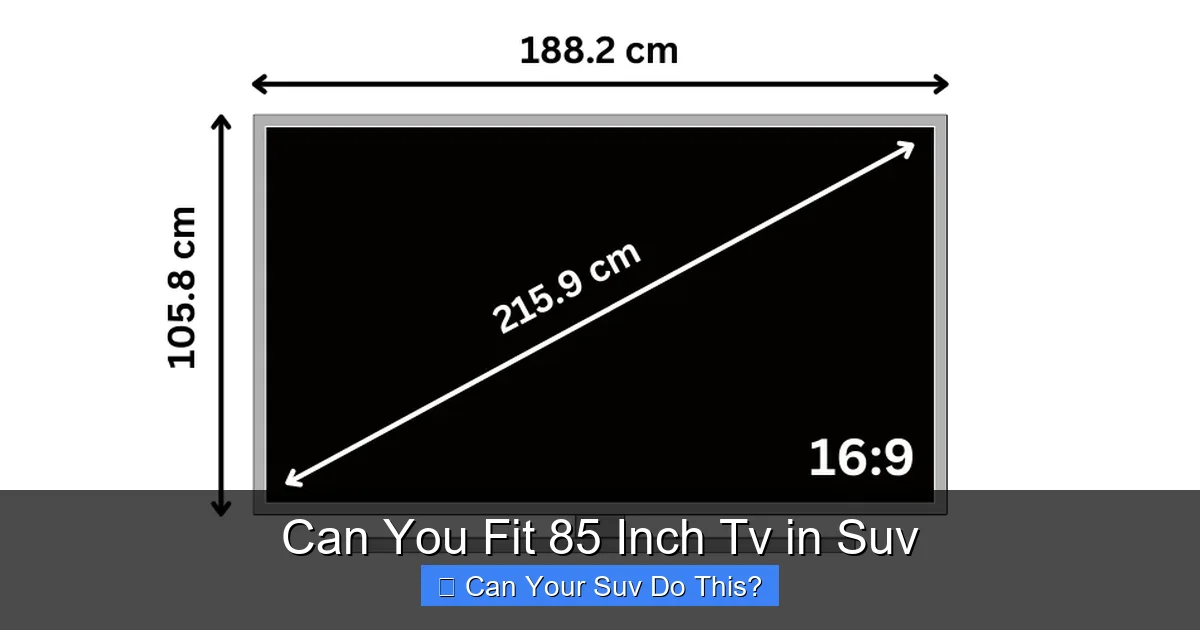
Yes, you can fit an 85 inch TV in many SUVs—but it’s not as simple as just loading it in. Success depends on your vehicle’s cargo space, seating configuration, and how you protect the screen during transit. With the right prep and know-how, transporting a massive TV is totally doable.
So, you’ve just splurged on a stunning 85 inch TV—maybe it’s a sleek OLED for movie nights, a bright QLED for gaming, or a budget-friendly LED that still delivers big-screen magic. You’re excited, you’ve picked the perfect wall mount, and you’re ready to transform your living room into a home theater. But then reality hits: how on earth are you going to get this giant screen from the store (or delivery truck) into your house?
If you drive an SUV, you might be wondering: Can you fit an 85 inch TV in an SUV? The short answer? Yes—often. But it’s not as simple as tossing it in the back like a suitcase. Transporting a massive TV requires planning, the right vehicle, and a bit of finesse. In this guide, we’ll walk you through everything you need to know to safely and successfully move your 85 inch TV using your SUV. Whether you’re picking it up from Best Buy, Costco, or a local electronics store, we’ve got your back.
Let’s be honest—most people don’t buy an 85 inch TV every day. These screens are heavy, fragile, and awkwardly shaped. A typical 85 inch TV measures around 75 inches wide, 43 inches tall, and 2–3 inches deep, depending on the model. That’s taller than many toddlers and wider than a standard doorway. And that’s just the screen—don’t forget the box, which adds several inches on all sides for protection.
But here’s the good news: SUVs are built for cargo. With their spacious interiors, fold-flat seating, and rugged frames, many SUVs are surprisingly capable of handling oversized items. From weekend camping gear to furniture hauls, SUVs are the go-to for families and adventurers alike. So why not a giant TV?
In this article, we’ll break down the factors that determine whether your SUV can handle an 85 inch TV, which models are best suited for the job, how to prepare your vehicle, and what safety precautions you should take. We’ll also share real-world examples, tips from moving professionals, and alternatives if your SUV just isn’t cutting it. By the end, you’ll know exactly what to do—and whether you need to call in reinforcements.
Key Takeaways
- SUV Size Matters: Larger SUVs like the Ford Expedition, Chevrolet Suburban, or Toyota Sequoia offer the best chance of fitting an 85 inch TV flat or diagonally.
- Seat Removal or Folding Is Key: Most SUVs require folding down rear seats or removing third-row seats to create enough flat space.
- Measure Before You Buy: Always check your TV’s exact dimensions and compare them to your SUV’s cargo area with seats down.
- Protect the Screen at All Costs: Use original packaging, moving blankets, or foam padding to prevent scratches, cracks, or pressure damage.
- Drive Carefully and Secure the Load: Avoid sudden stops, sharp turns, and uneven roads. Use straps to keep the TV from shifting.
- Consider Professional Delivery: For peace of mind, many retailers offer white-glove delivery and setup services for large TVs.
- Alternative Transport Options: If your SUV isn’t up to the task, consider renting a van or using a trailer for safer transport.
📑 Table of Contents
Understanding the Dimensions: TV vs. SUV
Before you even think about loading that TV into your SUV, you need to understand the numbers. It’s not just about the screen size—it’s about the actual physical dimensions of the TV and the available space in your vehicle.
Most 85 inch TVs have a screen diagonal of 85 inches, but the overall width is typically around 75 inches (just over 6 feet). The height is usually about 43 inches (a little over 3.5 feet), and the depth ranges from 2 to 3 inches for modern flat-panel models. However, the shipping box adds significant bulk—often 8–12 inches extra in each direction. So, you’re looking at a box that’s roughly 83 inches wide, 51 inches tall, and 10–15 inches deep.
Now, let’s talk SUVs. Cargo space varies widely depending on the make and model. Compact SUVs like the Honda CR-V or Toyota RAV4 offer around 30–35 cubic feet of space with rear seats up, and up to 70 cubic feet with seats folded. That sounds like a lot—but when you’re dealing with a long, flat object like a TV, volume isn’t the only factor. Length and width matter more.
For example, the Honda CR-V has a cargo floor length of about 73 inches with the rear seats folded—just shy of the TV’s 75-inch width. That means you’d need to angle the TV diagonally, which introduces risk. Meanwhile, larger SUVs like the Ford Expedition offer up to 104 inches of cargo length with all seats removed—plenty of room to lay the TV flat.
Measuring Your SUV’s Cargo Area
The best way to know for sure is to measure your own SUV. Grab a tape measure and check:
– The length from the back of the front seats to the tailgate (with rear seats folded or removed)
– The width between the wheel wells (this is often the narrowest point)
– The height from the cargo floor to the roof (important if you’re standing the TV upright)
Compare these numbers to your TV’s box dimensions. If the box fits flat with a few inches to spare, you’re in good shape. If it’s a tight squeeze or requires angling, proceed with caution.
Diagonal Loading: Is It Safe?
Some people try to fit long items diagonally across the cargo area. While this can work for furniture or mattresses, it’s risky for a TV. The screen is fragile, and pressure on the corners or edges can cause cracks or internal damage. Plus, diagonal loading makes it harder to secure the TV properly, increasing the chance of movement during transit.
If you must load diagonally, use extra padding and support the TV at multiple points. But whenever possible, aim for flat, horizontal transport.
Best SUVs for Transporting an 85 Inch TV

Visual guide about Can You Fit 85 Inch Tv in Suv
Image source: tvsizeguide.com
Not all SUVs are created equal when it comes to hauling big items. If you’re serious about fitting an 85 inch TV, you’ll want a vehicle with ample cargo length, wide openings, and flexible seating. Here are some of the top contenders.
Full-Size SUVs: The Heavy Lifters
Full-size SUVs are your best bet. These vehicles are designed for maximum cargo capacity and often come with features like power-folding third-row seats and low load floors.
– Ford Expedition: With up to 104 inches of cargo length (with seats removed), the Expedition can easily accommodate an 85 inch TV flat. The wide tailgate and low step-in height make loading easier.
– Chevrolet Suburban: One of the largest SUVs on the market, the Suburban offers 121 inches of cargo length with all seats folded. That’s more than enough room, even with the box.
– Toyota Sequoia: Similar in size to the Expedition, the Sequoia provides around 100 inches of cargo space. Its rugged build also means it can handle the weight—most 85 inch TVs weigh 70–100 pounds, plus the box.
– GMC Yukon XL: The extended version of the Yukon, this SUV offers 120+ inches of cargo length. It’s a popular choice for families who need space for gear, groceries, and yes—giant TVs.
These SUVs often have flat load floors, wide rear openings, and strong tie-down points, making them ideal for secure transport.
Mid-Size SUVs: Possible, But Tight
Some mid-size SUVs can handle an 85 inch TV, but it’s usually a tight fit and may require creative loading.
– Ford Explorer: With rear seats folded, the Explorer offers about 87 inches of cargo length. That’s enough to lay the TV flat, but you’ll need to remove the third-row seats if equipped.
– Jeep Grand Cherokee L: The longer version of the Grand Cherokee, this model has a cargo length of around 85 inches. It’s borderline, but possible with careful placement.
– Toyota Highlander: Offers about 84 inches of cargo length with seats down. Again, it’s tight, but doable if you angle slightly or remove headrests.
These vehicles work best if you’re willing to remove seats or make multiple trips (e.g., TV one way, stand or mount later).
Compact and Crossover SUVs: Think Twice
Compact SUVs like the Honda CR-V, Mazda CX-5, or Subaru Forester are great for daily driving but struggle with oversized items.
– The CR-V, for example, has a cargo length of about 73 inches—too short for a flat load.
– The CX-5 offers around 70 inches, and the Forester about 74 inches.
In these vehicles, you’d need to angle the TV or stand it upright, both of which increase risk. Upright transport is especially dangerous—TVs are top-heavy and can tip over, causing damage or injury.
If you drive a compact SUV, consider alternatives like professional delivery or renting a larger vehicle.
Preparing Your SUV for TV Transport
Once you’ve confirmed your SUV can handle the size, it’s time to prep for the move. Proper preparation reduces the risk of damage and makes the process smoother.
Clear the Cargo Area
Start by removing all loose items from the back of your SUV. This includes floor mats, emergency kits, and any personal belongings. You want a clean, flat surface with nothing that could shift and scratch the TV.
If your SUV has carpeted floors, consider laying down a non-slip mat or cardboard to protect both the TV and your vehicle’s interior.
Fold or Remove Seats
Most SUVs require folding down the rear seats to create a flat load floor. In many models, the second and third-row seats fold flat with the push of a button or a simple lever.
For maximum space, you may need to remove the third-row seats entirely. This is common in full-size SUVs like the Suburban or Expedition. Check your owner’s manual for instructions—some seats are heavy and require two people to lift out.
Protect the Interior
Even with seats down, the edges of the cargo area can scratch or dent the TV box. Use moving blankets, foam padding, or old towels to line the sides and floor. Pay special attention to the wheel wells, which can protrude into the cargo space.
If you’re transporting the TV upright, secure it against the back of the front seats with padding to prevent tipping.
Secure the TV Properly
Once the TV is loaded, it must be secured. Use ratchet straps or bungee cords to anchor the box to the SUV’s tie-down points. Avoid tying directly to the TV—always strap the box or use a dolly.
Never rely on friction alone. Even on a short trip, sudden stops or bumps can shift the load.
Safety Tips for Transporting a Large TV
Transporting an 85 inch TV isn’t just about space—it’s about safety. These screens are expensive, fragile, and potentially dangerous if they fall.
Never Transport the TV Face-Down or on Its Side
Modern TVs, especially OLEDs, are extremely sensitive to pressure. Placing the screen face-down or on its side can damage the display, internal components, or the delicate glass layer.
Always transport the TV in its original upright orientation, or flat on its back with the screen facing up.
Use the Original Packaging
The box your TV comes in is designed for transport. It includes foam inserts, corner protectors, and a sturdy outer shell. If you still have it, use it. If not, consider buying a TV moving kit or renting a padded dolly.
Avoid wrapping the TV in plastic alone—it can trap moisture and doesn’t provide structural support.
Drive Smoothly
Once the TV is loaded, drive like you’re carrying a newborn. Avoid potholes, speed bumps, and sudden maneuvers. Take turns slowly and maintain a safe following distance.
If possible, have a passenger ride in the back to monitor the TV during the trip.
Unload Carefully
When you arrive, don’t rush. Use a dolly or ask for help to unload the TV. Lift with your legs, not your back, and keep the screen protected until it’s safely inside.
Alternative Options If Your SUV Isn’t Enough
If your SUV just isn’t up to the task, don’t panic. There are several alternatives.
Professional Delivery Services
Many retailers offer white-glove delivery for large TVs. This includes in-home setup, mounting, and even old TV removal. Companies like Best Buy, Costco, and Amazon often provide this service for a fee (usually $100–$200).
It’s more expensive than DIY, but it’s stress-free and ensures your TV arrives safely.
Rent a Van or Truck
If you’re set on picking up the TV yourself, consider renting a cargo van or pickup truck. U-Haul, Home Depot, and local rental companies offer affordable options for a few hours or a day.
A cargo van provides a secure, enclosed space perfect for flat transport. Plus, you can use their dollies and moving supplies.
Use a Trailer
If you have a hitch on your SUV, you can tow a small utility trailer. This gives you extra space without needing a larger vehicle. Just make sure the trailer is rated for the weight and that you secure the TV properly.
Real-World Example: Moving an 85 Inch TV in a Ford Expedition
Let’s walk through a real scenario. John just bought an 85 inch Samsung QLED TV from Best Buy. He drives a 2022 Ford Expedition with the optional third-row seating.
First, he measures the TV box: 83” W x 51” H x 12” D. Then he checks his SUV: with the second and third-row seats folded, he has 104” of cargo length and 50” between the wheel wells.
He removes the third-row seats (which take about 10 minutes with help), lays down moving blankets, and loads the TV flat, screen-up. He secures it with two ratchet straps anchored to the cargo hooks.
The tailgate closes with a few inches to spare. He drives slowly, avoids highways with rough pavement, and arrives home safely. With help, he unloads the TV and sets it up on his wall mount.
Total time: 2 hours. Total cost: $0 (he already had straps and blankets). Success!
Conclusion
So, can you fit an 85 inch TV in an SUV? Absolutely—if you have the right vehicle and take the right precautions. Full-size SUVs like the Ford Expedition, Chevrolet Suburban, and Toyota Sequoia are ideal, offering the space and stability needed for safe transport. Mid-size SUVs can work in a pinch, but compact models are best left to professional delivery.
The key is preparation: measure everything, protect the screen, secure the load, and drive carefully. And if your SUV isn’t up to the task, don’t hesitate to rent a van or use a delivery service.
At the end of the day, your 85 inch TV is an investment—not just in entertainment, but in experiences. Movie nights, sports games, family gatherings—it’s worth the extra effort to get it home safely. With the tips in this guide, you’ll be ready to say yes to that big screen and no to the stress.
Now go enjoy that cinematic experience—you’ve earned it.
Frequently Asked Questions
Can you fit an 85 inch TV in a Honda CR-V?
It’s very difficult. The CR-V’s cargo length is about 73 inches with seats folded, which is shorter than the TV’s 75-inch width. You’d need to angle it, which increases the risk of damage. Consider professional delivery or a larger vehicle.
Do I need to remove seats to fit an 85 inch TV?
In most SUVs, yes—especially if you have third-row seating. Removing or folding rear seats creates a flat, uninterrupted space needed for safe transport. Check your owner’s manual for instructions.
Can I transport the TV upright?
It’s not recommended. TVs are top-heavy and can tip over, causing damage or injury. Always transport flat with the screen facing up, or use a dolly with straps for upright moves.
What if I don’t have the original box?
Use a TV moving kit with foam padding and a reinforced box, or wrap the TV in moving blankets and secure it in a large cardboard box. Avoid plastic wrap alone—it offers no structural support.
Is it safe to drive on the highway with a TV in the back?
Yes, as long as the TV is properly secured and the vehicle is driven carefully. Avoid sudden stops, sharp turns, and rough roads. Have a passenger monitor the load if possible.
Should I hire professionals instead?
If you’re unsure about your SUV’s capacity or don’t have help, professional delivery is a smart choice. Many retailers offer setup and mounting, giving you peace of mind and protecting your investment.