

Yes, you can fit a bike in an SUV—but it depends on the vehicle size, bike type, and how you pack. With the right preparation, most SUVs can accommodate one or even multiple bikes, whether you’re heading to the trailhead or moving across town.
Key Takeaways
- Most SUVs can fit at least one bike: Mid-size and larger SUVs typically have enough cargo space to fit a standard adult bike, especially when the rear seats are folded down.
- Bike size and type matter: Road bikes and hybrid bikes are easier to fit than full-suspension mountain bikes or e-bikes due to their bulkier frames and batteries.
- Folding bikes are the easiest option: Compact and lightweight, folding bikes can often be stored in the trunk without removing wheels or adjusting seats.
- Proper packing prevents damage: Use bike bags, foam padding, or towels to protect both the bike and your SUV’s interior from scratches and grease.
- Roof and hitch racks are alternatives: If interior space is tight, external bike racks offer a secure way to transport bikes without sacrificing passenger or cargo room.
- Check your SUV’s cargo dimensions: Knowing your vehicle’s cargo length, width, and height helps determine the best way to load your bike.
- Plan ahead for multi-bike trips: Families or groups may need larger SUVs like the Honda Pilot or Ford Expedition to fit two or more bikes inside comfortably.
📑 Table of Contents
- Can You Fit a Bike in an SUV? The Short Answer
- Why Putting a Bike Inside an SUV Makes Sense
- SUV Size Matters: Compact vs. Mid-Size vs. Full-Size
- Bike Type and How It Affects Fit
- Packing Tips and Tricks for a Safe Ride
- When to Use a Roof or Hitch Rack Instead
- Real-World Examples: Which SUVs Fit Bikes Best?
- Final Thoughts: Make It Work for You
Can You Fit a Bike in an SUV? The Short Answer
So, can you fit a bike in an SUV? The quick and honest answer is: yes—most of the time. But like most things in life, it’s not always that simple. Whether you’re a weekend warrior heading to the mountains or a parent shuttling kids to bike practice, knowing how to safely and efficiently transport your bike inside your SUV can save you time, money, and stress.
SUVs are known for their versatility, and that includes cargo space. Unlike sedans or compact cars, SUVs are built with larger trunks, foldable rear seats, and higher roofs—features that make them ideal for hauling gear. Bikes, while not the smallest items, are generally manageable inside most SUVs with a little planning. However, success depends on several factors: the size and type of your bike, the make and model of your SUV, and how willing you are to get creative with packing.
In this guide, we’ll walk you through everything you need to know about fitting a bike inside your SUV. From measuring your cargo space to choosing the right bike rack or packing method, we’ve got you covered. Whether you drive a compact crossover like a Toyota RAV4 or a full-size beast like a Chevrolet Tahoe, you’ll learn how to make it work—without damaging your bike or your vehicle.
Why Putting a Bike Inside an SUV Makes Sense
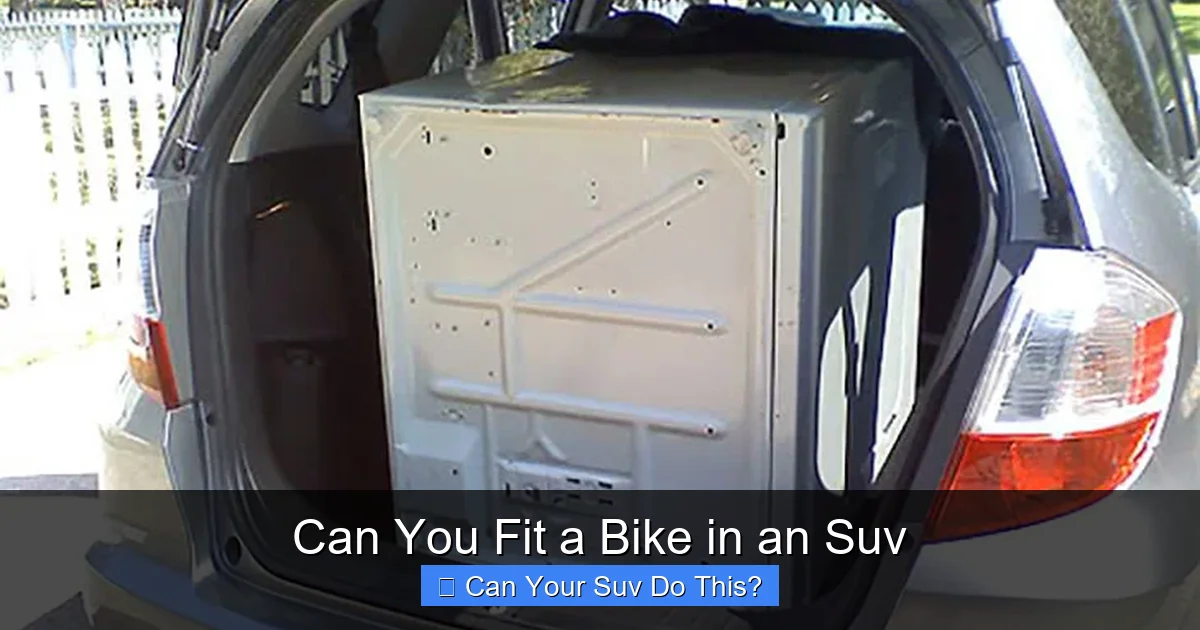
Visual guide about Can You Fit a Bike in an Suv
Image source: bryansgarage.com
There are plenty of reasons why you might want to load your bike inside your SUV instead of using a roof or hitch rack. First and foremost, it protects your bike from the elements. Rain, snow, road salt, and UV rays can take a toll on your bike’s frame, drivetrain, and components over time. Keeping it inside shields it from weather damage and keeps it cleaner.
Another major benefit is security. Bikes on external racks are more vulnerable to theft, especially if you’re stopping at a trailhead or parking in a public lot. Inside the vehicle, your bike is out of sight and harder for thieves to access. Plus, you don’t have to worry about low-clearance bridges, parking garages, or overhanging branches that could damage a roof-mounted bike.
Interior transport also preserves your SUV’s aerodynamics. Roof racks create drag, which can reduce fuel efficiency by up to 20%. By keeping the bike inside, you maintain better gas mileage and a quieter ride. And let’s not forget convenience—loading and unloading a bike from inside the cabin is often faster and easier than wrestling with straps and clamps on a roof rack.
Of course, there are trade-offs. You’ll lose some cargo space, and you’ll need to protect your upholstery from grease and dirt. But for many riders, the benefits far outweigh the drawbacks—especially on longer trips or when transporting expensive e-bikes.
SUV Size Matters: Compact vs. Mid-Size vs. Full-Size
Not all SUVs are created equal when it comes to cargo space. The size of your SUV plays a big role in whether you can fit a bike inside—and how comfortably you can do it. Let’s break it down by category.
Compact SUVs (e.g., Honda CR-V, Toyota RAV4, Mazda CX-5)
Compact SUVs are popular for their fuel efficiency and city-friendly size, but their cargo space is limited. With rear seats up, you’ll typically have around 30 to 35 cubic feet of space. That’s enough for groceries, luggage, or small gear—but not always a full-sized bike.
However, most compact SUVs allow you to fold down the rear seats (either 60/40 or 40/20/40 split), which opens up a longer, flatter loading area. In many cases, you can fit a standard adult bike by laying it on its side or removing one or both wheels. For example, a 29-inch mountain bike might just squeeze into a RAV4 if you remove the front wheel and angle the frame diagonally.
Pro tip: Use a bike bag or large plastic bin to contain grease and prevent scratches. And always secure the bike with straps or bungee cords so it doesn’t shift during driving.
Mid-Size SUVs (e.g., Ford Explorer, Hyundai Santa Fe, Subaru Ascent)
Mid-size SUVs strike a great balance between space and maneuverability. With rear seats folded, you can expect 60 to 80 cubic feet of cargo space—plenty for one or even two bikes.
These vehicles often have wider rear openings and longer wheelbases, making it easier to load bikes lengthwise. You can usually fit a road bike or hybrid bike without removing wheels, especially if you tilt the seat post or lower the handlebars. Some models, like the Subaru Ascent, have flat-folding seats that create a nearly seamless floor, ideal for sliding in a bike.
If you’re transporting two bikes, consider removing both front wheels and stacking them carefully. Use foam pipe insulation or pool noodles on the frame to prevent contact points from scratching. And don’t forget to cover the seats with a tarp or old blanket to protect them from dirt.
Full-Size SUVs (e.g., Chevrolet Tahoe, Ford Expedition, Toyota Sequoia)
Full-size SUVs are the kings of cargo space. With all seats folded, these beasts offer 90 to 120 cubic feet or more—enough to fit multiple bikes, camping gear, and still have room to spare.
In a Tahoe or Expedition, you can often load two or three bikes standing upright or lying flat without removing any parts. The wide rear hatch and high roofline make loading a breeze. Some owners even install custom bike mounts or cargo trays to keep bikes secure and organized.
These vehicles are ideal for families, bike clubs, or anyone who frequently transports gear. If you’re planning a weekend trip with friends, a full-size SUV can easily handle the bikes, coolers, and luggage—all in one trip.
Bike Type and How It Affects Fit
Not all bikes are the same size or shape, and that affects how easily they’ll fit inside your SUV. Let’s look at the most common types and what to expect.
Road Bikes
Road bikes are generally the easiest to fit. They have narrow frames, lightweight components, and drop handlebars that can be turned sideways to save space. Most road bikes will fit in compact and mid-size SUVs with the front wheel removed.
Tip: Use a front wheel bag or wrap the wheel in a towel to protect the rim and frame. Store the wheel in the footwell or under a seat to keep it secure.
Mountain Bikes
Mountain bikes are bulkier due to wider tires, suspension forks, and heavier frames. A 29-inch mountain bike with knobby tires can be a tight fit, especially in smaller SUVs. You’ll likely need to remove both wheels and possibly lower the seat post.
Full-suspension models are even trickier because of the rear shock and linkage. If you’re transporting a high-end trail bike, consider using a padded bike bag or case to protect the suspension and drivetrain.
Hybrid and City Bikes
These bikes fall somewhere in between road and mountain bikes. They’re usually easier to fit than mountain bikes but may have accessories like racks, fenders, or baskets that take up extra space. Remove any detachable parts before loading.
Folding Bikes
Folding bikes are the ultimate space-savers. Models like the Brompton or Dahon can collapse down to the size of a large suitcase. They often fit in the trunk of a compact SUV without folding down seats—perfect for urban commuters or travelers.
Just make sure the bike is fully locked in its folded position and secured so it doesn’t unfold during transit.
E-Bikes
E-bikes are heavier and often larger than standard bikes, thanks to the motor and battery. This makes them harder to lift and more prone to damaging your SUV’s interior. Always use padding and consider removing the battery (if removable) to reduce weight and prevent theft.
Some e-bikes have step-through frames that make them easier to angle into tight spaces. But due to their weight, they’re best transported in mid-size or full-size SUVs with power liftgates or ramps.
Packing Tips and Tricks for a Safe Ride
Loading a bike into an SUV isn’t just about squeezing it in—it’s about doing it safely and cleanly. A little preparation goes a long way in protecting both your bike and your vehicle.
Protect Your SUV’s Interior
Bikes are dirty. They carry grease, chain oil, and trail grime that can stain upholstery and carpets. To prevent damage:
– Lay down a heavy-duty tarp, moving blanket, or old comforter in the cargo area.
– Use foam padding or pool noodles on sharp edges like derailleurs or brake levers.
– Cover seats with seat protectors or plastic sheeting if you’re folding them down.
Secure the Bike Properly
A loose bike can become a dangerous projectile in a sudden stop or accident. Always secure it with ratchet straps, bungee cords, or cargo nets. Anchor the straps to the SUV’s tie-down points (usually located in the cargo floor) and avoid tying them to seat frames or plastic trim.
If you’re transporting multiple bikes, use foam spacers or cardboard between frames to prevent contact.
Remove Wheels When Needed
Removing the front wheel is the most common way to save space. Most quick-release or thru-axle wheels can be removed in under a minute. Store wheels in a dedicated bag or in the footwell to keep them from rolling around.
For extra tight spaces, consider removing both wheels. Just make sure you have the right tools (like a multi-tool or Allen keys) and know how to reinstall them.
Angle the Bike for Maximum Space
Don’t try to load the bike straight in. Instead, angle it diagonally across the cargo area. This often allows the handlebars and pedals to fit in the gaps between seats or along the sides.
In some SUVs, you can slide the bike in handlebars first, then pivot it into place. Experiment with different orientations to find the best fit.
Use Bike Bags or Cases
For frequent travelers or high-value bikes, consider investing in a soft or hard bike case. These protect the bike from scratches, dirt, and impact. Soft cases are lighter and more flexible, while hard cases offer maximum protection but take up more space.
Some cases are designed to fit inside SUVs and can double as storage when not in use.
When to Use a Roof or Hitch Rack Instead
While fitting a bike inside your SUV is often the best option, there are times when an external rack makes more sense.
You Need Maximum Interior Space
If you’re traveling with passengers, pets, or a lot of gear, you might not want to sacrifice cargo room for a bike. A hitch-mounted rack can carry two to four bikes while keeping the interior free.
Hitch racks are also easier to load and unload, especially for heavier e-bikes. Just make sure your SUV has a hitch receiver and the rack is compatible with your bike’s frame type (some racks don’t work well with full-suspension or step-through frames).
You’re Transporting Multiple Bikes
If you regularly carry three or more bikes, interior space will quickly run out—even in a full-size SUV. A hitch rack with a ramp or platform design can make loading easier and safer.
Roof racks are another option, though they require more effort to lift bikes overhead. They’re best for lighter bikes and drivers who are comfortable with heights.
You’re on a Budget
Interior transport is free—no need to buy a rack. But if you’re transporting bikes frequently, a quality hitch rack can pay for itself in convenience and protection.
Look for racks with anti-sway features, locking mechanisms, and padded cradles to keep bikes secure and scratch-free.
You’re Traveling Long Distances
On road trips, external racks can reduce wear and tear on your SUV’s interior. They also make it easier to access the bike without unloading everything else.
Just remember to check height restrictions at tunnels, parking garages, and drive-thrus. A roof-mounted bike can add 3 to 4 feet to your vehicle’s height.
Real-World Examples: Which SUVs Fit Bikes Best?
Let’s look at a few real-world examples to see how different SUVs handle bike transport.
Toyota RAV4
The RAV4 is a top-selling compact SUV with about 37 cubic feet of cargo space behind the rear seats. With seats folded, that jumps to 69 cubic feet. Most users report being able to fit one bike by removing the front wheel and angling the frame. Two bikes are possible but tight—best for smaller or folding bikes.
Honda Pilot
This mid-size SUV offers 38 cubic feet behind the third row and up to 83 cubic feet with all rear seats folded. Owners say it comfortably fits two adult bikes with wheels removed. The wide rear opening and flat floor make loading easy.
Ford Expedition
With up to 104 cubic feet of cargo space, the Expedition can handle three or more bikes with room to spare. Many owners use it for family bike trips, loading bikes upright or stacking them with padding.
Subaru Outback (Wagon, Not SUV—But Worth Mentioning)
Though technically a wagon, the Outback has SUV-like cargo space (35.5 cubic feet, 75.7 with seats down). It’s a favorite among outdoor enthusiasts for its ability to fit bikes, gear, and dogs all at once.
Final Thoughts: Make It Work for You
So, can you fit a bike in an SUV? Absolutely—and with the right approach, it can be safe, clean, and convenient. Whether you drive a compact crossover or a full-size hauler, there’s a solution that works for your lifestyle.
Start by measuring your cargo space and knowing your bike’s dimensions. Remove wheels when needed, protect your interior, and secure the bike properly. If interior space is limited, don’t hesitate to use a hitch or roof rack.
The key is planning ahead. A little prep goes a long way in making your next bike adventure smooth and stress-free. After all, the best rides start with a well-packed SUV.
Frequently Asked Questions
Can you fit a bike in a compact SUV?
Yes, most compact SUVs can fit a standard adult bike, especially if you remove the front wheel and fold down the rear seats. Models like the Toyota RAV4 and Honda CR-V have enough space when properly packed.
Do I need to remove both wheels to fit a bike in an SUV?
Not always. In mid-size and full-size SUVs, you can often fit a bike with just the front wheel removed. In tighter spaces, removing both wheels may be necessary for a secure fit.
Will a bike damage my SUV’s interior?
It can if not protected. Use tarps, foam padding, and bike bags to prevent scratches, grease stains, and dents. Always secure the bike to avoid movement during transit.
Can I fit two bikes in a mid-size SUV?
Yes, many mid-size SUVs like the Ford Explorer or Hyundai Santa Fe can fit two bikes with the rear seats folded and wheels removed. Use padding between frames to prevent damage.
Are folding bikes easier to fit in an SUV?
Absolutely. Folding bikes collapse down to a compact size and often fit in the trunk without folding seats. They’re ideal for small SUVs or multi-stop trips.
Is it better to put a bike inside or on a rack?
It depends on your needs. Interior transport protects the bike and improves fuel efficiency, while racks save interior space and are easier to load. Choose based on trip length, bike value, and cargo needs.