
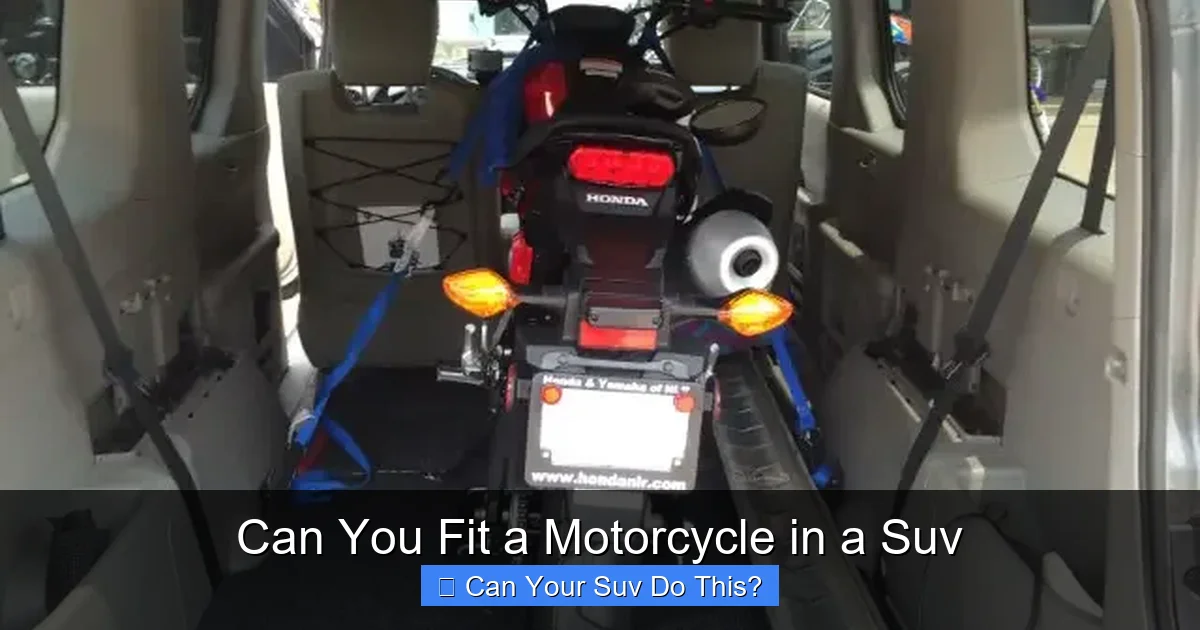
Yes, you can fit a motorcycle in an SUV—but it depends on the bike size, SUV model, and preparation. With proper planning, tools, and safety measures, many SUVs can accommodate a motorcycle for transport, whether for weekend adventures or cross-country trips.
So, you’ve got a motorcycle—maybe it’s your weekend joyride, your daily commuter, or that vintage Harley you’ve been restoring. But now you need to get it from Point A to Point B without riding it. Maybe you’re moving, heading to a track day, or picking it up from a repair shop. The big question: Can you fit a motorcycle in a SUV?
The short answer? Yes—often, you can. But it’s not as simple as just opening the back door and rolling it in. It takes planning, the right tools, and a good understanding of both your vehicle and your bike. SUVs come in all shapes and sizes, from compact crossovers like the Honda CR-V to full-size beasts like the Toyota Sequoia. And motorcycles vary just as much—from lightweight scooters to heavy-duty touring bikes.
In this guide, we’ll walk you through everything you need to know about fitting a motorcycle inside an SUV. We’ll cover which SUVs work best, how to measure your bike and vehicle, the gear you’ll need, step-by-step loading tips, and even alternatives if your SUV just isn’t up to the task. Whether you’re a weekend warrior or a full-time rider, this guide will help you transport your bike safely and confidently.
Key Takeaways
- SUV size matters: Larger SUVs like the Ford Expedition or Chevrolet Suburban offer more cargo space and are better suited for motorcycle transport.
- Motorcycle dimensions are key: Smaller bikes like the Honda Grom or Kawasaki Ninja 400 are easier to fit than full-sized touring or cruiser models.
- Folding seats increase space: Rear and middle seats that fold flat create a longer, uninterrupted cargo area for loading.
- Ramps and tie-downs are essential: A sturdy ramp and high-quality ratchet straps ensure safe loading and secure transport.
- Weight distribution is critical: Improperly balanced loads can affect handling and safety—always center the bike and secure it tightly.
- Legal and safety considerations apply: Check local laws about transporting motorcycles inside vehicles and ensure windows are not obstructed.
- Alternative solutions exist: If your SUV can’t fit the bike, consider a trailer, roof rack, or professional transport service.
📑 Table of Contents
- Understanding SUV Cargo Space and Layout
- Motorcycle Size and Type Considerations
- Essential Gear for Loading and Transporting
- Step-by-Step Guide to Loading a Motorcycle into an SUV
- Safety, Legal, and Practical Considerations
- Alternative Transport Options
- Real-World Examples and Success Stories
- Conclusion
Understanding SUV Cargo Space and Layout
Not all SUVs are created equal when it comes to cargo space. Some are designed for passengers first, with limited room in the back. Others prioritize utility, offering expansive interiors perfect for hauling gear—or even a motorcycle.
To determine if your SUV can fit a motorcycle, start by measuring the cargo area. You’ll want to check three key dimensions: length, width, and height. Most motorcycles are between 7 and 9 feet long, 2.5 to 3.5 feet wide, and 3.5 to 4.5 feet tall—though this varies widely by model.
For example, a Honda Grom is only about 6.5 feet long and 2.5 feet wide, making it one of the easiest bikes to fit. On the other hand, a Harley-Davidson Road King can stretch over 9 feet and weigh over 800 pounds—definitely a challenge for most SUVs.
Now, let’s talk about SUV types. Compact SUVs like the Toyota RAV4 or Mazda CX-5 typically have around 30–40 cubic feet of cargo space behind the rear seats. That’s enough for groceries, luggage, or a few suitcases—but not much more. Even with the seats folded, you’re unlikely to fit anything longer than 6 feet.
Mid-size SUVs like the Ford Explorer or Hyundai Santa Fe offer more room—usually 40–60 cubic feet with seats up, and up to 80 cubic feet with them folded. These can sometimes accommodate smaller motorcycles, especially if you remove the front wheel or use a ramp.
Full-size SUVs are where things get interesting. Vehicles like the Chevrolet Tahoe, Ford Expedition, or Toyota Sequoia offer 100+ cubic feet of cargo space with all seats folded. These are your best bet for fitting a motorcycle inside. In fact, many owners have successfully loaded full-sized bikes into these models with room to spare.
Seat Configuration and Flexibility
One of the biggest factors in fitting a motorcycle is seat flexibility. SUVs with 60/40 or 40/20/40 split-folding rear seats allow you to create a longer, more open cargo area. Some even have third-row seats that fold flat into the floor, maximizing space.
For example, the Ford Expedition has a flat load floor with all seats folded, making it ideal for long items. The third row tucks away completely, and the second row folds nearly flat. This creates a cargo area over 8 feet long—plenty of room for most motorcycles.
Even some three-row SUVs like the Kia Telluride or Honda Pilot can work if you remove the third row (if possible) or fold it down. Just remember: the more seats you fold, the more space you gain—but also the fewer passengers you can carry.
Measuring Your SUV’s Cargo Area
Before you even think about loading your bike, measure your SUV’s cargo space. Here’s how:
– Use a tape measure to check the length from the back of the front seats (or rear seats if folded) to the tailgate.
– Measure the width at the narrowest point—usually between the wheel wells.
– Check the height from the floor to the roof, especially if your bike has tall handlebars or a windshield.
Write these numbers down and compare them to your motorcycle’s dimensions. You can usually find these in the owner’s manual or on the manufacturer’s website.
Pro tip: Add a few extra inches to your measurements for safety. You’ll need room to maneuver the bike in and out, and you don’t want to scrape the paint or damage the interior.
Motorcycle Size and Type Considerations
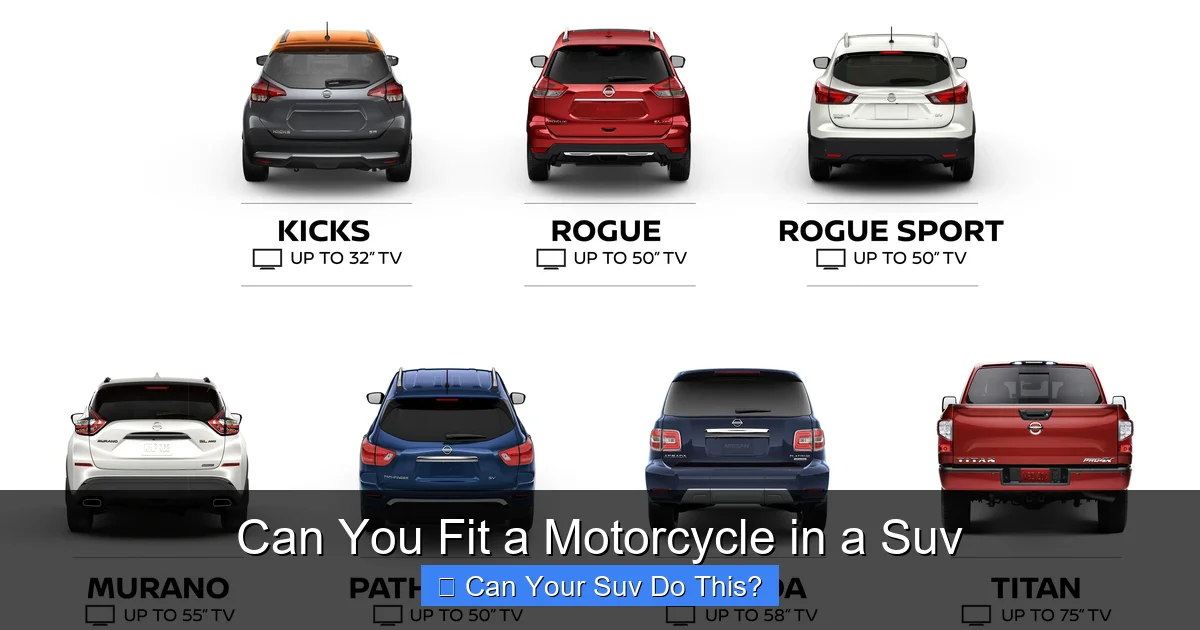
Visual guide about Can You Fit a Motorcycle in a Suv
Image source: gottabemobile.com
Not all motorcycles are built the same—and that makes a huge difference when trying to fit one inside an SUV. Let’s break it down by category.
Small and Lightweight Bikes
These are your best friends when it comes to SUV transport. Bikes like the Honda Grom, Kawasaki Z125, or Yamaha YZF-R125 are under 7 feet long and weigh less than 300 pounds. They’re narrow, easy to handle, and often fit comfortably in mid-size SUVs—even with the rear seats up.
For example, a Grom can easily slide into a Toyota Highlander with the rear seats folded. You might even be able to close the tailgate, though it’s safer to leave it open and secure the bike with straps.
These bikes are also great for first-time transporters. Their light weight makes loading easier, and their compact size reduces the risk of damage.
Standard and Sport Bikes
Mid-sized motorcycles like the Yamaha MT-07, Kawasaki Ninja 650, or Honda CB500X are more common and slightly larger. They typically range from 7.5 to 8.5 feet in length and weigh 400–500 pounds.
These can fit in many full-size SUVs, especially with the rear seats folded. However, you’ll likely need a ramp and some muscle to load them. The handlebars may stick out, so you’ll need to angle the bike or remove the front wheel (more on that later).
Sport bikes with low handlebars and rear-set footpegs can be trickier to load, as they sit lower to the ground. You might need a longer ramp or a helper to guide the front wheel.
Cruisers and Touring Bikes
Now we’re entering challenging territory. Cruisers like the Harley-Davidson Street Glide or Indian Chief can be over 9 feet long and weigh 700–900 pounds. Touring bikes like the BMW R 1250 RT or Honda Gold Wing are even larger, with big fairings, saddlebags, and windshields.
These bikes are rarely practical to fit inside an SUV—unless you have a massive vehicle like a Suburban or Expedition Max. Even then, you’ll likely need to remove the front wheel, lower the suspension (if adjustable), and use a heavy-duty ramp.
And let’s be honest: loading a 900-pound bike into an SUV is no small feat. It requires strength, coordination, and the right equipment. If you’re not confident, consider a trailer or professional transport.
Adventure and Dual-Sport Bikes
Bikes like the BMW GS series, KTM Adventure, or Honda Africa Twin are built for off-road and long-distance travel. They’re tall, wide, and often have high handlebars and large fuel tanks.
While they’re not the longest bikes, their height and width can make them difficult to fit. The handlebars may hit the roof, and the wide mirrors can catch on the door frame.
However, some adventure bikes have adjustable suspensions that can be lowered for transport. Removing the mirrors or folding them in can also help. And because they’re designed for rugged use, they’re often more durable during loading.
Essential Gear for Loading and Transporting
You can’t just shove a motorcycle into an SUV and hope for the best. You need the right tools to do it safely and efficiently. Here’s what you’ll need:
Motorcycle Ramp
A sturdy ramp is non-negotiable. Look for one that’s at least 6–8 feet long, with a weight capacity higher than your bike. Aluminum ramps are lightweight and durable, while steel ramps are heavier but often more affordable.
Make sure the ramp has a non-slip surface and secure attachment points. Some ramps come with hooks or straps to attach to the SUV’s tow hitch or bumper.
Avoid using homemade ramps—they’re unsafe and can collapse under weight. Always test the ramp before loading.
Tie-Down Straps and Anchors
You’ll need at least four high-quality ratchet straps to secure the bike. Look for straps with a minimum 1,500-pound working load limit. Soft loops or handlebar straps help protect your bike’s finish.
Attach the straps to solid anchor points in the SUV—like the cargo tie-down hooks or seat belt anchors. Never strap to plastic trim or weak points.
Tighten the straps evenly to keep the bike upright and prevent shifting. The front wheel should be chocked or braced to prevent rolling.
Wheel Chocks and Braces
A front wheel chock keeps the bike stable during loading and transport. You can buy a portable chock or make one from wood or rubber.
Some people use a piece of 2×4 or a small block to wedge the front tire. Just make sure it’s secure and won’t move.
For extra stability, consider a motorcycle stand or center stand that fits inside the SUV. This keeps the bike upright without needing to lean it against the wall.
Protective Materials
Protect both your bike and your SUV’s interior. Use moving blankets, foam padding, or old towels to cover the cargo area floor and walls.
This prevents scratches, dents, and oil stains. It also reduces noise and vibration during transit.
If your bike has a full fairing or delicate parts, wrap them in bubble wrap or soft cloth.
Tools for Disassembly (Optional)
In some cases, you might need to remove parts to fit the bike. Common modifications include:
– Removing the front wheel (requires a stand and axle spacer)
– Folding or removing mirrors
– Lowering the suspension (if adjustable)
– Detaching the windshield (if quick-release)
Always reassemble carefully and check torque specs before riding.
Step-by-Step Guide to Loading a Motorcycle into an SUV
Now that you’ve got the gear and measurements, let’s walk through the loading process. Safety is key—take your time and don’t rush.
Step 1: Prepare the SUV
Clear out the cargo area completely. Remove any loose items that could shift or get damaged.
Fold down the rear seats to create a flat, open space. If you have a third row, fold it down too.
Place protective materials on the floor and walls. Set up your ramp securely, ensuring it’s level and anchored.
Step 2: Position the Bike
Stand the motorcycle upright on level ground, facing the ramp. Make sure the fuel valve is closed (if applicable) and the bike is in neutral.
If you’re removing the front wheel, do it now and place the wheel inside the SUV.
Step 3: Load the Bike
With a helper (recommended), slowly roll the bike up the ramp. One person should guide the front wheel, the other should stabilize the rear.
Keep the bike straight and avoid sudden movements. If the ramp is steep, go slowly and use the engine to assist (if running).
Once the bike is inside, lower it gently onto the cargo floor. Use a stand or chock to keep it upright.
Step 4: Secure the Bike
Attach the tie-down straps to the handlebars or frame (not the forks). Pull them tight, but don’t over-tighten—this can damage suspension.
Use a second set of straps on the rear wheel or frame to prevent shifting.
Check that the bike is centered and balanced. The weight should be evenly distributed.
Step 5: Final Checks
Close the tailgate if possible. If it doesn’t close, secure it with a bungee cord or strap—but never drive with an open tailgate unless it’s safe and legal.
Double-check all straps and anchors. Make sure nothing is loose or rubbing.
Take a short test drive to ensure the bike doesn’t move. Listen for rattling or shifting.
Safety, Legal, and Practical Considerations
Transporting a motorcycle inside an SUV isn’t just about fitting it—it’s about doing it safely and legally.
Weight Distribution and Handling
A heavy bike in the back can affect your SUV’s handling, especially during braking and cornering. The center of gravity shifts, making the vehicle feel top-heavy.
To minimize this, place the bike as far forward as possible—near the rear seats. This keeps the weight closer to the center of the vehicle.
Avoid overloading the SUV. Check your owner’s manual for the maximum cargo weight. Most SUVs can handle 1,000–1,500 pounds, but it varies.
Legal and Visibility Issues
In many states, it’s illegal to transport a motorcycle inside a vehicle if it obstructs the driver’s view. If the bike blocks the rear window, you may need to install a backup camera or use side mirrors only.
Some jurisdictions require the bike to be fully enclosed or secured in a specific way. Check local laws before hitting the road.
Also, ensure the bike doesn’t leak fuel or oil. Use a drip pan or absorbent mat if needed.
Insurance and Liability
Your auto insurance may not cover damage to the motorcycle during transport. Check your policy or consider adding coverage.
If you’re transporting someone else’s bike, get written permission and confirm liability terms.
Alternative Transport Options
If your SUV just can’t handle the bike, don’t worry—there are other ways to move it.
Motorcycle Trailers
A small trailer hitched to your SUV is one of the easiest and safest options. Trailers like the Kendal or Aluma MC12 can carry most bikes and are easy to load.
They’re especially useful for heavy or large motorcycles. Just make sure your SUV can tow the combined weight.
Roof Racks (Rare but Possible)
Some companies make roof-mounted motorcycle carriers, but they’re uncommon and require a strong roof rack. They’re best for lightweight bikes and short trips.
Professional Transport Services
For long distances or valuable bikes, consider hiring a motorcycle transport company. They use enclosed trucks and have the experience to handle delicate loads.
It’s more expensive, but it’s stress-free and secure.
Pickup Trucks
If you have access to a pickup truck, it’s often the best option. The open bed makes loading easy, and you can use a ramp and straps without worrying about interior damage.
Even a small truck like a Toyota Tacoma can handle most motorcycles.
Real-World Examples and Success Stories
Let’s look at a few real examples of people who’ve successfully fit motorcycles in their SUVs.
– A Honda Grom in a Toyota RAV4: With the rear seats folded, the owner loaded the bike in under 10 minutes using a 6-foot ramp and two straps. The tailgate closed with an inch to spare.
– A Kawasaki Ninja 400 in a Ford Explorer: The owner removed the front wheel and used a portable chock. The bike fit diagonally with room for gear.
– A Harley-Davidson Street 750 in a Chevrolet Suburban: With all seats folded, the bike fit lengthwise. The owner used a 8-foot ramp and four heavy-duty straps.
These stories show that with the right preparation, it’s definitely possible.
Conclusion
So, can you fit a motorcycle in a SUV? The answer is a resounding yes—if you plan ahead and use the right tools. While not every SUV can handle every bike, many combinations work with a little creativity and effort.
Start by measuring your vehicle and motorcycle. Choose the right gear—ramp, straps, chocks—and take your time during loading. Prioritize safety, balance, and legal compliance.
And if your SUV just isn’t up to the task, don’t sweat it. Trailers, trucks, and professional services are all great alternatives.
Whether you’re heading to the track, moving across the country, or just picking up a new ride, knowing how to transport your motorcycle safely is a valuable skill. With this guide, you’re ready to hit the road—with your bike in tow.
Frequently Asked Questions
Can you fit a full-size motorcycle in a mid-size SUV?
It’s unlikely unless you remove parts like the front wheel or fold the bike. Most mid-size SUVs lack the length and space for full-size bikes like Harleys or Gold Wings. A full-size SUV is a better option.
Do I need to remove the front wheel to fit a motorcycle in an SUV?
Not always, but it helps. Removing the front wheel reduces the bike’s length by 1–2 feet, making it easier to fit in tighter spaces. Use a stand to keep the bike upright.
Is it safe to transport a motorcycle inside an SUV?
Yes, if done correctly. Use proper straps, chocks, and protective materials. Secure the bike tightly and check local laws about visibility and cargo securement.
What’s the best SUV for transporting a motorcycle?
Full-size SUVs like the Ford Expedition, Chevrolet Suburban, or Toyota Sequoia are ideal. They offer over 100 cubic feet of cargo space and flat load floors.
Can I drive with the tailgate open while transporting a motorcycle?
Only if it’s safe and legal. In many states, an open tailgate is allowed if the cargo doesn’t obstruct the view. Use caution and check local regulations.
How do I prevent my motorcycle from moving during transport?
Use at least four ratchet straps attached to solid anchor points. Add a front wheel chock and center the bike in the cargo area. Test drive and recheck straps.