

Yes, you can fit a recliner in an SUV—but it depends on the model, recliner size, and how you pack it. With smart planning, folding seats, and proper measurements, many SUVs can accommodate even large recliners for moving or delivery.
So, you’ve just bought that perfect recliner—plush, cozy, and exactly what your living room was missing. But now comes the real challenge: how on earth are you going to get it home? If you drive an SUV, you might be wondering, “Can you fit a recliner in an SUV?” The short answer is: yes, often you can. But the long answer involves a mix of planning, measuring, and maybe a little creativity.
SUVs are known for their versatility. They’re built to handle everything from grocery runs to weekend camping trips, and yes, even furniture hauling. But not all SUVs are created equal when it comes to cargo space. A compact SUV like a Honda CR-V might struggle with a large power recliner, while a full-size SUV like a Toyota Sequoia could swallow it whole—almost literally. The key is understanding your vehicle’s capabilities and the recliner’s dimensions.
In this guide, we’ll walk you through everything you need to know about fitting a recliner in an SUV. From measuring your cargo space to tips for safe loading, we’ll cover the practical steps that turn a daunting task into a doable one. Whether you’re moving, buying secondhand furniture, or helping a friend relocate, this information will save you time, stress, and possibly a trip to the chiropractor.
Key Takeaways
- SUV size matters: Larger SUVs like the Ford Expedition or Chevrolet Suburban offer more cargo space, making recliner transport easier.
- Measure before you move: Always check both the recliner’s dimensions and your SUV’s cargo area to avoid surprises.
- Fold down rear seats: Most SUVs allow you to fold down rear seats to create a flat loading surface for bulky items.
- Disassemble if possible: Removing the backrest or legs can make a recliner more compact and easier to load.
- Use protective gear: Blankets, straps, and corner guards prevent damage to both the recliner and your vehicle’s interior.
- Consider delivery options: For heavy or oversized recliners, professional delivery may be safer and more convenient.
- Practice loading techniques: Angling the recliner diagonally or using a ramp can help you get it in without straining yourself.
📑 Table of Contents
Why People Want to Fit a Recliner in an SUV
Let’s be honest—recliners aren’t exactly easy to transport. They’re bulky, heavy, and often awkwardly shaped. Unlike a flat-pack bookshelf or a rolled-up rug, a recliner doesn’t compress or fold down neatly. That’s why so many people turn to their SUVs when they need to move one.
One of the most common scenarios is buying a recliner from a local store that doesn’t offer delivery. Maybe you found a great deal at a furniture outlet or scored a gently used model from a neighbor. If you don’t have a truck or van, your SUV might be the only option. Another situation is moving homes. If you’re relocating and don’t want to pay for professional movers just for one piece of furniture, loading it into your SUV yourself can save hundreds of dollars.
Then there’s the “just because I can” factor. SUVs are built for adventure and utility. Many owners take pride in using their vehicle for more than just commuting. Hauling a recliner? That’s a badge of honor in the DIY world.
But beyond convenience, there’s also the matter of cost. Renting a truck for a few hours can cost $50–$100, not including fuel and mileage. If you already own an SUV with decent cargo space, using it makes financial sense. Plus, you avoid the hassle of coordinating pickup times and returning the rental.
Understanding SUV Cargo Space
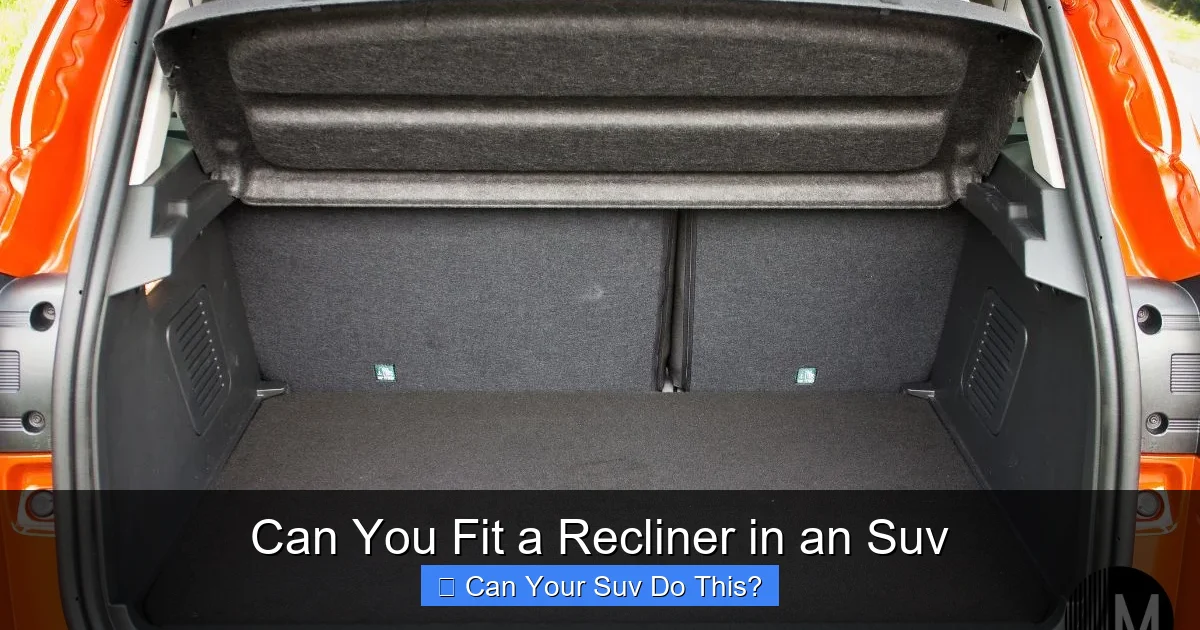
Visual guide about Can You Fit a Recliner in an Suv
Image source: measuringstuff.com
Before you even think about loading that recliner, you need to understand your SUV’s cargo capacity. Not all SUVs are built the same, and assuming yours can handle a recliner without checking could lead to frustration—or worse, damage to your vehicle or the furniture.
SUVs come in three main size categories: compact, midsize, and full-size. Compact SUVs like the Nissan Rogue or Subaru Forester offer around 30–35 cubic feet of cargo space behind the rear seats. That might be enough for a small recliner, especially if you fold down the back seats. Midsize SUVs like the Toyota Highlander or Ford Explorer provide 40–50 cubic feet, giving you more flexibility. Full-size SUVs such as the Chevrolet Tahoe or GMC Yukon can offer 60–90 cubic feet, making them ideal for larger furniture pieces.
But cubic footage isn’t the only factor. You also need to consider the shape of the cargo area. Some SUVs have a wide, flat floor, while others have wheel wells or uneven surfaces that can make loading bulky items tricky. The height of the cargo opening matters too. A low bumper and wide liftgate make it easier to slide in heavy items without lifting them too high.
Another important feature is the ability to fold down rear seats. Most modern SUVs have 60/40 or 40/20/40 split-folding rear seats, allowing you to create a longer, flatter loading surface. Some even have third-row seats that fold flat, giving you a massive cargo area—perfect for a recliner.
Measuring Your SUV’s Cargo Area
To determine if your SUV can fit a recliner, start by measuring the cargo space. Grab a tape measure and check three key dimensions: length (from the back of the front seats to the liftgate), width (between the wheel wells), and height (from the floor to the ceiling).
For example, a 2023 Toyota RAV4 has a cargo length of about 70 inches with the rear seats folded, a width of 41 inches between the wheel wells, and a height of around 30 inches. That’s enough for a standard recliner, but not a large oversized model.
Compare these measurements to the recliner’s dimensions, which you can usually find on the product label or manufacturer’s website. Don’t forget to account for the recliner’s depth when fully extended—some models can stretch out to 60 inches or more.
Real-World Examples
Let’s look at a few real-world examples. A La-Z-Boy classic recliner measures approximately 38” W x 40” D x 42” H. In a Honda CR-V, you’d need to fold down the rear seats and angle the recliner diagonally to fit it. It’s tight, but doable.
In a Ford Explorer, with 43.7 cubic feet behind the second row and up to 87.8 cubic feet with both rear rows folded, you’ve got plenty of room. You could even lay the recliner flat on its back and slide it in easily.
For a large power recliner like the Ashley Yandel, which measures 42” W x 42” D x 43” H, you’d want a full-size SUV. A Chevrolet Suburban with 93.9 cubic feet of cargo space can handle it with ease—especially if you remove the third-row seats.
Types of Recliners and Their Dimensions
Not all recliners are created equal. The type of recliner you’re trying to transport will greatly affect whether it fits in your SUV. Let’s break down the most common types and their typical dimensions.
Wall-Hugger Recliners
These are designed to save space by reclining forward instead of backward. They’re ideal for small rooms and often more compact. A typical wall-hugger recliner measures around 32” W x 36” D x 40” H. Because they don’t extend far behind the seatback, they’re easier to fit into tighter spaces—even in compact SUVs.
Traditional Recliners
The classic recliner that leans back and extends a footrest. These are bulkier, usually measuring 36–40” in width, 38–42” in depth, and 40–44” in height. When fully reclined, the depth can increase by 12–18 inches, making them harder to transport.
Power Recliners
These use motors to recline and often include features like USB ports, massage, and heat. They tend to be heavier and larger, with dimensions similar to traditional recliners but with added weight (often 100–150 lbs). The motor mechanism can also make them less flexible when trying to angle or tilt during loading.
Oversized or Executive Recliners
Designed for comfort and luxury, these can be massive—up to 44” wide and 46” deep. They’re best suited for full-size SUVs or trucks. Trying to fit one into a compact SUV is usually a no-go unless you’re willing to disassemble it.
Rocker Recliners
These combine reclining with a rocking motion. They’re similar in size to traditional recliners but have a curved base that adds to their footprint. The rocking mechanism can make them harder to secure during transport.
How to Prepare the Recliner for Transport
Once you’ve confirmed your SUV can handle the recliner, it’s time to prepare it for the journey. A little prep work can make loading easier and prevent damage.
Disassemble If Possible
Some recliners can be partially disassembled. Check the manual or look for removable parts like the backrest, footrest, or legs. For example, many La-Z-Boy models allow you to remove the back by unscrewing a few bolts. This can reduce the recliner’s height by 10–15 inches, making it much easier to load.
If you’re not sure how to disassemble it, call the manufacturer or check online tutorials. Never force parts apart—this can damage the frame or mechanisms.
Protect the Recliner
Even if your SUV has carpeted floors, you’ll want to protect both the recliner and your vehicle. Use moving blankets, bubble wrap, or old comforters to cover the fabric or leather. Pay special attention to corners and edges, which are prone to scuffing.
Secure the blankets with packing tape or straps, but avoid taping directly to the recliner’s surface. For leather recliners, use a soft cloth barrier to prevent scratches.
Secure the Recliner in the SUV
Once loaded, you need to keep the recliner from shifting during transit. Use ratchet straps or bungee cords to anchor it to the SUV’s tie-down points—usually found in the cargo floor or along the sides. Never rely solely on the recliner’s weight to keep it in place.
If the recliner is lying on its side or back, place it against the front seats or a wall of the cargo area to prevent sliding. For extra stability, fill gaps with pillows, boxes, or other soft items.
Loading Techniques and Tips
Loading a recliner into an SUV isn’t just about strength—it’s about strategy. Here are some proven techniques to make the process smoother.
Use a Ramp or Board
If your SUV has a high bumper, use a loading ramp or a sturdy board to create a gentle incline. This reduces the lifting height and makes it easier to slide the recliner in. A piece of plywood or a commercial ramp works well.
Angle the Recliner Diagonally
Instead of trying to push the recliner straight in, angle it so the front corner enters first. This takes advantage of the diagonal space in the cargo area, which is often longer than the straight length.
Get Help
Recliners are heavy—often 80–150 lbs. Even if you’re strong, lifting one alone can lead to injury. Ask a friend or family member to help. Use proper lifting techniques: bend your knees, keep your back straight, and lift with your legs.
Use Furniture Sliders
Place furniture sliders under the recliner’s legs or base to reduce friction. This makes it easier to slide the recliner across the driveway and into the SUV.
Test the Fit First
Before lifting the recliner, do a dry run. Use a cardboard box or another large object of similar size to test how it fits in your SUV. This helps you plan the best angle and position.
Alternative Solutions If It Doesn’t Fit
Sometimes, despite your best efforts, the recliner just won’t fit. Don’t panic—there are alternatives.
Rent a Truck or Van
For one-time moves, renting a pickup truck or cargo van is a smart choice. Companies like U-Haul, Budget, and Home Depot offer affordable hourly or daily rentals. A small truck can cost as little as $20 for a few hours.
Use a Trailer
If you have a hitch on your SUV, consider renting a small utility trailer. These are inexpensive and can handle heavy, bulky items with ease. Just make sure your SUV is rated to tow the trailer’s weight.
Professional Delivery
Many furniture stores offer delivery for a fee—usually $50–$150. While it costs more than DIY, it’s stress-free and ensures the recliner arrives safely. Some stores even include assembly.
Disassemble and Reassemble
If the recliner is too large to fit whole, consider full disassembly. Some models can be taken apart into three or four pieces. Reassemble it at home using the manual. This is more work, but it’s often the only way to transport large recliners in smaller vehicles.
Safety Considerations
Transporting a recliner isn’t just about fitting it—it’s about doing it safely.
Protect Your Back
Lifting heavy objects incorrectly is a leading cause of back injury. Always lift with your legs, not your back. Use a dolly or hand truck if possible. If the recliner is too bulky for a dolly, get help.
Secure the Load
An unsecured recliner can become a dangerous projectile in a sudden stop or crash. Always use straps to anchor it. Check the straps during long trips to ensure they haven’t loosened.
Check Visibility
Make sure the recliner doesn’t block your rearview mirror or side mirrors. If it does, adjust your seating or use a backup camera. Never drive with obstructed vision.
Follow Weight Limits
Every SUV has a maximum cargo weight limit—usually listed in the owner’s manual. Overloading can damage your suspension, brakes, and tires. A typical recliner weighs 100–150 lbs, so it’s unlikely to exceed the limit, but it’s good to check.
Final Thoughts
So, can you fit a recliner in an SUV? The answer is a resounding “yes”—for most people, most of the time. With the right preparation, measurements, and techniques, your SUV can handle this common but challenging task.
It starts with knowing your vehicle’s cargo dimensions and the recliner’s size. From there, it’s about smart loading: folding seats, angling the recliner, using protective gear, and securing it properly. And if all else fails, don’t hesitate to rent a truck or opt for delivery.
Remember, the goal isn’t just to get the recliner home—it’s to do it safely, without damaging your vehicle or injuring yourself. Take your time, ask for help when needed, and celebrate the small victory when that cozy chair finally makes it to your living room.
Your SUV is more than just a ride—it’s a tool, a helper, and sometimes, a furniture mover. And now, you know exactly how to make it work for you.
Frequently Asked Questions
Can a recliner fit in a compact SUV like a Honda CR-V?
Yes, but it depends on the recliner size. A small or wall-hugger recliner may fit if you fold down the rear seats and angle it diagonally. Larger recliners will likely not fit without disassembly.
Do I need to disassemble the recliner to fit it in an SUV?
Not always, but it helps. Removing the backrest or legs can reduce the recliner’s height and make it easier to load. Check the manual to see if your model allows disassembly.
What’s the best way to protect my SUV’s interior when hauling a recliner?
Use moving blankets, cardboard, or old comforters to cover the cargo area. Secure the recliner with straps to prevent sliding, and avoid placing it directly on carpet without protection.
Can I drive with a recliner blocking my rearview mirror?
No. Always ensure your view is unobstructed. If the recliner blocks your mirror, reposition it or use a backup camera. Safety should always come first.
Is it better to rent a truck or use my SUV for a recliner?
It depends on your SUV’s size and the recliner’s dimensions. If your SUV can handle it safely, it’s cheaper. But for large or heavy recliners, renting a truck may be easier and safer.
How much does a typical recliner weigh?
Most recliners weigh between 80 and 150 pounds. Power recliners and oversized models tend to be on the heavier end, so plan accordingly when lifting and securing.