

Yes, you can fit furniture in an SUV—but success depends on the vehicle size, furniture type, and smart packing. From folding seats to roof racks, many SUVs offer surprising cargo flexibility for moving couches, tables, and even mattresses with the right preparation.
So, you’ve just scored a gently used armchair from a garage sale, or maybe you’re finally upgrading that wobbly IKEA bookshelf to something sturdier. You load up your SUV, heart full of hope—only to realize halfway home that your new treasure might not actually fit. Sound familiar? You’re not alone. Many people assume that because an SUV is “big,” it can handle any piece of furniture. But the truth is, fitting furniture in an SUV isn’t just about size—it’s about strategy, preparation, and knowing your vehicle’s limits.
The good news? Most modern SUVs are designed with versatility in mind. Whether you drive a compact crossover like a Honda CR-V or a full-size beast like a Toyota Sequoia, there’s usually a way to make it work. But it helps to understand how much space you really have, what tricks your SUV offers (like fold-flat seats or hidden compartments), and how to pack smart. In this guide, we’ll walk you through everything you need to know about hauling furniture in your SUV—from measuring your cargo area to choosing the right vehicle for the job. By the end, you’ll be ready to tackle that weekend move, furniture run, or spontaneous decor upgrade with confidence.
Key Takeaways
- Most midsize and large SUVs can fit small to medium furniture pieces like chairs, coffee tables, or nightstands with rear seats folded down.
- Full-size SUVs like the Chevrolet Suburban or Ford Expedition excel at hauling large items such as sofas, dressers, or queen-sized mattresses.
- Folding or removable rear seats dramatically increase cargo space, making it easier to slide in longer or bulkier furniture.
- Roof racks and cargo carriers expand your options for transporting lightweight items like outdoor furniture or flat-pack boxes.
- Always measure both your furniture and your SUV’s cargo area before loading to avoid frustration or damage.
- Use moving blankets, straps, and padding to protect both your furniture and your vehicle’s interior during transport.
- Consider renting a trailer or van for oversized items if your SUV isn’t up to the task—safety and efficiency matter most.
📑 Table of Contents
- Understanding Your SUV’s Cargo Capacity
- Types of Furniture and How They Fit
- Maximizing Space: Tips and Tricks
- Which SUVs Are Best for Moving Furniture?
- Safety and Protection: Don’t Skip These Steps
- When to Call in the Pros (or Rent a Truck)
- Real-Life Examples: What People Actually Haul
- Final Thoughts: Yes, You Can Fit Furniture in an SUV
Understanding Your SUV’s Cargo Capacity
Before you even think about loading that sectional sofa, it’s crucial to know exactly what your SUV can handle. Cargo capacity isn’t just about how much stuff you can shove in the back—it’s about volume, weight limits, and accessibility. Most automakers list cargo volume in cubic feet, but these numbers can be misleading if you don’t understand how they’re measured.
For example, a compact SUV like the Mazda CX-5 offers around 30 cubic feet of space behind the rear seats and up to 59 cubic feet with the seats folded. That sounds decent—until you try to fit a loveseat that’s 6 feet long. Meanwhile, a full-size SUV like the Ford Expedition boasts over 100 cubic feet with all seats down, making it a true furniture-moving machine. But even within the same class, dimensions vary. A Toyota RAV4 and a Subaru Forester might both be “compact,” but the RAV4’s slightly longer wheelbase gives it an edge for longer items.
Measuring Your SUV’s Interior Dimensions
Don’t rely solely on manufacturer specs. Get out your tape measure and check the actual usable space. Start by measuring:
– The length from the back of the front seats to the tailgate (with rear seats up or down).
– The width between the wheel wells (this is often the narrowest point).
– The height from the floor to the roof liner (especially important for tall items like bookshelves).
Pro tip: Take photos of your cargo area from different angles and note these measurements in your phone. That way, when you’re at the furniture store, you can quickly compare dimensions on the spot.
Weight Limits Matter Too
While most furniture isn’t extremely heavy, some pieces—like solid wood dressers or metal-framed couches—can easily exceed 100 pounds. Your SUV has a maximum payload capacity (usually listed in the owner’s manual), which includes passengers, cargo, and any accessories. Overloading can damage suspension, reduce braking efficiency, and even void your warranty. As a rule of thumb, keep total cargo under 80% of your vehicle’s payload limit to stay safe.
Types of Furniture and How They Fit
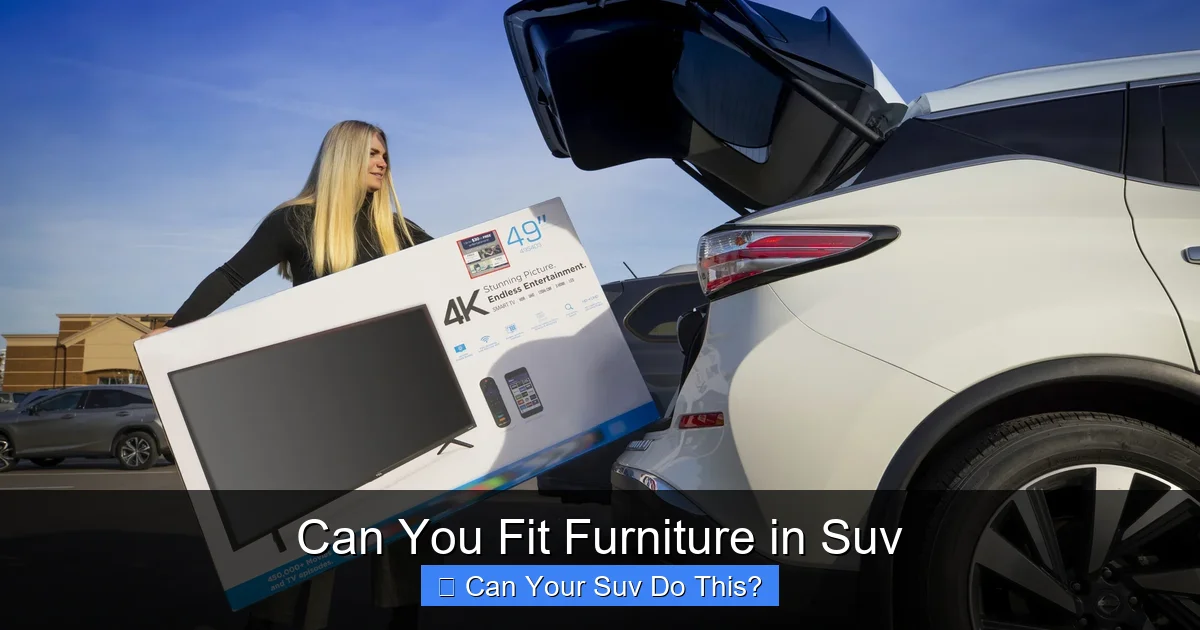
Visual guide about Can You Fit Furniture in Suv
Image source: gottabemobile.com
Not all furniture is created equal when it comes to SUV transport. Some pieces slide in easily, while others require creative maneuvering—or a different vehicle altogether. Let’s break down common furniture types and how they typically fare in an SUV.
Chairs and Ottomans
These are usually the easiest to transport. Most dining chairs, accent chairs, and ottomans can fit upright or laid flat in the back of a midsize SUV. If the chair has arms, try rotating it so the arms face the sides of the vehicle to maximize space. For extra protection, wrap the legs in moving blankets or bubble wrap.
Tables (Coffee, End, Dining)
Small coffee tables? No problem. Large dining tables? Trickier. Rectangular tables longer than 5 feet may need to be angled diagonally or placed vertically along the side of the cargo area. Round tables can be laid flat if they’re under 48 inches in diameter. Always remove glass tops and secure them separately—glass doesn’t bend, and neither should your nerves.
Sofas and Sectionals
This is where things get interesting. A standard loveseat (around 5–6 feet long) might fit in a larger SUV like a Hyundai Palisade or Kia Telluride if you fold down the rear seats and tilt the front seats forward. But a full-size sofa (7+ feet) or a sectional? You’ll likely need a full-size SUV or a trailer. Some people remove legs or cushions to reduce bulk—just label everything so reassembly isn’t a nightmare.
Mattresses and Box Springs
Ah, the classic furniture-moving challenge. A twin or full mattress can often be rolled and secured in a midsize SUV, especially if you fold the front passenger seat down. Queen and king mattresses are tougher—they usually require a full-size SUV with all seats folded or removed. Never tie a mattress to the roof unless it’s in a proper cargo bag; wind resistance can turn it into a sail.
Bookshelves and Dressers
Tall, narrow items like bookshelves can be transported upright if your SUV has enough height. Lay them on their back if needed, but always pad the corners to prevent scratches. Dressers are heavy and bulky—consider disassembling drawers and removing hardware. If the dresser is wider than your SUV’s interior, you may need to angle it or use a trailer.
Maximizing Space: Tips and Tricks
Even if your SUV isn’t the biggest on the block, a few smart techniques can dramatically increase your hauling potential. Think of it like a game of Tetris—every inch counts.
Fold and Remove Seats
Most SUVs have 60/40 or 40/20/40 split-folding rear seats. Fold down one side to create an L-shaped cargo area perfect for long, narrow items. Some models, like the Honda Pilot or Toyota Highlander, offer third-row seats that fold flat into the floor, giving you a completely level load surface. If you’re moving something really large, check if your rear seats are removable—some older SUVs allow this, though it’s less common today.
Use the Front Passenger Seat
Don’t overlook the front seat! Folding it forward (or removing the headrest) can create a tunnel effect, allowing you to slide long items like tables or mirrors deeper into the cabin. Just make sure nothing blocks the driver’s view or interferes with airbags.
Roof Racks and Cargo Carriers
For lightweight, flat-pack furniture (think IKEA shelves or outdoor patio sets), a roof rack can be a lifesaver. Soft-sided cargo bags are affordable and weather-resistant, while hard-shell carriers offer more protection. Never put heavy or awkwardly shaped items on the roof—they can shift in wind or rain, creating a hazard.
Pack Strategically
Start with the heaviest, flattest items at the bottom (like dresser bases or table tops). Fill gaps with softer items like cushions or folded blankets. Use bungee cords or ratchet straps to secure everything—nothing should shift while driving. And always cover sharp edges with cardboard or foam to protect your upholstery.
Consider a Hitch-Mounted Cargo Carrier
If your SUV has a trailer hitch, a hitch-mounted cargo platform can hold bulky but lightweight items like lawn furniture or boxed furniture kits. These carriers sit behind the vehicle, freeing up interior space. Just remember: they reduce rear visibility and can affect handling, so drive cautiously.
Which SUVs Are Best for Moving Furniture?
Not all SUVs are equal when it comes to furniture hauling. If you’re in the market for a new vehicle—or just curious about how your current ride stacks up—here’s a quick breakdown by category.
Compact SUVs (e.g., Honda CR-V, Toyota RAV4)
Great for small furniture runs. With rear seats folded, they can handle chairs, small tables, and rolled mattresses. Limited for larger items, but perfect for weekend errands or apartment upgrades.
Midsize SUVs (e.g., Ford Explorer, Hyundai Santa Fe)
A sweet spot for most homeowners. These offer 70–85 cubic feet of cargo space and often have third-row seating that folds away. Ideal for loveseats, dressers, and queen mattresses with some disassembly.
Full-Size SUVs (e.g., Chevrolet Tahoe, Ford Expedition, Toyota Sequoia)
The champions of furniture transport. With over 100 cubic feet of space and robust payload capacities, these can handle full sofas, king mattresses, and even small appliances. Many come with power-folding seats and built-in tie-downs for easy loading.
Three-Row SUVs with Flat Floors (e.g., Kia Telluride, Subaru Ascent)
Look for models where the third row folds completely flat. This creates a seamless, level surface perfect for sliding in large items without tilting or angling.
Safety and Protection: Don’t Skip These Steps
Transporting furniture isn’t just about fitting it in—it’s about getting it there safely, without damaging your SUV or your new purchase.
Protect Your Vehicle’s Interior
Use moving blankets, old comforters, or rubber mats to cover seats and floors. Plastic drop cloths work well for wet or dirty items. Avoid dragging furniture across carpet—lift, don’t slide.
Secure Everything
Loose items can become dangerous projectiles in a sudden stop. Use ratchet straps anchored to your SUV’s built-in tie-down hooks (usually found in the cargo floor). Never rely solely on bungee cords—they can snap under tension.
Check Local Laws
Some states have regulations about how far cargo can extend beyond your vehicle. If your furniture sticks out the back, use red flags or reflective tape and drive during daylight hours. Never obstruct license plates or lights.
Drive Cautiously
Extra weight and altered aerodynamics affect handling. Take turns slowly, increase following distance, and avoid sudden maneuvers. If you’re carrying tall items, watch for low bridges or garage doors.
When to Call in the Pros (or Rent a Truck)
Sometimes, despite your best efforts, your SUV just isn’t up to the task. And that’s okay! Knowing when to ask for help is a sign of smart planning, not failure.
If you’re moving a large sectional, a grand piano, or multiple heavy pieces, consider renting a moving truck or hiring a professional delivery service. Many furniture stores offer white-glove delivery for a fee—it’s often cheaper than damaging your SUV or injuring yourself. For occasional big moves, truck rental companies like U-Haul or Home Depot offer affordable daily rates with ramps and dollies included.
Alternatively, borrow a friend’s pickup truck or van. Even a small cargo van can handle what most SUVs can’t. And if you’re a frequent mover, investing in a small utility trailer might be worth it.
Real-Life Examples: What People Actually Haul
Still unsure? Here are a few real-world scenarios based on common furniture moves:
– **Sarah’s IKEA Haul**: She drove her Subaru Outback to pick up a KALLAX shelf unit, two POÄNG chairs, and a LACK table. By folding the rear seats and laying the shelf on its side, everything fit with room to spare. She used cardboard corners to protect the chairs and secured everything with straps.
– **Mike’s Mattress Move**: Needing to transport a queen mattress from a friend’s house, Mike used his Ford Explorer. He folded the third row, tilted the second row forward, and rolled the mattress diagonally across the cargo area. A moving blanket prevented scuffs, and he drove slowly to avoid wind lift.
– **Lisa’s Sofa Struggle**: Lisa tried to fit a 7-foot fabric sofa into her Nissan Rogue. After two failed attempts, she rented a U-Haul trailer for $29. The sofa arrived intact, and her Rogue stayed scratch-free.
These stories show that preparation and flexibility make all the difference.
Final Thoughts: Yes, You Can Fit Furniture in an SUV
The short answer? Absolutely. With the right approach, most SUVs can handle a surprising amount of furniture. It starts with knowing your vehicle’s dimensions and capabilities, choosing the right packing strategy, and never skipping safety steps. Whether you’re hauling a single chair or a full bedroom set, a little planning goes a long way.
Remember: it’s not just about whether it fits—it’s about whether it fits *safely* and *securely*. Measure twice, pack smart, and when in doubt, don’t force it. Your SUV is versatile, but it’s not magic (yet). With these tips in your back pocket, you’ll be ready for your next furniture adventure—no truck required.
Frequently Asked Questions
Can I fit a queen mattress in my SUV?
Yes, many midsize and full-size SUVs can fit a queen mattress if the rear seats are folded down. You may need to angle it diagonally or fold the front passenger seat forward. Always secure it with straps and protect it with a moving blanket.
Will a sofa fit in a Honda CR-V?
A small loveseat might fit in a Honda CR-V with the rear seats folded, but a full-size sofa likely won’t. The CR-V’s cargo area is around 76 cubic feet max—better suited for chairs, tables, or rolled mattresses.
Do I need a roof rack to transport furniture?
Not always. Roof racks are best for lightweight, flat items like outdoor furniture or boxed kits. Heavy or bulky furniture should stay inside the vehicle for safety and stability.
Can I remove my SUV’s rear seats to fit more furniture?
Some older SUVs allow rear seat removal, but most modern models have permanently anchored or fold-flat seats. Check your owner’s manual—tampering with airbag systems or seat mounts can be dangerous and illegal.
What’s the safest way to tie down furniture in an SUV?
Use ratchet straps anchored to factory-installed tie-down hooks in the cargo floor. Avoid bungee cords for heavy items. Cover sharp edges and ensure nothing blocks the driver’s view or airbag deployment zones.
Should I rent a truck instead of using my SUV?
If you’re moving large, heavy, or multiple furniture pieces, renting a truck or trailer is often safer and more efficient. It protects your SUV and reduces the risk of injury or damage.