
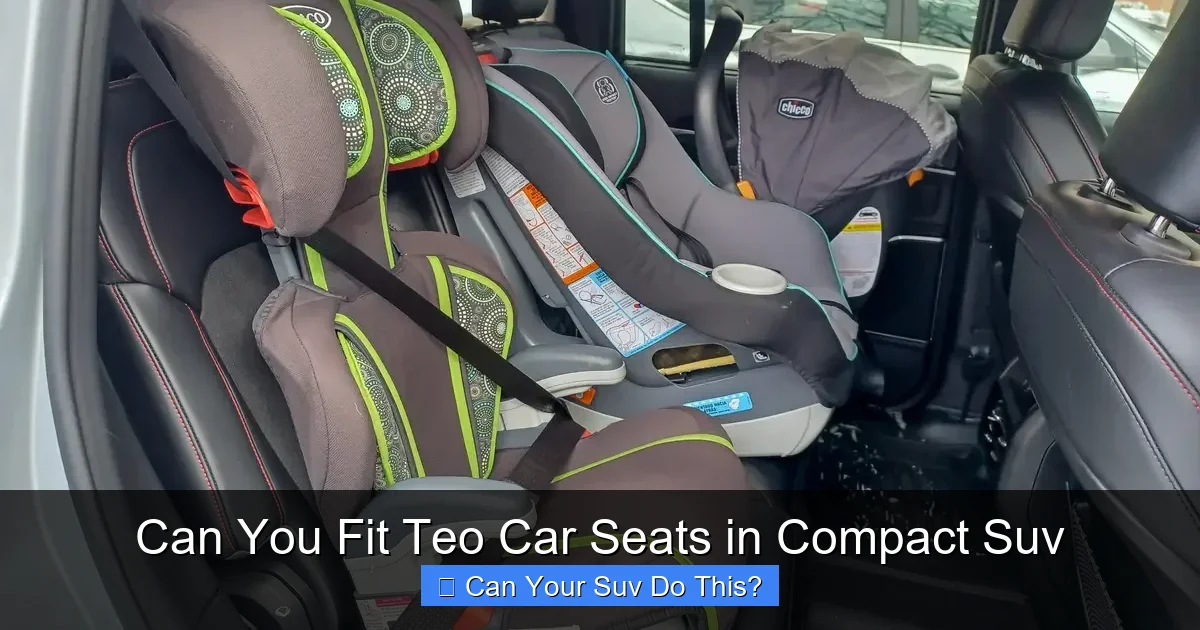
Yes, you can fit two car seats in most compact SUVs—but it depends on the vehicle, seat types, and installation method. With smart planning and the right gear, even smaller crossovers can handle twins or siblings safely and comfortably.
So, you’ve got a growing family—or maybe you’re just preparing for the possibility—and you’re driving a compact SUV. You love its fuel efficiency, easy parking, and all-wheel-drive capability. But now comes the real test: can you fit two car seats in a compact SUV?
The short answer? Yes—most of the time. But it’s not as simple as just plopping them in the back. Compact SUVs, while versatile, have limited rear-seat real estate. Between legroom, seat width, seatbelt routing, and the angle of the backrest, fitting two car seats requires strategy, research, and sometimes a bit of trial and error.
In this guide, we’ll walk you through everything you need to know about squeezing two car seats into your compact SUV—without compromising safety or sanity. Whether you’re expecting twins, have a toddler and a newborn, or are just future-proofing your ride, we’ve got practical tips, real-world examples, and expert-backed advice to help you make it work.
Let’s dive in.
Key Takeaways
- Most compact SUVs can accommodate two car seats: Models like the Honda CR-V, Toyota RAV4, and Subaru Forester offer enough rear width and legroom for dual installations.
- Car seat type matters: Rear-facing infant seats take up more space than forward-facing or booster seats—plan accordingly.
- Installation method is crucial: LATCH systems simplify setup, but seatbelt installation may offer better fit in tighter spaces.
- Measure before you buy: Always test-fit seats in your vehicle; don’t rely solely on manufacturer claims.
- Consider slim-profile car seats: Brands like Clek, Diono, and Graco offer narrow designs built for tight back seats.
- Third-row access may be compromised: In 7-seater compact SUVs, installing two seats often blocks easy access to the third row.
- Safety first, comfort second: Never sacrifice proper installation or harness tightness just to make seats “fit.”
📑 Table of Contents
Understanding Compact SUV Dimensions
Before you even think about car seats, it’s important to understand what “compact SUV” really means—and how those dimensions impact your ability to fit two seats.
Compact SUVs typically fall between 175 and 185 inches in length, with a wheelbase of around 104 to 110 inches. They’re smaller than midsize SUVs like the Ford Explorer or Hyundai Santa Fe, but larger than subcompacts like the Nissan Kicks or Mazda CX-3. Popular models include the Honda CR-V, Toyota RAV4, Subaru Forester, Ford Escape, and Hyundai Tucson.
While these vehicles are designed for families, their rear seats aren’t always as spacious as you’d hope. Rear legroom usually ranges from 37 to 40 inches, and shoulder room is typically between 54 and 57 inches. That might sound like plenty—but when you factor in the depth of a rear-facing infant seat (which can extend 12–16 inches into the cabin), things get tight fast.
Key Measurements to Check
When evaluating whether your compact SUV can handle two car seats, focus on three critical dimensions:
- Rear seat width: Measure the flat, usable width between the door panels—not just the cushion. You’ll need at least 52–54 inches to comfortably fit two standard-width car seats (most are 17–19 inches wide).
- Rear legroom: This affects how far forward a rear-facing seat will push into the front passenger area. If you’ve got less than 38 inches, tall front passengers may feel cramped.
- Seatback angle: Some compact SUVs have more upright rear seats, which can make installing rear-facing seats trickier. A slight recline helps, but too much can interfere with proper installation.
For example, the 2023 Honda CR-V offers 40.4 inches of rear legroom and 56.6 inches of shoulder room—making it one of the most car-seat-friendly compact SUVs on the market. In contrast, the 2023 Ford Escape has only 37.5 inches of legroom and 55.0 inches of shoulder room, which can make dual installations more challenging, especially with larger seats.
Types of Car Seats and Their Space Requirements
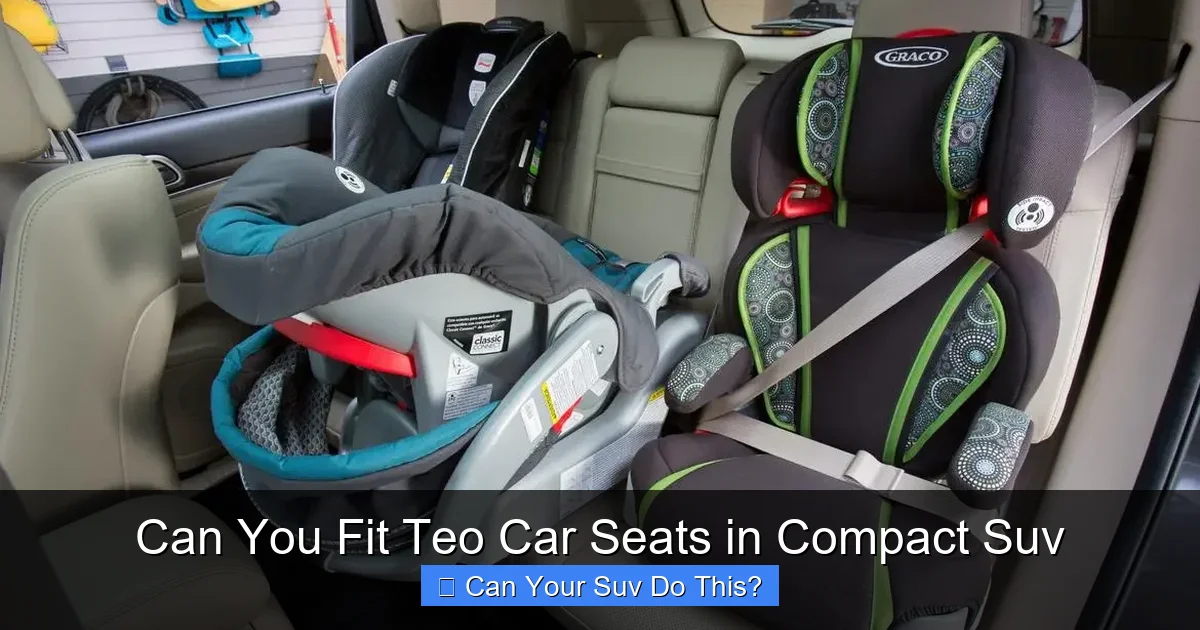
Visual guide about Can You Fit Teo Car Seats in Compact Suv
Image source: cstatic-images.com
Not all car seats are created equal—and their size and shape play a huge role in whether two will fit in your compact SUV.
Car seats fall into three main categories: rear-facing infant seats, forward-facing convertible or combination seats, and booster seats. Each has different space demands.
Rear-Facing Infant Seats
These are the bulkiest and most space-consuming. Designed for newborns and infants up to 22–35 pounds (depending on the model), they often have a deep base and a high back. When installed rear-facing, the seat extends significantly into the cabin—sometimes up to 16 inches from the backrest.
Because of this, rear-facing seats are the biggest challenge in compact SUVs. If you’ve got two infants or a newborn and a toddler still in a rear-facing seat, you’ll need extra room. Some parents solve this by installing one seat behind the driver and one behind the front passenger, but that can make access difficult and may not work if the front seats are pushed too far back.
Forward-Facing Seats
Once your child outgrows the rear-facing stage (usually around age 2 or when they reach the height/weight limit), you can switch to forward-facing. These seats take up less depth since they don’t extend into the front seats. Most are 17–19 inches wide and sit more upright, making them easier to fit side by side.
However, forward-facing seats still require proper harness routing and tether anchors. In compact SUVs, the tether anchors are usually located on the back of the rear seats or the cargo floor—make sure they’re accessible and not blocked by the seat itself.
Booster Seats
Booster seats are the most compact option. They don’t have a back (in the case of backless boosters) or are much slimmer than full car seats. If your kids are old enough for boosters (typically 4’9” tall and 8–12 years old), you’ll have the easiest time fitting two in a compact SUV.
That said, even boosters need proper seatbelt fit. The lap belt should lie low across the hips, and the shoulder belt should cross the center of the chest—not the neck or arm. In tighter SUVs, overlapping seatbelts or misaligned anchors can make this tricky.
Top Compact SUVs for Two Car Seats
Not all compact SUVs are equally car-seat-friendly. Some are designed with families in mind, offering wider rear seats, more legroom, and thoughtful features like flat floorboards and easy-access LATCH anchors.
Here are five of the best compact SUVs for fitting two car seats:
1. Honda CR-V
The CR-V consistently ranks as one of the most family-friendly compact SUVs. With 40.4 inches of rear legroom and 56.6 inches of shoulder room, it offers ample space for two car seats—even rear-facing ones. The rear seat is wide and flat, and the LATCH anchors are easy to access. Plus, the doors open wide, making installation a breeze.
Parents love the CR-V for its reliability, fuel efficiency, and spacious interior. It’s a top pick for families with young children.
2. Toyota RAV4
The RAV4 is another standout, with 40.0 inches of rear legroom and 57.4 inches of shoulder room. Its rear seat is slightly more contoured than the CR-V’s, but still wide enough for two seats. The LATCH system is well-designed, and the cargo area is generous—perfect for strollers and diaper bags.
One note: the RAV4 Hybrid has a slightly higher floor due to the battery pack, which can affect rear legroom for taller passengers. But for car seat installations, it’s still a solid choice.
3. Subaru Forester
The Forester shines with its boxy design, which maximizes interior space. It offers 39.3 inches of rear legroom and 57.2 inches of shoulder room—among the best in the class. The rear doors are large, and the seatbacks fold flat, making it easy to load bulky items.
Subaru’s standard all-wheel drive is a bonus for families in snowy or rainy climates. The Forester also has excellent crash test ratings, adding peace of mind.
4. Mazda CX-5
The CX-5 is more compact than the others on this list, with 39.6 inches of rear legroom and 55.5 inches of shoulder room. While it’s narrower, many parents still manage to fit two car seats—especially if they use slim-profile models.
Mazda’s focus on driving dynamics means the CX-5 feels more like a sport sedan than an SUV, but it still offers solid safety features and a premium interior. Just be prepared for a tighter fit.
5. Hyundai Tucson
The 2023 Tucson got a major redesign, adding more rear legroom (38.7 inches) and a wider cabin. It’s not as spacious as the CR-V or RAV4, but it’s still capable of handling two car seats—especially forward-facing or booster seats.
Hyundai’s warranty and tech features (like wireless Apple CarPlay) make it a strong value. The LATCH anchors are easy to find, and the rear seat is relatively flat.
Tips for Installing Two Car Seats in a Compact SUV
Even in the most spacious compact SUV, installing two car seats requires planning. Here are expert-backed tips to make it work:
1. Choose Slim-Profile Car Seats
Not all car seats are equally wide. Some brands design their seats to be narrower without sacrificing safety. Look for models labeled “slim” or “compact.”
For example:
- Clek Fllo: Only 18.5 inches wide, with a sleek, modern design. Great for tight spaces.
- Diono Radian 3RXT: 17 inches wide and folds flat for storage. Ideal for compact SUVs.
- Graco 4Ever DLX: 18.5 inches wide and converts from rear-facing to booster, saving you from buying multiple seats.
Avoid bulky, oversized seats like the Britax Boulevard or Chicco NextFit if space is tight.
2. Use the LATCH System Wisely
The LATCH (Lower Anchors and Tethers for Children) system makes installation easier and more secure. Most compact SUVs have lower anchors in the outboard rear seats—perfect for side installations.
However, LATCH has weight limits. Once your child plus the seat exceeds 65 pounds, you must switch to seatbelt installation. In tight spaces, seatbelt installation can actually provide a tighter fit, as you’re not limited by anchor placement.
3. Install Rear-Facing Seats First
If you have a mix of rear-facing and forward-facing seats, install the rear-facing one first. These take up the most space and are harder to adjust once the other seat is in place.
Position the rear-facing seat behind the front passenger seat if possible—this gives the driver more legroom and makes it easier to reach the child.
4. Angle the Seats Slightly
Some parents find that angling the seats slightly inward (toward the center console) helps them fit better. This works especially well with convertible seats that have a more flexible base.
Just make sure the seats don’t interfere with each other’s harness systems or the vehicle’s seatbelts.
5. Test Before You Commit
Never buy a car seat without testing it in your vehicle. Visit a local store, bring your SUV, and try installing the seat. Many retailers allow returns if the seat doesn’t fit.
You can also check resources like the Car Seat Lady website or the NHTSA’s car seat finder tool for compatibility tips.
Common Challenges and How to Solve Them
Even with the best planning, you might run into issues. Here are common problems and practical solutions:
Seats Overlap or Touch
If the car seats are touching or overlapping, it can make buckling difficult and may affect safety. To fix this:
- Use narrower seats.
- Install one seat slightly forward or back to create a gap.
- Consider a center seat installation (if your SUV has a flat middle seat and LATCH anchors).
Note: The center seat is often the safest spot in a crash, but not all compact SUVs support LATCH in the middle. Check your owner’s manual.
Front Passenger Legroom Is Cramped
Rear-facing seats can push into the front passenger space. If the front passenger is tall, they may feel squeezed.
Solutions:
- Ask the front passenger to slide their seat forward slightly—most people can tolerate a small reduction in legroom.
- Use a seat with a compact rear-facing profile, like the Nuna PIPA or UPPAbaby MESA.
- Consider switching one child to forward-facing earlier (only if they meet height/weight requirements).
Difficulty Accessing the Third Row
In 7-seater compact SUVs like the Kia Sorento or Hyundai Santa Fe Sport, installing two car seats in the second row can block access to the third row.
Workarounds:
- Install one seat in the second row and one in the third row (if the third row has LATCH and is safe for children).
- Use a seat that folds flat or has a removable base for easier access.
- Limit third-row use to older kids or adults who can climb in easily.
Seatbelt or LATCH Interference
Sometimes, the seatbelts or LATCH straps from one seat interfere with the other. This can make buckling difficult or unsafe.
Fix it by:
- Routing straps away from the adjacent seat.
- Using seatbelt locks or LATCH connectors to secure straps out of the way.
- Choosing seats with rear-facing bases that don’t extend as far forward.
Safety First: Never Compromise on Installation
No matter how tight the space, safety must always come first. A poorly installed car seat is dangerous—even if it “fits.”
Follow these safety rules:
- Harness tightness: You shouldn’t be able to pinch any webbing at the shoulder. The harness should lie flat and snug.
- Recline angle: Rear-facing seats need a 30–45 degree recline. Use the built-in angle indicator or pool noodles/towels (only if recommended by the manufacturer).
- No aftermarket products: Avoid seat protectors, strap covers, or inserts not approved by the car seat manufacturer. They can interfere with crash performance.
- Professional inspection: Visit a certified Child Passenger Safety Technician (CPST) for a free car seat check. Find one at NHTSA’s website.
Remember: a seat that doesn’t fit properly isn’t safe—even if it’s the most expensive model on the market.
Final Thoughts: Yes, You Can Do It
So, can you fit two car seats in a compact SUV? Absolutely—with the right vehicle, the right seats, and the right approach.
Compact SUVs are more capable than ever, and many are designed with families in mind. By choosing a model with generous rear dimensions, opting for slim-profile car seats, and installing them correctly, you can safely transport two children without upgrading to a larger vehicle.
It might take a little extra effort—measuring, testing, adjusting—but the payoff is worth it. You get the fuel efficiency, maneuverability, and affordability of a compact SUV, plus the peace of mind that your kids are safe and secure.
And as your children grow, your needs will change. What starts as two rear-facing infant seats can evolve into forward-facing seats, then boosters, and eventually—fingers crossed—your teen driving themselves.
Until then, your compact SUV is more than up to the task.
Frequently Asked Questions
Can you fit two rear-facing car seats in a compact SUV?
Yes, many compact SUVs can accommodate two rear-facing car seats, especially models like the Honda CR-V or Subaru Forester. However, front passenger legroom may be limited, and you’ll need to choose seats with a compact rear-facing profile.
What’s the narrowest car seat for a compact SUV?
The Diono Radian 3RXT (17 inches wide) and Clek Fllo (18.5 inches) are among the narrowest on the market. Both are designed for tight spaces and offer excellent safety ratings.
Is the center seat safe for a car seat in a compact SUV?
The center seat is often the safest spot in a crash, but only if your SUV has LATCH anchors there. Check your owner’s manual—many compact SUVs only have LATCH in the outboard positions.
Can I install two car seats in a Ford Escape?
Yes, but it’s tighter than in larger models. The Escape has 37.5 inches of rear legroom, so rear-facing seats may push into the front. Use slim seats and consider forward-facing for older toddlers.
Do I need to use LATCH or seatbelt installation?
Either is safe if done correctly. LATCH is easier, but seatbelt installation may offer a tighter fit in compact spaces. Switch to seatbelt once your child plus seat exceeds 65 pounds.
What if the car seats don’t fit side by side?
Try installing one seat slightly forward or back, or consider a center installation if supported. If all else fails, you may need to upgrade to a midsize SUV or minivan for more space.