

Yes, you can have a SUV uptake without active cancer. SUV (Standardized Uptake Value) is a measurement used in PET scans to show how much radioactive tracer is absorbed by tissues. While high SUV values often raise concern for cancer, they can also appear due to inflammation, infection, or even normal body processes.
Key Takeaways
- SUV uptake is not cancer-specific: A high SUV value on a PET scan doesn’t automatically mean cancer—it can result from benign conditions like infection or inflammation.
- Inflammation mimics cancer on scans: Conditions such as pneumonia, sarcoidosis, or post-surgical healing can cause increased glucose metabolism, leading to elevated SUV readings.
- Normal tissues can show uptake: Organs like the brain, heart, liver, and muscles naturally absorb more tracer due to high metabolic activity, which is completely normal.
- Timing and preparation matter: Factors like recent exercise, blood sugar levels, and fasting status can influence SUV values and lead to misleading results.
- Clinical context is crucial: Doctors interpret SUV values alongside medical history, symptoms, and other imaging tests—never in isolation.
- False positives are common: Up to 30% of PET scan findings may be false positives, emphasizing the need for follow-up testing.
- SUV is a tool, not a diagnosis: It helps guide further investigation but should never be used alone to confirm or rule out cancer.
📑 Table of Contents
- Can You Have a SUV Uptake Without Active Cancer?
- What Is SUV Uptake and How Is It Measured?
- Common Non-Cancer Causes of SUV Uptake
- Why False Positives Happen and How Common Are They?
- How to Prepare for a PET Scan to Minimize Misleading SUV Results
- What to Do If Your PET Scan Shows High SUV Uptake
- The Bottom Line: SUV Uptake Is Not a Cancer Diagnosis
Can You Have a SUV Uptake Without Active Cancer?
When you hear the term “SUV uptake,” your mind might immediately jump to cancer. After all, PET scans—positron emission tomography—are commonly used to detect tumors, monitor treatment, and check for recurrence. But here’s a surprising truth: you can absolutely have a SUV uptake without active cancer.
SUV stands for Standardized Uptake Value. It’s a number that tells doctors how much of a radioactive tracer (usually a form of sugar called FDG) is being absorbed by different parts of your body. Cancer cells tend to be very hungry for sugar because they grow and divide quickly. So, when they light up on a PET scan with a high SUV value, it raises a red flag.
But here’s the twist: not all bright spots on a PET scan are cancer. In fact, many non-cancerous conditions can cause increased SUV uptake. From infections to inflammation, from normal organ function to recent injuries—your body has plenty of reasons to absorb more tracer that have nothing to do with tumors.
This article dives deep into what SUV uptake really means, why it’s not a cancer-only signal, and how doctors make sense of it all. Whether you’re a patient trying to understand your scan results or just curious about medical imaging, this guide will help you separate fact from fear.
What Is SUV Uptake and How Is It Measured?
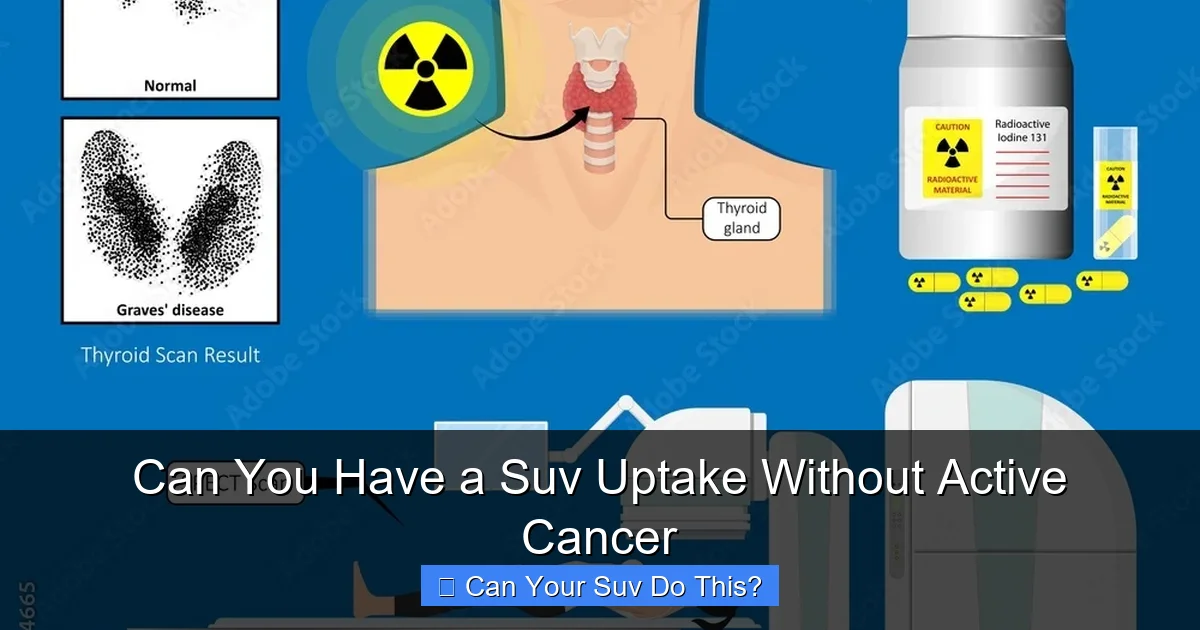
Visual guide about Can You Have a Suv Uptake Without Active Cancer
Image source: as1.ftcdn.net
Before we explore whether SUV uptake can occur without cancer, let’s break down what SUV actually is.
SUV, or Standardized Uptake Value, is a quantitative measure used in PET scans to compare how much of a radioactive tracer is taken up by a specific area of tissue relative to the average uptake in the entire body. The tracer most commonly used is fluorodeoxyglucose (FDG), a glucose analog tagged with a radioactive isotope (fluorine-18).
Here’s how it works: Before the scan, you’re injected with the FDG tracer. Since cancer cells metabolize glucose at a much higher rate than normal cells, they absorb more of the tracer. During the scan, a special camera detects the radiation emitted by the tracer and creates detailed images showing areas of high metabolic activity.
The SUV value is calculated using a formula that factors in the amount of tracer injected, your body weight (or body surface area), and the concentration of tracer in a specific region of interest (ROI). For example, an SUV of 2.5 means that the tissue in question is absorbing 2.5 times more tracer than the average tissue in your body.
Why Is SUV Important?
SUV values help doctors:
– Identify suspicious areas that may need further testing
– Monitor how well a tumor is responding to treatment
– Differentiate between active disease and scar tissue
– Assess the aggressiveness of a tumor (higher SUV often correlates with more aggressive cancer)
But here’s the key point: SUV is a measure of metabolic activity, not cancer itself. Just because a tissue is “hot” on a PET scan doesn’t mean it’s malignant. Many normal and benign processes also involve increased glucose metabolism.
Limitations of SUV Measurements
While SUV is a useful tool, it’s not perfect. Several factors can affect the accuracy of SUV readings:
– Blood glucose levels: High blood sugar can compete with FDG for uptake, leading to falsely low SUV values.
– Recent food intake: Eating before a scan can increase background uptake and skew results.
– Body composition: Obesity or muscle mass can influence how tracer is distributed.
– Scan timing: The time between injection and scanning affects tracer uptake.
– Technical factors: Scanner calibration, image reconstruction methods, and ROI placement can all impact SUV calculations.
Because of these variables, SUV values should always be interpreted with caution and in context.
Common Non-Cancer Causes of SUV Uptake
Now for the big question: What else—besides cancer—can cause a high SUV uptake?
The short answer: A lot. In fact, many benign conditions can mimic cancer on a PET scan. Let’s look at some of the most common culprits.
Infection and Inflammation
One of the most frequent causes of false-positive SUV uptake is infection or inflammation. When your body is fighting off an infection—like pneumonia, tuberculosis, or a dental abscess—immune cells such as macrophages and neutrophils rush to the site. These cells are highly metabolically active and gobble up glucose just like cancer cells do.
For example, a patient with a lung infection might show a bright spot on a PET scan that looks suspicious for lung cancer. But after antibiotics and a follow-up scan, the uptake disappears—confirming it was inflammation, not malignancy.
Similarly, chronic inflammatory conditions like sarcoidosis (a disease that causes granulomas in the lungs and lymph nodes) can produce multiple areas of high SUV uptake that resemble metastatic cancer.
Healing Tissues and Post-Surgical Changes
After surgery, injury, or radiation therapy, your body goes into repair mode. Healing tissues require extra energy, so they absorb more glucose. This can lead to increased SUV uptake in the affected area for weeks or even months after the procedure.
Imagine someone who had abdominal surgery six weeks ago. A follow-up PET scan might show elevated SUV in the surgical site. Without knowing the history, a radiologist might worry about tumor recurrence. But in reality, it’s just the body healing.
The same goes for radiation therapy. Tissues exposed to radiation can remain inflamed and metabolically active long after treatment ends, causing persistent SUV uptake that’s often mistaken for residual cancer.
Normal Physiological Uptake
Some organs naturally have high SUV values because they’re always working hard. These include:
– Brain: The brain uses about 20% of your body’s glucose, so it lights up brightly on PET scans.
– Heart: Cardiac muscle is highly metabolic, especially if you haven’t fasted properly before the scan.
– Liver and spleen: These organs process nutrients and detoxify the blood, leading to moderate SUV uptake.
– Muscles: If you exercised recently or were tense during the scan, your muscles may show increased uptake.
– Kidneys and bladder: The tracer is excreted through the urinary system, so these areas are always bright.
Even normal variations—like brown fat activation in cold environments—can cause SUV uptake in the neck and shoulders. This is especially common in children and young adults.
Benign Tumors and Cysts
Not all tumors are cancerous. Benign growths like thyroid nodules, adrenal adenomas, or fibroadenomas in the breast can also show increased SUV uptake. While they’re not dangerous, their metabolic activity can make them look suspicious on imaging.
For instance, a thyroid nodule with an SUV of 4.0 might raise concerns for thyroid cancer. But after a biopsy, it could turn out to be a harmless cyst or hyperplastic nodule.
Autoimmune and Granulomatous Diseases
Conditions like rheumatoid arthritis, lupus, or Crohn’s disease involve chronic immune activation. Immune cells infiltrate tissues and increase glucose metabolism, leading to SUV uptake in affected areas.
Sarcoidosis, as mentioned earlier, is a classic example. It causes non-caseating granulomas in the lungs, lymph nodes, and other organs. On PET scans, these granulomas can appear as multiple hot spots, mimicking lymphoma or metastatic cancer.
Why False Positives Happen and How Common Are They?
False positives—when a scan suggests cancer but none is present—are more common than you might think. Studies suggest that up to 30% of PET scan findings may be false positives, especially in areas prone to inflammation or infection.
Why Do False Positives Occur?
Several factors contribute to false-positive SUV uptake:
– Overlap in metabolic behavior: Cancer, infection, and inflammation all increase glucose metabolism, making them look similar on PET scans.
– Lack of specificity: FDG is not cancer-specific. It’s taken up by any cell with high glucose demand.
– Interpretation challenges: Radiologists must distinguish between benign and malignant patterns, which isn’t always easy.
– Patient factors: Recent illness, surgery, or medication use can alter tracer distribution.
Real-World Examples
Let’s look at a few real-life scenarios:
– A 55-year-old man with a history of smoking undergoes a PET scan for a lung nodule. The nodule has an SUV of 6.2—high enough to suggest cancer. But a biopsy reveals it’s a fungal infection (histoplasmosis), common in certain regions.
– A woman with breast cancer has a follow-up scan. A new hot spot appears in her liver. Further testing shows it’s a benign hemangioma, not metastasis.
– A patient with lymphoma in remission has a scan showing uptake in the thyroid. It turns out to be Hashimoto’s thyroiditis, an autoimmune condition.
These examples highlight why SUV alone can’t diagnose cancer.
How Doctors Reduce False Positives
To minimize misinterpretation, doctors use a combination of strategies:
– Clinical correlation: They review the patient’s symptoms, medical history, and lab results.
– Multimodal imaging: They combine PET with CT or MRI to see both function and structure.
– Follow-up scans: Benign uptake often resolves over time, while cancer persists or grows.
– Biopsy: When in doubt, a tissue sample provides a definitive answer.
How to Prepare for a PET Scan to Minimize Misleading SUV Results
If you’re scheduled for a PET scan, proper preparation can help ensure accurate SUV measurements and reduce the risk of false positives.
Fasting and Diet
You’ll typically be asked to fast for 4–6 hours before the scan. This helps stabilize blood sugar levels and ensures consistent tracer uptake. Avoid sugary drinks, gum, and candy, as they can spike glucose and affect results.
Hydration
Drink plenty of water before and after the scan. Staying hydrated helps flush out the tracer and reduces background uptake in the bladder.
Medications and Supplements
Tell your doctor about any medications or supplements you’re taking. Some drugs, like steroids or insulin, can influence glucose metabolism. You may need to adjust your dosage before the scan.
Exercise and Activity
Avoid strenuous exercise 24 hours before the scan. Physical activity increases muscle uptake of FDG, which can obscure results. Also, try to stay relaxed during the scan—tension can cause muscle uptake in the neck and shoulders.
Body Temperature
Cold environments can activate brown fat, leading to SUV uptake in the neck and upper chest. Wear warm clothing and avoid air conditioning before the scan.
Timing of the Scan
Make sure the scan is scheduled at the right time. For example, if you’ve recently had surgery or radiation, your doctor may delay the scan to allow healing and reduce inflammation-related uptake.
What to Do If Your PET Scan Shows High SUV Uptake
Receiving news of high SUV uptake can be alarming. But remember: it’s not a diagnosis—it’s a clue.
Stay Calm and Ask Questions
Don’t panic. Ask your doctor:
– What does this SUV value mean in my case?
– Could this be due to infection, inflammation, or healing?
– What other tests are needed?
Follow the Recommended Next Steps
Your doctor may recommend:
– A follow-up scan in 6–12 weeks to see if the uptake resolves
– Additional imaging (CT, MRI, or ultrasound)
– Blood tests to check for infection or inflammation
– A biopsy if the finding remains suspicious
Keep a Health Journal
Track your symptoms, recent illnesses, surgeries, or injuries. This information helps your medical team interpret the scan accurately.
Get a Second Opinion
If you’re unsure about the results, consider getting a second opinion from a radiologist or oncologist experienced in PET imaging.
The Bottom Line: SUV Uptake Is Not a Cancer Diagnosis
To sum it up: Yes, you can have a SUV uptake without active cancer. While PET scans are powerful tools for detecting cancer, they’re not perfect. Many benign conditions can cause increased SUV values, and interpreting them requires skill, experience, and clinical context.
SUV is a measure of metabolic activity—not malignancy. It’s a piece of the puzzle, not the whole picture. Doctors use it alongside other tests, your medical history, and physical exam findings to make informed decisions.
So if your scan shows a high SUV, don’t jump to conclusions. Work with your healthcare team to understand what it means for you. With the right follow-up, most false positives can be resolved, and true concerns can be addressed promptly.
Remember: medicine is complex, and imaging is just one part of the story. Stay informed, ask questions, and trust the process.
Frequently Asked Questions
Can a high SUV value mean I have cancer?
A high SUV value doesn’t automatically mean cancer. While it can indicate malignancy, it may also result from infection, inflammation, or normal metabolic activity. Further testing is usually needed to confirm the cause.
How accurate are PET scans in detecting cancer?
PET scans are highly sensitive but not 100% specific. They can detect small tumors and monitor treatment response, but false positives occur in up to 30% of cases due to benign conditions.
Can inflammation cause a positive PET scan?
Yes, inflammation is a common cause of false-positive PET scans. Conditions like pneumonia, sarcoidosis, or post-surgical healing can increase SUV uptake and mimic cancer.
What should I do if my PET scan shows unexpected uptake?
Don’t panic. Discuss the results with your doctor, who may recommend follow-up scans, additional imaging, or a biopsy to determine the cause.
Can normal organs show high SUV uptake?
Absolutely. The brain, heart, liver, muscles, and urinary system naturally have high metabolic activity and will show increased SUV uptake on PET scans.
How can I prepare for a PET scan to get accurate results?
Fast for 4–6 hours, avoid exercise, stay hydrated, and wear warm clothing. Inform your doctor about medications and recent health events to ensure proper interpretation.