
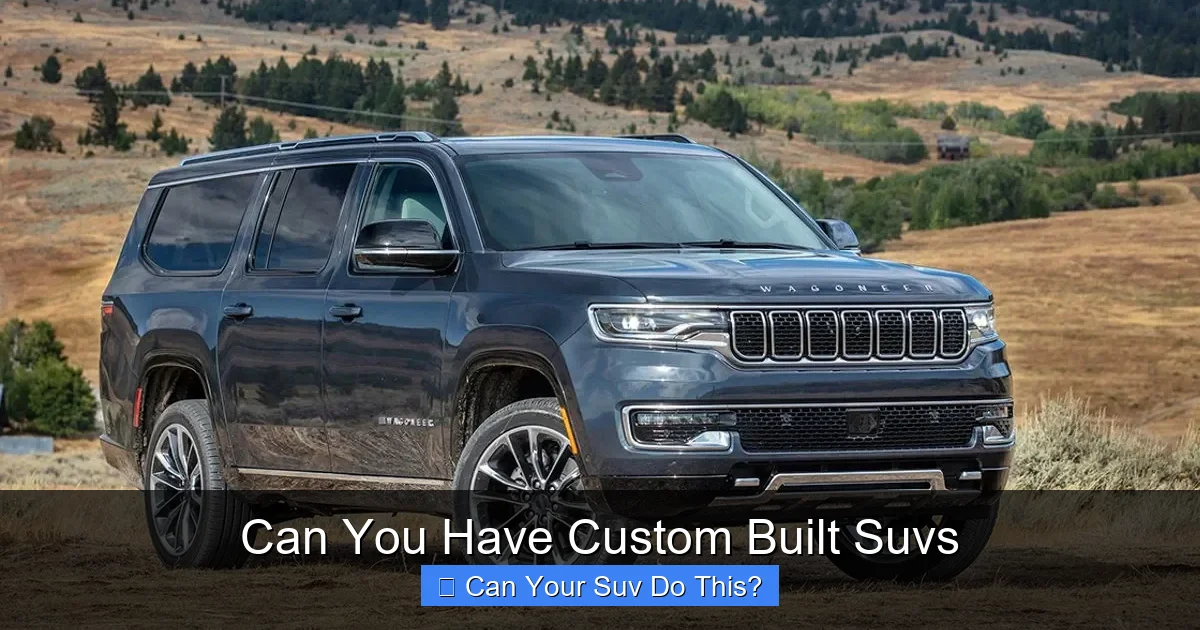
Absolutely—you can have custom built SUVs designed exactly how you want them. From rugged off-road beasts to luxury mobile offices, specialized manufacturers and aftermarket builders make it possible to create a one-of-a-kind vehicle that fits your needs, style, and adventures.
So, you’ve got a dream SUV in mind—one that’s not just another cookie-cutter model from the dealership lot. Maybe it’s a lifted Jeep with a rooftop tent, a stealthy blacked-out Bronco with custom leather seats, or a luxury SUV turned into a mobile office with Wi-Fi and a mini-fridge. The big question: *Can you have custom built SUVs?* The short answer? Yes—absolutely. And it’s more achievable than you might think.
Gone are the days when “custom” meant slapping on a spoiler and calling it a day. Today’s custom SUV market is thriving, fueled by passionate builders, innovative technology, and a growing demand for personalized vehicles. Whether you’re an off-road enthusiast, a luxury traveler, or someone who just wants a ride that truly reflects your personality, custom built SUVs are no longer reserved for the ultra-wealthy or Hollywood celebrities. With the right team, budget, and vision, you can drive away in a vehicle that’s 100% you.
But let’s be real—this isn’t just about aesthetics. Custom built SUVs are about function, performance, and freedom. They’re for people who refuse to compromise. Want a vehicle that can tackle mountain trails by day and host a dinner party by night? Done. Need a mobile command center for your business? Possible. Dream of a solar-powered overlanding rig that sleeps four? Yep, that exists too. The possibilities are limited only by your imagination—and your budget.
Key Takeaways
- Custom built SUVs are real and accessible: Multiple companies offer bespoke SUV builds, from mild upgrades to full ground-up customizations.
- You can tailor performance, comfort, and aesthetics: Choose everything from engine swaps and suspension lifts to custom interiors and paint jobs.
- Popular base models include Jeep Wrangler, Ford Bronco, and Land Rover Defender: These platforms are favorites among custom builders due to their ruggedness and modular design.
- Custom builds can serve unique purposes: Think mobile command centers, overlanding rigs, luxury campers, or even mobile salons and offices.
- Costs vary widely—from $50,000 to over $500,000: Budget depends on complexity, materials, and whether you start with a new or used vehicle.
- Legal and safety compliance is essential: Ensure your custom SUV meets DOT, EPA, and state regulations to avoid registration or insurance issues.
- Working with experienced builders ensures quality: Reputable shops provide warranties, documentation, and support long after delivery.
📑 Table of Contents
- What Does “Custom Built SUV” Really Mean?
- Popular Base Models for Custom SUV Builds
- Customization Options: What Can You Actually Change?
- Costs and Budgeting for a Custom Built SUV
- Legal and Safety Considerations
- How to Get Started with Your Custom Built SUV
- Real-World Examples of Custom Built SUVs
- Conclusion: Yes, You Can Have a Custom Built SUV
What Does “Custom Built SUV” Really Mean?
When we talk about custom built SUVs, we’re not just referring to minor cosmetic tweaks like new wheels or a custom paint job. A true custom build involves significant modifications—sometimes starting from the ground up—to create a vehicle that’s uniquely tailored to the owner’s needs and desires.
At its core, a custom built SUV is a vehicle that has been extensively modified beyond factory specifications. This could mean upgrading the engine for more power, installing a long-travel suspension for off-road capability, reconfiguring the interior for luxury or utility, or even integrating advanced technology like solar panels, satellite internet, or automated leveling systems.
Some custom builds start with a brand-new SUV straight from the manufacturer. Others begin with a used model that’s been stripped down and rebuilt. In many cases, the original vehicle is used as a “donor chassis”—providing the frame, drivetrain, and core components—while nearly everything else is customized.
Types of Custom Builds
Custom SUVs fall into several categories, each serving a different purpose:
– **Off-Road & Overlanding Builds:** These are designed for adventure. Think lifted suspensions, all-terrain tires, skid plates, winches, and rooftop tents. Popular base models include the Jeep Wrangler, Toyota 4Runner, and Ford Bronco.
– **Luxury & Executive Builds:** These focus on comfort, technology, and prestige. Custom interiors with premium leather, wood trim, massage seats, and advanced infotainment systems are common. Brands like Mercedes-Benz G-Class and Land Rover Defender are often used as starting points.
– **Utility & Commercial Builds:** These SUVs are transformed into mobile workspaces—think mobile clinics, food trucks, security vehicles, or mobile offices. They often include built-in power systems, storage solutions, and communication equipment.
– **Show & Concept Builds:** These are built for style and attention. Often seen at car shows, they feature wild paint jobs, custom lighting, exaggerated body kits, and one-of-a-kind interiors.
The Role of Aftermarket Builders
You don’t have to be a mechanic or engineer to get a custom built SUV. That’s where aftermarket builders come in. These are specialized companies—some small and boutique, others large and well-known—that take existing SUVs and transform them into custom masterpieces.
Companies like **Ringbrothers**, **Hennessey Performance**, **Safari Ltd**, and **Overland Vehicle Systems (OVS)** are renowned for their high-quality custom builds. They offer everything from performance packages to full turnkey vehicles. Some even allow you to customize online, choosing colors, materials, and features before placing your order.
For example, Hennessey offers the “VelociRaptor” based on the Ford F-150 Raptor—essentially a high-performance SUV with over 700 horsepower. Meanwhile, Safari Ltd specializes in overlanding builds, turning Toyota Land Cruisers into fully equipped adventure rigs with kitchens, beds, and water systems.
Popular Base Models for Custom SUV Builds
Visual guide about Can You Have Custom Built Suvs
Image source: ruffinocustomclosets.com
Not all SUVs are created equal when it comes to customization. Some platforms are more popular among builders because they’re durable, modular, and widely supported by the aftermarket community.
Jeep Wrangler (JL & JK)
The Jeep Wrangler is arguably the most customizable SUV on the market. Its body-on-frame design, removable doors and roof, and strong aftermarket support make it a favorite for off-road builds. Whether you want a mild lift with all-terrain tires or a full-blown rock-crawling monster with a V8 swap, the Wrangler can handle it.
Popular customizations include:
– 2-6 inch suspension lifts
– 35-40 inch tires
– Winches and recovery gear
– Custom bumpers and rock sliders
– LED light bars and fog lights
– Interior upgrades like custom seats and dash panels
Builders like **Jeep Creations** and **American Expedition Vehicles (AEV)** offer complete packages that turn a stock Wrangler into a trail-ready beast.
Ford Bronco (2021+)
The revival of the Ford Bronco has sparked a new wave of custom builds. With its retro styling, removable roof, and advanced 4×4 system, it’s a natural choice for overlanding and adventure builds.
Custom Bronco builds often include:
– Lift kits and upgraded shocks
– All-terrain or mud-terrain tires
– Roof racks and rooftop tents
– Custom paint and graphics
– Upgraded audio and navigation systems
Companies like **Ford Performance** and **Bronco Custom Works** offer official and third-party upgrade packages.
Land Rover Defender (New & Classic)
The new Defender (L663) combines modern tech with rugged capability, making it a prime candidate for luxury and expedition builds. Classic Defenders (like the Series III or Defender 90) are also popular for restomods—restored and modernized versions of vintage models.
Custom Defender builds may feature:
– Modern engine swaps (like a Tesla motor or LS V8)
– Upgraded suspension and braking systems
– Luxury interiors with heated seats and touchscreen dashboards
– Off-grid power systems (solar, lithium batteries)
– Camping conversions with pop-top roofs
Builders like **Twisted Automotive** and **ECD Automotive Design** specialize in high-end Defender customizations.
Toyota 4Runner & Land Cruiser
Known for their reliability and longevity, Toyota SUVs are staples in the overlanding community. The 4Runner, in particular, is a favorite for its rugged build and strong aftermarket support.
Custom 4Runner builds often include:
– Long-travel suspension systems
– Roof racks and cargo management
– Auxiliary fuel tanks
– Water and electrical systems for camping
– Custom bumpers and armor
Companies like **Icon Vehicle Dynamics** and **Old Man Emu** offer performance parts specifically designed for Toyota platforms.
Customization Options: What Can You Actually Change?
The beauty of custom built SUVs is the sheer range of options available. You’re not limited to what the factory offers—you can redefine nearly every aspect of the vehicle.
Performance Upgrades
Want more power? You can swap in a bigger engine, add a supercharger or turbo, or even go electric. Some builders are now offering EV conversions for classic SUVs, combining vintage style with zero-emission performance.
Other performance mods include:
– Upgraded exhaust systems
– High-flow air intakes
– Performance tuning (ECU remapping)
– Reinforced drivetrain components
– Upgraded brakes and cooling systems
For example, **Hennessey** offers a 1,000-horsepower version of the Ford Bronco, while **Electric Classic Cars** converts vintage Land Rovers into electric vehicles with modern range and reliability.
Suspension & Off-Road Capability
If you’re building for adventure, suspension is key. A proper lift kit, long-travel shocks, and reinforced control arms can transform a stock SUV into a capable off-roader.
Popular suspension upgrades:
– 2-4 inch lift kits (for mild off-roading)
– 6+ inch lifts with custom fabrication (for extreme terrain)
– Coilover shocks and bypass dampers
– Solid axles vs. independent front suspension (IFS) debates
– Skid plates and underbody protection
Builders often tailor the suspension to the intended use—rock crawling, desert running, or overlanding.
Interior Customization
The interior is where personal style really shines. You can go from basic cloth seats to a full luxury cabin with:
– Custom leather or Alcantara upholstery
– Wood or carbon fiber trim
– Heated and ventilated seats
– Massage functions and power adjustments
– Custom dashboards and center consoles
– Integrated refrigerators, coffee makers, or mini-bars
Some builders even add entertainment systems with large touchscreens, surround sound, and streaming capabilities.
Exterior Styling & Functionality
The outside of your SUV can be as unique as the inside. Options include:
– Custom paint jobs (matte, metallic, two-tone, or wraps)
– Body kits and fender flares
– LED light bars, rock lights, and ambient lighting
– Roof racks, ladder systems, and cargo boxes
– Winches, tow hooks, and recovery points
– Custom grilles and badging
For overlanding builds, functionality is key—think pop-top roofs, side awnings, and built-in kitchens.
Technology & Connectivity
Modern custom SUVs are packed with tech. You can integrate:
– Satellite internet and Wi-Fi hotspots
– GPS tracking and off-grid navigation
– Dash cams and 360-degree cameras
– Smart home integration (control lights, AC, etc.)
– Solar charging systems and lithium battery banks
– Remote start and climate control via smartphone
Some builders even add autonomous features like adaptive cruise control and lane-keeping assist—even on older models.
Costs and Budgeting for a Custom Built SUV
Let’s talk money. Custom built SUVs aren’t cheap—but they don’t have to break the bank either. Costs vary widely depending on the scope of the build, the base vehicle, and the builder you choose.
Entry-Level Builds ($20,000–$50,000)
These are mild to moderate upgrades on a used or new SUV. Think:
– Lift kit and tires
– Basic roof rack and lights
– Interior upgrades (seats, audio)
– Paint or wrap
You can get a solid overlanding or weekend warrior build in this range.
Mid-Range Builds ($50,000–$150,000)
This is where things get serious. You’re looking at:
– Full suspension overhaul
– Engine upgrades or swaps
– Custom interior with premium materials
– Advanced electrical systems
– Professional fabrication and welding
Many boutique builders offer turnkey vehicles in this price range.
High-End & Luxury Builds ($150,000–$500,000+)
These are show-stopping, one-of-a-kind machines. Examples include:
– Full EV conversions of classic SUVs
– Mobile command centers or luxury campers
– Bespoke interiors with hand-stitched leather and exotic wood
– Custom fabrication from the ground up
Companies like **ECD Automotive Design** and **Twisted Automotive** build vehicles in this tier, often taking 6–12 months to complete.
Hidden Costs to Consider
Beyond the build itself, remember:
– **Insurance:** Custom vehicles may require specialized coverage.
– **Registration:** Some states have strict rules on modified vehicles.
– **Maintenance:** Custom parts may be harder to service.
– **Resale Value:** While some builds hold value, others may be harder to sell.
Always get a detailed quote and timeline from your builder before committing.
Legal and Safety Considerations
Custom built SUVs are exciting—but they must still be street-legal and safe to drive. Ignoring regulations can lead to fines, failed inspections, or even accidents.
Street Legality
In the U.S., your custom SUV must comply with:
– **DOT (Department of Transportation) standards:** Lighting, brakes, tires, etc.
– **EPA regulations:** Emissions, especially if you modify the engine.
– **State-specific laws:** Some states have strict rules on lift height, tire coverage, and lighting.
For example, in California, lifted vehicles must have fender flares that cover the tires, and certain lights must be DOT-approved.
Safety Standards
Even if it’s legal, is it safe? Custom builds should never compromise structural integrity or safety systems. Key areas to check:
– Airbag functionality (don’t disable them)
– Seatbelt integrity
– Brake performance
– Suspension geometry (to avoid handling issues)
– Electrical safety (proper wiring, fuses, grounding)
Always work with a builder who understands safety and can provide documentation.
Insurance and Registration
Not all insurers cover custom vehicles. You may need:
– **Agreed value insurance:** Pays a set amount if the vehicle is totaled.
– **Specialty insurers:** Companies like Hagerty or Grundy specialize in custom and classic cars.
– **Inspection requirements:** Some states require a VIN inspection or safety check for modified vehicles.
Keep all build receipts, photos, and documentation—this helps with insurance claims and resale.
How to Get Started with Your Custom Built SUV
Ready to build your dream SUV? Here’s a step-by-step guide to get you started.
1. Define Your Purpose
Ask yourself:
– What will I use this SUV for? (Off-roading, camping, daily driving, business?)
– How many people will it carry?
– Do I need storage, power, or special equipment?
Your answers will guide every decision.
2. Choose a Base Vehicle
Pick a model that fits your needs and has strong aftermarket support. Popular choices include:
– Jeep Wrangler
– Ford Bronco
– Toyota 4Runner
– Land Rover Defender
– Chevrolet Tahoe (for larger builds)
Consider whether to start new or used. A used vehicle can save money, but a new one may have better warranties and fewer hidden issues.
3. Set a Realistic Budget
Be honest about what you can afford. Include:
– Base vehicle cost
– Build labor and parts
– Insurance, registration, and taxes
– Ongoing maintenance
Add a 10–20% buffer for unexpected costs.
4. Find a Reputable Builder
Do your research. Look for:
– Portfolio of past builds
– Customer reviews and testimonials
– Certifications or affiliations (SEMA, ASE, etc.)
– Warranty and support policies
Visit the shop if possible. A clean, organized workspace is a good sign.
5. Collaborate on the Design
Work closely with your builder. Share:
– Photos or sketches of your vision
– Lists of must-have features
– Budget constraints
Many builders use 3D modeling software to show you the final product before starting.
6. Monitor the Build
Stay involved. Ask for regular updates, photos, and progress reports. This ensures the build stays on track and meets your expectations.
7. Final Inspection and Delivery
Before taking delivery:
– Test drive the vehicle
– Check all systems (lights, AC, audio, etc.)
– Review documentation and warranty
– Ensure it’s registered and insured
Real-World Examples of Custom Built SUVs
Still not convinced? Here are a few real-world examples of incredible custom built SUVs.
The “Blackbird” Bronco by Hennessey
Based on the Ford Bronco, this build features a 750-horsepower twin-turbo V8, custom suspension, and a stealthy black exterior. It’s designed for high-speed desert running and can hit 60 mph in under 4 seconds.
The “Defender 130 Outbound” by ECD
This luxury overlander starts with a classic Defender and adds a modern LS3 V8, air suspension, and a full interior with heated seats, a kitchenette, and a pop-top roof. It’s perfect for long-term travel.
The “Project Overland” 4Runner by OVS
A fully self-contained overlanding rig with a rooftop tent, solar panels, water filtration, and a custom interior. It’s built to handle remote trails and off-grid camping.
The “Electric Defender” by Electric Classic Cars
A vintage Land Rover converted to run on electricity. It retains the classic look but offers modern range, quiet operation, and zero emissions.
These builds show that custom SUVs aren’t just possible—they’re incredible.
Conclusion: Yes, You Can Have a Custom Built SUV
So, can you have custom built SUVs? The answer is a resounding yes. Whether you’re dreaming of a rugged overlanding machine, a luxury mobile office, or a high-performance showstopper, the tools, talent, and technology exist to make it happen.
Custom built SUVs are more than just vehicles—they’re expressions of identity, adventure, and innovation. They let you break free from the limitations of factory designs and create something truly unique. With the right vision, budget, and builder, your dream SUV is within reach.
Don’t settle for ordinary. The road—and the trail—are waiting. Build the SUV that matches your life.
Frequently Asked Questions
Can I legally drive a custom built SUV on public roads?
Yes, as long as it meets DOT, EPA, and state safety and emissions standards. Most reputable builders ensure their vehicles are street-legal and can be registered and insured.
How long does it take to build a custom SUV?
Build times vary from a few weeks for mild upgrades to 6–12 months for complex, ground-up customizations. It depends on the builder’s workload and the scope of the project.
Can I customize a brand-new SUV, or do I need a used one?
You can start with either. New SUVs offer modern tech and warranties, while used ones can be more affordable and easier to modify without worrying about factory restrictions.
Are custom built SUVs reliable?
Reliability depends on the quality of the build and components. Working with experienced builders who use high-quality parts and proper engineering ensures long-term dependability.
Can I do a custom build myself?
Yes, if you have mechanical skills and tools. However, complex builds involving engine swaps, electrical systems, or structural changes are best left to professionals for safety and legality.
Will a custom SUV hold its value?
Some custom builds, especially those from reputable builders, can retain or even appreciate in value. However, highly personalized builds may be harder to sell and could depreciate faster.