
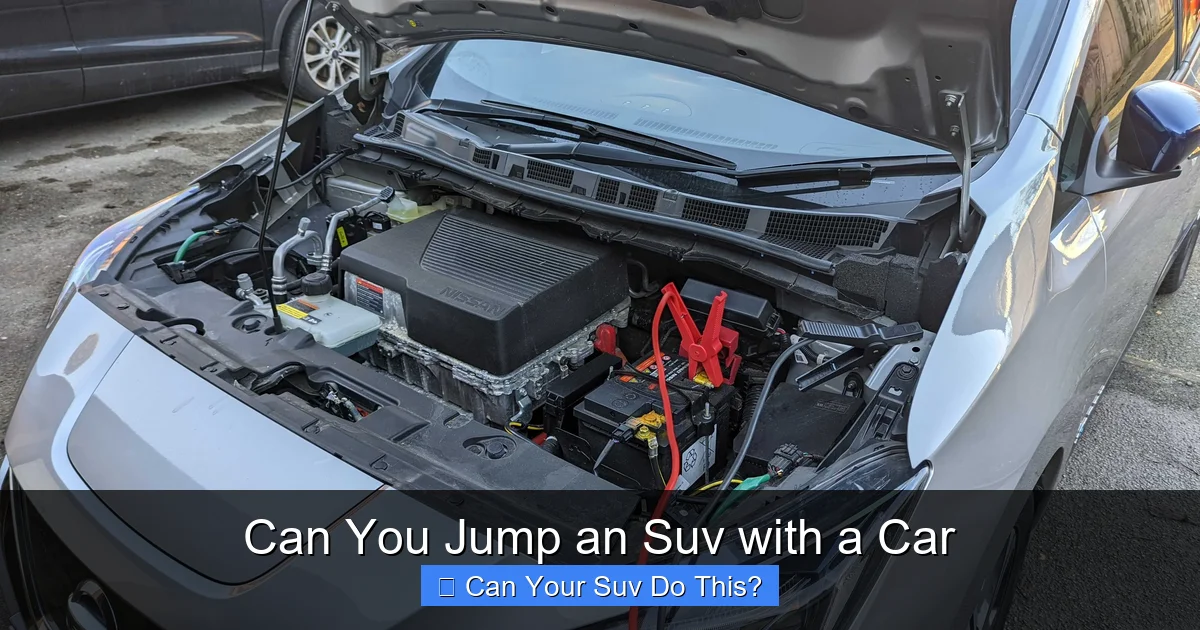
Yes, you can jump an SUV with a car—but it’s not always safe or recommended. While smaller cars can technically provide enough power to start many SUVs, differences in battery size, electrical systems, and safety risks mean you should proceed with caution and follow proper procedures.
So, your SUV won’t start. The dashboard lights flicker weakly, the engine groans but won’t turn over—classic signs of a dead battery. You’re stuck in a parking lot, late for work, and the only help nearby is your friend’s compact sedan. You start wondering: *Can you jump an SUV with a car?* It’s a common question, especially for SUV owners who assume their larger vehicle needs a bigger power source to get going again.
The short answer? Yes, it’s often possible—but it’s not always the best idea. While many people successfully jump-start their SUVs using smaller cars, there are important factors to consider: battery capacity, electrical system compatibility, cable quality, and safety risks. Jumping a vehicle isn’t just about connecting red to red and black to black. It’s a process that, when done incorrectly, can damage electronics, ruin batteries, or even cause injury.
In this guide, we’ll walk you through everything you need to know about jumping an SUV with a car. We’ll cover the basics of how jump-starting works, the risks involved, step-by-step instructions, and safer alternatives. Whether you’re driving a rugged Ford Explorer, a luxury Lexus RX, or a compact Honda CR-V, this information will help you make smart decisions when your battery bites the dust.
Key Takeaways
- Yes, it’s possible: Most modern cars can jump-start an SUV if both vehicles have 12-volt electrical systems and compatible batteries.
- Battery size matters: SUVs often have larger, higher-capacity batteries, so a small car may struggle to provide enough cranking amps.
- Safety first: Incorrect jump-starting can damage electronics, cause sparks, or even lead to battery explosions.
- Use proper cables: Heavy-duty jumper cables with thick gauge (4 or 6 AWG) improve success rates and reduce risk.
- Follow the correct sequence: Connecting and disconnecting cables in the right order prevents surges and protects both vehicles.
- Consider alternatives: Portable jump starters or calling roadside assistance may be safer and more reliable than using another car.
- Know your vehicle: Check your SUV’s owner’s manual for specific jump-starting instructions and warnings.
📑 Table of Contents
How Jump-Starting Works
Jump-starting a vehicle is essentially a temporary power transfer. When your SUV’s battery is dead or too weak to crank the engine, another vehicle’s battery—connected via jumper cables—provides the necessary electrical current to get the starter motor spinning. Once the engine is running, the alternator takes over, recharging the dead battery and powering the electrical system.
Most vehicles on the road today, including cars and SUVs, use a 12-volt electrical system. This means the voltage is compatible between most passenger vehicles, making cross-jump-starting technically feasible. The real difference lies in the battery’s capacity, measured in cold cranking amps (CCA). SUVs typically have higher CCA ratings because their engines are larger and require more power to start, especially in cold weather.
For example, a compact car like a Toyota Corolla might have a battery rated at 400–500 CCA, while a full-size SUV like a Chevrolet Tahoe could need 700–800 CCA or more. This doesn’t mean a smaller car can’t help—it just means the donor vehicle’s battery must be in good condition and able to deliver enough current without overheating or draining too quickly.
The Role of the Alternator
Once the SUV’s engine is running, the alternator becomes the hero. It generates electricity to recharge the dead battery and power all the vehicle’s systems. Ideally, you should let the SUV run for at least 20–30 minutes after a jump to allow the alternator to restore some charge. If you turn it off too soon, the battery may not have enough power to restart later.
It’s also worth noting that modern vehicles—especially SUVs with advanced electronics—are more sensitive to voltage fluctuations. A sudden surge or incorrect connection can fry control modules, sensors, or infotainment systems. That’s why following the correct procedure is critical.
Can a Car Really Jump an SUV?
Visual guide about Can You Jump an Suv with a Car
Image source: publicdomainpictures.net
This is the million-dollar question: *Can you jump an SUV with a car?* The answer depends on several factors, including the size and condition of both batteries, the quality of your jumper cables, and the specific vehicles involved.
In many cases, yes—a car can successfully jump an SUV. If the donor car has a healthy battery and the SUV’s electrical system isn’t too demanding, the jump can work just fine. For instance, jump-starting a midsize SUV like a Toyota Highlander with a Honda Civic is often successful, especially if both vehicles are relatively new and well-maintained.
However, there are limitations. Smaller cars with weaker batteries may struggle to provide enough current, particularly if the SUV’s battery is completely dead or the engine is large. In cold weather, when battery performance drops, the odds of success decrease further. Additionally, some high-end SUVs with advanced start-stop systems or dual-battery setups may require special procedures or equipment.
Real-World Example
Imagine you’re at a ski resort in Colorado. It’s 15°F (-9°C), and your Ford Expedition won’t start. Your friend pulls up in a Hyundai Elantra. Can the Elantra jump the Expedition? Possibly—but it’s not guaranteed. The Elantra’s smaller battery may not deliver enough cranking amps in the cold, and if the Expedition’s battery is deeply discharged, the jump might fail.
In this scenario, a portable jump starter or a tow truck with a heavy-duty booster would be more reliable. But if you’re careful, use thick cables, and let the donor car run for a few minutes before attempting the jump, you might get lucky.
When It’s Not Advisable
There are situations where jumping an SUV with a car is not recommended:
– The donor car’s battery is old, weak, or damaged.
– The SUV has a lithium-ion battery (common in hybrids or EVs).
– Either vehicle has visible battery damage, leaks, or corrosion.
– You’re in a hazardous environment (e.g., near flammable materials or in heavy rain).
– The SUV’s owner’s manual explicitly warns against jump-starting.
Always consult your SUV’s manual before attempting a jump. Some manufacturers, like Tesla or certain BMW models, advise against traditional jump-starting due to sensitive electronics.
Safety Risks and Precautions
Jump-starting might seem simple, but it carries real risks if done improperly. The most dangerous hazard is battery explosion. Car batteries contain sulfuric acid and produce hydrogen gas, which is highly flammable. A spark near the battery—especially during connection or disconnection—can ignite the gas, causing the battery to explode.
Other risks include:
– Electrical shock or short circuits
– Damage to vehicle electronics (ECUs, sensors, infotainment)
– Reverse polarity (connecting positive to negative), which can fry both vehicles
– Overheating of jumper cables or batteries
To minimize these risks, follow these safety precautions:
Inspect Before You Connect
Before touching any cables, inspect both batteries. Look for cracks, leaks, swelling, or excessive corrosion. If either battery is damaged, do not attempt a jump. Call a professional.
Clean any corrosion from the terminals using a wire brush and a mixture of baking soda and water. Corrosion can interfere with electrical contact and increase resistance, reducing the effectiveness of the jump.
Use the Right Equipment
Not all jumper cables are created equal. Cheap, thin cables (8 AWG or higher) may not handle the current needed for an SUV. Opt for heavy-duty cables with a 4 or 6 AWG rating. These thicker cables have lower resistance and can deliver more power safely.
Also, ensure the cables are long enough to reach both batteries without stretching, but not so long that they drag on the ground or get caught in moving parts.
Wear Protective Gear
Wear safety glasses and gloves if possible. This protects your eyes from sparks and your hands from acid or sharp edges. Avoid wearing loose clothing or jewelry that could come into contact with battery terminals.
Park Safely
Position the vehicles close enough for the cables to reach, but not touching. Turn off both engines, set the parking brakes, and put the transmissions in Park (or Neutral for manuals). Turn off all lights, radios, and accessories to reduce electrical load.
Step-by-Step Guide to Jump-Starting an SUV with a Car
Now that we’ve covered the basics and safety, let’s walk through the correct procedure. Follow these steps carefully to increase your chances of success and reduce risk.
Step 1: Position the Vehicles
Park the working car (the donor) so the batteries are as close as possible—usually front-to-front or side-by-side. Make sure the vehicles aren’t touching. Turn off both engines and remove the keys.
Step 2: Identify the Terminals
Open both hoods and locate the battery terminals. The positive terminal is usually marked with a “+” sign and covered with a red cap. The negative terminal is marked with a “–” and often black or bare metal.
Some SUVs have battery terminals hidden under covers or in hard-to-reach places. Check your owner’s manual if you’re unsure.
Step 3: Connect the Cables in the Correct Order
This is the most critical part. Follow this sequence exactly:
1. **Connect the red (positive) clamp to the dead battery’s positive terminal.**
2. **Connect the other red clamp to the donor car’s positive terminal.**
3. **Connect the black (negative) clamp to the donor car’s negative terminal.**
4. **Connect the final black clamp to an unpainted metal surface on the dead SUV—like a bolt or bracket—NOT the negative terminal.**
Why the last step? Connecting the final clamp to the battery’s negative terminal can create a spark near the battery, increasing explosion risk. Grounding it to the engine block or chassis dissipates the spark safely.
Step 4: Start the Donor Car
Start the working car and let it run for 3–5 minutes. This allows the alternator to build up charge and stabilize the electrical system.
Step 5: Attempt to Start the SUV
Try starting the SUV. If it doesn’t start right away, wait a minute or two and try again. Avoid cranking for more than 10–15 seconds at a time. If it still won’t start after 2–3 attempts, there may be a deeper issue—like a bad starter, fuel problem, or severely damaged battery.
Step 6: Disconnect in Reverse Order
Once the SUV is running, disconnect the cables in the reverse order:
1. Remove the black clamp from the SUV’s ground point.
2. Remove the black clamp from the donor car’s negative terminal.
3. Remove the red clamp from the donor car’s positive terminal.
4. Remove the red clamp from the SUV’s positive terminal.
This minimizes the chance of sparks or short circuits.
Step 7: Let the SUV Run
Keep the SUV running for at least 20–30 minutes to allow the alternator to recharge the battery. Avoid turning it off immediately. If possible, drive the SUV rather than idling, as driving generates more alternator output.
Alternatives to Jumping with Another Car
While jumping an SUV with a car is possible, it’s not always the best or safest option. Fortunately, there are modern alternatives that are more convenient and reliable.
Portable Jump Starters
Portable jump starters—also called jump boxes or battery boosters—are compact devices that store electrical energy in an internal battery. They’re lightweight, easy to use, and don’t require another vehicle.
Most modern jump starters can deliver 1000–2000 amps, which is more than enough for most SUVs. Some even include USB ports, flashlights, and air compressors. Popular brands like NOCO, Jump-N-Carry, and Hulkman offer models specifically designed for larger vehicles.
To use one, simply connect the clamps to the SUV’s battery (positive to positive, negative to ground), turn on the device, and start the engine. No donor car needed.
Roadside Assistance
If you’re a member of AAA, your insurance provider, or a manufacturer’s roadside program, calling for help is often the safest choice. Professional technicians have the right tools and training to jump-start your SUV safely, even in challenging conditions.
This is especially useful if you’re in a remote area, bad weather, or unsure about the process.
Battery Chargers
If you have time and access to an outlet, a battery charger is the gentlest way to revive a dead battery. It slowly replenishes the charge over several hours, reducing stress on the battery and electronics.
However, this isn’t practical in emergencies. It’s best used at home or in a garage.
Tips for Preventing Future Dead Batteries
The best way to avoid needing a jump is to prevent dead batteries in the first place. Here are some proactive tips:
Regular Maintenance
Have your battery tested annually, especially before winter. Most auto parts stores offer free battery checks. Replace batteries every 3–5 years, or sooner if you notice slow cranking or dim lights.
Avoid Parasitic Drain
Leaving lights, phone chargers, or accessories on when the engine is off can drain the battery overnight. Modern SUVs with keyless entry and always-on systems are especially prone to parasitic drain.
If you don’t drive often, consider a battery maintainer or trickle charger to keep the battery topped up.
Watch for Warning Signs
Slow engine cranking, dim headlights, clicking sounds, or dashboard warnings (like a battery light) are early signs of a failing battery. Don’t wait until you’re stranded.
Extreme Temperatures
Cold weather reduces battery efficiency, while heat accelerates internal corrosion. Park in a garage when possible, and consider a battery blanket in very cold climates.
Conclusion
So, can you jump an SUV with a car? The answer is yes—but with important caveats. While it’s often possible, especially with compatible 12-volt systems and proper technique, it’s not always the safest or most reliable method. SUVs have larger batteries and more complex electronics, which means jump-starting requires extra care.
Always prioritize safety: inspect batteries, use quality cables, follow the correct connection sequence, and avoid sparks near the battery. If in doubt, opt for a portable jump starter or call for professional help.
Remember, prevention is key. Regular maintenance, awareness of warning signs, and smart driving habits can save you from being stranded in the first place. Whether you’re driving a rugged off-roader or a family-friendly crossover, knowing how to handle a dead battery—and when to ask for help—is an essential skill for any SUV owner.
With the right knowledge and tools, you’ll be ready for whatever the road throws your way.
Frequently Asked Questions
Can a small car jump-start a large SUV?
Yes, a small car can often jump-start a large SUV if both have 12-volt systems and the donor car’s battery is healthy. However, success depends on battery condition, cable quality, and environmental factors like temperature.
Is it safe to jump an SUV with a car?
It can be safe if done correctly, but there are risks like battery explosion, electrical damage, or reverse polarity. Always follow safety precautions and consult your owner’s manual first.
What if the SUV still won’t start after a jump?
If the SUV doesn’t start after multiple attempts, the issue may not be the battery. It could be a bad starter, fuel pump, alternator, or electrical fault. Have it inspected by a mechanic.
Can I connect the negative clamp directly to the dead battery?
It’s not recommended. Connecting the final negative clamp to the battery terminal can cause a spark near flammable gases. Instead, ground it to an unpainted metal part of the engine or chassis.
Do I need special jumper cables for an SUV?
Heavy-duty cables (4 or 6 AWG) are best for SUVs because they can handle higher current. Thinner cables may overheat or fail to deliver enough power.
Should I replace my SUV’s battery after a jump?
Not necessarily. A jump can revive a temporarily dead battery. But if the battery is old, frequently dies, or fails a load test, replacement is likely needed.