

Yes, you can lease a Mercedes SUV — and it’s often more affordable than buying. Leasing offers lower monthly payments, warranty coverage, and the chance to drive a new luxury vehicle every few years with minimal hassle.
Key Takeaways
- Leasing a Mercedes SUV is a smart financial move: Lower monthly payments and reduced upfront costs make luxury more accessible.
- Multiple models available for lease: From the compact GLA to the full-size GLS, there’s a Mercedes SUV for every lifestyle and budget.
- Warranty and maintenance included: Most leases come with comprehensive coverage, reducing out-of-pocket repair costs.
- Flexible lease terms: Choose from 24 to 36 months with customizable mileage limits to fit your driving habits.
- Potential tax advantages for business use: If you use your leased SUV for work, you may qualify for tax deductions.
- End-of-lease options: Return the vehicle, lease a new one, or purchase it at a predetermined residual value.
- Credit and down payment matter: Strong credit scores can unlock better lease rates and lower fees.
📑 Table of Contents
- Can You Lease a Mercedes SUV? The Short Answer Is Yes — and Here’s Why You Should
- Why Lease a Mercedes SUV? Top Benefits You Should Know
- Mercedes SUV Models Available for Lease
- How Much Does It Cost to Lease a Mercedes SUV?
- What to Expect at the End of Your Mercedes SUV Lease
- Tips for Getting the Best Mercedes SUV Lease Deal
- Is Leasing a Mercedes SUV Right for You?
Can You Lease a Mercedes SUV? The Short Answer Is Yes — and Here’s Why You Should
If you’ve ever dreamed of driving a sleek, powerful, and luxurious SUV with the three-pointed star on the grille, you’re not alone. Mercedes-Benz SUVs are known for their cutting-edge technology, refined interiors, and impressive performance. But let’s be honest — buying one outright can be a serious financial commitment. That’s where leasing comes in.
Yes, you absolutely can lease a Mercedes SUV. In fact, leasing is one of the most popular ways people enjoy these high-end vehicles without the long-term financial burden of ownership. Whether you’re eyeing the sporty GLE, the family-friendly GLS, or the compact yet stylish GLA, Mercedes-Benz offers flexible leasing options across its entire SUV lineup.
Leasing a Mercedes SUV isn’t just about affordability — it’s about convenience, peace of mind, and staying current with the latest automotive innovations. With a lease, you’re typically covered under the manufacturer’s warranty for the entire term, meaning fewer unexpected repair bills. Plus, you can upgrade to a new model every two to three years, always driving the latest in safety, tech, and design.
But before you sign on the dotted line, it’s important to understand how leasing works, what models are available, and how to get the best deal. Let’s dive into everything you need to know about leasing a Mercedes SUV — from the benefits and costs to insider tips that can save you thousands.
Why Lease a Mercedes SUV? Top Benefits You Should Know
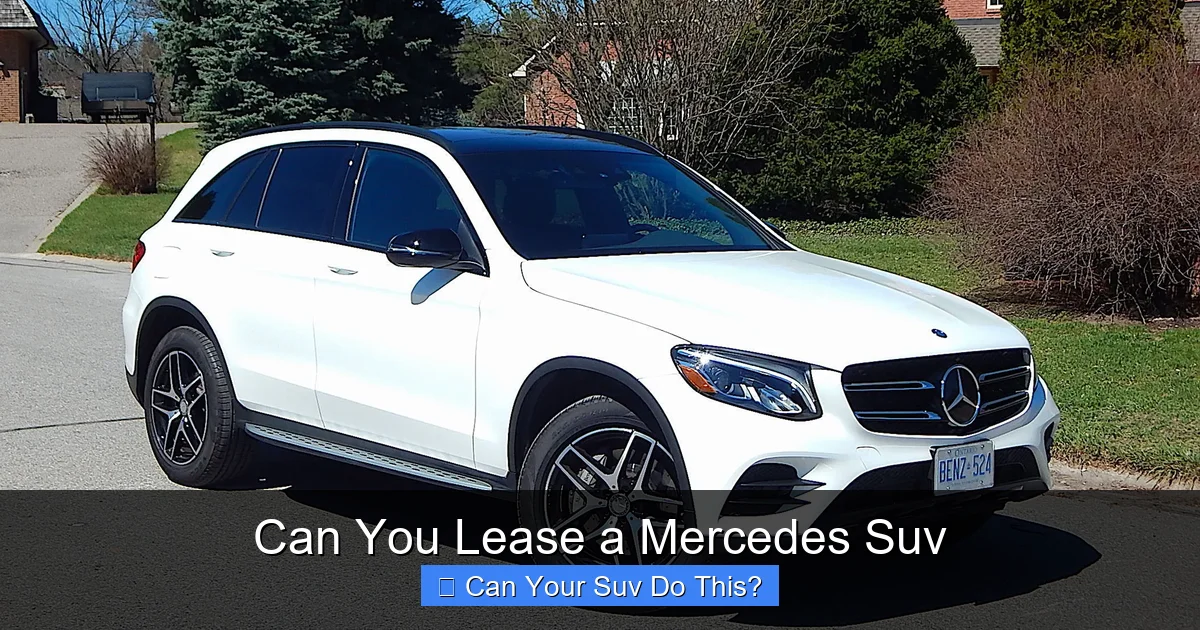
Visual guide about Can You Lease a Mercedes Suv
Image source: smartcdn.gprod.postmedia.digital
Leasing a Mercedes SUV isn’t just a trend — it’s a smart financial strategy for many drivers. While buying gives you long-term ownership, leasing offers a different kind of value: access, flexibility, and predictability. Here’s why so many people choose to lease their luxury SUVs.
Lower Monthly Payments
One of the biggest advantages of leasing is the lower monthly cost compared to financing a purchase. When you lease, you’re only paying for the vehicle’s depreciation during the lease term, not the full value of the car. For example, a Mercedes GLE 350 might cost $70,000 to buy, but your lease payments could be as low as $600–$800 per month, depending on terms and incentives.
This means you can drive a higher trim or more feature-rich model than you might afford to buy outright. It’s like renting a luxury apartment instead of buying a house — you get the lifestyle upgrade without the massive down payment.
Warranty Coverage for the Entire Lease Term
Mercedes-Benz vehicles come with a comprehensive warranty — typically 4 years or 50,000 miles, whichever comes first. Since most leases last 24 to 36 months, you’ll likely be covered for the entire duration. That means routine maintenance, unexpected repairs, and even some wear-and-tear items are handled by the dealership or manufacturer.
This peace of mind is priceless. No more worrying about a $2,000 transmission repair or a failing air suspension. If something goes wrong, you bring it in, and it’s fixed — often at no extra cost to you.
Drive a New Car Every Few Years
Technology in cars evolves fast. What’s cutting-edge today might feel outdated in just a couple of years. Leasing lets you stay ahead of the curve. Every 2–3 years, you can return your current Mercedes SUV and lease a brand-new model with the latest infotainment systems, driver-assist features, and design updates.
Imagine driving a 2024 GLE with the new MBUX Hyperscreen one year, then upgrading to a 2027 model with even more advanced AI and autonomous driving capabilities. That’s the beauty of leasing — you’re never stuck with an aging vehicle.
Lower Sales Tax in Some States
In many states, you only pay sales tax on the monthly lease payments, not the full value of the vehicle. This can result in significant savings. For example, in a state with a 7% sales tax, leasing a $70,000 SUV could save you thousands in tax compared to buying.
Check your state’s regulations — some, like Virginia and Texas, offer tax advantages for lessees, while others tax the full vehicle value upfront.
No Hassle of Selling or Trading In
When you buy a car, eventually you’ll have to sell it or trade it in — and that process can be stressful and time-consuming. You have to clean it, fix dings, advertise it, negotiate with buyers, and deal with paperwork.
With a lease, you simply return the vehicle at the end of the term (assuming it’s in good condition and within mileage limits). No private sales, no trade-in haggling — just drop it off and walk away.
Mercedes SUV Models Available for Lease
Mercedes-Benz offers a full range of SUVs, from compact crossovers to full-size luxury haulers. No matter your needs — city driving, family road trips, or off-road adventures — there’s a model that fits. Here’s a breakdown of the most popular Mercedes SUVs you can lease today.
Mercedes GLA – The Compact Urban Cruiser
The GLA is the smallest SUV in the lineup, perfect for city dwellers who want luxury in a nimble package. With a starting MSRP around $40,000, it’s also the most affordable way to get behind the wheel of a Mercedes SUV.
Lease deals often start under $400 per month with low down payments. The GLA offers a stylish interior, intuitive tech, and optional all-wheel drive. It’s ideal for singles, couples, or small families who don’t need massive cargo space but still want a premium driving experience.
Mercedes GLB – The Practical Family Hauler
Need a bit more room? The GLB offers three rows of seating (optional) and a boxy design that maximizes interior space. It’s perfect for growing families or anyone who needs extra passenger or cargo room without stepping up to a larger SUV.
With a starting price around $45,000, the GLB is a great value in the luxury segment. Lease payments typically range from $450 to $600 per month, depending on trim and incentives.
Mercedes GLC – The Balanced Luxury SUV
The GLC is one of Mercedes’ best-selling models, and for good reason. It strikes the perfect balance between size, performance, and luxury. Available as a traditional SUV or a coupe-style variant, the GLC offers a smooth ride, a high-quality interior, and strong resale value.
Lease rates often start around $500–$700 per month. With available plug-in hybrid versions, the GLC also appeals to eco-conscious drivers who want efficiency without sacrificing performance.
Mercedes GLE – The Premium Mid-Size SUV
Step up to the GLE, and you’re in true luxury territory. This mid-size SUV offers powerful engine options, including a plug-in hybrid and a high-performance AMG variant. The interior is spacious, with optional third-row seating and features like massaging seats, ambient lighting, and a panoramic sunroof.
Lease payments for the GLE typically range from $700 to $1,000 per month. It’s a favorite among executives, professionals, and families who want both comfort and capability.
Mercedes GLS – The Full-Size Flagship
If you need maximum space, power, and prestige, the GLS is the ultimate Mercedes SUV. It’s the largest in the lineup, with three full rows of seating and enough cargo room to handle a week’s worth of luggage.
Starting around $85,000, the GLS is a serious investment — but leasing makes it more accessible. Monthly payments often fall between $900 and $1,300, depending on configuration. It’s perfect for large families, frequent travelers, or anyone who wants to make a statement.
Mercedes G-Class – The Iconic Off-Roader
For the adventurous spirit, the G-Class (or “G-Wagon”) is the ultimate luxury off-roader. With its boxy design, military roots, and serious 4×4 capability, the G-Class is as much a status symbol as it is a capable vehicle.
Leasing a G-Class is less common due to its high price (starting around $140,000), but it’s possible. Monthly payments can exceed $1,500, but for some, the combination of luxury and ruggedness is worth every penny.
How Much Does It Cost to Lease a Mercedes SUV?
Leasing a Mercedes SUV is more affordable than you might think — but costs vary widely based on model, trim, location, and your credit profile. Here’s what goes into the price and how to estimate your monthly payment.
Key Factors That Affect Lease Payments
Several variables determine your monthly lease cost:
– **Vehicle Price (MSRP):** Higher trims and options increase the base cost.
– **Residual Value:** This is the estimated value of the car at the end of the lease. Mercedes SUVs typically have strong residuals (50–60% after 3 years), which keeps payments lower.
– **Money Factor (Interest Rate):** This is the lease equivalent of an APR. Lower is better. Good credit can get you rates as low as 0.00100 (about 2.4% APR).
– **Down Payment (Cap Cost Reduction):** Putting more money down lowers monthly payments but increases upfront costs.
– **Mileage Allowance:** Standard leases allow 10,000–12,000 miles per year. Exceeding this incurs fees (typically $0.15–$0.25 per mile).
– **Lease Term:** Shorter terms (24 months) often have higher monthly payments but lower total cost. Longer terms (36 months) spread out the cost but may have higher interest.
Sample Lease Scenarios
Let’s look at real-world examples to give you a sense of what to expect:
– **Mercedes GLA 250:** $399/month, $3,999 due at signing, 36 months, 10,000 miles/year.
– **Mercedes GLC 300:** $599/month, $4,500 due at signing, 36 months, 12,000 miles/year.
– **Mercedes GLE 350:** $799/month, $5,999 due at signing, 36 months, 12,000 miles/year.
These are promotional offers and may include incentives like loyalty bonuses or manufacturer cash. Always check current deals at your local dealership.
How to Lower Your Lease Payment
Want to reduce your monthly cost? Try these tips:
– **Improve Your Credit Score:** A score above 720 can qualify you for the best money factors.
– **Put Down a Larger Down Payment:** $3,000–$5,000 can cut $100+ off your monthly payment.
– **Choose a Higher Mileage Allowance Upfront:** If you drive a lot, paying for extra miles now avoids steep overage fees later.
– **Negotiate the Capitalized Cost:** Just like buying, you can negotiate the price of the car before leasing. Lower cap cost = lower payments.
– **Time Your Lease:** End-of-year and end-of-quarter promotions often include better deals.
What to Expect at the End of Your Mercedes SUV Lease
Leasing isn’t forever — and that’s part of the appeal. But when your lease term ends, you’ll need to decide what to do next. Here are your three main options.
Option 1: Return the Vehicle
The most common choice is to simply return the SUV to the dealership. As long as the vehicle is in good condition (normal wear and tear is allowed) and you’re within your mileage limit, there’s no penalty.
Before returning, schedule a pre-inspection. The dealer will check for excess wear, dents, or damage. Minor issues like small scratches are usually fine, but large dings or upholstery stains could result in charges.
Once returned, you’re free to lease a new Mercedes SUV — or walk away and explore other brands.
Option 2: Lease a New Mercedes SUV
Many lessees choose to upgrade to a new model. Dealerships often offer loyalty incentives — like waived acquisition fees or reduced down payments — to keep you in the Mercedes family.
This is a great way to stay current with the latest tech and design. You can even switch models — from a GLE to a GLS, for example — if your needs have changed.
Option 3: Purchase the Leased Vehicle
If you’ve fallen in love with your Mercedes SUV, you can buy it at the end of the lease. The purchase price is set at the beginning of the lease (called the residual value) and is often lower than market value.
For example, if your GLE had a $70,000 MSRP and a 55% residual, you can buy it for $38,500 at the end of the lease. That’s a great deal if the car has held its value well.
You can finance the purchase through Mercedes Financial or your own bank. Some dealers even offer lease-to-own programs with flexible terms.
Tips for Getting the Best Mercedes SUV Lease Deal
Leasing a Mercedes SUV doesn’t have to be complicated — but a little strategy can save you thousands. Here’s how to get the best possible deal.
Shop Multiple Dealerships
Don’t settle for the first offer. Contact several Mercedes dealerships in your area and compare lease quotes. Use online tools like Edmunds, Leasehackr, or the Mercedes-Benz website to get pre-qualified offers.
Dealers often compete for your business, especially at the end of the month or quarter. Use this to your advantage.
Understand All Fees
Lease agreements include several fees:
– **Acquisition Fee:** $500–$1,000, charged by the leasing company.
– **Disposition Fee:** $300–$500, charged when you return the car.
– **Doc Fee:** $200–$500, for processing paperwork.
– **Title and Registration:** Varies by state.
Ask for a full breakdown before signing. Some dealers may waive certain fees as part of a promotion.
Watch Out for Excess Wear and Tear
Mercedes defines “excess wear” as damage beyond normal use. This includes:
– Tires worn below legal tread depth
– Large dents or paint damage
– Stains or tears in upholstery
– Broken glass or mirrors
To avoid charges, keep your SUV clean, rotate tires, and address minor issues early. Consider purchasing a wear-and-tear protection plan if you’re concerned.
Consider a Lease Buyout
If you decide to buy your leased SUV, shop around for financing. Sometimes, your bank or credit union offers better rates than the dealership. Compare APRs and loan terms before committing.
Use a Lease Broker (Optional)
For a fee, lease brokers can negotiate on your behalf and find the best deals across multiple dealers. This is helpful if you’re short on time or unfamiliar with leasing.
Is Leasing a Mercedes SUV Right for You?
Leasing isn’t for everyone — but for the right person, it’s a fantastic way to enjoy luxury without the long-term commitment. Ask yourself these questions:
– Do you prefer driving a new car every few years?
– Do you stay within 10,000–15,000 miles per year?
– Do you want lower monthly payments and minimal repair worries?
– Are you comfortable not owning the vehicle?
If you answered yes, leasing a Mercedes SUV could be a perfect fit. But if you drive a lot, want to customize your car, or plan to keep it for 10+ years, buying might be better.
Ultimately, leasing a Mercedes SUV is about lifestyle. It’s about enjoying the best of what luxury automotive has to offer — without the burden of ownership. With the right model, terms, and strategy, you can drive in style, comfort, and confidence.
Frequently Asked Questions
Can you lease a Mercedes SUV with bad credit?
Yes, but it may be more difficult and expensive. Dealers may require a larger down payment or charge a higher money factor. Consider improving your credit or exploring subprime leasing programs.
How many miles can you drive on a Mercedes SUV lease?
Most leases allow 10,000 to 15,000 miles per year. Exceeding the limit incurs fees of $0.15 to $0.25 per mile. You can prepay for extra miles to avoid surprises.
Can you negotiate a Mercedes SUV lease?
Absolutely. You can negotiate the capitalized cost, money factor, and fees — just like buying a car. Research current offers and use competing quotes to your advantage.
What happens if you go over your mileage limit?
You’ll be charged per mile over the limit, typically $0.15–$0.25. To avoid this, choose a higher mileage allowance upfront or consider buying the vehicle at lease end.
Can you lease a Mercedes SUV for business use?
Yes, and it may offer tax benefits. Businesses can often deduct a portion of lease payments as a business expense. Consult a tax professional for guidance.
Is it better to lease or buy a Mercedes SUV?
It depends on your priorities. Leasing offers lower payments and new cars often; buying builds equity and allows unlimited mileage and customization. Choose based on your lifestyle and financial goals.