
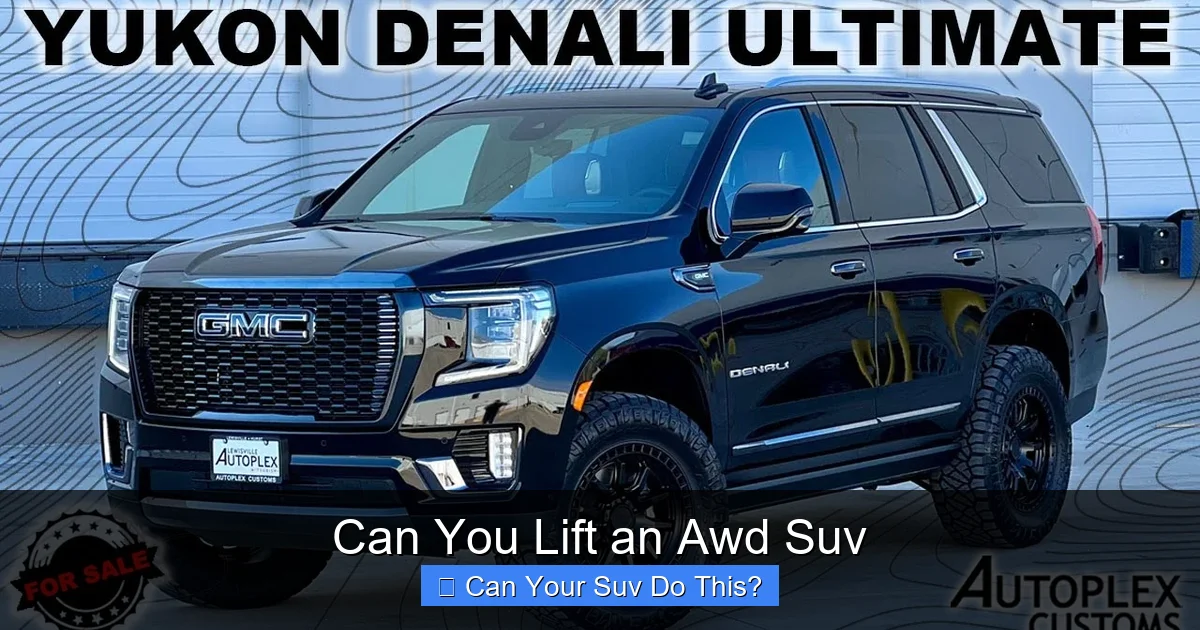
Lifting an AWD SUV is possible, but it’s not as simple as just adding bigger tires and a suspension lift. You need to consider drivetrain stress, alignment, and potential warranty issues. With the right approach, your lifted AWD SUV can handle off-road adventures while maintaining on-road reliability.
Key Takeaways
- Yes, you can lift an AWD SUV—but with caution: Most modern AWD SUVs can be lifted, but improper modifications can damage the drivetrain, reduce fuel efficiency, and void warranties.
- Choose the right lift type: A suspension lift offers better performance and ground clearance, while a body lift is cheaper but less effective for off-roading.
- Watch your driveline angles: Lifting changes the angle of driveshafts and CV joints, which can cause vibration, wear, and premature failure if not corrected.
- Tire size matters: Larger tires improve off-road capability but may require re-gearing, speedometer recalibration, and fender trimming.
- Not all AWD systems are equal: Full-time, part-time, and automatic AWD systems respond differently to lifts—know your vehicle’s setup before modifying.
- Professional installation is recommended: DIY lifts can save money, but improper alignment or component selection can lead to costly repairs down the road.
- Consider your driving needs: If you mostly drive on pavement, a mild lift may suffice. For serious off-roading, a full suspension upgrade with supporting mods is ideal.
📑 Table of Contents
- Can You Lift an AWD SUV? The Truth Behind the Trend
- Understanding AWD Systems and Why They Matter
- Types of Lifts: Which One Is Right for Your AWD SUV?
- The Risks of Lifting an AWD SUV
- Step-by-Step: How to Safely Lift Your AWD SUV
- Real-World Examples: Lifted AWD SUVs That Work
- Conclusion: Is Lifting Your AWD SUV Worth It?
Can You Lift an AWD SUV? The Truth Behind the Trend
So, you’ve got an all-wheel-drive SUV—maybe a Toyota RAV4, Subaru Outback, Ford Explorer, or even a Jeep Grand Cherokee—and you’re dreaming of conquering muddy trails, rocky paths, or snowy backroads. You’ve seen lifted SUVs on social media, looking tough and trail-ready, and now you’re wondering: *Can you lift an AWD SUV?*
The short answer? Yes—you can. But the longer, more important answer is: *It depends.*
Lifting an AWD SUV isn’t just about slapping on bigger tires and a lift kit. It’s a process that requires understanding your vehicle’s design, the type of AWD system it uses, and how modifications will affect performance, safety, and longevity. Done right, a lift can transform your SUV into a capable off-roader. Done wrong, it can lead to expensive repairs, poor handling, and even safety hazards.
In this guide, we’ll walk you through everything you need to know about lifting an AWD SUV—from the basics of how AWD works to the best lift options, common pitfalls, and real-world tips from experienced owners. Whether you’re a weekend warrior or a daily driver looking for a little extra ground clearance, this article will help you make smart, informed decisions.
Understanding AWD Systems and Why They Matter
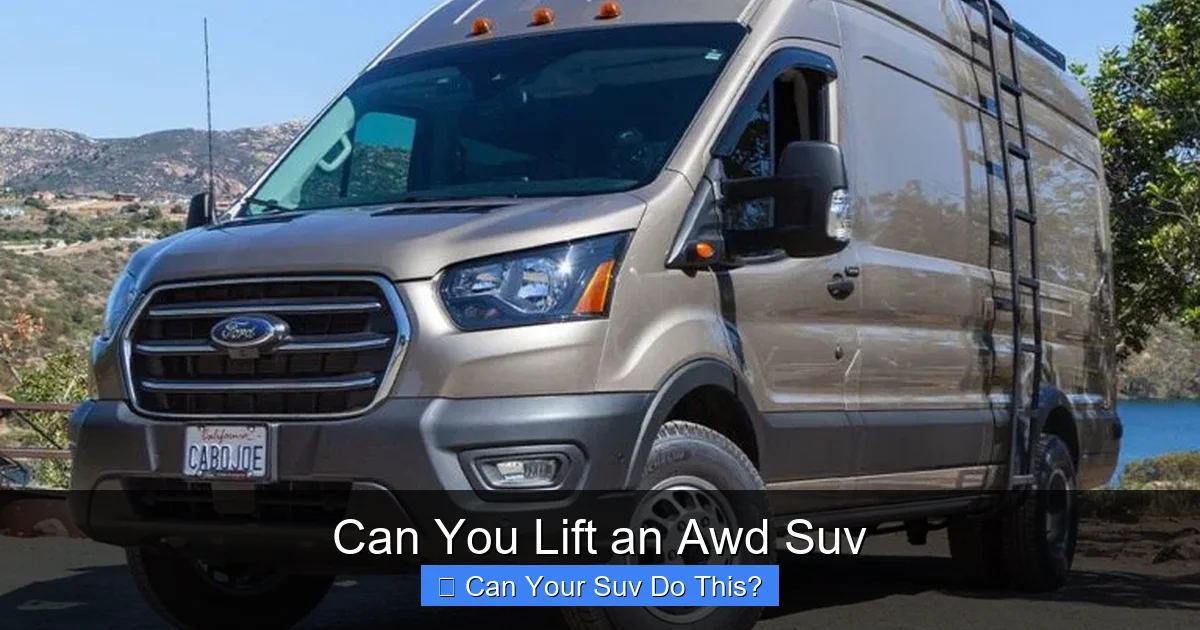
Visual guide about Can You Lift an Awd Suv
Image source: weldtecdesigns.com
Before you even think about lifting your SUV, it’s crucial to understand how your all-wheel-drive system works. Not all AWD systems are created equal, and the type your vehicle uses will significantly impact how it responds to a lift.
Types of AWD Systems
There are three main types of AWD systems found in modern SUVs:
- Full-Time AWD: This system sends power to all four wheels at all times. Examples include the Subaru Symmetrical AWD and Audi Quattro. These systems are great for traction in all conditions but can be sensitive to tire size differences and driveline stress when lifted.
- Part-Time AWD (or 4WD): Found in trucks and some SUVs like the Jeep Grand Cherokee, this system usually operates in two-wheel drive and can be manually switched to four-wheel drive when needed. It’s more robust for off-roading but requires driver input.
- Automatic or On-Demand AWD: Common in crossovers like the Honda CR-V or Nissan Rogue, this system primarily powers two wheels and sends power to the other two only when slippage is detected. These systems are less tolerant of lifts due to their reliance on precise wheel speed sensors.
Why the AWD System Affects Lift Compatibility
When you lift an AWD SUV, you change the geometry of the suspension and drivetrain. This can cause several issues:
- Increased Driveline Angles: Lifting raises the vehicle, which changes the angle of the driveshafts and CV (constant velocity) joints. If these angles become too steep, it can lead to vibration, premature wear, and even failure.
- Tire Size Mismatch: Larger tires can cause the front and rear axles to rotate at slightly different speeds. In full-time AWD systems, this can create “binding” or “wind-up,” where the drivetrain fights itself, leading to damage.
- Sensor Confusion: On-demand AWD systems rely on wheel speed sensors to detect slippage. If one tire is significantly larger or spins faster due to a lift, the system may misinterpret this as wheel slip and engage AWD unnecessarily—or not at all when needed.
For example, lifting a Subaru Outback with a 3-inch suspension lift without addressing driveline angles could cause CV joint failure within a few thousand miles. On the other hand, a lifted Jeep Wrangler with a part-time 4WD system is more forgiving because it doesn’t constantly power all four wheels.
Types of Lifts: Which One Is Right for Your AWD SUV?
Not all lifts are created equal. The type of lift you choose will depend on your goals, budget, and how much you’re willing to modify your vehicle. Here are the three main options:
1. Body Lift
A body lift involves inserting spacers between the vehicle’s body and frame to raise the cabin higher off the ground. It’s the cheapest and easiest option, typically costing between $200 and $600.
Pros:
- Low cost and minimal mechanical changes
- Doesn’t affect suspension or drivetrain
- Easy to install—often a DIY project
Cons:
- Doesn’t improve ground clearance underneath the frame
- Can look awkward if not done neatly
- Doesn’t allow for larger tires unless combined with other mods
A body lift is best for cosmetic upgrades or mild off-roading where you just want a taller stance. However, it won’t help you tackle serious trails.
2. Suspension Lift
This is the most popular and effective option for AWD SUVs. A suspension lift replaces or modifies the shocks, springs, struts, and control arms to raise the entire vehicle—frame and all.
Pros:
- Increases true ground clearance
- Allows for larger tires and better off-road performance
- Improves approach, departure, and breakover angles
Cons:
- More expensive—typically $1,000 to $3,000+
- Requires professional installation for best results
- Can affect ride quality and fuel economy
For example, a 2.5-inch suspension lift on a Toyota 4Runner can allow you to fit 33-inch tires, dramatically improving off-road capability. But you’ll also need to consider upgrading control arms, adding a differential drop, or installing a transfer case spacer to maintain proper driveline angles.
3. Leveling Kit
A leveling kit is a mild form of suspension lift that raises the front of the vehicle to match the rear. Many SUVs sit slightly lower in the front from the factory, so a leveling kit evens things out.
Pros:
- Affordable—usually $100 to $400
- Improves appearance and allows slightly larger tires
- Minimal impact on drivetrain
Cons:
- Only raises the front—doesn’t increase overall ground clearance
- May still require alignment and suspension adjustments
A leveling kit is ideal if you want a tougher look and a little more tire clearance without going all-in on a full lift.
The Risks of Lifting an AWD SUV
While lifting your AWD SUV can be exciting, it’s not without risks. Ignoring these can lead to expensive repairs or even safety issues.
Driveline Vibration and CV Joint Wear
One of the most common problems after lifting an AWD SUV is driveline vibration. This happens when the angle of the driveshaft or CV joints becomes too steep. The symptoms include:
- A shaking sensation, especially at highway speeds
- Clicking or popping noises when turning
- Premature wear on CV boots and joints
To fix this, you may need:
- Control arm spacers or aftermarket control arms: These help maintain proper suspension geometry.
- Differential drop kit: Lowers the differential to reduce driveshaft angle.
- Transfer case drop: Used in 4WD/AWD vehicles to realign the transfer case output shaft.
For example, a lifted Subaru Forester often benefits from a 1-inch differential drop to reduce CV joint stress.
Speedometer and ABS Errors
Larger tires change the effective gear ratio, which can throw off your speedometer, odometer, and ABS system. If your SUV thinks it’s going 60 mph when it’s actually going 65, you could get a speeding ticket—or worse, brake incorrectly in an emergency.
Solutions include:
- Re-gearing the differential: Changes the final drive ratio to match the new tire size.
- Speedometer recalibration: Done via a tuner or at a dealership.
- Aftermarket modules: Devices like the Hypertech Speedometer Calibrator can adjust readings automatically.
Warranty and Insurance Concerns
Modifying your AWD SUV can void parts of your factory warranty, especially if the lift causes damage to the drivetrain or suspension. Always check your warranty terms before making changes.
Insurance is another consideration. Some insurers may view lifted vehicles as higher risk, potentially increasing premiums or denying claims if the lift contributed to an accident.
Ride Quality and Handling
A lifted SUV will handle differently. The higher center of gravity increases the risk of rollover, especially during sharp turns or emergency maneuvers. Stiffer suspension components can also make the ride harsher on pavement.
To mitigate this:
- Choose quality lift components designed for your specific vehicle
- Avoid excessive lift heights (more than 3 inches without supporting mods)
- Consider adding sway bar disconnects for better off-road articulation
Step-by-Step: How to Safely Lift Your AWD SUV
Ready to take the plunge? Here’s a practical guide to lifting your AWD SUV the right way.
1. Research Your Vehicle
Not all SUVs are lift-friendly. Start by researching forums, YouTube videos, and manufacturer guidelines for your specific make and model. Some vehicles, like the Jeep Wrangler or Toyota 4Runner, have strong aftermarket support and are well-suited for lifts. Others, like the Honda CR-V or Mazda CX-5, are more limited.
2. Set a Budget
Lifts can range from $200 for a leveling kit to $5,000+ for a full off-road build. Include costs for:
- Lift kit
- Installation (if not DIY)
- Larger tires and wheels
- Alignment and calibration
- Supporting mods (differential drop, control arms, etc.)
3. Choose the Right Lift Height
For most AWD SUVs, a 2- to 3-inch lift is the sweet spot. It provides noticeable improvement without excessive strain on the drivetrain. Going beyond 3 inches usually requires additional modifications and increases risk.
4. Upgrade Tires Wisely
Larger tires improve off-road traction but must be compatible with your lift. Use a tire size calculator to ensure your new tires won’t rub or cause speedometer errors. Common upgrades:
- Stock 225/65R17 → 245/70R17 (about 1 inch taller)
- Stock 265/60R18 → 285/65R18 (about 1.5 inches taller)
5. Get a Professional Alignment
After lifting, your suspension geometry will be off. A professional alignment ensures your tires wear evenly and your SUV handles safely.
6. Test and Tune
Take your lifted SUV for a test drive on both pavement and light trails. Listen for vibrations, check for rubbing, and monitor dashboard warnings. If something feels off, address it immediately.
Real-World Examples: Lifted AWD SUVs That Work
Still unsure? Let’s look at some real-world examples of successfully lifted AWD SUVs.
Toyota RAV4 with a 2-Inch Suspension Lift
A popular mod among RAV4 owners is a 2-inch lift using a kit from companies like LP Adventure or Old Man Emu. This allows for 235/65R17 tires and improves off-road capability without major drivetrain issues. Owners report better trail performance while maintaining daily drivability.
Subaru Outback with a 2.5-Inch Lift and Differential Drop
The Outback is a favorite for overlanding. A 2.5-inch lift with a differential drop kit reduces CV joint stress and allows for 245/75R16 tires. Many owners also add skid plates and roof racks for full adventure readiness.
Jeep Grand Cherokee with a 3-Inch Lift
With its robust 4WD system, the Grand Cherokee handles lifts well. A 3-inch lift with upgraded control arms and 33-inch tires turns it into a serious trail machine. Some owners even add lockers and winches for extreme off-roading.
Conclusion: Is Lifting Your AWD SUV Worth It?
So, can you lift an AWD SUV? Absolutely—but it’s not a one-size-fits-all solution. The key is understanding your vehicle’s AWD system, choosing the right lift type, and addressing the mechanical challenges that come with increased height.
If you’re mainly driving on roads and want a tougher look, a leveling kit or mild suspension lift might be perfect. But if you’re serious about off-roading, invest in a quality suspension lift, larger tires, and supporting modifications to protect your drivetrain.
Remember: lifting your AWD SUV is about more than just height—it’s about capability, confidence, and adventure. With the right approach, your lifted SUV can take you places you’ve only dreamed of.
Just don’t forget to drive responsibly, maintain your vehicle, and respect the limits of your modifications. After all, the best off-roader is the one that makes it home safely.
Frequently Asked Questions
Can you lift any AWD SUV?
Most AWD SUVs can be lifted, but compatibility depends on the vehicle’s design, AWD system, and available aftermarket support. Some models, like the Jeep Grand Cherokee or Toyota 4Runner, are more lift-friendly than others.
Will lifting my AWD SUV void the warranty?
Lifting can void parts of your warranty, especially if it causes damage to the drivetrain or suspension. Always check your warranty terms and consider using OEM-approved parts when possible.
How much does it cost to lift an AWD SUV?
Costs vary widely: a leveling kit starts around $100, a body lift $200–$600, and a full suspension lift $1,000–$3,000+. Add $500–$1,500 for tires, alignment, and supporting mods.
Can I lift my AWD SUV myself?
Simple lifts like leveling kits or body lifts can be DIY projects with basic tools. However, suspension lifts are complex and best left to professionals to avoid safety risks and improper installation.
Will a lift affect my SUV’s fuel economy?
Yes—larger tires and increased aerodynamic drag from a taller stance can reduce fuel efficiency by 1–3 mpg, depending on the lift height and driving conditions.
Do I need to re-gear my differential after lifting?
Re-gearing is recommended if you install significantly larger tires (usually 2+ inches taller). It restores power, improves towing, and prevents strain on the transmission and differential.