
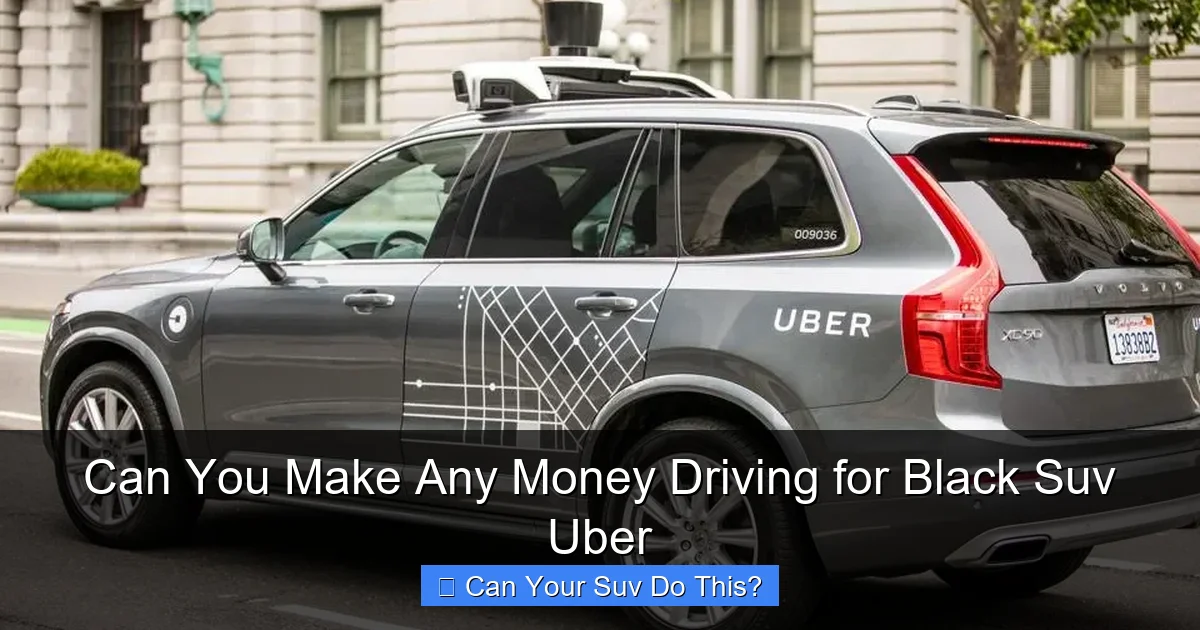
Yes, you can make money driving for Black SUV Uber—but it’s not always profitable. While fares are higher than standard UberX, vehicle costs, maintenance, and depreciation eat into earnings. Success depends on location, driving habits, and smart financial planning.
[FEATURED_IMAGE_PLACEHODEL]
So, you’ve got a sleek black SUV—maybe a Cadillac Escalade, a Lincoln Navigator, or even a high-trim Toyota Sequoia—and you’re thinking, “Can I make some real money driving for Black SUV Uber?” It’s a tempting idea. After all, those luxury rides cost passengers $50, $100, even $200 for a single trip. Surely, that means big bucks for the driver, right?
Well, not so fast. While driving for Uber Black SUV can bring in more per ride than standard UberX, the reality is a lot more complicated. The higher fares are tempting, but they come with equally high costs. From fuel and insurance to maintenance and vehicle depreciation, the expenses pile up fast. And if you’re not strategic about when, where, and how you drive, you might end up working long hours just to break even.
In this guide, we’ll break down everything you need to know about making money with a Black SUV on Uber. We’ll look at real earning potential, compare costs, explore the best markets, and share practical tips to help you decide if this side hustle is worth your time—or if you’d be better off sticking with a more affordable vehicle. Whether you’re already driving or just considering it, this article will give you the honest, no-fluff truth about Uber Black SUV profitability.
Key Takeaways
- Higher fares mean higher potential income: Black SUV rides cost riders significantly more than UberX, which can translate into better pay per trip—especially for airport or long-distance rides.
- Vehicle costs are steep: Luxury SUVs like Cadillac Escalades or Lincoln Navigators come with high purchase prices, insurance, fuel, and maintenance costs that can quickly offset earnings.
- Depreciation is a silent profit killer: High-end vehicles lose value fast, and using them for ride-sharing accelerates wear and tear, reducing resale value.
- Location matters more than ever: Profitable Black SUV driving is mostly viable in major cities with high demand for premium rides, such as New York, Los Angeles, or Chicago.
- Time and efficiency are critical: To make real money, drivers must minimize downtime, optimize routes, and accept high-value trips while avoiding low-margin short rides.
- Taxes and expenses must be tracked: Ride-share drivers are independent contractors, so setting aside money for taxes and logging every expense is essential for long-term success.
- Alternative options may be more profitable: In many cases, driving a standard vehicle on UberX or Uber Comfort can yield better net income due to lower overhead.
📑 Table of Contents
What Is Uber Black SUV?
Before we dive into the money side, let’s make sure we’re on the same page about what Uber Black SUV actually is. Uber Black is the premium tier of Uber’s ride-sharing service. It’s designed for passengers who want a high-end, professional experience—think business travelers, wedding guests, or people heading to fancy events. The key difference between Uber Black and standard UberX? The vehicle.
To qualify for Uber Black, your car must meet strict requirements. It needs to be a luxury sedan or SUV, typically from brands like Cadillac, Lincoln, Mercedes-Benz, or BMW. The vehicle must be no more than 7 years old (as of the current year), have four doors, and seat at least four passengers comfortably. But Uber Black SUV is a specific subcategory.
Uber Black vs. Uber Black SUV: What’s the Difference?
Uber Black originally started with luxury sedans—think black town cars or high-end four-door cars. But as demand grew for more space, especially for groups or travelers with luggage, Uber introduced Uber Black SUV. This tier is for larger luxury vehicles that can seat up to six passengers. Think Cadillac Escalade, Lincoln Navigator, Chevrolet Suburban (if it meets luxury trim standards), or even a Range Rover.
The main difference? Capacity and fare. Uber Black SUV rides are priced higher than regular Uber Black because they offer more room and comfort. For example, a 30-minute ride in a standard Uber Black might cost $60, while the same trip in an Uber Black SUV could run $90 or more. That extra $30 might sound great—but remember, you’re also driving a much bigger, more expensive vehicle.
Vehicle Requirements for Uber Black SUV
Not every big SUV qualifies. Uber has strict rules to maintain the premium experience. Your vehicle must:
– Be a luxury SUV (non-luxury models like a base Ford Explorer won’t cut it)
– Be no more than 7 years old
– Have four doors and seat at least 6 passengers
– Be in excellent condition—no dents, tears, or mechanical issues
– Be registered and insured in your name
– Pass a vehicle inspection by Uber
Popular models that qualify include:
– Cadillac Escalade
– Lincoln Navigator
– Mercedes-Benz GLS
– BMW X7
– Lexus LX
– Range Rover (certain trims)
Even if your SUV meets the size and age requirements, it still needs to feel “luxury.” That means leather seats, a clean interior, working climate control, and a quiet, smooth ride. Uber riders expect a five-star experience, and your vehicle is a big part of that.
How Much Can You Actually Earn?
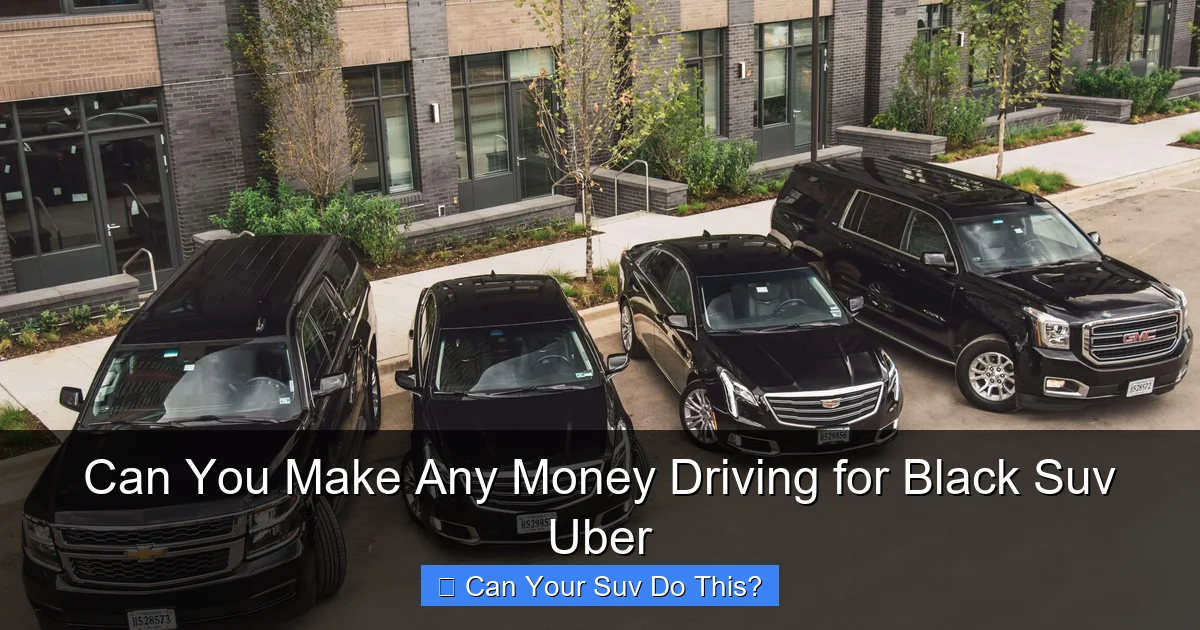
Visual guide about Can You Make Any Money Driving for Black Suv Uber
Image source: blogoval.com
Now for the million-dollar question: How much money can you really make driving for Uber Black SUV? The short answer? It varies—a lot. But let’s break it down with some realistic numbers.
Average Earnings Per Trip
Uber Black SUV fares are significantly higher than standard rides. On average, a 15-minute trip might pay $25–$35, while a 30-minute ride could earn $45–$65. Longer trips, especially to airports or across town during peak hours, can bring in $80–$150 or more.
For example, a ride from downtown Los Angeles to LAX in an Uber Black SUV might cost the passenger $120. After Uber takes its 25% cut, you’d earn around $90. That’s a solid payout for one trip. Compare that to a standard UberX ride on the same route, which might pay $35–$45 after fees. The difference is clear.
But here’s the catch: You can’t do 10 of those trips in a row. Big SUVs are gas guzzlers. The Cadillac Escalade, for instance, gets around 14–16 miles per gallon in the city. That LAX trip is about 20 miles one way. Round trip? 40 miles. At 15 mpg, that’s nearly 3 gallons of gas—costing $12–$15 at current prices. So your $90 fare just dropped to $75 after fuel.
Hourly and Daily Earnings
Let’s say you drive 8 hours a day, 5 days a week. In a busy city like New York or Chicago, you might complete 3–4 long trips per hour during peak times. At an average of $60 per trip after Uber’s cut, that’s $180–$240 per hour. But again, that’s optimistic.
In reality, you’ll have downtime—waiting for rides, driving between pickups, dealing with traffic. A more realistic average is 2–3 trips per hour, earning $40–$60 per trip. That puts your hourly take-home at $80–$180. Over an 8-hour day, that’s $640–$1,440.
But wait—before you start celebrating, remember: that’s gross income. You haven’t subtracted fuel, maintenance, insurance, or vehicle depreciation yet.
Real-World Example: A Week in the Life
Let’s follow a driver in Miami named Jamal. He drives a 2020 Cadillac Escalade for Uber Black SUV. Here’s his typical week:
– Works 6 days, 8 hours per day
– Completes 120 trips total
– Average fare after Uber’s cut: $55
– Gross earnings: $6,600
Now, let’s subtract expenses:
– Fuel: $1,200 (Escalade averages 15 mpg, drives ~1,200 miles)
– Maintenance: $300 (oil changes, tire wear, brake pads)
– Insurance: $200 (commercial ride-share policy)
– Depreciation: $800 (estimated $0.50 per mile on a $70,000 vehicle)
– Tolls and parking: $150
Total expenses: $2,650
Net profit: $6,600 – $2,650 = $3,950
That’s about $658 per day—not bad, right? But remember, this is in a high-demand city with lots of airport and event traffic. In a smaller city or during a slow season, Jamal might only complete 60 trips and earn half as much.
And that’s before taxes. As an independent contractor, Jamal must pay self-employment tax (about 15.3%) on his net income. That’s another $600+ gone.
The Hidden Costs of Driving a Luxury SUV
This is where most new drivers get tripped up. They see the high fares and think, “Easy money!” But the truth is, luxury SUVs come with luxury costs. Let’s look at the biggest expenses you’ll face.
Fuel Costs: The Gas Guzzler Problem
Big SUVs are not fuel-efficient. The average luxury SUV gets 14–18 mpg in the city and 20–24 mpg on the highway. Compare that to a standard UberX vehicle like a Toyota Camry (30+ mpg) or a Honda Accord (28+ mpg). The difference is huge.
If you drive 100 miles a day, a fuel-efficient car might cost $10 in gas. Your Escalade? Closer to $25–$30. Over a month, that’s $450–$900 just in fuel. And gas prices aren’t getting cheaper.
Insurance: Not Your Average Policy
Personal auto insurance won’t cover you when you’re driving for Uber. You need a commercial ride-share policy. These can cost 2–3 times more than standard insurance.
For a luxury SUV, expect to pay $200–$400 per month—or more—for full coverage. Some insurers charge even higher rates for high-value vehicles because repair costs are so expensive.
And if you get into an accident? Repairs on a Cadillac or Lincoln can run into the thousands. A new bumper or headlight on an Escalade can cost $2,000+. That’s not something you want to pay out of pocket.
Maintenance and Repairs: Wear and Tear Adds Up
Luxury vehicles are built for comfort, not constant stop-and-go city driving. The suspension, brakes, and transmission take a beating in ride-share use.
Oil changes? Every 5,000 miles, but with heavy use, you might need them every 3,000. Tires? High-end SUVs use expensive, low-profile tires that can cost $300–$500 each. Brake pads? They wear out faster with frequent braking in traffic.
And don’t forget about unexpected repairs. A transmission issue or electrical problem can cost $1,500–$3,000. If your car is in the shop for a week, you’re not earning anything.
Depreciation: The Silent Profit Killer
This is the expense most drivers forget—but it’s one of the biggest. Luxury SUVs lose value fast. A new Cadillac Escalade might cost $80,000. After one year of heavy ride-share use, it could be worth $50,000. That’s $30,000 in depreciation—just for driving it.
Even if you don’t sell the car, that loss affects your net worth. And if you plan to sell it later, the high mileage and wear from ride-sharing will reduce its resale value even more.
Tolls, Parking, and Other Expenses
In cities like New York or San Francisco, tolls and parking can add up fast. Airport drop-offs often require paid parking or waiting fees. Tolls on bridges and tunnels can cost $10–$20 per trip. If you’re doing multiple airport runs a day, that’s $50–$100 in extra costs.
And don’t forget about cleaning. Uber riders expect a spotless vehicle. Regular detailing—inside and out—can cost $50–$100 per month. Air fresheners, tissues, phone chargers? Those small expenses add up too.
Where Is It Most Profitable to Drive?
Not all cities are created equal when it comes to Uber Black SUV profitability. Your location can make or break your earnings.
Top Markets for Uber Black SUV
The best cities for high-end ride-sharing are those with:
– High population density
– Strong tourism industry
– Business travel hubs
– Events and nightlife
Here are the top markets:
– **New York City:** High demand for premium rides, especially to airports (JFK, LaGuardia) and business districts. Fares are high, but so are expenses (tolls, parking, traffic).
– **Los Angeles:** Airport runs (LAX), celebrity sightings, and event traffic (Oscars, concerts) drive demand. Long distances mean higher fares.
– **Chicago:** O’Hare and Midway airports, plus corporate travel, make this a strong market. Winter weather can increase demand for comfortable rides.
– **Miami:** Tourism, nightlife, and luxury events (Art Basel, Miami Beach) create steady demand. Airport runs to MIA are common.
– **San Francisco/Silicon Valley:** High-income professionals and tech workers often prefer premium rides. SFO airport trips are lucrative.
In these cities, drivers can earn $50–$100 per hour during peak times. But again, expenses are higher too.
Smaller Cities: Tough to Break Even
In mid-sized or smaller cities, demand for Uber Black SUV is much lower. Passengers are more price-sensitive, and luxury rides are seen as a splurge—not a necessity.
For example, in a city like Nashville or Austin, you might only get 1–2 Black SUV rides per hour. The rest of the time, you’re waiting or driving empty. In those cases, a standard UberX or Uber Comfort vehicle is far more profitable.
Seasonal and Event-Based Demand
Demand for premium rides spikes during certain times:
– Holiday seasons (Thanksgiving, Christmas)
– Major events (Super Bowl, concerts, festivals)
– Business conferences and trade shows
– Weddings and graduations
If you live near a convention center or event venue, you can plan your driving schedule around these peaks. But during off-seasons, earnings may drop significantly.
Tips to Maximize Your Earnings
If you’re serious about making money with Uber Black SUV, you need a strategy. Here are some proven tips to boost your profits.
Focus on High-Value Trips
Not all rides are created equal. Aim for:
– Airport runs (longer distance = higher fare)
– Business districts during rush hour
– Event drop-offs and pickups
– Late-night rides (higher surge pricing)
Avoid short, low-fare trips in busy downtown areas. A 5-minute ride for $15 might seem quick, but after fuel and time, it’s not worth it.
Use Surge Pricing Wisely
Surge pricing happens when demand is high and drivers are scarce. During surge, fares can double or triple. Use apps like Gridwise or Uber Driver to track surge zones and head there before prices spike.
But don’t chase surge blindly. Sometimes, driving 20 minutes to a surge zone only to find it’s already over isn’t worth it. Plan ahead and know your city’s patterns.
Minimize Downtime
The more time your car is sitting idle, the less money you make. Use downtime to:
– Clean your vehicle
– Restock supplies (water, chargers, tissues)
– Plan your next pickup area
– Take short breaks to avoid burnout
Avoid driving in heavy traffic unless surge is active. Time is money—don’t waste it in gridlock.
Track Every Expense
Use apps like QuickBooks Self-Employed or Everlance to log every mile, fuel purchase, and repair. This helps you:
– Calculate true profitability
– Deduct expenses on taxes
– Identify cost-saving opportunities
For example, if you notice your tires are wearing out fast, you might switch to a more durable brand or adjust your driving style.
Consider a Lease or Used Vehicle
Buying a new luxury SUV just for ride-sharing is risky. Instead, consider:
– Leasing a vehicle (lower monthly payments, warranty coverage)
– Buying a used luxury SUV (2–3 years old, lower depreciation)
– Partnering with a fleet owner (some companies lease vehicles to drivers)
This reduces your upfront cost and financial risk.
Is It Worth It? The Final Verdict
So, can you make money driving for Black SUV Uber? Yes—but only if you’re smart about it.
In high-demand cities, with a well-maintained vehicle and efficient driving habits, it’s possible to earn $3,000–$5,000 per month after expenses. That’s a solid side income or even a full-time job for some.
But in most cases, the profit margin is thin. After fuel, insurance, maintenance, and depreciation, your net earnings might be closer to $1,500–$2,500 per month. And that’s before taxes.
Compare that to driving a standard vehicle on UberX. A fuel-efficient car with lower insurance and maintenance costs might net $2,000–$3,000 per month with less stress and risk.
Ultimately, driving for Uber Black SUV is best for:
– People who already own a qualifying vehicle
– Drivers in major cities with high demand
– Those who enjoy the luxury driving experience
– Drivers who can minimize downtime and maximize high-value trips
If you’re buying a new SUV just to drive for Uber, think twice. The math rarely works out in your favor.
But if you’ve got the right car, the right city, and the right strategy? You might just find that driving for Black SUV Uber is a profitable—and prestigious—way to earn extra cash.
Frequently Asked Questions
How much does Uber take from Black SUV fares?
Uber typically takes a 25% commission from each Black SUV fare. So if a ride costs $100, you earn $75. This rate is similar to other Uber tiers, though some promotions or incentives may temporarily reduce the cut.
Can I drive my personal SUV for Uber Black?
Yes, as long as it meets Uber’s vehicle requirements—luxury make, 7 years or newer, seats 6 passengers, and passes inspection. You’ll also need commercial ride-share insurance.
Is Uber Black SUV more profitable than UberX?
Not always. While fares are higher, so are costs. In most cases, a fuel-efficient UberX vehicle yields better net profit due to lower fuel, insurance, and maintenance expenses.
Do I need special insurance for Uber Black SUV?
Yes. Personal auto insurance doesn’t cover commercial use. You need a ride-share insurance policy that covers you during all phases of driving—waiting, en route, and during trips.
How often do I need to maintain my Black SUV?
More often than a personal vehicle. Oil changes every 3,000–5,000 miles, tire rotations every 6,000 miles, and regular detailing are essential to keep your car in top condition for riders.
Can I switch between Uber Black and UberX?
No. Once you’re approved for Uber Black, you must use a qualifying luxury vehicle. You can’t downgrade to UberX with the same account unless you switch to a different, non-luxury vehicle and reapply.