
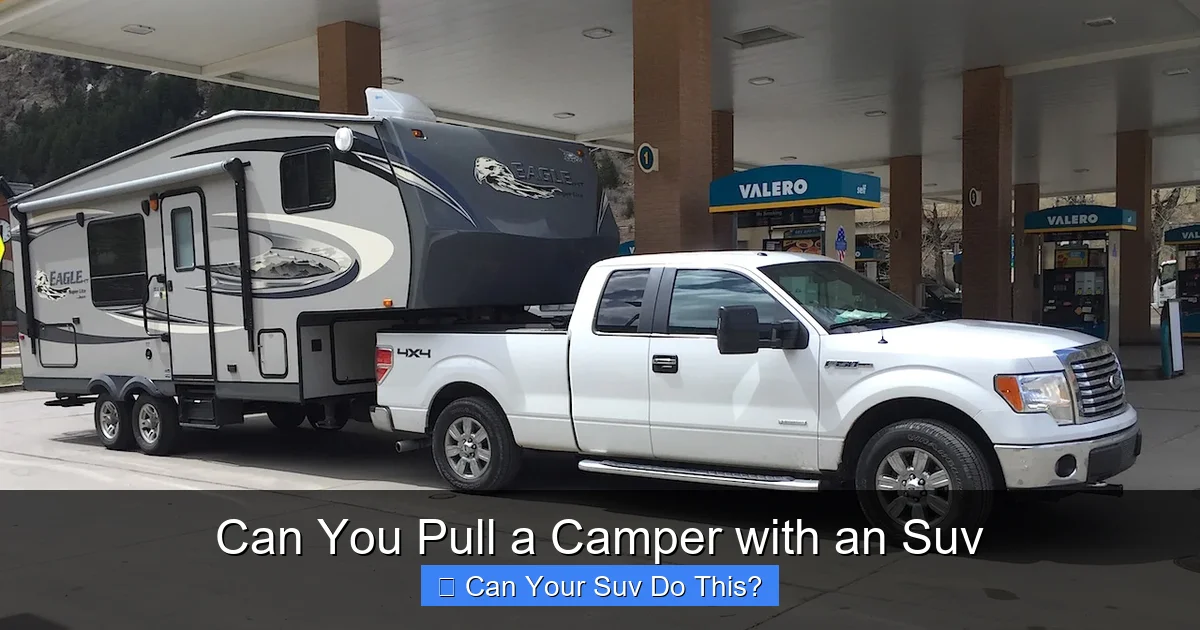
Yes, you can pull a camper with an SUV—but only if your vehicle’s towing capacity matches or exceeds the camper’s weight. Matching your SUV to the right trailer, using proper equipment, and driving safely are key to a smooth, stress-free camping trip.
So, you’ve got an SUV and a dream of hitting the open road with a cozy camper in tow. Maybe you’re picturing mountain views, lakeside sunrises, or just a weekend escape from the city. But before you hitch up and hit the highway, there’s one big question: *Can you pull a camper with an SUV?*
The short answer? **Yes—but it depends.** Not every SUV is built to tow heavy loads, and not every camper is light enough for smaller vehicles. Towing a camper isn’t just about power; it’s about safety, preparation, and knowing your vehicle’s limits. Whether you drive a rugged full-size SUV or a compact crossover, understanding towing basics can make the difference between a smooth adventure and a roadside breakdown.
In this guide, we’ll walk you through everything you need to know about pulling a camper with an SUV. From checking your towing capacity to choosing the right hitch, we’ll cover the essentials so you can tow with confidence. Whether you’re a first-time camper or upgrading your setup, this article will help you make smart, safe decisions. Let’s dive in.
Key Takeaways
- Check your SUV’s towing capacity: This is the maximum weight your vehicle can safely tow, found in the owner’s manual or manufacturer’s website.
- Know your camper’s weight: Always consider the dry weight plus cargo, water, propane, and gear—this is the gross trailer weight (GTW).
- Use the right hitch and equipment: A Class III or IV hitch, brake controller, and sway bars are often needed for safe towing.
- Not all SUVs are created equal: Full-size SUVs like the Ford Expedition or Chevrolet Tahoe tow more than compact models like the Honda CR-V.
- Practice safe driving habits: Allow extra stopping distance, avoid sudden maneuvers, and check tire pressure before every trip.
- Consider a weight distribution hitch: This improves stability and control, especially with heavier campers.
- Get professional help if unsure: Visit a towing specialist or dealership to ensure your setup is safe and legal.
📑 Table of Contents
Understanding Towing Capacity: The Foundation of Safe Towing
Before you even think about hitching up, you need to know your SUV’s **towing capacity**. This number tells you the maximum weight your vehicle can safely pull. Exceeding it can lead to engine strain, brake failure, or even accidents.
Towing capacity varies widely between SUV models. A compact SUV like the Toyota RAV4 might tow around 1,500 to 3,500 pounds, while a full-size SUV like the Ford Expedition can handle up to 9,300 pounds. That’s a huge difference—and it directly affects what kind of camper you can pull.
So how do you find your SUV’s towing capacity? Start with the **owner’s manual**. It’s the most reliable source. You can also check the manufacturer’s website or use online towing calculators. Look for the “maximum towing capacity” under standard conditions—this usually assumes you’re towing on flat ground with minimal cargo and passengers.
But here’s a common mistake: people confuse **towing capacity** with **payload capacity**. Payload is how much weight your SUV can carry inside—passengers, gear, fuel, etc. Both matter. If your SUV is already loaded with gear and people, you may not be able to tow the full rated capacity.
For example, let’s say your SUV has a 5,000-pound towing capacity and a 1,500-pound payload. If you’ve got four people (600 pounds), luggage (200 pounds), and a full tank of gas (100 pounds), you’ve already used 900 pounds of payload. That leaves less room for tongue weight—the downward force the camper exerts on the hitch. Tongue weight should be about 10–15% of the camper’s total weight. So a 4,000-pound camper needs 400–600 pounds of tongue weight. If your payload is maxed out, you could be overloading your SUV.
Always do the math. Add up your passengers, cargo, fuel, and tongue weight. If the total exceeds your payload, you’re risking damage to your suspension, brakes, and drivetrain.
Camper Weight: What You Need to Know Before You Hitch Up
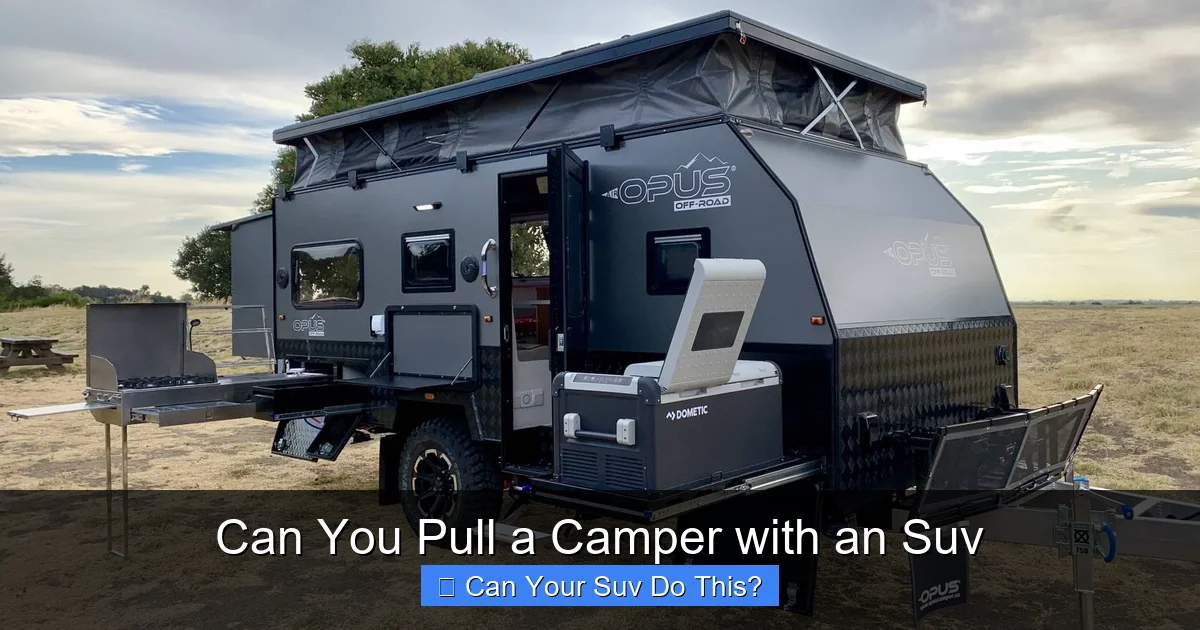
Visual guide about Can You Pull a Camper with an Suv
Image source: s3.amazonaws.com
Now that you know your SUV’s towing limit, it’s time to look at the camper. But don’t just glance at the sticker—understand the different weight ratings.
The most important number is the **Gross Trailer Weight (GTW)**. This is the total weight of the camper when fully loaded—including water, propane, food, clothes, and gear. This is the number you must compare to your SUV’s towing capacity.
Many people make the mistake of looking only at the **dry weight**—the camper’s weight with no options or cargo. A dry weight of 3,000 pounds might sound manageable, but once you add 50 gallons of water (400 pounds), two propane tanks (60 pounds), and a week’s worth of supplies (200+ pounds), you’re suddenly at 3,660 pounds. That extra 660 pounds can push you over your SUV’s limit.
Let’s look at a real-world example. Say you’re eyeing a popular travel trailer like the Airstream Bambi. Its dry weight is around 3,500 pounds. But with options and full tanks, it can easily reach 4,200 pounds. If your SUV has a 4,000-pound towing capacity, you’re already over—even before adding passengers and gear.
Another key term is **Gross Vehicle Weight Rating (GVWR)**. This is the maximum weight the camper is designed to handle, including its own structure and cargo. Never exceed the GVWR—it’s a safety limit set by the manufacturer.
Also, pay attention to **hitch weight**—the downward force on the tow vehicle’s hitch. As mentioned earlier, this should be 10–15% of the GTW. Too little, and the trailer may sway. Too much, and you’ll strain your SUV’s rear suspension.
To avoid surprises, always weigh your loaded camper at a public scale. Many truck stops and recycling centers offer this service for a small fee. It’s the only way to know your true GTW.
Matching Your SUV to the Right Camper
Not all SUVs are created equal when it comes to towing. The type of SUV you drive will determine what kind of camper you can safely pull.
Compact and Midsize SUVs: Light-Duty Towing
Compact SUVs like the Honda CR-V, Toyota RAV4, or Subaru Forester are great for city driving and light adventures. But their towing capacity usually ranges from 1,500 to 3,500 pounds. That limits you to very small campers—think teardrop trailers, pop-ups, or lightweight travel trailers under 3,000 pounds.
For example, the RAV4 can tow up to 3,500 pounds (with the towing package). That’s enough for a small A-frame camper like the Nest Caravan or a basic pop-up. But it’s not enough for a full-sized travel trailer with a bathroom and kitchen.
If you’re set on a compact SUV, look for models with a factory-installed towing package. These often include a heavier-duty radiator, transmission cooler, and upgraded electrical system—all crucial for safe towing.
Full-Size SUVs: Heavy-Duty Towing Power
If you’re serious about camping with a larger trailer, a full-size SUV is your best bet. Models like the Ford Expedition, Chevrolet Tahoe, GMC Yukon, and Toyota Sequoia can tow 7,000 to 9,000+ pounds.
These SUVs are built for heavy loads. They have powerful V8 or turbocharged engines, robust transmissions, and reinforced frames. The Ford Expedition, for instance, can tow up to 9,300 pounds when properly equipped. That’s enough for a 7,000-pound travel trailer with room to spare.
Full-size SUVs also have more interior space, so you can bring more passengers and gear without sacrificing towing power. Plus, many come with advanced towing features like trailer sway control, integrated brake controllers, and rearview cameras with trailer guides.
Luxury and Hybrid SUVs: Towing with Efficiency
Luxury SUVs like the BMW X5, Mercedes-Benz GLE, or Audi Q7 often have impressive towing capacities—up to 7,700 pounds in some cases. But they may require special packages and can be expensive to maintain.
Hybrid SUVs are trickier. While some, like the Toyota Highlander Hybrid, can tow up to 3,500 pounds, others have lower limits due to battery placement and cooling needs. Always check the hybrid model’s specific towing rating—it’s often lower than the gas-only version.
Essential Towing Equipment: Don’t Skip These
Even if your SUV and camper are a perfect match on paper, you still need the right equipment to tow safely.
The Right Hitch
Most campers require a **Class III or IV hitch**. These are heavy-duty hitches rated for 3,500 to 10,000 pounds. A Class II hitch (up to 3,500 pounds) might work for very light trailers, but it’s not ideal for anything over 2,500 pounds.
Make sure the hitch is properly installed—either by a professional or using a trusted DIY kit. A loose or misaligned hitch can cause dangerous sway or detachment.
Weight Distribution Hitch
If your camper is over 5,000 pounds, a **weight distribution hitch** is highly recommended. This system uses spring bars to redistribute the trailer’s weight across all four tires of your SUV, improving stability and control.
Without it, the rear of your SUV can sag, causing poor steering and increased wear on the rear suspension. A weight distribution hitch levels the load and reduces sway.
Brake Controller
Most campers over 1,500 pounds require electric brakes. Your SUV needs a **brake controller** to activate them. This device, usually mounted under the dashboard, lets you adjust brake power and manually apply trailer brakes if needed.
Many modern SUVs come with a factory-installed brake controller. If yours doesn’t, you can install an aftermarket one. It’s a must-have for safety—especially on hills or in traffic.
Sway Control
Trailer sway happens when wind, passing trucks, or uneven roads cause the camper to fishtail. It’s scary and dangerous.
Sway control devices—like friction bars or dual-cam systems—help reduce this motion. Some weight distribution hitches include built-in sway control. Others require separate add-ons.
Always test your setup in a safe, empty parking lot before hitting the highway. Practice backing up, turning, and braking with the trailer attached.
Driving Tips for Towing a Camper
Towing changes how your SUV handles. It’s heavier, slower to accelerate, and harder to stop. Here’s how to drive safely.
Slow Down and Leave Space
Reduce your speed by 10–15 mph when towing. Allow at least twice the normal following distance. Sudden braking can cause jackknifing or loss of control.
Use Lower Gears on Hills
When climbing or descending steep grades, shift into a lower gear (like “L” or “2” on automatic transmissions). This reduces strain on the engine and brakes.
Check Tires and Pressure
Underinflated tires overheat and can blow out. Check both your SUV and camper tires before every trip. Use a tire pressure gauge and follow the manufacturer’s recommendations.
Avoid Sudden Maneuvers
No quick lane changes or sharp turns. Wide turns are essential—your trailer’s wheels follow a tighter path than your SUV’s. Swing wide on corners to avoid curbs or medians.
Use Mirrors and Cameras
Extended side mirrors or a backup camera with trailer mode can help you see blind spots. Some SUVs offer 360-degree cameras—great for tight spaces.
Common Mistakes to Avoid
Even experienced drivers make towing errors. Here are the top ones to watch for.
Overloading the Camper
Packing too much gear? That’s a fast way to exceed your GTW. Use a luggage scale for heavy items and distribute weight evenly—60% in the front half of the trailer.
Ignoring Maintenance
Towing puts extra stress on your SUV. Regularly check the transmission fluid, coolant, brakes, and suspension. Change fluids more often if you tow frequently.
Skipping the Pre-Trip Inspection
Before every trip, inspect the hitch, lights, tires, and brakes. Make sure all connections are secure and the trailer is level.
Driving Without Practice
If you’ve never towed before, practice in an empty parking lot. Learn how the trailer responds to turns, stops, and reverses.
Conclusion: Can Your SUV Do This?
So, can you pull a camper with an SUV? **Yes—if you do it right.** It starts with knowing your SUV’s towing capacity and matching it to a camper that fits within those limits. Add the right equipment, practice safe driving, and maintain your vehicle, and you’ll be ready for countless adventures.
Don’t let fear or misinformation stop you. With the right preparation, even a modest SUV can handle a small camper. And if you’re ready to upgrade, a full-size SUV opens up a world of possibilities.
Remember: towing is not just about power—it’s about responsibility. Respect the limits of your vehicle, respect the road, and respect the journey. Whether you’re heading to a national park or a quiet lakeside campground, the freedom of the open road is worth the effort.
Now go forth, hitch up safely, and make some memories.
Frequently Asked Questions
Can a small SUV like a Honda CR-V pull a camper?
Yes, but only very small campers. The CR-V can tow up to 1,500–3,500 pounds depending on the model and engine. That’s enough for a lightweight teardrop trailer or pop-up camper, but not for larger travel trailers.
Do I need a special license to tow a camper with an SUV?
In most states, no special license is required for towing a camper with an SUV, as long as the combined weight is under 26,000 pounds. However, check your local laws—some states have specific rules for trailers over certain weights.
What happens if I exceed my SUV’s towing capacity?
Exceeding towing capacity can cause engine overheating, transmission failure, brake damage, and loss of control. It also voids your warranty and may not be covered by insurance in case of an accident.
Can I tow a camper without a brake controller?
Only if the camper weighs under 1,500 pounds and doesn’t have brakes. Most campers over that weight require electric brakes and a brake controller for safe stopping.
How do I know if my SUV has a towing package?
Check the owner’s manual or look for features like a heavy-duty radiator, transmission cooler, upgraded alternator, and factory-installed hitch. You can also ask a dealership to verify.
Is it safe to tow a camper in the rain or wind?
Towing in bad weather is riskier due to reduced traction and increased sway. If you must drive, reduce speed, increase following distance, and avoid sudden movements. Consider delaying your trip if conditions are severe.