
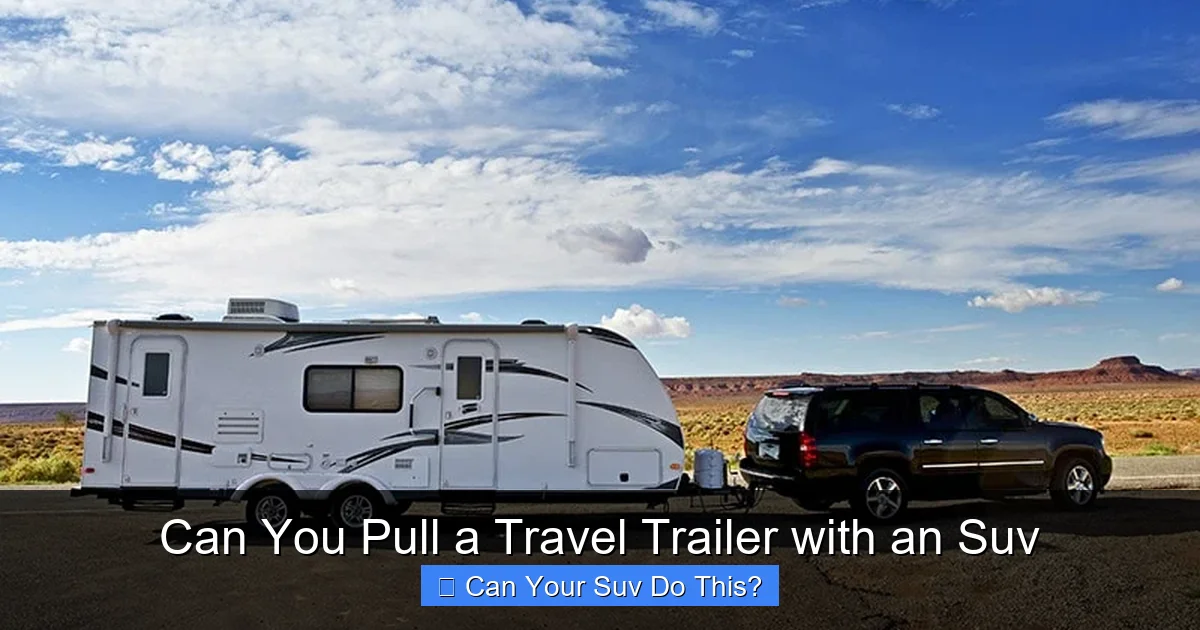
Yes, you can pull a travel trailer with an SUV, but success depends on matching your SUV’s towing capacity to the trailer’s weight. Always check your vehicle’s manufacturer ratings and ensure proper hitch setup to safely handle the load, as overloading can lead to dangerous driving conditions and mechanical failure.
Key Takeaways
- Check your SUV’s towing capacity: Match it to the trailer’s weight for safe towing.
- Use the right hitch and equipment: Proper setup prevents accidents and improves control.
- Consider trailer size and weight: Lighter trailers are easier for SUVs to handle.
- Upgrade brakes if needed: Enhanced braking ensures safer stops with added load.
- Practice driving and maneuvering: Get comfortable with longer, heavier vehicles before trips.
- Distribute weight evenly: Proper balance improves stability and reduces sway.
📑 Table of Contents
- Can You Pull a Travel Trailer with an SUV?
- Understanding Towing Capacity: The Foundation of Safe Towing
- Matching Your SUV to the Right Travel Trailer
- Essential Towing Equipment for SUVs
- Driving Tips for Towing with an SUV
- Real SUVs That Can (and Can’t) Tow Travel Trailers
- Common Mistakes to Avoid When Towing with an SUV
- Can You Pull a Travel Trailer with an SUV? The Final Answer
Can You Pull a Travel Trailer with an SUV?
So, you’ve got an SUV parked in your driveway, and you’ve been dreaming about weekend getaways, cross-country road trips, or maybe even full-time travel in a cozy little trailer. But here’s the big question: Can you pull a travel trailer with an SUV? It’s a question I asked myself not too long ago when I traded in my sedan for a rugged-looking SUV, convinced it could handle anything—including hauling a home on wheels.
Let me tell you, the answer isn’t as simple as “yes” or “no.” It depends on a lot of factors: the size and weight of your SUV, the type of trailer you’re eyeing, your driving experience, and even the terrain you plan to explore. I learned this the hard way on my first attempt to tow a small teardrop trailer up a mountain pass. My SUV groaned, the engine overheated, and I spent the night in a rest stop instead of a scenic overlook. But that experience taught me more than any manual ever could. Since then, I’ve done my research, talked to fellow travelers, and even upgraded my setup. And now? I’m pulling a 25-foot travel trailer with confidence—thanks to understanding what my SUV can really handle.
Understanding Towing Capacity: The Foundation of Safe Towing
Before you even think about hitching up, you need to know your SUV’s towing capacity. This is the maximum weight your vehicle can safely pull, and it’s not something you should guess. Every SUV has a specific towing rating set by the manufacturer, and exceeding it can lead to serious mechanical failure, loss of control, or even accidents.
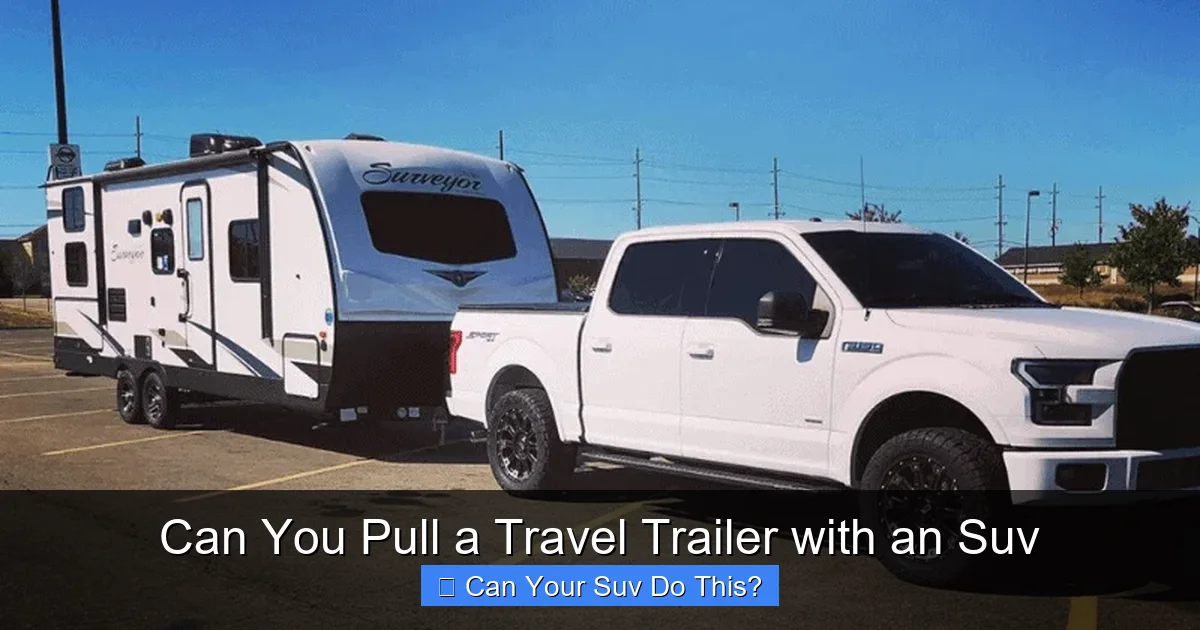
Visual guide about Can You Pull a Travel Trailer with an Suv
Image source: rvingknowhow.com
What Is Towing Capacity?
Towing capacity is the maximum weight your SUV can pull when properly equipped. It includes the weight of the trailer, all its contents (furniture, water, gear), and any passengers or cargo in the SUV. This number is determined by factors like engine power, transmission strength, cooling systems, frame design, and braking capability.
Where to Find Your SUV’s Towing Capacity
You can find your SUV’s towing capacity in several places:
- The owner’s manual
- The driver’s side door jamb sticker
- The manufacturer’s website (search by make, model, and year)
- Online towing calculators from trusted sources like the RV Safety & Education Foundation
For example, a 2023 Ford Explorer has a towing capacity ranging from 3,500 to 5,600 pounds, depending on the engine and drivetrain. Meanwhile, a Toyota Highlander can tow between 3,500 and 5,000 pounds. Always check your specific trim and options—don’t assume all models in a lineup are equal.
Why Exceeding Towing Capacity Is Dangerous
Towing beyond your SUV’s limits doesn’t just strain the engine—it affects every part of your vehicle. Overloading can cause:
- Transmission overheating
- Brake failure due to increased stopping distance
- Loss of steering control, especially on hills or in wind
- Suspension damage or tire blowouts
I once met a traveler whose SUV’s rear suspension collapsed after towing a 6,000-pound trailer with a 4,500-pound capacity. The repair cost over $3,000—and that didn’t include the tow bill or the ruined vacation.
Matching Your SUV to the Right Travel Trailer
Now that you know your SUV’s towing limits, it’s time to find a travel trailer that fits. Not all trailers are created equal, and choosing the wrong one can turn your dream trip into a nightmare.
Types of Travel Trailers and Their Weights
Travel trailers come in various sizes and styles, each with different weight ranges. Here’s a quick breakdown:
- Tear-drop trailers: 1,000–2,500 lbs – Perfect for small SUVs and solo travelers.
- Pop-up campers: 1,500–3,500 lbs – Lightweight and compact, great for weekend trips.
- Small travel trailers (15–20 ft): 3,000–5,000 lbs – Ideal for mid-size SUVs like the Honda Pilot or Jeep Grand Cherokee.
- Mid-size trailers (20–25 ft): 5,000–7,000 lbs – Best for full-size SUVs like the Chevrolet Tahoe or Ford Expedition.
- Large trailers (25+ ft): 7,000+ lbs – Usually require heavy-duty trucks, not SUVs.
For example, a 2022 Subaru Outback has a towing capacity of 2,700 pounds. That means it’s only suitable for the smallest tear-drop or pop-up trailers. But a 2023 GMC Yukon Denali can tow up to 8,400 pounds—enough for a mid-size travel trailer with room to spare.
Don’t Forget the “Wet Weight”
When comparing trailers, always look at the gross vehicle weight rating (GVWR), also known as “wet weight.” This includes the trailer’s dry weight plus all fluids (water, propane, batteries) and cargo. A trailer advertised as “4,000 lbs” might actually weigh 5,200 lbs when fully loaded. Always plan for at least 10–15% more weight than the dry weight.
Real-World Example: Matching SUV and Trailer
Let’s say you drive a 2021 Jeep Grand Cherokee with a 6,200-pound towing capacity. You’re eyeing a 22-foot travel trailer with a dry weight of 4,800 pounds. Sounds good, right? But when you add water tanks, a generator, bikes, and camping gear, the total weight jumps to 6,100 pounds. That’s cutting it dangerously close. A better choice would be a 19-foot trailer with a wet weight under 5,500 pounds, leaving you a 700-pound safety buffer.
Essential Towing Equipment for SUVs
Even if your SUV can technically tow a trailer, you can’t just hitch it up and go. Proper equipment is critical for safety, control, and legal compliance.
Weight Distribution Hitches: Your Best Friend
A weight distribution hitch (WDH) is a must for trailers over 3,500 pounds. It redistributes the trailer’s tongue weight across all four wheels of your SUV, improving stability and reducing sway. Without it, your SUV’s rear end can sag, causing poor handling and increased risk of fishtailing.
I used to think a basic ball mount was enough—until I tried towing a 5,000-pound trailer through a windy canyon. The trailer started swaying, and I had to pull over and install a WDH before continuing. Now it’s the first thing I check before every trip.
Sway Control Systems
Sway control devices help prevent the trailer from fishtailing, especially in crosswinds or when passing large trucks. Many WDHs come with built-in sway control, but you can also add separate friction or hydraulic sway bars. These are relatively inexpensive ($100–$300) and can make a huge difference in control.
Brake Controllers
If your trailer has electric brakes (most do over 3,000 pounds), you’ll need a brake controller installed in your SUV. This device lets you manually activate the trailer’s brakes from the driver’s seat, improving stopping power and reducing wear on your SUV’s brakes. Most modern SUVs have pre-wired harnesses for easy installation.
Mirrors and Lighting
Extended towing mirrors are essential for seeing around wide trailers. Standard mirrors won’t give you enough visibility, especially when changing lanes or backing up. Also, ensure your trailer’s lights (brake, turn, and running lights) are properly connected and functioning. A simple light tester can save you from a ticket or, worse, an accident.
Driving Tips for Towing with an SUV
Towing changes how your SUV handles. It’s heavier, slower to accelerate, and harder to stop. But with the right techniques, you can drive safely and confidently.
Slow Down and Leave Extra Space
When towing, your stopping distance increases by up to 40%. Always leave at least 5–6 seconds of following distance behind the vehicle in front of you. On highways, reduce your speed by 5–10 mph compared to normal driving. This gives you more time to react and reduces strain on your brakes.
Practice Backing Up
Backing up with a trailer is counterintuitive—turn the wheel right to go left, and vice versa. The best way to learn? Find an empty parking lot and practice. Start with straight-line backing, then try 90-degree turns and backing into a space. I spent an entire Saturday doing this before my first big trip, and it paid off when I had to back into a tight campsite.
Watch for Hills and Wind
Mountain passes and open highways with strong crosswinds can be challenging. When climbing hills, use lower gears to maintain engine power and prevent overheating. On descents, use engine braking (downshift) to avoid riding the brakes, which can overheat and fail. In windy areas, keep a firm grip on the wheel and be ready to correct gently—overcorrecting can cause sway.
Check Tires and Fluids Regularly
Towing puts extra stress on your SUV’s tires, transmission, and cooling system. Before every trip, check:
- Tire pressure (including trailer tires)
- Transmission fluid level and condition
- Engine coolant and oil levels
- Brake fluid and brake pad wear
I learned this after my transmission overheated on a 90-degree day. Now I carry extra coolant and a portable tire inflator—just in case.
Real SUVs That Can (and Can’t) Tow Travel Trailers
Let’s look at some popular SUVs and see how they stack up when it comes to towing travel trailers.
Best SUVs for Towing Travel Trailers
These SUVs have strong towing capacities and are well-suited for mid-size trailers:
- Ford Expedition: Up to 9,300 lbs – Can handle most 25-foot trailers with ease.
- Chevrolet Tahoe: Up to 8,400 lbs – Great for families wanting space and power.
- Toyota Sequoia: Up to 9,500 lbs – Reliable and rugged, perfect for long trips.
- Jeep Grand Cherokee (V8): Up to 7,200 lbs – A solid choice for off-road and towing.
SUVs That Can Tow Smaller Trailers
These models are better suited for lightweight trailers:
- Honda Pilot: Up to 5,000 lbs – Good for 18–20 foot trailers.
- Subaru Ascent: Up to 5,000 lbs – Great for all-weather towing.
- Toyota Highlander: Up to 5,000 lbs – Reliable and fuel-efficient.
SUVs to Avoid for Towing
These SUVs have low towing capacities and aren’t ideal for travel trailers:
- Honda CR-V: 1,500–3,500 lbs – Only suitable for pop-ups or tear-drops.
- Toyota RAV4: 1,500–3,500 lbs – Great for city driving, not heavy towing.
- Mazda CX-5: 2,000–3,500 lbs – Stylish but not built for trailers.
Remember: just because an SUV can tow a trailer doesn’t mean it should. Always consider your driving habits, terrain, and comfort level.
Common Mistakes to Avoid When Towing with an SUV
Even experienced drivers make mistakes when towing. Here are the most common ones—and how to avoid them.
Overloading the Trailer
It’s tempting to pack everything “just in case,” but overloading is dangerous. Use a portable scale to weigh your trailer at a truck stop or recycling center. Many campgrounds also have scales for guests. Keep the trailer’s weight at least 10% below your SUV’s max capacity for safety.
Ignoring Weight Distribution
Improperly loaded trailers can cause sway or jackknifing. Always load 60% of the weight in the front half of the trailer and keep heavy items low and centered. Avoid placing all your gear in the back—this increases tongue weight and can lift the SUV’s rear wheels.
Skipping Pre-Trip Inspections
Before every trip, do a full walk-around:
- Check hitch connection and safety chains
- Test trailer brakes and lights
- Inspect tires for wear and proper inflation
- Ensure cargo is secured
I keep a checklist in my glove box—it takes 5 minutes and gives me peace of mind.
Driving Too Fast
Speed is the enemy of stability. Most experts recommend driving no faster than 55–60 mph when towing. High speeds increase sway risk and reduce your ability to react. On highways, use the right lane and let faster traffic pass.
Can You Pull a Travel Trailer with an SUV? The Final Answer
So, can you pull a travel trailer with an SUV? Yes—but only if your SUV has the right towing capacity, you choose a compatible trailer, and you equip and drive it properly. It’s not just about horsepower; it’s about preparation, knowledge, and respect for the limits of your vehicle.
My journey from nervous first-timer to confident tower taught me that towing is as much about mindset as it is about mechanics. It’s about planning ahead, staying humble, and always prioritizing safety over speed or convenience. Whether you’re towing a tiny tear-drop or a full-sized home on wheels, the key is to match your SUV’s capabilities with your travel goals.
If you’re unsure, start small. Rent a trailer for a weekend trip. Take a towing safety course. Talk to other travelers at campgrounds. The more you learn, the more confident you’ll become. And remember: the best adventures aren’t about how far you go—they’re about how safely and happily you get there.
| SUV Model | Max Towing Capacity (lbs) | Best For |
|---|---|---|
| Ford Expedition | 9,300 | Large travel trailers |
| Chevrolet Tahoe | 8,400 | Mid to large trailers |
| Toyota Sequoia | 9,500 | Heavy-duty towing |
| Jeep Grand Cherokee (V8) | 7,200 | Mid-size trailers, off-road |
| Honda Pilot | 5,000 | Small to mid trailers |
| Subaru Ascent | 5,000 | Lightweight trailers, all weather |
| Toyota Highlander | 5,000 | Compact travel trailers |
| Honda CR-V | 3,500 | Pop-ups and tear-drops only |
With the right setup and mindset, your SUV can be the perfect partner for your next adventure. Just remember: know your limits, prepare thoroughly, and always tow with confidence—not fear.
Frequently Asked Questions
Can you pull a travel trailer with an SUV?
Yes, many SUVs are capable of pulling a travel trailer, but it depends on the SUV’s towing capacity and the trailer’s weight. Always check your vehicle’s owner’s manual and the trailer’s Gross Vehicle Weight Rating (GVWR) to ensure safe towing.
What size travel trailer can an SUV tow?
The size of the travel trailer an SUV can tow varies based on the model and engine. Compact SUVs may tow 1,500–3,500 lbs, while full-size SUVs with V8 engines can often handle 5,000–8,000 lbs or more.
Do I need a special hitch to pull a travel trailer with an SUV?
Yes, you’ll need a properly rated hitch and possibly a weight distribution system, especially for heavier trailers. Consult a professional installer to ensure compatibility and safety with your SUV.
Can a small SUV safely tow a travel trailer?
Some small SUVs can tow lightweight travel trailers under 3,000 lbs, but you must stay within the manufacturer’s towing limits. Overloading can damage the vehicle and compromise safety.
What should I consider before pulling a travel trailer with an SUV?
Key factors include your SUV’s towing capacity, trailer weight, braking system, and driving conditions. Also, ensure your SUV has trailer sway control and consider adding auxiliary cooling for long trips.
Are there SUVs specifically designed for towing travel trailers?
Yes, many full-size and midsize SUVs like the Ford Expedition, Chevrolet Tahoe, and Toyota Sequoia are built with high towing capacities—often 7,000 lbs or more—making them ideal for pulling travel trailers.