
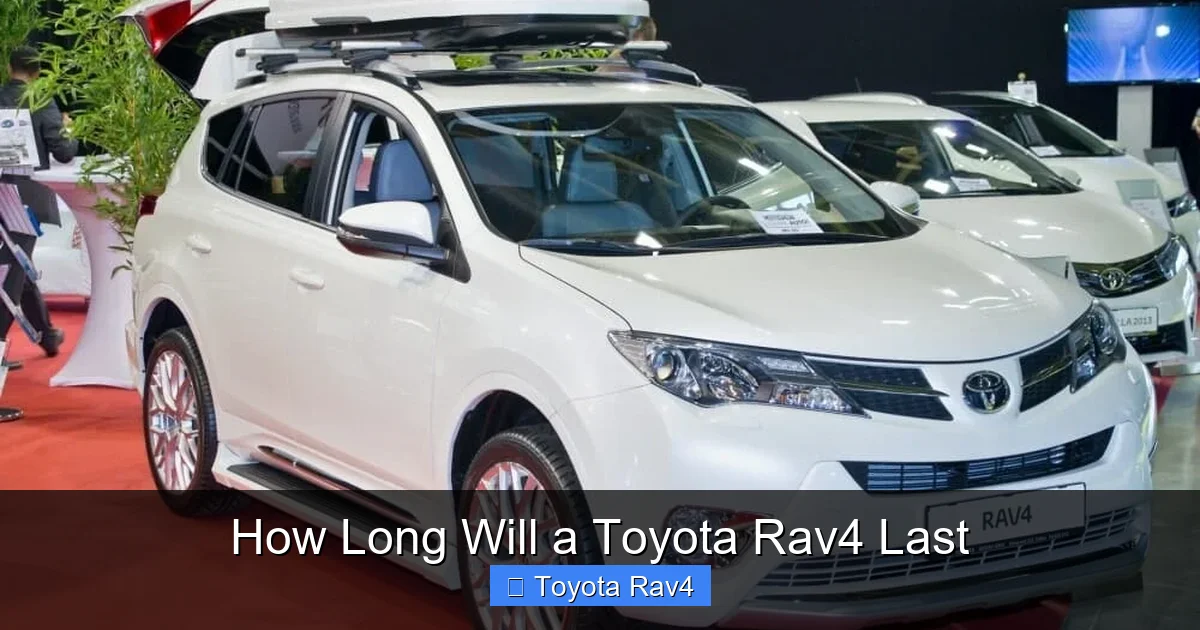
The Toyota RAV4 is built to last, often reaching 200,000 to 300,000 miles with proper care. Regular maintenance, timely repairs, and driving habits play a big role in how long your RAV4 will serve you reliably.
If you’re thinking about buying a Toyota RAV4—or already own one—you’re probably wondering: *How long will a Toyota RAV4 last?* It’s a fair question. After all, your SUV is more than just a vehicle; it’s your daily driver, weekend adventurer, and maybe even your family’s trusted road-trip companion. You want to know it’ll be there for the long haul.
The good news? The Toyota RAV4 is one of the most reliable compact SUVs on the market. With proper care, it’s not uncommon for owners to hit 200,000 miles—and many go well beyond that. Some even reach 300,000 miles or more. That’s decades of dependable service. But like any vehicle, longevity isn’t just about the brand or model. It’s about how you treat it, where you drive it, and how consistently you maintain it.
In this guide, we’ll dive deep into what makes the RAV4 so durable, what factors influence its lifespan, and how you can maximize the years (and miles) you get out of your SUV. Whether you’re driving a 2024 RAV4 Hybrid or a 2010 gas model, the principles of longevity remain the same. Let’s get started.
Key Takeaways
- Typical Lifespan: Most Toyota RAV4 models last between 200,000 and 300,000 miles, with some even surpassing 350,000 miles.
- Maintenance Matters: Following the manufacturer’s maintenance schedule is the #1 factor in extending your RAV4’s life.
- Engine Reliability: The RAV4’s 2.5L four-cylinder engine is known for durability and low failure rates when serviced regularly.
- Driving Conditions Impact Longevity: Frequent short trips, extreme temperatures, and off-road use can reduce lifespan if not managed properly.
- Hybrid Models Last Longer: RAV4 Hybrid versions often outlast gas-only models due to reduced engine wear and regenerative braking.
- Resale Value Stays High: Even high-mileage RAV4s retain strong resale value thanks to Toyota’s reputation for reliability.
- Common Issues Are Fixable: Known problems like oil consumption or infotainment glitches are manageable with timely repairs.
📑 Table of Contents
What’s the Average Lifespan of a Toyota RAV4?
When people ask, “How long will a Toyota RAV4 last?” they’re usually thinking in terms of miles. And the answer is impressive: most RAV4s comfortably reach **200,000 to 300,000 miles** with proper maintenance. That’s roughly 15 to 20 years of use for the average driver putting on 12,000 to 15,000 miles per year.
But let’s break that down. A 200,000-mile RAV4 isn’t just surviving—it’s thriving. Many owners report their SUVs still running strong at this milestone, with minimal major repairs. Some even push past 350,000 miles. For example, a 2007 RAV4 owner in Colorado recently shared that his vehicle hit 367,000 miles before the transmission finally gave out—after he replaced it once at 280,000 miles. That’s a testament to Toyota’s engineering.
Why such longevity? It starts with the RAV4’s reputation for reliability. Toyota has spent decades refining its manufacturing processes, and the RAV4 benefits from that legacy. The engines are simple, robust, and built to handle years of daily use. The chassis is well-designed, and the overall build quality is consistently high across model years.
Of course, not every RAV4 will hit 300,000 miles. Some may need major repairs earlier, especially if they’ve been neglected or driven in harsh conditions. But the average owner who follows a basic maintenance routine can expect their RAV4 to last well into six figures—and often beyond.
Why the Toyota RAV4 Is Built to Last
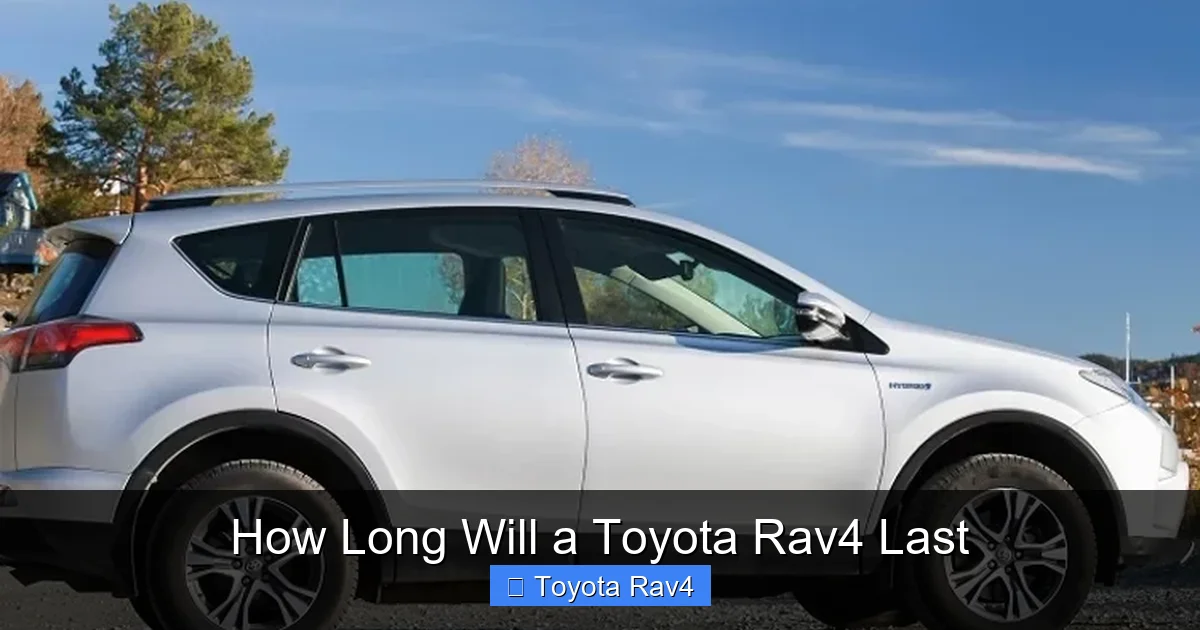
Visual guide about How Long Will a Toyota Rav4 Last
Image source: carcaretotal.com
So, what makes the RAV4 so durable? It’s not magic—it’s smart engineering, quality materials, and a focus on long-term reliability. Let’s look at the key factors that contribute to the RAV4’s impressive lifespan.
Proven Engine Design
The heart of any vehicle is its engine, and the RAV4’s 2.5L four-cylinder engine is a workhorse. Introduced in the fourth generation (2013–2018) and refined in the fifth (2019–present), this engine is known for its balance of power, efficiency, and durability. It produces around 203 horsepower in newer models and delivers smooth, consistent performance.
What makes it so reliable? For one, it’s a naturally aspirated engine (in most models), meaning it doesn’t rely on turbocharging, which can add stress and complexity. Fewer moving parts mean fewer things can go wrong. Toyota also uses high-quality internal components, including forged steel connecting rods and a durable timing chain (not a belt), which lasts the life of the engine.
Regular oil changes are key—every 5,000 to 7,500 miles—but when done consistently, this engine can run for decades. Many owners report no major engine issues even past 250,000 miles.
Robust Transmission
The RAV4 typically comes with an 8-speed automatic transmission (in newer models) or a CVT (continuously variable transmission) in hybrid versions. Both are designed for longevity. The 8-speed unit is smooth and responsive, while the CVT in hybrids is optimized for fuel efficiency and reduced wear.
One common concern with CVTs is their lifespan, but Toyota’s implementation is among the best in the industry. With proper fluid changes every 60,000 to 100,000 miles, the transmission can last well over 200,000 miles. In fact, many hybrid RAV4 owners report their CVTs running flawlessly past 250,000 miles.
Quality Build and Materials
Toyota doesn’t cut corners on materials. The RAV4’s frame is made from high-strength steel, which resists rust and corrosion—especially important in snowy or coastal regions. The suspension components are durable, and the interior materials, while not luxury-grade, are built to withstand daily wear and tear.
Even the paint and trim are designed to last. Many owners report minimal fading or peeling, even after 10+ years of sun exposure. This attention to detail adds up over time, helping the RAV4 maintain its structural integrity and appearance.
Hybrid Technology Adds Longevity
The RAV4 Hybrid, introduced in 2016, offers even greater longevity potential. Why? Because the electric motor assists the gasoline engine, reducing overall engine strain. This means less wear on internal components, especially during stop-and-go driving.
Additionally, regenerative braking—used in hybrids—reduces wear on brake pads and rotors. Instead of relying solely on friction brakes, the system captures energy during deceleration and uses it to recharge the battery. This not only improves fuel economy but also extends the life of braking components.
Many hybrid RAV4 owners report brake pads lasting 80,000 to 100,000 miles or more—nearly double the lifespan of traditional brakes. Combined with the engine’s reduced workload, it’s no surprise that hybrid models often outlast their gas-only counterparts.
Factors That Affect How Long Your RAV4 Will Last
While the RAV4 is built to last, its actual lifespan depends on several real-world factors. Let’s explore what can help—or hurt—your SUV’s longevity.
Driving Habits and Conditions
How you drive matters. Aggressive acceleration, hard braking, and frequent short trips can shorten your RAV4’s life. Short trips, in particular, prevent the engine from reaching optimal operating temperature, leading to moisture buildup and increased wear.
On the flip side, highway driving is easier on the engine and transmission. Consistent speeds reduce stress on components, and longer drives help burn off condensation in the oil.
If you live in a region with extreme temperatures—very hot or very cold—your RAV4 may face additional challenges. Cold weather can thicken oil and strain the battery, while heat can accelerate fluid breakdown and rubber component aging. Using the right oil viscosity and parking in a garage (when possible) can help mitigate these effects.
Maintenance Routine
This is the #1 factor in how long your RAV4 will last. Skipping oil changes, ignoring warning lights, or delaying repairs can turn small issues into major problems.
Toyota recommends a maintenance schedule based on time or mileage, whichever comes first. Key items include:
– Oil and filter changes every 5,000 to 7,500 miles
– Tire rotations every 5,000 to 10,000 miles
– Brake inspections every 15,000 miles
– Transmission fluid changes every 60,000 to 100,000 miles
– Coolant replacement every 100,000 miles
– Timing chain inspection (if applicable)
Sticking to this schedule—and using OEM or high-quality aftermarket parts—can add years to your RAV4’s life.
Climate and Environment
Where you live plays a big role. If you drive in a snowy area, road salt can accelerate rust on the undercarriage. Regular undercarriage washes (especially in winter) can prevent corrosion.
In coastal areas, salt air can damage paint and metal components. Washing your RAV4 monthly and applying a protective wax or sealant can help.
Dusty or sandy environments can clog air filters faster. Check and replace the engine air filter every 15,000 to 30,000 miles, depending on conditions.
Modifications and Upgrades
While some modifications can enhance performance, others can shorten your RAV4’s lifespan. Lift kits, oversized tires, and performance tuners can strain the suspension, transmission, and engine.
If you’re planning upgrades, consult a trusted mechanic. Some changes—like all-terrain tires or a roof rack—are generally safe, but others may require supporting modifications to avoid premature wear.
Common Issues and How to Prevent Them
No vehicle is perfect, and the RAV4 has a few known issues. But the good news? Most are preventable or fixable with timely attention.
Oil Consumption (2013–2018 Models)
Some fourth-generation RAV4s (2013–2018) were reported to consume oil between changes. This wasn’t due to leaks, but internal engine design. Toyota issued technical service bulletins and extended warranties for affected vehicles.
If you own one of these models, check your oil level monthly and top it off as needed. Use full synthetic oil (0W-20 recommended) and change it every 5,000 miles. Most owners who stay on top of this report no long-term damage.
Infotainment System Glitches
The touchscreen and audio system in some RAV4s (especially 2019–2021 models) can freeze or reboot unexpectedly. This is usually a software issue, not hardware.
Toyota has released updates to fix these bugs. Visit your dealer for a free software update, or check for over-the-air updates if your model supports them.
Suspension Noise (Rear Suspension)
A few owners report clunking or squeaking from the rear suspension, especially in colder weather. This is often due to worn bushings or shock absorbers.
Regular inspections during oil changes can catch these issues early. Replacing worn components before they fail prevents further damage.
Brake Noise (Hybrid Models)
Some RAV4 Hybrid owners notice a “groaning” sound when braking at low speeds. This is normal for regenerative braking systems and doesn’t indicate a problem. However, if the noise is loud or accompanied by reduced braking performance, have it checked.
Tips to Maximize Your RAV4’s Lifespan
Want your RAV4 to last as long as possible? Follow these practical tips:
Stick to the Maintenance Schedule
Use the owner’s manual or Toyota’s online maintenance planner. Set reminders on your phone or calendar. Don’t skip services—even if the car seems fine.
Use Quality Fluids and Parts
Always use manufacturer-recommended oil (0W-20 full synthetic), coolant, and transmission fluid. Cheap alternatives can cause long-term damage.
Drive Gently When Cold
Let your engine warm up for 30 seconds to a minute before driving. Avoid high RPMs until the temperature gauge reaches normal.
Rotate and Align Tires
Uneven tire wear strains suspension components. Rotate tires every 5,000 to 10,000 miles and get an alignment if you notice pulling or uneven wear.
Wash and Wax Regularly
Protect your paint and undercarriage. Wash your RAV4 every two weeks in harsh climates, and wax it twice a year.
Address Issues Early
If you hear a noise, see a warning light, or notice a performance change, don’t wait. Small problems can become expensive repairs if ignored.
Real Owner Stories: RAV4s That Lasted
Nothing proves longevity like real-world examples. Here are a few stories from actual RAV4 owners:
– **Sarah M., 2012 RAV4:** “I bought my RAV4 used with 80,000 miles. I’ve put on another 140,000 miles with only regular maintenance. The only major repair was a water pump at 190,000 miles. It still runs like new.”
– **James T., 2016 RAV4 Hybrid:** “I drive 30,000 miles a year for work. My hybrid just hit 275,000 miles. I’ve changed the oil every 5,000 miles, rotated tires, and replaced brakes once. No engine or transmission issues.”
– **Linda R., 2008 RAV4:** “I live in Minnesota, so salt is a killer. I wash the undercarriage every spring and fall. My RAV4 has 210,000 miles and still looks and drives great.”
These stories show that with care, a RAV4 can be a lifelong companion.
Conclusion: The RAV4 Is a Long-Term Investment
So, how long will a Toyota RAV4 last? The answer is clear: **a very long time**—often 200,000 to 300,000 miles or more. With proper maintenance, gentle driving, and attention to known issues, your RAV4 can serve you reliably for 15 to 20 years.
It’s not just about the miles, though. It’s about peace of mind. Knowing your SUV is built to handle daily commutes, family trips, and weekend adventures—year after year—is priceless. The RAV4’s combination of reliability, fuel efficiency, and resale value makes it one of the smartest SUV choices on the market.
Whether you’re buying new or used, the RAV4 is a long-term investment. Treat it well, and it will reward you with decades of dependable service.
Frequently Asked Questions
How many miles can a Toyota RAV4 last?
Most Toyota RAV4 models last between 200,000 and 300,000 miles with proper maintenance. Some owners even reach 350,000 miles or more, especially with hybrid versions.
What maintenance is required to extend a RAV4’s life?
Follow the manufacturer’s schedule: oil changes every 5,000–7,500 miles, tire rotations, brake inspections, and fluid changes. Regular maintenance is the key to longevity.
Are RAV4 Hybrids more reliable than gas models?
Yes, RAV4 Hybrids often last longer due to reduced engine wear and regenerative braking. The electric motor assists the engine, lowering overall stress.
What are common problems with high-mileage RAV4s?
Common issues include oil consumption (in some 2013–2018 models), infotainment glitches, and suspension noise. Most are fixable with timely repairs.
Can a RAV4 last 20 years?
Yes, if driven 12,000–15,000 miles per year and well-maintained, a RAV4 can easily last 20 years or more.
Does driving in cold weather shorten a RAV4’s lifespan?
Cold weather can strain the battery and engine, but regular maintenance—like using the right oil and warming up the engine—can minimize the impact.