
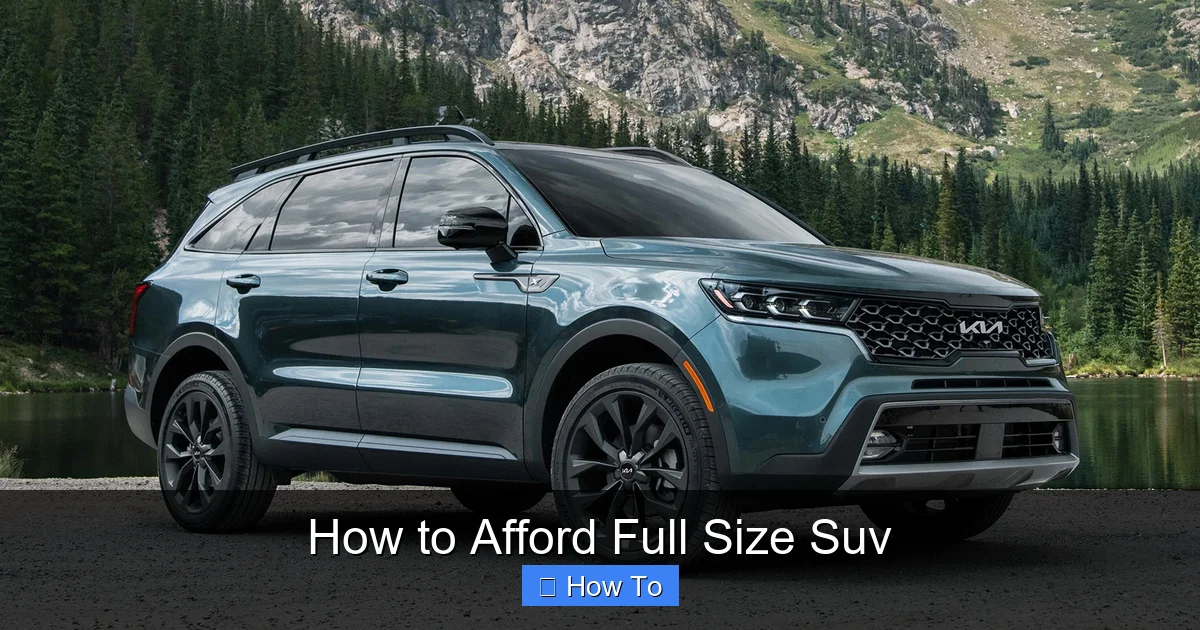
Owning a full-size SUV doesn’t have to drain your wallet. This guide walks you through practical steps—like improving your credit, choosing the right model, and timing your purchase—to make a large, capable vehicle affordable. With smart planning and savvy shopping, you can enjoy space, power, and comfort without financial stress.
Key Takeaways
- Budget wisely: Determine how much you can truly afford by calculating total ownership costs—not just the monthly payment.
- Improve your credit score: A higher credit score can save you thousands in interest over the life of your loan.
- Consider certified pre-owned (CPO) models: You get near-new reliability at a fraction of the price with extended warranties.
- Time your purchase strategically: Shop at the end of the month, quarter, or year when dealers are more motivated to meet sales goals.
- Negotiate like a pro: Research invoice prices, use competing offers, and don’t be afraid to walk away.
- Explore alternative financing: Credit unions and online lenders often offer better rates than traditional banks or dealerships.
- Cut ongoing costs: Choose fuel-efficient trims, maintain your SUV properly, and shop around for insurance to keep long-term expenses low.
How to Afford a Full-Size SUV: A Step-by-Step Guide
If you’re dreaming of a full-size SUV—whether it’s for hauling gear, transporting a big family, or simply enjoying the commanding view of the road—you’re not alone. Vehicles like the Chevrolet Tahoe, Ford Expedition, Toyota Sequoia, and GMC Yukon offer unmatched space, towing power, and comfort. But let’s be honest: they also come with a hefty price tag. The average new full-size SUV costs over $60,000, and that’s before factoring in insurance, fuel, maintenance, and financing.
So how can you afford one without derailing your financial life? The good news is, with smart planning, disciplined budgeting, and a few insider tips, owning a full-size SUV is more achievable than you think. This guide will walk you through every step—from assessing your finances to driving off the lot—with practical advice to help you afford the SUV you need without sacrificing your financial health.
Step 1: Assess Your Financial Readiness
Visual guide about How to Afford Full Size Suv
Image source: teslarati.com
Before you even look at SUVs, take a hard look at your finances. Full-size SUVs are expensive not just to buy, but to own. You’ll need to account for monthly payments, insurance, fuel, maintenance, and potential repairs.
Calculate Your True Budget
Start by using the 20/4/10 rule as a guideline:
– Put down at least 20% of the vehicle’s price.
– Finance for no more than 4 years.
– Keep total car expenses (loan payment, insurance, fuel, maintenance) under 10% of your gross monthly income.
For example, if you earn $6,000 per month, your total car costs should stay under $600. If a full-size SUV’s monthly payment alone is $700, it’s likely unaffordable—even if you can technically make the payment.
Use online auto loan calculators to estimate monthly payments based on different loan terms, interest rates, and down payments. Don’t forget to include taxes, registration, and dealer fees.
Review Your Credit Score
Your credit score directly impacts the interest rate you’ll qualify for. A score above 740 typically gets you the best rates, while scores below 620 may result in high-interest loans that add thousands to your total cost.
Check your credit report for free at AnnualCreditReport.com. Look for errors—like incorrect late payments or accounts that aren’t yours—and dispute them. Even a 20- to 50-point increase in your score can save you hundreds per year in interest.
Build an Emergency Fund
Full-size SUVs are more likely to need repairs than smaller vehicles due to their complexity and size. Aim to have at least $1,000–$2,000 in an emergency fund before buying. This prevents you from relying on credit cards or loans when something breaks.
Step 2: Choose the Right Full-Size SUV for Your Budget
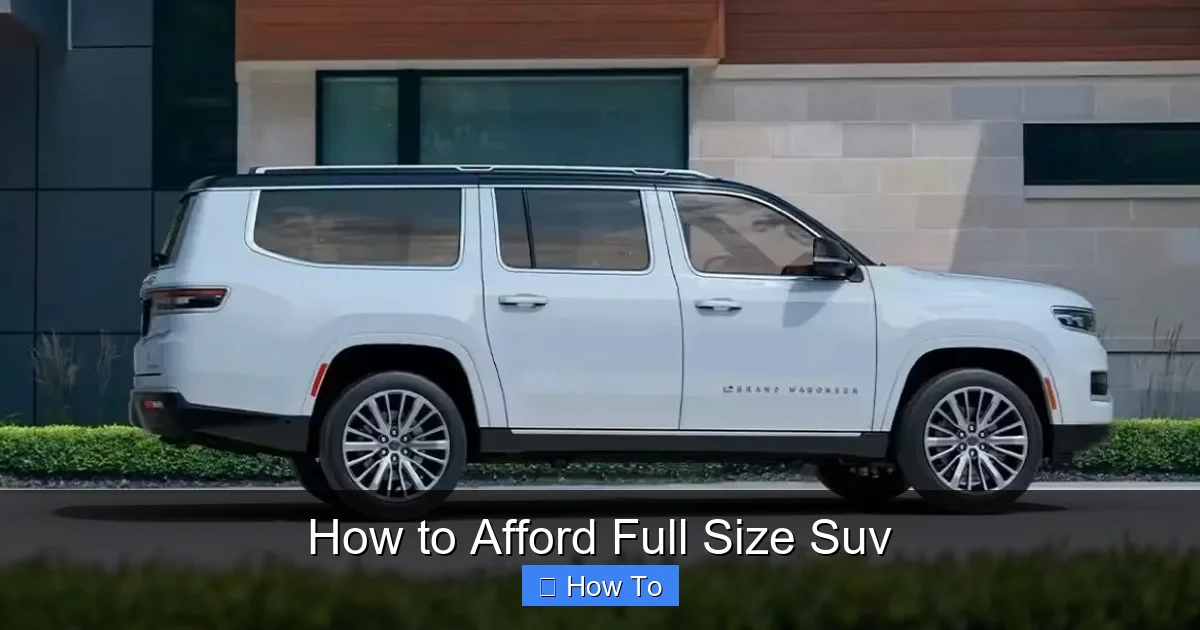
Visual guide about How to Afford Full Size Suv
Image source: motorbiscuit.com
Not all full-size SUVs are created equal—especially when it comes to price and operating costs. Picking the right model can make a huge difference in affordability.
Compare New vs. Used vs. Certified Pre-Owned (CPO)
– New SUVs: Offer the latest tech, full warranty, and peace of mind—but depreciate fast. You lose about 20% of the value the moment you drive off the lot.
– Used SUVs (3–5 years old): Can save you $10,000–$20,000 off the original price. However, they may have higher maintenance costs and no warranty.
– Certified Pre-Owned (CPO): The sweet spot for many buyers. These are typically 1–3 years old, have been inspected, and come with extended manufacturer warranties. You get near-new reliability at a used price.
For example, a 2021 Ford Expedition CPO might cost $50,000 instead of $70,000 for a new one—and still have 4 years of warranty coverage.
Prioritize Fuel Efficiency and Reliability
Full-size SUVs are gas guzzlers, but some are more efficient than others. Look for models with:
– EcoBoost or hybrid engines (e.g., Ford Expedition with EcoBoost, Toyota Sequoia with i-FORCE MAX hybrid).
– 8-speed or 10-speed automatic transmissions.
– Cylinder deactivation technology (shuts off cylinders when not needed).
Also, check reliability ratings from sources like J.D. Power, Consumer Reports, and Edmunds. A reliable SUV means fewer repair bills and lower long-term costs.
Skip the Top-Tier Trims
The base or mid-level trims of most full-size SUVs offer 90% of the features at 70% of the price. Skip the luxury packages, panoramic sunroofs, and premium sound systems unless they’re must-haves. You can often add aftermarket accessories later for less.
For instance, a Chevrolet Tahoe LS starts around $58,000, while the High Country trim tops $80,000. The LS still has seating for 8, advanced safety features, and a powerful V8—just without the leather and massaging seats.
Step 3: Save for a Larger Down Payment
A bigger down payment reduces your loan amount, lowers monthly payments, and may help you avoid negative equity (owing more than the car is worth).
Set a Savings Goal
Aim for at least 20% of the SUV’s purchase price. For a $60,000 SUV, that’s $12,000. Break it down: save $1,000 per month for a year, or $500 per month for two years.
Use Windfalls Wisely
Put tax refunds, bonuses, or gifts toward your down payment. Even $1,000 extra can reduce your loan by that amount and save you hundreds in interest.
Cut Expenses Temporarily
Trim non-essential spending—like dining out, subscriptions, or weekend trips—for 6–12 months to boost your savings. Use budgeting apps like Mint or YNAB to track progress.
Step 4: Secure the Best Financing
Where and how you finance your SUV can save—or cost—you thousands.
Get Pre-Approved
Before visiting dealers, get pre-approved for a loan from a bank, credit union, or online lender. This gives you a clear budget and strengthens your negotiating position.
Credit unions often offer lower rates than banks. For example, Navy Federal Credit Union or PenFed may offer rates 1–2% lower than national banks.
Compare Loan Offers
Don’t just accept the dealer’s financing. Compare:
– Interest rates (APR)
– Loan term (shorter = less interest paid)
– Prepayment penalties
– Fees
Use sites like Bankrate, LendingTree, or LightStream to compare offers. Even a 0.5% lower rate on a $50,000 loan over 60 months saves over $700.
Watch for Dealer Markups
Some dealers inflate interest rates and pocket the difference (called “markup”). Always ask for the “buy rate”—the rate the dealer pays the lender—and negotiate it down.
Step 5: Time Your Purchase Strategically
When you buy can be just as important as what you buy.
Shop at the End of the Month, Quarter, or Year
Dealers have sales targets. At the end of these periods, they’re more likely to offer discounts, rebates, or throw in extras (like free maintenance) to close deals.
Buy During Model-Year Clearance
New models typically arrive in late summer or early fall. Buy the previous year’s model in September or October for deep discounts. A 2023 SUV might be $5,000–$8,000 off in October.
Watch for Incentives and Rebates
Check manufacturer websites for:
– Cash rebates
– Low APR financing
– Loyalty bonuses (if you’re trading in a same-brand vehicle)
– Military, first responder, or college graduate discounts
For example, GM often offers $3,000–$5,000 cash back on full-size SUVs during holiday sales.
Step 6: Negotiate the Price Like a Pro
Don’t pay sticker price. Most dealers expect negotiation.
Research Invoice Price and Market Value
Use Edmunds, Kelley Blue Book (KBB), or TrueCar to find:
– Invoice price (what the dealer paid)
– Fair market value (what others are paying)
– Dealer incentives (hidden cash the dealer can use)
Aim to pay close to invoice, especially if there are incentives.
Get Multiple Quotes
Contact 3–5 dealerships by email or phone. Ask for their “out-the-door” price (includes all fees and taxes). Use competing offers to negotiate a better deal.
Negotiate the Price, Not the Payment
Dealers may try to distract you with low monthly payments by extending the loan term. Focus on the total price. A $55,000 SUV with a $600/month payment over 84 months costs more in interest than a $58,000 SUV over 60 months.
Walk Away if Needed
If the deal isn’t right, leave. There are plenty of SUVs and dealers. Walking away often prompts the dealer to call back with a better offer.
Step 7: Reduce Ongoing Ownership Costs
Affording the purchase is just the first step. Keeping costs low over time is key.
Choose the Right Insurance
Full-size SUVs cost more to insure due to size and repair costs. Get quotes from multiple insurers (Geico, Progressive, State Farm) and ask about:
– Safe driver discounts
– Multi-policy bundles
– Low-mileage discounts
Consider raising your deductible to lower premiums—but only if you can afford the out-of-pocket cost if you file a claim.
Maintain Your SUV Regularly
Follow the manufacturer’s maintenance schedule. Regular oil changes, tire rotations, and brake checks prevent costly repairs. Use OEM or high-quality aftermarket parts.
Keep records—they help with resale value and warranty claims.
Drive Efficiently
Full-size SUVs average 15–20 MPG. Improve fuel economy by:
– Avoiding rapid acceleration and hard braking
– Removing roof racks when not in use
– Keeping tires properly inflated
– Using cruise control on highways
Even small changes can save $200–$400 per year on gas.
Consider a Fuel Rewards Program
Sign up for programs like Exxon Mobil Rewards+, Shell Fuel Rewards, or grocery store gas points. You can save $0.10–$0.30 per gallon with regular use.
Troubleshooting Common Challenges
What if I Have Bad Credit?
You can still buy a full-size SUV, but expect higher interest rates. Consider:
– A co-signer with good credit
– A shorter loan term to reduce total interest
– Buying a lower-priced used SUV to keep payments manageable
Work on improving your credit before buying—even 6 months of on-time payments can boost your score.
What if I Can’t Afford the Down Payment?
Look for:
– Manufacturer rebates that can be applied as down payment
– State or federal programs for low-income buyers (rare, but check local options)
– Lease-to-own programs (use cautiously—they often cost more long-term)
Alternatively, delay your purchase and save more.
What if the SUV Needs Repairs Soon After Buying?
If it’s CPO or under warranty, the manufacturer should cover it. For used SUVs, consider an extended warranty—but read the fine print. Only buy from reputable providers like Endurance or CarShield.
Conclusion
Affording a full-size SUV is absolutely possible—if you plan carefully and make smart financial choices. Start by assessing your budget and credit, then choose a model that balances cost, reliability, and efficiency. Save for a strong down payment, secure the best financing, and time your purchase to take advantage of deals and incentives.
Negotiate confidently, keep ongoing costs in check, and don’t rush. With patience and strategy, you can drive the spacious, powerful SUV you need without compromising your financial future. Remember: it’s not about how much you can borrow—it’s about how much you can truly afford.
Your dream SUV is within reach. Start today, and you could be behind the wheel sooner than you think.